El amor brujo (Love, the Magician, literally, Spell-bound Love or The Bewitched Love, sometimes translated as Wedded by Witchcraft) is a ballet composed in 1914–15 by Manuel de Falla to a libretto by Gregorio Martínez Sierra. In 1916, Falla arranged a rendition of the work for sextet and small orchestra and the following year he made a concert version, also for small orchestra. Later, he fashioned a piano suite from it and finally, a second ballet version (1925) that features expanded orchestration, elimination of the narration, small cuts and plot changes, and a different order to the numbers.[1]
The work is distinctively Andalusian in character with the songs in the Andalusian Spanish dialect of the Gypsies. The music contains moments of remarkable beauty and originality; it includes the celebrated Danza ritual del fuego, “Canción del fuego fatuo” (Song of Wildfire, or Song Of The Will-o’-the-Wisp), and the “Danza del terror” (Dance of Terror).
Versions and performance history
Gitanería
El amor brujo was commissioned in 1914 as a gitanería (gypsy piece) by Pastora Imperio, a renowned flamenco gypsy dancer. It was scored for cantaora voice, actors and chamber orchestra and performed at the Teatro Lara, Madrid, on 15 April 1915, unsuccessfully.
Orchestral version
The following year, Falla revised the work by cutting its length, enlarging the orchestration, removing the dialogue and reducing the vocal part to three short songs for mezzo-soprano. This version was performed on 28 March 1916, by the Madrid Symphony Orchestra under Enrique Fernández Arbós.
Ballet
In 1924 Falla finished a transformation of El amor brujo into a one-act ‘ballet pantomímico’; it is in this version that the work is best known to this day. Published by Chester, the ballet was given in Paris the next year (1925) and by the Philadelphia Civic Opera Company at Philadelphia’s Metropolitan Opera House on 17 March 1927, with mezzo-soprano Kathryn Noll and conductor Alexander Smallens.
Piano suite
Later, the composer arranged a suite for piano solo (catalog G. 69) of four movements from the 1925 ballet: “Pantomima”, “Danza del terror”, “Romance del pescador”, and Danza ritual del fuego.
Synopsis
El amor brujo is the story of an Andalusian gypsy woman called Candela. Although her affection is for a man named Carmelo, as a girl she was promised to be married to another man (then a boy). After many years Candela’s husband has died (at the hands of the husband of a woman named Lucia), but he continues to haunt his wife.
The entire village knows about the haunting, but still brands Candela as crazy because she dances every night with her husband’s ghost (“Danza del terror”). Candela, now a widow, is free to establish a relationship with Carmelo, but continues to be haunted by her husband’s ghost.
After a conversation with other women of the village, Candela finally comes to realise that her husband was unfaithful to her, despite all her efforts to make their marriage work; her husband’s lover is revealed to have been Lucia.
Candela and Carmelo get advice that a ritual dance is necessary to cast the ghost off (“Danza ritual del fuego“), but it does not work. The ghost is still obsessed with Candela’s soul.
Candela manages to trick Lucía to come that night, with the excuse of hooking her up with Carmelo. As she turns up, the nightly ritual of Candela’s dance with her husband’s ghost begins, but at the last moment Candela moves away from her husband and Lucía is taken away by her now dead lover (“Danza del juego de amor”).
Dawn breaks, Candela and Carmelo are now truly free to enjoy their love.
Movements
Introducción y escena (‘Introduction and scene’)
En la cueva (‘In the cave’)
Canción del amor dolido (‘Song of suffering love’)
El aparecido (El espectro) (‘The apparition’)
Danza del terror (‘Dance of terror’)
El círculo mágico (Romance del pescador) (‘The magic circle’)
In 1986, Spanish director Carlos Saura directed El amor brujo based on the ballet, starring and choreographed by Antonio Gades. It was the third in his trilogy of dance films, following Bodas de sangre (Blood Wedding) and Carmen. The film filled out the story with spoken dialogue, but nevertheless used the entire score of the ballet, along with additional songs and dances performed by characters in the film. The Orquesta Nacional de España was conducted by Jesús López-Cobos, and the cante jondo singer heard on the soundtrack was Rocío Jurado. A soundtrack album, now out of print, was issued by EMI.
Music
The section “Cancion del Fuego Fatuo” was recorded in 1960 by jazz musician Miles Davis as “Will O’ the Wisp” in an arrangement by Gil Evans for their album Sketches of Spain.
In 1967 Francisco Rovira Beleta directed a film version of el amor brujoIn 1986, Spanish director Carlos Saura directed El amor brujo based on the ballet, starring and choreographed by Antonio Gades. It was the third in his trilogy of dance films, following Bodas de sangre (Blood Wedding) and Carmen. The film filled out the story with spoken dialogue, but nevertheless used the entire score of the ballet, along with additional songs and dances performed by characters in the film. The Orquesta Nacional de España was conducted by Jesús López-Cobos, and the cante jondo singer heard on the soundtrack was Rocío Jurado. A soundtrack album, now out of print, was issued by EMI.In 1986, Spanish director Carlos Saura directed El amor brujo based on the ballet, starring and choreographed by Antonio Gades. It was the third in his trilogy of dance films, following Bodas de sangre (Blood Wedding) and Carmen. The film filled out the story with spoken dialogue, but nevertheless used the entire score of the ballet, along with additional songs and dances performed by characters in the film. The Orquesta Nacional de España was conducted by Jesús López-Cobos, and the cante jondo singer heard on the soundtrack was Rocío Jurado. A soundtrack album, now out of print, was issued by EMI.
El amor brujo (Love, the Magician, or Wedded by Witchcraft) or Carlos Saura Dance Trilogy, Part 3: El Amor Brujo is a 1986 Spanish musical film written and directed by Carlos Saura. It was directed and choreographed in the flamenco style by Maria Pagès. It is the third part of the Saura’s flamenco trilogy he made in the 1980s, after Bodas de sangre in 1981 and Carmen in 1983. The film was screened out of competition at the 1986 Cannes Film Festival.[1]
Candela, who is loved by Carmelo, marries José in a pre-arranged marriage decided by their respective fathers. José is in love with the flirtatious Lucía and dies defending her honor. Carmelo is mistakenly arrested for the killing, and spends several years in prison. After being released, he declares his love for Candela.
Although Candela is now “free” to marry Carmelo she is haunted (and obsessed) by the ghost of José, who reappears every night to dance with her. Candela, while speaking with Lucía, learns that José pursued her even after he married Candela. She renounces him, but is unable to shake his hold on her. Tía Rosario provides the solution – Lucia must dance with José, an act which will exorcise his ghost forever. (It is never made clear if Lucía actually gives up her life to join him, but she never reappears in the film after their dance scene.)
Soundtrack
The film fleshed out the story with spoken dialogue and several songs, but used the entire score of the ballet. The Orquesta Nacional de España was conducted by Jesús López-Cobos. The singer heard on the soundtrack was the late Rocío Jurado. A soundtrack album, now out of print, was issued by EMI.
after cnn https://www.cnn.com/2018/03/01/asia/india-holi-explainer-intl/index.html Mythological roots The roots of the festival lie in the Hindu legend of Holika, a female demon, and the sister of the demon, King Hiranyakashayap. Hiranyakashayap believed he was the ruler of the universe and superior to all the gods. But his son, Prahlad, followed the god Vishnu, the preserver and protector of the universe. A trial by fire would decide: Holika had an enchanted shawl that protect,her from flames so she planned on jumping into the flames with Pralad on her lap. It turned out she was consumed by the fire because she was immune to fire only if she was alone.DescriptionThe arduous journey of a child bride, Anandi, from childhood to womanhood, as she strives to face every challenge and carve out her own identity. First episode date: July 21, 2008 Final episode date: July 31, 2016 Theme song: Choti Si Umar Number of episodes: 2,245 Networks: Colors, antv, Viacom 18, Nova television
holika or the lovers of el amor brujo did not seem to have made the right/correct choice initially … although in their defense, what seems wrong choices might have been actually only nearsightedness of the part for the whole (the great problem of evil of the west: if god is omniscience and omnipotent why did god permit what seem like evil choices … [well, supposedly a hint of the answer is that it only “seems” “evil” because you cannot stand in the shoes of others nor walk quite the exact same mile with others but you are only perceiving and imagining what other’s experience might be for all you know the other might have thought of their own experience not as evil but as good … at least according to assumption/affirmation/insistence of 1 corinthians 10:13
New Living Translation
The temptations in your life are no different from what others experience. And God is faithful. He will not allow the temptation to be more than you can stand. When you are tempted, he will show you a way out so that you can endure.
1Though I speak with the tongues of men and of angels, and have not charity, I am become as sounding brass, or a tinkling cymbal. 2And though I have the gift of prophecy, and understand all mysteries, and all knowledge; and though I have all faith, so that I could remove mountains, and have not charity, I am nothing. 3And though I bestow all my goods to feed the poor, and though I give my body to be burned, and have not charity, it profiteth me nothing.
4Charity suffereth long, and is kind; charity envieth not; charity vaunteth not itself, is not puffed up, 5Doth not behave itself unseemly, seeketh not her own, is not easily provoked, thinketh no evil; 6Rejoiceth not in iniquity, but rejoiceth in the truth; 7Beareth all things, believeth all things, hopeth all things, endureth all things.
8Charity never faileth: but whether there be prophecies, they shall fail; whether there be tongues, they shall cease; whether there be knowledge, it shall vanish away. 9For we know in part, and we prophesy in part. 10But when that which is perfect is come, then that which is in part shall be done away. 11When I was a child, I spake as a child, I understood qas a child, I thought as a child: but when I became a man, I put away childish things. 12For now we see through a glass, darkly; but then face to face: now I know in part; but then shall I know even as also I am known. 13And now abideth faith, hope, charity, these three; but the greatest of these is charity.
Que Sera Sera – Doris Day
Genco
Que Sera Sera – Doris Day
Genco22000
6 years ago|4.5K views
When I was just a little girl
I asked my mother what will I be
Will I be pretty will I be rich
Here’s what she said to me
Que Sera Sera
Whatever will be will be
The future’s not ours to see
Que Sera Sera
What will be will be
When I grew up and fell in love
I asked my sweetheart what lies ahead
Will we have rainbows day after day
Here’s what my sweetheart said
Que Sera Sera22000
6 years ago|4.5K views
When I was just a little girl
I asked my mother what will I be
Will I be pretty will I be rich
Here’s what she said to me
Que Sera Sera
Whatever will be will be
The future’s not ours to see
Que Sera Sera
What will be will be
When I grew up and fell in love
I asked my sweetheart what lies ahead
Will we have rainbows day after day
Here’s what my sweetheart said
Que Sera Sera
“what will be will be” will be abiding faith, hope, charity of which charity is the greatest … according to 1 corinthians 13
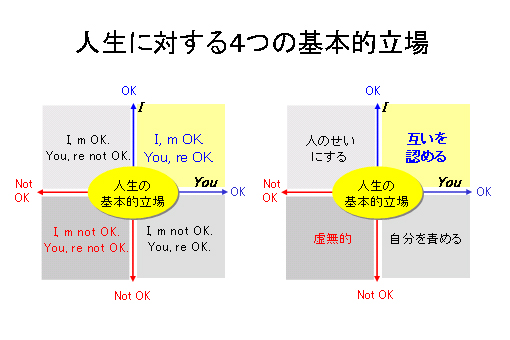
and “what will be will be” will be “you’re ok/well; i’m ok/well” “muôn loài được bình thường sống lâu; everyone live well and long” … according to blaise pascal’s wager …
all choices other than the choice blaise pascal wagers on–namely “you’re ok/well; i’m ok/well”–are like fire/flames (for example the fire of “vicious circles” instead of good circles) … [incidentally, the choice pascal wagers on itself–namely “you’re ok/well; i’m ok/well”–is a type of “fire” itself, the “good” “fire” of hearth and home for example, because that choice tends to produce the result of “have eyes/ears/mouth but as though could only see/hear/say good/goodness/godness/godliness/god”: “darkness at noon” so to speak] …
our heater seems to be having some kind of problem making loud noises as we head toward vernal equinox …
Safari – Mar 8, 2019 at 11:38 PM
historical yearly temperature for detroit, mihistorical yearly temperature for new haven, connecticut
may “you’re ok/well; i’m ok/well” “muôn loài được bình thường sống lâu; everyone live well and long” …
thatscienceguy: As children we’re taught the process of a caterpillar turning into a butterfly, and the story normally goes along the lines of a hungry caterpillar eats and eats until it can eat no longer, then it hangs upside down and forms a chrysalis, from which a beautiful butterfly emerges. But what actually happens inside the cocoon? It’s actually quite surprising, the caterpillar does not merely change its body a bit and grow wings, no… It dissolves. Almost entirely. The caterpillar excretes an enzyme which decomposes all the tissues and fibres into basic organic material, leaving only a few ‘cell disks.’ These cell disks comprise all the different types of cells in an adult butterfly – its eyes, legs, wings, etc. The caterpillar is actually born with them but they just remain dormant until metamorphosis. Once all the caterpillars cells have been decomposed the adult cell disks then start to grow, using the organic materials left over, eventually forming the butterfly that emerges a few days later.eric carle the very hungry caterpillar
it’s true that the states of poops (“residues” e.g. DNA/RNA of genetics or complex residues of mathematics etc. or abiding “faith hope charity” residues of 1 corinthian 13; “man must endure/outlast the going hence even as the coming hither. ripeness is all” man’s forever endurance is a residue of sort; …) can be associated (pavlov) with specific causes yet one wonder if the law of entropy (digits of pi = 3.1415… randomness; chrysalis; mach’s principle; ubuntu; conditional genesis “THIS arises; THAT arises”; Pratītyasamutpāda (Sanskrit: प्रतीत्यसमुत्पाद pratītyasamutpāda; Pali: पटिच्चसमुप्पादpaṭiccasamuppāda), commonly translated as dependent origination, or dependent arising, is a key principle in Buddhist teachings,[note 1] which states that all dharmas (“phenomena”) arise in dependence upon other dharmas: “if this exists, that exists; if this ceases to exist, that also ceases to exist”.; etc.
Ernst Mach’s suggestion that inertial motion is not governed by Newton’s absolute space and time but by the totality of masses in the universe [1, 2, 3, 4] was the primary stimulus to Einstein’s creation of general relativity … The Definition of Mach’s Principle Julian Barbour (Submitted on 20 Jul 2010) Two definitions of Mach’s principle are proposed. Both are related to gauge theory, are universal in scope and amount to formulations of causality that take into account the relational nature of position, time, and size. One of them leads directly to general relativity and may have relevance to the problem of creating a quantum theory of gravity. Comments: To be published in Foundations of Physics as invited contribution to Peter Mittelstaedt’s 80th Birthday Festschrift. 30 pages Subjects: General Relativity and Quantum Cosmology (gr-qc) Journal reference: Found.Phys.40:1263-1284,2010 DOI: 10.1007/s10701-010-9490-7 Cite as: arXiv:1007.3368 [gr-qc] (or arXiv:1007.3368v1 [gr-qc] for this version)) or the (biblical book of job) unsearchable god isn’t at the bottom of it all … big one skinny one yellow one … etc. …[historical yearly temperature for dublin, ca the variations around the average curve …]… spice of life …
may “you’re ok/well; i’m ok/well” “muon loai duoc binh thuong song lau; everyone live well and long” …
tv’s co dau 8 tuoi gauri gauri’s mother jadit (this minute he takes after his mother sumitra mirroring the last person he encounters) sumitra gayna anandi hadron basan etc. seem to be illustrating something …kanaji might yet be an exception …: there seems to be sort of misunderstanding (viet tv quotes ecclesiastes “21Do not pay attention to every word that is spoken, …”) all around because everyone sort of have been going each their separate ways without first agreeing on a common target other than the target of their common god tha^`n linh that it will be all right for it’s all good it will be all good …
Joni Mitchell – Both Sides, Now [Original Studio Version, 1969]
the best fruit (best knowledge) from the tree of knowledge might be that: we think we know but we don’t really know … song ‘you ain’t seen nothing yet’ … but of course yet we can will if we can’t know (or can’t believe): though we might not be able to know good (especially since good is associated with “have eyes/ears/mouth but as though could only see/hear/say good/goodness/godness/godliness/god” that is to say we usually “know” by contrast/differences/differentials “black is what’s not white or is the opposite of white” but when we have good we can only see/hear/say good and hence we cannot know good having nothing to contrast good with [in fact the bible genesis affirms that –evidence to the contrary–this world is a good world “… and god saw that it was good …” … this world of ours is “the best of all possible worlds”]) we yet can will good: that is to say we can pray/wish/will/plan that it will be all good … in particular, we don’t really know you (be you communist, catholic, buddhist, chinese, black, etc.; dahlia says something today that sounds like “racism”) but we assume (“assume” ~ “will”) that you are good that your intentions are good (song “any love is good love”) …: such will (will = love: such love/will that does not depend on rhymes or reasons or conditions/conditional or understanding) is the same as unconditional love … unconditional love loves things apriori before things encounter conditions requiring understandings and follow-through’s and unconditional love loves things (that have come to require understanding) in the form of conditional love and unconditional love continues to love things aposteriori long after past all understandings …
so then we will wish/will good: may “you’re ok/well; i’m ok/well” “muôn loài được bình thường sống lâu; everyone live well and long” …
Ecclesiastes is presented as biography of “Kohelet” (or “Qoheleth”, meaning “Assembler”, but traditionally translated by Christians as “Teacher” or “Preacher”[2]). Kohelet’s story is framed by voice of the narrator, who refers to Kohelet in the third person, praises his wisdom, but reminds the reader that wisdom has its limitations and is not man’s main concern. Kohelet reports what he planned, did, experienced and thought. His journey to knowledge is, in the end, incomplete. The reader is not only to hear Kohelet’s wisdom, but to observe his journey towards understanding and acceptance of life’s frustrations and uncertainties: the journey itself is important.[3]
Few of the many attempts to uncover an underlying structure to Ecclesiastes have met with widespread acceptance; among them, the following is one of the more influential:[4]
Title (1:1)
Initial poem (1:2–11)
I: Kohelet’s investigation of life (1:12–6:9)
II: Kohelet’s conclusions (6:10–11:6)
Introduction (6:10–12)
A: Man cannot discover what is good for him to do (7:1–8:17)
B: Man does not know what will come after him (9:1–11:6)
Concluding poem (11:7–12:8)
Epilogue (12:9–14)
Verse 1:1 is a superscription, the ancient equivalent of a title page: it introduces the book as “the words of Kohelet, son of David, king in Jerusalem.”[5]
Most, though not all, modern commentators regard the epilogue (12:9–14) as an addition by a later scribe. Some have identified certain other statements as further additions intended to make the book more religiously orthodox (e.g., the affirmations of God’s justice and the need for piety).[6]
Chương 42: Không hiểu biết thì không thể thương yêu
Vua hỏi Bụt về điều mà vua còn thắc mắc và chưa giải quyết được xong xuôi:
– Sa môn Gotama, có người nói rằng ngài chủ trương không nên thương yêu, bởi vì càng thương nhiều thì càng lo lắng nhiều, càng thương nhiều thì càng sầu khổ nhiều, càng thương nhiều thì càng thất vọng nhiều. Trẫm nghĩ rằng điều đó có thể đúng, nhưng lòng trẫm vẫn không yên. Trẫm nghĩ nếu không có thương yêu thì cuộc đời sẽ khô khan và vô vị lắm. Xin ngài giải giùm những nghi nan ấy cho trẫm.
Bụt nhìn vua:
– Đại vương, câu hỏi của ngài rất hay, và nhiều người sẽ được khai sáng nhờ câu hỏi này. Tiếng thương yêu có nhiều nghĩa, ta phải xét cho kỹ về bản chất của từng loại thương yêu. Cuộc đời cần đến sự thương yêu, nhưng không phải là thứ thương yêu dựa trên căn bản của dục vọng, của đam mê và vướng mắc, của phân biệt và kỳ thị. Đại vương, có một thứ tình thương mà cuộc đời rất cần đến, đó là lòng từ bi. Từ là maitri, còn bi là karuna.
Đại vương, tình thương mà người đời thường nói tới là tình thương giữa cha mẹ và con cái, giữa vợ và chồng, giữa những người cùng trong họ hàng, cùng thân tộc, cùng giai cấp hoặc cùng quốc gia. Vì tình thương ấy còn dựa vào ý niệm “tôi” và “của tôi” cho nên bản chất của nó còn là sự vướng mắc và phân biệt.
Người ta chỉ muốn thương cha của mình, thương mẹ của mình, thương chồng của mình, thương vợ của mình, thương con của mình, thương cháu của mình, thương họ hàng của mình, thương đất nước của mình, cho nên người ta còn vướng mắc và phân biệt. Vướng mắc cho nên lo lắng về những bất trắc có thể xảy đến dù chúng chưa xảy đến, vướng mắc cho nên phải gánh chịu sầu đau và thất vọng mỗi khi có những bất trắc xảy đến.
Phân biệt cho nên có thái độ nghi kỵ, hờ hững và ghét bỏ đối với những người mình không thương. Vướng mắc và phân biệt đều là những nguyên nhân của khổ đau, khổ đau cho mình và cho người.
Đại vương, thứ tình thương mà muôn loài đang khao khát là lòng từ bi. Từ là thứ tình thương có thể đem đến an vui cho kẻ khác, bi là thứ tình thương có thể làm vơi đi những khổ đau của kẻ khác. Từ và bi là thứ tình thương không có điều kiện, không bắt buộc và không đòi hỏi bất cứ một sự đền đáp nào. Trong từ bi, người được thương không phải chỉ là cha ta, mẹ ta, vợ ta, chồng ta, con ta, huyết thống ta, giai cấp ta… Kẻ được thương là tất cả mọi người và mọi loài.
Trong từ và bi không có sự phân biệt ta và không ta, của ta và của không của ta. Vì không phân biệt nên không có vướng mắc. Từ và Bi chỉ đem lại niềm vui và làm giảm đi nỗi khổ; Từ và Bi không gây lo lắng sầu khổ và thất vọng. Thiếu từ bi, cuộc đời sẽ khô khan, khổ đau và buồn chán như đại vương nói. Có từ bi, cuộc đời sẽ có an lạc, hạnh phúc và tươi vui. Đại vương, ngài là bậc nhân chủ cầm đầu của cả một nước, dân chúng vương quốc ngài sẽ được thấm nhuần ân đức ngài nếu ngài tu tập được tâm Từ và tâm Bi.
Vua cúi đầu suy nghĩ một lúc. Sau đó vua ngửng lên hỏi Bụt:
– Trẫm có một gia đình để coi sóc, có một vương quốc phải chăm lo. Nếu trẫm không thương yêu gia đình của trẫm và dân chúng trong vương quốc của trẫm thì làm sao trẫm có thể coi sóc và chăm lo cho họ được? Xin Bụt soi sáng điểm này cho trẫm.
– Cố nhiên là đại vương phải thương yêu gia đình hoàng gia và phải thương yêu dân chúng của vương quốc. Nhưng tình thương yêu của đại vương có thể vượt khỏi phạm vi gia đình và vương quốc. Đại vương thương yêu và chăm sóc cho các hoàng tử và công chúa. Điều đó không ngăn cản việc đại vương có thể thương yêu và chăm sóc cho tất cả những người trẻ khác trong vương quốc như là thương yêu và chăm sóc chính con trai và con gái của đại vương. Nếu đại vương làm được như vậy thì tình thương hạn hẹp trở thành tình thương rộng lớn, và đột nhiên tất cả những người trẻ tuổi trong vương quốc đều trở nên con trai và con gái của đại vương. Đó đích thực là tâm từ bi. Đây không phải là một điều quá lý tưởng. Đây là một điều con người có thể thực hiện được, nhất là khi con người ấy có trong tay những phương tiện như đại vương. Nếu đại vương phát được nguyện lớn thì đại vương chắc chắn có thể làm được điều này.
– Nhưng còn những người trẻ tuổi trong các vương quốc khác?
– Không có gì ngăn cản đại vương thương yêu những người trẻ tuổi trong các vương quốc khác như con trai và con gái của ngài, dù những người này không nằm trong vùng cai trị của đại vương. Không phải vì thương yêu dân chúng của quốc gia mình mà mình không thể thương yêu dân chúng của các quốc gia khác.
– Thương yêu như thế nào? Họ có nằm dưới quyền cai trị của mình đâu?
Bụt nhìn vua:
– Sự giàu mạnh và an ổn của một quốc gia không phải được tạo nên bởi sự nghèo hèn và loạn lạc của những quốc gia khác. Đại vương, nền hòa bình và thịnh vượng lâu dài của một quốc gia chỉ có thể được xây dựng trên sự hòa hiếu giữa các quốc gia và ý hướng về một nền thịnh vượng chung. Nếu đại vương thực sự muốn cho vương quốc Kosala có hòa bình và những người trai trẻ trong vương quốc không phải xông pha nơi lửa đạn thì đại vương cũng phải giữ gìn làm sao cho các vương quốc kế cận cũng có hòa bình và để những trai trẻ các xứ đó cũng khỏi phải xông pha trong vòng lửa đạn. Chính sách ngoại giao và kinh tế của đại vương phải thực sự đi theo con đường của tâm từ bi thì đại vương mới có thể làm được chuyện này. Như vậy trong khi đại vương thương yêu và chăm sóc cho quốc gia Kosala, đại vương cũng chăm sóc cho các vương quốc khác như Magadha, Sasi, Videha, Sakya và Koliya.
Đại vương, mới năm ngoái đây, sau khi về thăm gia đình và vương quốc Sakya, tôi và nhiều vị khất sĩ có tới du hóa ở Arannakutila, thuộc lãnh thổ của quý quốc, sát chân núi Hy Mã Lạp Sơn. Ở đó tôi đã suy nghiệm về một chính sách trị nước căn cứ trên nguyên tắc bất bạo động. Tôi thấy các vị quốc vương rất có thể cai trị nghiêm minh, đem lại an hòa và hạnh phúc của muôn dân mà không cần sử dụng đến những biện pháp bạo động như chinh phạt, xử tử, giam hãm, tù đày v.v… Tôi đã nói những điều này với phụ vương tôi, vua Suddhodana. Nhân tiện đây tôi cũng muốn xác định điều đó với đại vương. Làm nhà chính trị giỏi, đại vương có thể trị nước mà không cần đến những phương thức bạo động, nếu ngài biết un đúc và nuôi dưỡng Từ Bi.
Vua thốt lên:
– Thật là kỳ diệu! Thật là kỳ diệu! Chưa bao giờ trẫm được nghe những lời giáo huấn mới lạ và sâu sắc như thế! Ngài thật là một bậc tôn quý trên đời! Những điều Bụt dạy, trẫm xin lĩnh giáo để về chiêm nghiệm, bởi vì trẫm biết những lời dạy ấy có những chiều sâu cần phải khám phá. Bây giờ trẫm xin hỏi ngài một câu hỏi thật đơn giản. Thói thường, thì tình thương của người đời bao giờ cũng ẩn chứa ý niệm phân biệt, và ít nhiều cũng mang tính chất đam mê và vướng mắc. Theo Bụt thì thứ tình thương đó có thể gây nên lo lắng, sầu khổ, và thất vọng. Vậy nếu không thương như thế thì ta phải thương làm sao? Ví dụ như trẫm đây, trẫm phải thương con cái của trẫm như thế nào để tránh được những lo lắng, sầu khổ và thất vọng?
– Không ai cấm cản chúng ta thương yêu, nhưng ta phải biết quán sát để thấy được bản chất của tình thương chúng ta. Tình thương theo lẽ thì phải làm cho người được thương yêu có an lạc và hạnh phúc, nhưng nếu chỉ là đam mê, là ích kỷ, là ý chí chiếm hữu thì tình thương này không thực sự là tình thương, tình thương này không làm cho người được thương có an lạc và hạnh phúc. Trái lại nó làm cho kẻ kia cảm thấy tù túng, lệ thuộc, mất hết tự do, mất hết phẩm cách của một con người có tự do. Tình thương trong trường hợp này chỉ là một tù ngục. Nếu người được thương không có hạnh phúc, nếu người ấy không chấp nhận cái nhà tù của sự chiếm hữu thì tình thương kia sẽ dần dần biến thành sự ghét bỏ và hận thù.
156 Countries Sing Together for the Starbucks Love Project
may “you’re ok/well; i’m ok/well” “muôn loài được bình thường sống lâu; everyone live well and long” …
Genesis 3 -19In the sweat of thy face shalt thou eat bread, till thou return unto the ground; for out of it wast thou taken: for dust thou art, and unto dust shalt thou return.
Job 1 -20Then Job arose, and rent his mantle, and shaved his head, and fell down upon the ground, and worshipped,
21And said, Naked came I out of my mother’s womb, and naked shall I return thither: the LORD gave, and the LORD hath taken away; blessed be the name of the LORD.
22In all this Job sinned not, nor charged God foolishly.
Ecclesiastes 1 -4One generation passeth away, and another generation cometh: but the earth abideth for ever.
5The sun also ariseth, and the sun goeth down, and hasteth to his place where he arose.
6The wind goeth toward the south, and turneth about unto the north; it whirleth about continually, and the wind returneth again according to his circuits.
7All the rivers run into the sea; yet the sea is not full; unto the place from whence the rivers come, thither they return again.
8All things are full of labour; man cannot utter it: the eye is not satisfied with seeing, nor the ear filled with hearing.
9The thing that hath been, it is that which shall be; and that which is done is that which shall be done: and there is no new thing under the sun.
1Though I speak with the tongues of men and of angels, and have not charity, I am become as sounding brass, or a tinkling cymbal. 2And though I have the gift of prophecy, and understand all mysteries, and all knowledge; and though I have all faith, so that I could remove mountains, and have not charity, I am nothing. 3And though I bestow all my goods to feed the poor, and though I give my body to be burned, and have not charity, it profiteth me nothing.
4Charity suffereth long, and is kind; charity envieth not; charity vaunteth not itself, is not puffed up, 5Doth not behave itself unseemly, seeketh not her own, is not easily provoked, thinketh no evil; 6Rejoiceth not in iniquity, but rejoiceth in the truth; 7Beareth all things, believeth all things, hopeth all things, endureth all things.
8Charity never faileth: but whether there be prophecies, they shall fail; whether there be tongues, they shall cease; whether there be knowledge, it shall vanish away. 9For we know in part, and we prophesy in part. 10But when that which is perfect is come, then that which is in part shall be done away. 11When I was a child, I spake as a child, I understood as a child, I thought as a child: but when I became a man, I put away childish things. 12For now we see through a glass, darkly; but then face to face: now I know in part; but then shall I know even as also I am known. 13And now abideth faith, hope, charity, these three; but the greatest of these is charity.
1 corinthian 13 suggests [vạn lý trường thành: there are always a miilion/godzillion reasons for everything and 1 corinthian 13 is only one reason: thus to be sure one should not be complacent–say with just one fitting reason–should not be jaded as pointed out about mass shootings in previous notes to the human conditions even if the human conditions seem to be happening only to other people while one is on cloud nine but one should always fear anger love rejoice quiet nothing doing or whatnot with reasons or without reason so that or so as to bring about “you’re ok/well; i’m ok/well” “muôn loài được bình thường lành mạnh sống lâu; everyone live well and long” … even if “you’re ok/well; i’m ok/well” “muôn loài được bình thường lành mạnh sống lâu; everyone live well and long” seems like but a carrot on a stick as mentioned in previous notes’ discussion of ubuntu {if ubuntu is only ‘in the image’ ‘mirror’ then it would have been as ‘nothing’ but supposedly it is ‘humanity’ is ‘good thoughts’ is the ‘good’ mirror is ‘you’re ok/well; i’m ok/well’ wellness mirror} … and that is blaise pascal’s wager … ‘you’re ok/well; i’m ok/well’ might seem like an unattainable or like an illusion especially because it produces ‘have eyes/ears/mouth but as though could only see/hear/say good/goodness/godness/god’ yet ‘you’re ok/well; i’m ok/well’ has to be aim at and strive for
Des’ree – You Gotta Be (Official Video)
] that “a child” [“do thái” ~ “because of goliath/big/great/adult/harvest/pick fruit”] seems to have “disappeared” becoming “a man” …
Cat’s In The Cradle https://en.m.wikipedia.org/wiki/Cat%27s_in_the_Cradle
The song’s lyrics began as a poem written by Harry’s wife, Sandra “Sandy” Gaston; the poem itself was inspired by the awkward relationship between her first husband, James Cashmore, and his father, John, a politician who served as Brooklyn borough president. She was also inspired by a country music song she had heard on the radio.[4] Chapin also said the song was about his own relationship with his son, Josh,
child inside the man:
Yoko Ono John Lennon Woman
Vitruvius Technologos
5 years ago
Yoko Ono John Lennon Woman
“Woman”
(from “Imagine: John Lennon” soundtrack)
For the other half of the sky
Woman, I can hardly express,
My mixed emotion at my thoughtlessness,
After all I’m forever in your debt,
And woman, I will try to express,
My inner feelings and thankfulness,
For showing me the meaning of success,
Ooh, well, well,
Ooh, well, well,
Woman, I know you understand
The little child inside the man,
Please remember my life is in your hands,
And, woman, hold me close to your heart,
However distant don’t keep us apart,
After all it is written in the stars,
Ooh, well, well,
Ooh, well, well,
Woman, please let me explain,
I never meant to cause you sorrow or pain,
So let me tell you again and again and again,
I love you (yeah, yeah) now and forever,
I love you (yeah, yeah) now and forever,
I love you (yeah, yeah) now and forever,
I love you (yeah, yeah).
Peanuts Creator Charles Schulz Didn’t Like the Classic Comic’s Name Merrill FabryOctober 1, 2015 The April 9, 1965, cover of TIME The April 9, 1965, cover of TIME TIME When first daily Peanuts comic ran on Oct. 2, 1950—exactly 65 years ago this Friday—its creator, Charles M. Schulz, had plenty to be happy about. But not everything was sunny: he didn’t like the name that had been given to his creation. Schulz had previously published a cartoon called Li’l Folks, which included forerunners of the Peanuts characters, and didn’t want to change the name. Schulz told TIME in 1965, when the magazine ran a cover story about Charlie Brown’s place in American culture, “I wanted to keep Li’l Folks. I wanted a strip with dignity and significance. ‘Peanuts’ made it sound too insignificant.” So how did Peanuts get its name? Schulz was working as an art teacher at a Minneapolis art school when he sold his first cartoon in 1948 to the Saturday Evening Post. Li’l Folks came soon after, in the St. Paul Pioneer Press, which ran the strip anywhere the editor had space to put it. He stopped drawing it after a year, because the editor wouldn’t give him more money or a regular spot. At that point, Schulz, still working as an art teacher, pursued comic syndication contracts and was rejected from a number of services. In 1950 United Feature Syndicate accepted Schulz’s Li’l Folks. But before it could be published, the syndicate wanted to change the name. Al Capp’s strip Li’l Abner had premiered in 1934 and ran until 1977, and Tack Knight’s Little Folks comic ran in the 1930s, so Schulz’s title raised concerns over copyright infringement. A syndicate editor chose the name Peanuts, despite Schulz’s protests. The syndicate initially ran the comic strip in seven papers across the U.S., according the Charles M. Schulz Museum—adding that, even many years after the death of Li’l Folks, Schulz remained displeased at its new name. Even so, he didn’t let the name get in the way: Schulz would continue to work on Peanuts for the rest of his life. Read more about Charles Schulz and Peanuts, here in the TIME Vault: Good Grief Contact us at editors@time.com.
bà lạc in los angeles where dì tư cô diệp moved and then married joe and have bobo who recently it is reported supposedly by dì ba cô diễm is not drinking milk and eating with regular gusto …
from Shakespeare’s King Lear:
EDGAR
What, in ill thoughts again? Men [“everyman“: humanity including both man and woman] must endure [“endure” has several shades of meaning … because the serpent’s tongue is forked {dahlia showed ba’c ty’ “new trick” of changing a spoon into a fork this morning} … the “ill thoughts” shade of meaning is “accept” what is fated what is unchangeable etc. … the “come on” meaning is {“outlast” or} “abides forever” such as for example ecclesiastes “the earth abides forever”: biblical “in the image” suggests that the sun too “abides forever” … for example previous note discussion of the midnight sun
The midnight sun
WHERE THE SUN NEVER SETS
Like a prolonged sunset and sunrise all at once, this natural phenomena colours heaven and earth in a reddish yellow light. Welcome to “the land of the midnight sun”.
SLETTNES, NORDKYN. PHOTO: CHRISTOFFER ROBIN JENSEN
…………………………
WHAT IS THE MIDNIGHT SUN?
The midnight sun is a natural phenomenon that occurs during summer in places south of the Antarctic Circle and north of the Arctic Circle – including Northern Norway.
The earth is rotating at a tilted axis relative to the sun, and during the summer months, the North Pole is angled towards our star. That’s why, for several weeks, the sun never sets above the Arctic Circle.
Svalbard is the place in Norway where the midnight sun occurs for the longest period. Here, the sun doesn’t set between 20 April and 22 August.
It’s tempting to wonder about all the sights and experiences that have been made under the midnight sun through the ages – by people living off the sea in the Lofoten and Vesterålen archipelagos, or the Sami reindeer herders of the far north.
The phenomena has at least made a lasting impression on several Norwegian artists and writers. This excerpt is from Knut Hamsuns Pan (1894): “Night was coming on again; the sun just dipped into the sea and rose again, red, refreshed, as if it had been down to drink. I could feel more strangely on those nights than anyone would believe …”
LOFOTEN. PHOTO: JØRN ALLAN PEDERSEN / VISITNORWAY.COM
Travel to the areas above the Arctic Circle in Norway and live these moments yourself: Doing a whale safari or exploring the wilderness inland takes on a new dimension at night in the summer months, when you literally get to see the nature and wildlife in a different light.
If you’re not afraid of the sometimes chilly summer nights in the north, you could try a midnight swim – or pitch your tent in the wild and stay up with the sun. Many sights and activities are open at night during these weeks, so you can go midnight golfing, cycling, river paddling, or sea kayaking – or maybe just find a quiet spot to fish.
If you travel to the Arctic islands of Svalbard, the sun doesn’t set between April and late August. Here, you can do a midnight walk on a glacier or look at the reddish sky from a moving dogsled, experiencing the unique climate and nature near the North Pole.
mapping relation function “you believe what you want to believe …” Tom Petty and the Heartbreaker world K consisting of
previous notes suggest that like 1 corinthian 13 humanity might pass through life stages similar to human life stages and in one of these liffe stages of humanity it might so happen that humanity might be able to transcend all of the conditions supposedly prince siddartha the future buddha supposedly saw at the 4 gates to his palace and thus be able to realize the “abides forever” or “endure” forever condition … though previous notes pointed out because it is ‘the best of all possible worlds” and because entropy makes ‘sameness’ “boring” once [currently various cloning levels of the physical human is perhaps within reach; cloning of the human spirit/soul is something else; harry chapin song cat’s cradle] humanity have succeeded ‘abiding forever’ humanity might very well allow/submit itself to the illusion of {“sleep”} ‘the sun sets and the sun also rises and there’s nothing new under the sun’ even though the sun has always ‘abided forever’ …
Bob Dylan’s “Forever Young”
ROD STEWART & RUBY STEWART FOR EVER YOUNG (SUBTITULADA)
]
10Their going hence even as their coming hither.
Ripeness [“ripeness” ~ “chín” ~ “china-home of ‘ren’ 人”] is all. Come on.
8 Simple Rules (originally 8 Simple Rules for Dating My Teenage Daughter for the first season) is an American sitcom comedy television show, originally starring John Ritter and Katey Sagal as middle-class parents Paul and Cate Hennessy raising their three children. Kaley Cuoco, Amy Davidson, and Martin Spanjers co-starred as their teenage kids; Bridget, Kerry, and Rory Hennessy. The series ran on ABC from September 17, 2002 to April 15, 2005. The first season focused on Paul being left in charge of the kids after Cate takes a full-time job as a nurse, with comedic emphasis on his often strict rules concerning his daughters and dating. The series’ name and premise were derived from the book 8 Simple Rules for Dating My Teenage Daughter by W. Bruce Cameron.[1] https://en.m.wikipedia.org/wiki/8_Simple_Rules and https://en.m.wikipedia.org/wiki/8_Simple_Rules_(season_1) Summary Edit Non-free media information and use rationale – non-free video cover for 8 Simple Rules (season 1) Description This is the cover art of 8 Simple Rules: The Complete First Season. The cover art copyright is believed to belong to the publisher of the video or the studio which produced the video. Source It is believed that the cover art can or could be obtained from the publisher or studio. Article 8 Simple Rules (season 1) Portion used The entire front cover. Because the image is cover art, a form of product packaging, the entire image is needed to identify the product, properly convey the meaning and branding intended, and avoid tarnishing or misrepresenting the image. Low resolution? The copy is of sufficient resolution for commentary and identification but lower resolution than the original video cover. Copies made from it will be of inferior quality, unsuitable as artwork on pirate versions or other uses that would compete with the commercial purpose of the original artwork. Purpose of use Main infobox. The image is used for identification in the context of critical commentary of the work for which it serves as cover art. It makes a significant contribution to the user’s understanding of the article, which could not practically be conveyed by words alone. The image is placed in the infobox at the top of the article discussing the work, to show the primary visual image associated with the work, and to help the user quickly identify the work and know they have found what they are looking for. Use for this purpose does not compete with the purposes of the original work, namely the video cover creator’s ability to provide video cover design services and in turn marketing video to the public. Replaceable? As a video cover, the image is not replaceable by free content; any other image that shows the packaging of the video would also be copyrighted, and any version that is not true to the original would be inadequate for identification or commentary. Other information Use of the video cover in the article complies with Wikipedia non-free content policy and fair use under United States copyright law as described above. Licensing Edit This image is the cover of a videotape, DVD, Blu-ray, etc. and the copyright for it is most likely owned by either the publisher of the video or the studio which produced the video in question. It is believed that the use of low-resolution images of video covers to illustrate the videotape or disc in question on the English-language Wikipedia, hosted on servers in the United States by the non-profit Wikimedia Foundation, qualifies as fair use under the Copyright law of the United States. Any other uses of this image, on Wikipedia or elsewhere, may be copyright infringement. See Wikipedia:Non-free content for more information.just two rules short of bible moses [in the bullrushes: cat’s cradle above] 10 rules/commandments …
“Original first edition cover art of “”The Sun Also Rises.”” The 1926 novel was written by American author Ernest Hemingway about a group of American and British expatriates who travel from Paris to the Festival of San Ferm?n in Pamplona to watch the running of the bulls and the bullfights. Scribner’s published the novel on 22 October 1926. Its first edition consisted of 5090 copies, selling at $2.00 per copy. Cleonike Damianakes (b. 1895 – 1979) illustrated the dust jacket with a Hellenistic design of a seated, robed woman, her head bent to her shoulder, eyes closed, one hand holding an apple, her shoulders and a thigh exposed.”
Hemingway presents his notion that the “Lost Generation“—considered to have been decadent, dissolute, and irretrievably damaged by World War I—was in fact resilient and strong.[4]
…
The themes of The Sun Also Rises appear in its two epigraphs. The first is an allusion to the “Lost Generation“, a term coined by Gertrude Stein referring to the post-war generation;[note 2][28] the other epigraph is a long quotation from Ecclesiastes: “One generation passeth away, and another generation cometh: but the earth abideth for ever. The sun also ariseth, and the sun goeth down, and hasteth to his place where he arose.”[29] Hemingway told his editor Max Perkins that the book was not so much about a generation being lost, but that “the earth abideth forever.” He thought the characters in The Sun Also Risesmay have been “battered” but were not lost.[4]
may “you’re ok/well; i’m ok/well” “muôn loài được bình thường lành mạnh sống lâu; everyone live well and long” …
Welcome, O life! I go to encounter for the millionth time the reality of experience and to forge in the smithy of my soul the uncreated conscience of my race.
an episode from “the monkey king” or “journey to the west”: Buddha scolded,”You little stinker.You haven’t jumped out of my palm.Look down.”When Wu-k’ung lowered his head,he found that on the middle finger of Buddha was the line of words which he had just written.And from the fingers came the powerful smell of monkey urine.
This unique architectural feat now welcomes visitors.
Photograph by Peter Hirth, Redux
A pair of giant, stone hands emerge from the verdant hills of Vietnam, lifting a gleaming bridge toward the sky. Cau Vang (meaning “gold bridge”) just opened near Da Nang in the heart of the country, adding yet another reason to explore the ever-popular destination.
Suspended almost 4,600 feet above sea level, the bridge combines eight sections and stretches 500 feet long. The hands appear weathered as if constructed centuries ago. Visitors can stroll through rows of purple chrysanthemums for uninterrupted views of the rolling Trường Sơn Mountains.
Cau Vang bridge rises above the Thien Thai gardens at the Bà Nà Hills Resort. Opened in 1919 by French colonists with around 200 villas, today the area holds attractions like an alpine roller coaster and the longest nonstop, single-track cable car, according to Guinness World Records.
Reports show this bridge as part of a $2 billion project to entice tourists in the area. No one claimed credit for the impressive design as their own, but architectural renderings appear suggest the Vietnamese landscape company TA Corporation.
Eden Ahbez + Cole & Boone – Nature Boy Live
may “you’re ok/well; i’m ok/well” “muôn loài được bình thường lành mạnh sống lâu; everyone live well and long” …
Why can’t we see the Apollo lunar landers on the Moon from Earth ?
2,011,328 views
45K
4.2K
SHARE
SAVE
Curious Droid
Published on Dec 29, 2016
SUBSCRIBE 593K
When you look up at a full moon, just remember that somewhere on the lunar face, the remains of Apollo 11, 12, 14, 15, 16 and 17 along with 8 unmanned Russian Luna missions and 5 pre-Apollo unmanned American Surveyor missions are all still there….. silently looking back….. unless of course, you’re a NASA non-believer.
so… why can’t we see these from the earth, why can’t we train our best telescopes on to the moon’s surface and see them there exactly where we left them the best part of 50 years ago.
Well, there a bit of a problem…. and that is that the moon is 384,000 kilometres or 238,000 miles away and the landers and all the other things left behind are just few meters across.
To give you an Idea how difficult a problems that it is….. it’s like looking for an object the size of a coin from 1000 miles away or the equivalent from New York to Florida…. so you going to need a pretty serious telescope.
One telescope that springs to mind is the Hubble space telescope, after all if it can see galaxy’s billons of light years away then it should be able to see the Apollo landers easily…. shouldn’t it ??
Well, as with many things to do with space it’s not that simple. Yes, the Hubble space telescope was indeed designed to look at very faint objects at astronomical distances but those objects are clusters of galaxy’s trillions of millions across, it was not designed the take high resolution images of small objects at fairly close ranges in astronomical terms like to the moon.
The problem is down to the resolution of the images that the telescope can produce and that is limited by the laws of physics. The resolution determines the size the smallest Picture Element is or pixel in the image. The higher the resolution more of the fine detail in an image can be seen.
In a telescope, the bigger the mirror, the more the magnification, so the closer the object will appear but at the very large magnifications the image is also affected by the wavelength of the light itself. The shorter the wavelength like ultraviolet light, the finer the detail that can be captured and the resolution increases but in visible light as we go from blue through green to red, the wavelength increases and the resolution is decreased.
The Hubble has a mirror which is 2.4 meters in diameter, that was the largest that could fit in to the Space Shuttle when it was placed in to orbit. This gives it a single pixel resolution in ultra violet light of about 43 meters across on the moon’s surface, anything smaller than 43 meters across will just be hidden in a single dot which cannot be resolved any further, in fact we need really 2 pixels or more to make out anything at all……
Title: Adam Are You Free?
Author: P C III
Source: http://www.pipechoir.com
Nightingale sounds from Gerry Gutteridge flic.kr/ps/Mk2zU
License: Creative Commons Attribution 4.0
Caption author (Czech)
Matouš Klugar
Category
People & Blogs
may “you’re ok/well; i’m ok/well” “muôn loài được bình thường sống lâu; everyone live well and long” …
In linguistics, word order typology is the study of the order of the syntactic constituents of a language, and how different languages can employ different orders. Correlations between orders found in different syntacticsub-domains are also of interest. The primary word orders that are of interest are the constituent order of a clause – the relative order of subject, object, and verb; the order of modifiers (adjectives, numerals, demonstratives, possessives, and adjuncts) in a noun phrase; and the order of adverbials.
Some languages use relatively restrictive word order, often relying on the order of constituents to convey important grammatical information. Others—often those that convey grammatical information through inflection—allow more flexibility, which can be used to encode pragmatic information such as topicalisation or focus. Most languages, however, have a preferred word order,[1] and other word orders, if used, are considered “marked“.[2]
There are six theoretically possible basic word orders for the transitive sentence. The overwhelming majority of the world’s languages are either subject–verb–object (SVO) or subject–object–verb (SOV), with a much smaller but still significant portion using verb–subject–object (VSO) word order. The remaining three arrangements are exceptionally rare, with verb–object–subject (VOS) being slightly more common than object–verb–subject(OVS), and object–subject–verb (OSV) being the rarest by a significant margin.[7]
These are all possible word orders for the subject, verb, and object in the order of most common to rarest (the examples use “she” as the subject, “ate” as the verb, and “bread” as the object):
SOV is the order used by the largest number of distinct languages; languages using it include Korean, Mongolian, Turkish, the Indo-Aryan languages and the Dravidian languages. Some, like Persian, Latin and Quechua, have SOV normal word order but conform less to the general tendencies of other such languages. A sentence glossing as “She bread ate” would be grammatically correct in these languages.
Sometimes patterns are more complex: German, Dutch, Afrikaans and Frisian have SOV in subordinates, but V2 word order in main clauses, SVO word order being the most common. Using the guidelines above, the unmarked word order is then SVO.
Topic-prominent languages organize sentences to emphasize their topic–comment structure. Nonetheless, there is often a preferred order; in Latin and Turkish, SOV is the most frequent outside of poetry, and in FinnishSVO is both the most frequent and obligatory when case marking fails to disambiguate argument roles. Just as languages may have different word orders in different contexts, so may they have both fixed and free word orders. For example, Russian has a relatively fixed SVO word order in transitive clauses, but a much freer SV / VS order in intransitive clauses.[citation needed] Cases like this can be addressed by encoding transitive and intransitive clauses separately, with the symbol ‘S’ being restricted to the argument of an intransitive clause, and ‘A’ for the actor/agent of a transitive clause. (‘O’ for object may be replaced with ‘P’ for ‘patient’ as well.) Thus, Russian is fixed AVO but flexible SV/VS. In such an approach, the description of word order extends more easily to languages that do not meet the criteria in the preceding section. For example, Mayan languageshave been described with the rather uncommon VOS word order. However, they are ergative–absolutive languages, and the more specific word order is intransitive VS, transitive VOA, where S and O arguments both trigger the same type of agreement on the verb. Indeed, many languages that some thought had a VOS word order turn out to be ergative like Mayan.
The table below displays the word order surveyed by Dryer. The 2005 study[11] surveyed 1228 languages, and the updated 2013 study[12] investigated 1377 languages. Percentage was not reported in his studies.
Word Order
Number (2005)
Percentage (2005)
Number (2013)
Percentage (2013)
SOV
497
40.5%
565
41.0%
SVO
435
35.4%
488
35.4%
VSO
85
6.9%
95
6.9%
VOS
26
2.1%
25
1.8%
OVS
9
0.7%
11
0.8%
OSV
4
0.3%
4
0.3%
UNFIXED
172
14.0%
189
13.7%
Hammarström (2016)[13] calculated the constituent orders of 5252 languages in two ways. His first method, counting languages directly, yielded results similar to Dryer’s studies, indicating both SOV and SVO are common patterns among human languages. However, when stratified by language families, the distribution became skewed. The order of SOV turned out to be most common.
A fixed or prototypical word order is one out of many ways to ease the processing of sentence semantics and reducing ambiguity. One method of making the speech stream less open to ambiguity (complete removal of ambiguity is probably impossible) is a fixed order of arguments and other sentence constituents. This works because speech is inherently linear. Another method is to label the constituents in some way, for example with case marking, agreement, or another marker. Fixed word order reduces expressiveness but added marking increases information load in the speech stream, and for these reasons strict word order seldom occurs together with strict morphological marking, one counter-example being Persian.[1]
Observing discourse patterns, it is found that previously given information (topic) tends to precede new information (comment). Furthermore, acting participants (especially humans) are more likely to be talked about (to be topic) than things simply undergoing actions (like oranges being eaten). If acting participants are often topical, and topic tends to be expressed early in the sentence, this entails that acting participants have a tendency to be expressed early in the sentence. This tendency can then grammaticalize to a privileged position in the sentence, the subject.
The mentioned functions of word order can be seen to affect the frequencies of the various word order patterns: The vast majority of languages have an order in which S precedes O and V. Whether V precedes O or O precedes V however, has been shown to be a very telling difference with wide consequences on phrasal word orders.[14]
Knowledge of word order on the other hand can be applied to identify the thematic relations of the NPs in a clause of an unfamiliar language. If we can identify the verb in a clause, and we know that the language is strict accusative SVO, then we know that Grob smock Blug probably means that Grob is the smocker and Blug the entity smocked. However, since very strict word order is rare in practice, such applications of word order studies are rarely effective.[citation needed]
A paper by Murray Gell-Mann and Merritt Ruhlen, building on work in comparative linguistics, asserts that the distribution[clarification needed] of word order types in the world’s languages was originally SOV. The paper compares a survey of 2135 languages with a “presumed phylogenetic tree” of languages, concluding that changes in word order tend to follow particular pathways, and the transmission of word order is to a great extent vertical (i.e. following the phylogenetic tree of ancestry) as opposed to horizontal (areal, i.e. by diffusion). According to this analysis, the most recent ancestor of[all?] currently known languages was spoken recently enough to trace the whole evolutionary path of word order in most cases.[15]
There is speculation on how the Celtic languages developed VSO word order. An Afro-Asiaticsubstratum has been hypothesized, but current scholarship considers this claim untenable, not least because Afro-Asiatic and Celtic were not in contact in the relevant period.[16][17]
The order of constituents in a phrase can vary as much as the order of constituents in a clause. Normally, the noun phrase and the adpositional phrase are investigated. Within the noun phrase, one investigates whether the following modifiers occur before or after the head noun.
adjective (red house vs house red)
determiner (this house vs house this)
numeral (two houses vs houses two)
possessor (my house vs house my)
relative clause (the by me built house vs the house built by me)
Within the adpositional clause, one investigates whether the languages makes use of prepositions (in London), postpositions (London in), or both (normally with different adpositions at both sides).
There are several common correlations between sentence-level word order and phrase-level constituent order. For example, SOV languages generally put modifiers before heads and use postpositions. VSO languages tend to place modifiers after their heads, and use prepositions. For SVO languages, either order is common.
For example, French (SVO) uses prepositions (dans la voiture, à gauche), and places adjectives after (une voiture spacieuse). However, a small class of adjectives generally go before their heads (une grande voiture). On the other hand, in English (also SVO) adjectives almost always go before nouns (a big car), and adverbs can go either way, but initially is more common (greatly improved). (English has a very small number of adjectives that go after their heads, such as extraordinaire, which kept its position when borrowed from French.)
This article needs additional citations for verification.
Some languages have no fixed word order and often use a significant amount of morphological marking to disambiguate the roles of the arguments. However, some languages use a fixed word order even if they provide a degree of marking that would support free word order. Also, some languages with free word order, such as some varieties of Datooga, combine free word order with a lack of morphological distinction between arguments.
Typologically, highly-animate actors are more likely topical than low-animate undergoers, a trend that would come through even in languages with free word order languages. That a statistical bias for SO order (or OS in the case of ergative systems, but ergative systems do not usually extend to the highest levels of animacy and usually give way to some form of nominative system, at least in the pronominal system).[18]
The word order in Hungarian sentences is changed according to the speaker’s communicative intentions. Hungarian word order is not free in the sense that it must reflect the information structure of the sentence, distinguishing the emphatic part that carries new information (rheme) from the rest of the sentence that carries little or no new information (theme).
The position of focus in a Hungarian sentence is immediately before the verb, that is, nothing can separate the emphatic part of the sentence from the verb.
For “Kate atea piece of cake“, the possibilities are:
“Kati megevettegy szelet tortát.” (same word order as English) [“Kate atea piece of cake.“]
“Egy szelet tortát Kati evett meg.” (emphasis on agent [Kate]) [“A piece of cake Kate ate.“] (One of the pieces of cake was eaten by Kate.)
“Kati evett megegy szelet tortát.” (also emphasis on agent [Kate]) [“Kate atea piece of cake.“] (Kate was the one eating one piece of cake.)
“Kati egy szelet tortátevett meg.” (emphasis on object [cake]) [“Kate a piece of cakeate.”] (Kate ate a piece of cake – cf. not a piece of bread.)
“Egy szelet tortátevett meg Kati.” (emphasis on number [a piece, i.e. only one piece]) [“A piece of cakeateKate.”] (Only one piece of cake was eaten by Kate.)
“Megevettegy szelet tortát Kati.” (emphasis on completeness of action) [“Atea piece of cake Kate.”] (A piece of cake had been finished by Kate.)
“Megevett Kati egy szelet tortát.” (emphasis on completeness of action) [“Ate Kate a piece of cake.“] (Kate finished with a piece of cake.)
The only freedom in Hungarian word order is that the order of parts outside the focus position and the verb may be freely changed without any change to the communicative focus of the sentence, as seen in sentences 2 and 3 as well as in sentences 6 and 7 above. These pairs of sentences have the same information structure, expressing the same communicative intention of the speaker, because the part immediately preceding the verb is left unchanged.
Note that the emphasis can be on the action (verb) itself, as seen in sentences 1, 6 and 7, or it can be on parts other than the action (verb), as seen in sentences 2, 3, 4 and 5. If the emphasis is not on the verb, and the verb has a co-verb (in the above example ‘meg’), then the co-verb is separated from the verb, and always follows the verb. Also note that the enclitic -t marks the direct object: ‘torta’ (cake) + ‘-t’ -> ‘tortát’.
Eu vou entregar para você amanhã. [“I will deliver to you tomorrow.”] (same word order as English)
Entregarei para você amanhã. [“{I} will deliver to you tomorrow.”]
Eu lhe entregarei amanhã. [“I to you will deliver tomorrow.”]
Entregar-lhe-ei amanhã. [“Deliver to you {I} will tomorrow.”] (mesoclisis)
A si, eu entregarei amanhã. [“To you I will deliver tomorrow.”]
A si, entregarei amanhã. [“To you deliver {I} will tomorrow.”]
Amanhã, entregarei para você. [“Tomorrow {I} will deliver to you”]
Poderia entregar, eu, a você amanhã? [“Could deliver I to you tomorrow?]
Braces ({ }) were used above to indicate omitted subject pronouns, which may be left implicit in Portuguese. Thanks to conjugation, the grammatical person is recovered.
In Latin, the endings of nouns, verbs, adjectives, and pronouns allow for extremely flexible order in most situations. Latin lacks articles.
The Subject, Verb, and Object can come in any order in a Latin sentence, although most often (especially in subordinate clauses) the verb comes last.[19] Pragmatic factors, such as topic and focus, play a large part in determining the order. Thus the following sentences each answer a different question:[20]
Romulus Romam condidit. “Romulus founded Rome” (What did Romulus do?)
Hanc urbem condidit Romulus. “Romulus founded this city” (Who founded this city?)
Condidit Romam Romulus. “Romulus founded Rome” (What happened?)
Latin prose often follows the word order “Subject, Direct Object, Indirect Object, Adverb, Verb”,[21] but this is more of a guideline than a rule. Adjectives in most cases go before the noun they modify,[22] but some categories, such as those that determine or specify (e.g. Via Appia “Appian Way”), usually follow the noun. In Classical Latin poetry, lyricists followed word order very loosely to achieve a desired scansion.
Due to the presence of grammatical cases (nominative, genitive, dative, accusative, ablative, and in some cases or dialects vocative and locative) applied to nouns, pronouns and adjectives, the Albanian language permits a large number of positional combination of words. In spoken language a word order differing from the most common S-V-O helps the speaker putting emphasis on a word, thus changing partially the message delivered. Here is an example:
“Marku më dha një dhuratë (mua).” [“Mark (me) gave a present to me.”, neutral narrating sentence.]
“Marku (mua) më dha një dhuratë.” [“Mark to me (me) gave a present.”, emphasis on the indirect object, probably to compare the result of the verb on different persons.]
“Marku një dhuratë më dha (mua).” [“Mark a present (me) gave to me”, meaning that Mark gave her only a present, and not something else or more presents.]
“Marku një dhuratë (mua) më dha.” [“Mark a present to me (me) gave”, meaning that Mark gave a present only to her.]
“Më dha Marku një dhuratë (mua).” [“Gave Mark to me a present.”, neutral sentence, but puts less emphasis on the subject.]
“Më dha një dhuratë Marku (mua).” [“Gave a present to me Mark.”, probably is the cause of an event being introduced later.]
“Më dha (mua) Marku një dhurate.” [“Gave to me Mark a present.”, same as above.]
“Më dha një dhuratë mua Marku” [“(Me) gave a present to me Mark.”, puts emphasis on the fact that the receiver is her and not someone else.]
“Një dhuratë më dha Marku (mua)” [“A present gave Mark to me.”, meaning it was a present and not something else.]
“Një dhuratë Marku më dha (mua)” [“A present Mark gave to me.”, puts emphasis on the fact that she got the present and someone else got something different.]
“Një dhuratë (mua) më dha Marku.” [“A present to me gave Mark.”, no particular emphasis, but can be used to list different actions from different subjects.]
“Një dhuratë (mua) Marku më dha.” [“A present to me Mark (me) gave”, remembers that at least a present was given to her by Mark.]
“Mua më dha Marku një dhuratë.” [“To me (me) gave Mark a present.”, is used when Mark gave something else to others.]
“Mua një dhuratë më dha Marku.” [“To me a present (me) gave Mark.”, emphasis on “to me” and the fact that it was a present, only one present or it was something different from usual.”]
“Mua Marku një dhuratë më dha” [“To me Mark a present (me) gave.”, Mark gave her only one present.]
“Mua Marku më dha një dhuratë” [“To me Mark (me) gave a present.” puts emphasis on Mark. Probably the others didn’t give her present, they gave something else or the present wasn’t expected at all.]
In the aforementioned examples, “(mua)” can be omitted causing a perceivable change in emphasis, the latter being of different intensity. “Më” is always followed by the verb. Thus, a sentence consisting of a subject, a verb and two objects (a direct and an indirect one), can be expressed in six different ways without “mua”, and in twenty-four different ways with “mua”, adding up to thirty possible combinations.
The word order of many Indo-European languages can change depending on what specific implications a speaker wishes to make. These are generally aided by the use of appropriate inflectional suffixes. Consider these examples from Bengali and Sinhalese:
আমি ওটা জানি না। [“I that don’t know.”, typical, neutral sentence]
আমি জানি না ওটা। [“I don’t know that.”, general emphasis on what isn’t known]
ওটা আমি জানি না। [“That I don’t know.”, agitation about what isn’t known]
ওটা জানি না আমি। [“That don’t know I.”, general emphasis on the person who doesn’t know]
জানি না আমি ওটা। [“Don’t know I that.”, agitation about the person who doesn’t know]
*জানি না ওটা আমি। [*”Don’t know that I.”, unused]
මම දන්නේ නැහැ. [“I that don’t know.”, typical, neutral sentence]
මම දන්නේ නැහැ ඒ. [“That I don’t know.”, agitation about what isn’t known]
In many languages, changes in word order occur due to topicalization or in questions. However, most languages are generally assumed to have a basic word order, called the unmarked word order; other, marked word orders can then be used to emphasize a sentence element, to indicate modality (such as an interrogative modality), or for other purposes.
For example, English is SVO (subject–verb–object), as in “I don’t know that”, but OSV is also possible: “That I don’t know.” This process is called topic-fronting (or topicalization) and is common. In English, OSV is a marked word order because it emphasises the object, and is often accompanied by a change in intonation.
An example of OSV being used for emphasis:
A: I can’t see Alice. (SVO)
B: What about Bill?
A: Bill I can see. (OSV, rather than I can see Bill, SVO)
Non-standard word orders are also found in poetry in English, particularly archaic or romantic terms – as the wedding phrase “With this ring, I thee wed” (SOV) or “Thee I love” (OSV) – as well as in many other languages.
Differences in word order complicate translation and language education – in addition to changing the individual words, the order must also be changed. This can be simplified by first translating the individual words, then reordering the sentence, as in interlinear gloss, or by reordering the words prior to translation.
^Graham Isaac, “Celtic and Afro-Asiatic” in The Celtic Languages in Contact (2007)
^Kim McCone, The origins and development of the Insular Celtic verbal complex, Maynooth studies in Celtic linguistics 6, 2006, ISBN0901519464. Department of Old Irish, National University of Ireland, 2006.
^Comrie, Bernard (1981). Language universals and linguistic typology: syntax and morphology (2nd ed). University of Chicago Press, Chicago
– Ananda, có luôn luôn nghĩa là có cái gì, không luôn luôn nghĩa là không cái gì. Tiếng có và tiếng không tự chúng không có nghĩa gì cả.
– Xin Thế Tôn giải rõ cho chúng con.
– Này nhé: không bao giờ cũng là không một cái gì, ví dụ không chợ búa, không trâu bò, không làng xóm, không có các vị khất sĩ. Ta không thể nói không một cách suông cụt được. Có cũng thế. Có bao giờ cũng là có một cái gì, như có chợ búa, có trâu bò, có làng xóm, có các vị khất sĩ. Ta không thể nói có một cách suông cụt được. Vào giờ phút hiện tại, các vị có thể nói là trong Lộc Mẫu Đường không chợ búa, không trâu bò, không xóm làng, nhưng có các vị khất sĩ. Đó là trường hợp Lộc Mẫu Đường, còn trong trường hợp vạn pháp thì sao? Nếu ta nói vạn pháp có, thì vạn pháp có cái gì? Nếu ta nói vạn pháp không thì vạn pháp không cái gì?
Này các vị khất sĩ, cái mà tôi gọi là không trong vạn pháp đó là cái ngã, nghĩa là cái tính chất thường tại và bất biến. Vạn pháp không nghĩa là vạn pháp không có ngã, nghĩa là không có tính chất thường tại và bất biến. Nghĩa căn bản của không là như thế. Các vị đã chấp nhận và đã biết rằng vạn pháp đều có tính biến chuyển và hoại diệt. Chính vì vạn pháp có tính cách biến chuyển và hoại diệt cho nên vạn pháp không có ngã, không hàm chứa một cái ngã. Vì vô thường cho nên vạn pháp cũng là vô ngã. Tất cả các pháp đều không có ngã trong tự thân, cho nên vạn pháp được gọi là không… Này quý vị, không có nghĩa là không có tự ngã.
Này các vị khất sĩ! Trong năm uẩn không có uẩn nào có tính cách thường tại bất biến cả. Cả năm yếu tố hình hài, cảm giác, tri giác, tâm tư và nhận thức đều không có tự ngã, đều không có tính cách thường tại bất biến. Tính cách thường tại bất biến ấy thường được gọi là cái ta. Đã không có ta thì làm gì có cái của ta? Đã không có ngã thì làm gì có ngã sở? Quán chiếu để thấy được sự không có mặt của cái ta và cái của ta trong vạn pháp tức là quán chiếu về không vậy.
if electronegativity was a verb and the object of the verb is electrons instead of the atomic nucleus the electrons are attached to ….. H-F versus H-I … somehow electron-electron repulsion and nucleus_nucleus repulsion for H-F means that the H will be stucked to F more than to I in H-I …
Now that we know how to quantify the strength of an acid or base, our next job is to gain an understanding of the fundamental reasons behind why one compound is more acidic or more basic than another. This is a big step: we are, for the first time, taking our knowledge of organic structure and applying it to a question of organic reactivity. Many of the ideas that we’ll see for the first here will continue to apply throughout the book as we tackle many other organic reaction types.
A: Periodic trends
First, we will focus on individual atoms, and think about trends associated with the position of an element on the periodic table. We’ll use as our first models the simple organic compounds ethane, methylamine, and ethanol, but the concepts apply equally to more complex biomolecules with the same functionalities, for example the side chains of the amino acids alanine (alkane), lysine (amine), and serine (alcohol).
Horizontal periodic trend in acidity and basicity
We can see a clear trend in acidity as we move from left to right along the second row of the periodic table from carbon to nitrogen to oxygen. The key to understanding this trend is to consider the hypothetical conjugate base in each case: the more stable (weaker) the conjugate base, the stronger the acid. Look at where the negative charge ends up in each conjugate base. In the conjugate base of ethane, the negative charge is borne by a carbon atom, while on the conjugate base of methylamine and ethanol the negative charge is located on a nitrogen and an oxygen, respectively. Remember that electronegativity also increases as we move from left to right along a row of the periodic table, meaning that oxygen is the most electronegative of the three atoms, and carbon the least.
The more electronegative an atom, the better able it is to bear a negative charge. Weaker bases have negative charges on more electronegative atoms; stronger bases have negative charges on less electronegative atoms.
Thus, the methoxide anion is the most stable (lowest energy, least basic) of the three conjugate bases, and the ethyl carbanion anion is the least stable (highest energy, most basic). Conversely, ethanol is the strongest acid, and ethane the weakest acid.
When moving vertically within a given column of the periodic table, we again observe a clear periodic trend in acidity. This is best illustrated with the haloacids and halides: basicity, like electronegativity, increases as we move up the column.
Vertical periodic trend in acidity and basicity
Conversely, acidity in the haloacids increases as we move down the column.
In order to make sense of this trend, we will once again consider the stability of the conjugate bases. Because fluorine is the most electronegative halogen element, we might expect fluoride to also be the least basic halogen ion. But in fact, it is the least stable, and the most basic! It turns out that when moving vertically in the periodic table, the size of the atom trumps its electronegativity with regard to basicity. The atomic radius of iodine is approximately twice that of fluorine, so in an iodide ion, the negative charge is spread out over a significantly larger volume:
This illustrates a fundamental concept in organic chemistry:
Electrostatic charges, whether positive or negative, are more stable when they are ‘spread out’ over a larger area.
We will see this idea expressed again and again throughout our study of organic reactivity, in many different contexts.
Spanish sentences generally use the same order and sentence structure as English sentences. An example:
Spanish:
Yocomola pizza.
English:
Ieatpizza.
Here both sentences start with a subject, move on to a verb, and finish off with an object.
But this isn’t always the case. Certain Spanish verbs basically work in reverse, which force us to change the order of the sentence. Gustar is the most common of these verbs.
How to Use Gustar
How would you translate this the following sentence?
Ilikepizza.
If you look up “to like” in the dictionary, you’ll probably be told to use gustar. This might prompt you to translate the sentence like this:
Yogustola pizza.
But that’s not the correct translation even though gustar is the appropriate verb to use in this situation. While it’s not wrong to say that gustar means “to like,” it’s not exactly true either. It’s more accurate to say that gustar means “to be pleasing.” Knowing that, you can see that you can’t really translate “I like pizza” word for word. Instead you’ll need to first change the sentence to something more like this:
Pizzais pleasingto me.
The meaning hasn’t changed, but you’re expressing it a different way, in reverse order. What used to be the object (pizza) is now the subject of the sentence, and what used to be the subject (I) is now an object (me).
Backward Verbs
So how do we translate “Pizza is pleasing to me”? Well, we still need to make another change before we can translate. Gustar is a member of a class of verbs sometimes called “backward verbs.” Sentences that use these verbs have an abnormal sentence structure. Rather than appearing at the beginning of the sentence, the subject comes after the verb. Therefore the subject (the thing that is pleasing) comes at the end of the sentence, the form of gustar comes in front of that, and the sentence starts with an object pronoun (which refers to the person being pleased). So instead of “Pizza is pleasing to me” we should translate:
To meis pleasingpizza.
So how do we do that in Spanish? Follow this formula:
IOP (of person being pleased) + gustar + subject (thing that is pleasing)
What’s an IOP? IOP stands for “indirect object pronoun.” You’ll learn more about IOPs later, but for right now refer to these charts:
English:
Spanish:
to me
to us
to you
to you
to him/her
to them
me
nos
te
os
le
les
Put it all together and here’s what we get:
original:
Ilikepizza.
↓
reworded:
Pizzais pleasingto me.
↓
backwards:
To meis pleasingpizza.
↓
translated:
Megustala pizza.
Here are some more examples:
Te gusta la pizza. You like pizza. (Pizza is pleasing to you.)
Le gusta la pizza. She likes pizza. (Pizza is pleasing to her.)
Nos gusta la pizza. We like pizza.
(Pizza is pleasing to us.)
Les gusta la pizza. They like pizza. (Pizza is pleasing to them.)
Note: To say “I like it” simply omit the subject altogether: Me gusta.
Notice how the verb gusta doesn’t change in any of the examples above. That’s because the subject “pizza” doesn’t change either.
What if you like more than one thing? Now we need to conjugate gustar differently. We need the plural form, gustan, since we now have a plural subject. Some examples:
Me gustan los tacos. I like tacos.
(Tacos are pleasing to me.)
Te gustan las galletas. You like cookies.
(Cookies are pleasing to you.)
Nos gustan los huevos. We like eggs.
(Eggs are pleasing to us.)
Les gustan las papas fritas. They like French fries.
(French fries are pleasing to them.)
Keep in mind that we’re conjugating gustar to agree with the plural subjects at the end of the sentence (tacos, galletas, huevos, and papas fritas). The objects (me, te, nos, and les) don’t affect our verb conjugation even though they’re at the beginning of the sentence.
The vast majority of the time, you’ll use either gusta (if one thing is liked) or gustan (for more than one thing). It’s rare that you would need gustas or gustamos, and there are other, better ways of conveying that meaning. See Liking People below.
Note: Because they are not “countable” you should always use gusta with infinitives: Me gusta leer y escribir.
Using Gustar with More Than One Subject
Once you’ve learned about using plural subjects with gustar, you may encounter sentences that look like they contain a grammatical error, such as the following:
Me gusta el arte y la música. I like art and music.
Art and music are two things, right? Shouldn’t gusta (singular) really be gustan (plural)?
Not always. Things get a little messy when y is used in the subject. The official rule comes down to “countability.” If your subjects are “countable” (tangible, concrete, specific), you should treat them as plural and use gustan:
Me gustan el vestido y la cartera. I like the dress and the purse.
If your subjects are non-countable (abstract, indefinite), you should treat them as singular and use gusta:
Me gusta la tecnología y la moda. I like technology and fashion.
Regardless of grammar, you’re more likely to see and hear the singular gusta when the subject has an y in it, even if the subject is countable.
Ambiguity with Le and Les
If you use me, te, nos, or os as your indirect object pronoun, the meaning of the sentence should be clear. However, if you use le or les, it’s not readily apparent whom you’re talking about. For instance, how would you translate these sentences?
Le gustan los libros.
Le gustan las películas.
¿Les gustan las canciones?
A Cookie Monster le gustan mucho las galletas.
The first sentence could be translated “He likes books,” “She likes books,” or even “You (Ud.) like books.” To clear up any confusion, Spanish speakers will often add some context to the sentence by adding a and a pronoun:
A él le gustan los libros. He likes books.
(Books are pleasing to him.)
A ella le gustan las películas. She likes movies.
(Movies are pleasing to her.)
¿A Uds. les gustan las canciones? Do you like the songs?
(Are the songs pleasing to you?)
A Indiana Jones no le gustan los serpientes.
It may seem redundant to include both a él and le in the same sentence since they mean the same thing, but it happens regularly in Spanish. Even if we don’t need to, we always use an indirect object pronoun with gustar.
In a similar way, if you need to include someone’s name in the sentence, you’ll start with a followed by their name, and you’ll still use the indirect object pronoun:
A Elena le gustan los zapatos. Elena likes shoes.
(Shoes are pleasing to Elena.)
A Marcos le gustan los videojuegos. Marcos likes video games.
(Video games are pleasing to Marcos.)
A Rodrigo y Felipe les gusta su escuela. Rodrigo and Felipe like their school.
(Their school is pleasing to Rodrigo and Felipe.)
Remember that the a is necessary because even though Elena, Marcos, Rodrigo and Felipe are at the beginning of the sentence, they’re the objects of the sentence, not the subjects. We need to say “To Elena,” “To Marcos,” and “To Rodrigo and Felipe.”
We can also use a and a prepositional pronoun where it would otherwise be unnecessary in order to emphasize whose opinion you’re discussing:
¿A ti te gusta la Coca Cola? You like Coca Cola?
A mí me gusta la Pepsi. Me, I like Pepsi.
Even though they are redundant, a ti is used together with te, and a mí is used with me, to put a stronger emphasis on the “you” and the “me.”
Notes on Gustar
Gustar Questions
“¿Te gustan manzanas? ¿Cómo te gustan esas manzanas?”
Normally to turn a sentence into a question we move the subject from the beginning of the sentence to the end. With gustar the subject is already at the end of the sentence, so all we need to do is add the question marks:
statement:
Te gustan las anchoas. You like anchovies.
question:
¿Te gustan las anchoas? Do you like anchovies?
Gustar with Infinitives
Simply pair gusta with an infinitive to say that you like doing something. No need to conjugate twice:
Me gusta dibujar. I like drawing.
¿Te gusta jugar al golf? Do you like to play golf?
Me gusta leer. I like to read.
Gustar in Other Tenses
Gustar works the same way in other tenses (and moods):
Me gustó la música. I liked the music.
Le gustarán los libros. She will like the books.
Le gustaría la comida. He would like the food.
Note: It’s appropriate to say ¡Con mucho gusto!(“With much pleasure!”) when meeting someone.
Liking People
Gustar is typically used to state that you like things, not that you like people. While it’s not out of the question to say something like Me gustas tú (“You are pleasing to me”) or Les gustamos (“We are pleasing to them”), those expressions can indicate physical attraction and should be used carefully. You’re better off re-wording things or using the phrase caer bien:
Eres mi amigo. You’re my friend.
Me cae bien Ronaldo. I like Ronaldo.
Les caemos bien. They like us.
Caer bien literally means “to fall well,” but in this context would be more like “to leave a good impression.” You can use caer mal to indicate dislike: Me cae mal Ronaldo.
Unless you’re very narcissistic, you’re going to want to avoid saying Me gusto.
Other Verbs Similar to Gustar
While we’re on the subject of gustar, there are a number of other verbs which typically work in reverse order. The following verbs all take an indirect object pronoun and they usually come in front of the subject:
aburrir (to be boring)
agradar (to be pleasing)
bastar (to be sufficient)
disgustar (to be upsetting)
doler (to be painful)
encantar (to be enchanting)
faltar (to be lacking)
fascinar (to be fascinating)
hacer falta (to be lacking)
importar (to be important)
interesar (to be interesting)
molestar (to be a bother)
parecer (to appear to be)
picar (to be itchy)
placer (to be pleasing to)
quedar (to be left over)
Some examples:
Me duele la espalda. My back hurts. (My back is painful to me.)
¡Le encanta la limonada! He loves the lemonade! (The lemonade is enchanting to him!)
No me importan las razones. I don’t care about the reasons.
(The reasons aren’t important to me.)
Les interesan los coches. They’re interested in the cars. (The cars are interesting to them.)
may “you’re ok/well; i’m ok/well” “muôn loài được bình thường sống lâu; everyone live well and long” …
thie^n hu+o+ng returned to michigan today where it is raining supposedly (only minnesota and neighboring states remains in deep winter cold) …
.to^nan was reading a lot of economics and politics (william riker’s “the art of political manipulation” which previous notes suggest is about the middle path between hard choices which hard choices sort of having been set up previously –even president abraham lincoln was framed was set up into making a middle path choice that in turn sets up his political rival, and biographies of presidents:
“Politics is a matter of choices, and a man doesn’t set up the choices himself.”
― Robert Penn Warren, All the King’s Men) just before going to chicago noted for its political machine and ward bosses at one time …
Great Twitch
On his return home from California, where Jack has been staying to escape from thoughts of Anne Stanton’s affair with Willie, he gives a lift to a man of 75. This man’s face is, for the most part, immobile, except for a twitch in the left cheek. Whilst talking to him, Jack considers the man’s words are ‘not alive’; only the twitch is alive and the man is no longer aware of it. Jack then goes on to ruminate in an absurdist fashion that, ‘you are at one with the Great Twitch’ as though this is all that matters about life. The Great Twitch represents Jack’s nihilistic perspective at this moment in the narrative.
In the concluding pages of the novel, the change in Jack’s views are represented by his repudiation of his ‘Great Twitch’ theory: ‘But later, much later, he woke up one morning to discover that he did not believe in the Great Twitch any more.
Ubuntu (Zulu pronunciation: [ùɓúntʼù])[1][2] is a NguniBantu term meaning “humanity”. It is often translated as “I am because we are,” or “humanity towards others”, but is often used in a more philosophical sense to mean “the belief in a universal bond of sharing that connects all humanity”.[3]
In Southern Africa, it has come to be used as a term for a kind of humanist philosophy, ethic, or ideology, also known as Ubuntuism propagated in the Africanisation (transition to majority rule) process of these countries during the 1980s and 1990s.
Since the transition to democracy in South Africa with the Nelson Mandela presidency in 1994, the term has become more widely known outside of Southern Africa, notably popularised to English-language readers through the ubuntu theology of Desmond Tutu.[4] Tutu was the chairman of the South African Truth and Reconciliation Commission (TRC), and many have argued that ubuntu was a formative influence on the TRC.
…
South Africa
Ubuntu: “I am what I am because of who we all are.” (From a definition offered by Liberian peace activist Leymah Gbowee.)
A person with Ubuntu is open and available to others, affirming of others, does not feel threatened that others are able and good, based from a proper self-assurance that comes from knowing that he or she belongs in a greater whole and is diminished when others are humiliated or diminished, when others are tortured or oppressed.
A traveller through a country would stop at a village and he didn’t have to ask for food or for water. Once he stops, the people give him food and attend him. That is one aspect of Ubuntu, but it will have various aspects. Ubuntu does not mean that people should not enrich themselves. The question therefore is: Are you going to do so in order to enable the community around you to be able to improve?
Tim Jackson refers to Ubuntu as a philosophy that supports the changes he says are necessary to create a future that is economically and environmentally sustainable[17]. Judge Colin Lamont expanded on the definition during his ruling on the hate speech trial of Julius Malema:[18].
There is a word in South Africa – Ubuntu – a word that captures Mandela’s greatest gift: his recognition that we are all bound together in ways that are invisible to the eye; that there is a oneness to humanity; that we achieve ourselves by sharing ourselves with others, and caring for those around us.
We can never know how much of this sense was innate in him, or how much was shaped in a dark and solitary cell. But we remember the gestures, large and small – introducing his jailers as honored guests at his inauguration; taking a pitch in a Springbok uniform; turning his family’s heartbreak into a call to confront HIV/AIDS – that revealed the depth of his empathy and his understanding. He not only embodied Ubuntu, he taught millions to find that truth within themselves.[19]
“Ubuntu Diplomacy”
In June 2009, in her swearing-in remarks as US Department of State Special Representative for Global Partnerships, Global Partnership Initiative, Office of the Secretary of State (served 18 June 2009 – 10 October 2010), Elizabeth Frawley Bagley discussed ubuntu in the context of American foreign policy, stating: “In understanding the responsibilities that come with our interconnectedness, we realize that we must rely on each other to lift our World from where it is now to where we want it to be in our lifetime, while casting aside our worn out preconceptions, and our outdated modes of statecraft.” She then introduced the notion of “Ubuntu Diplomacy” with the following words:
In 21st-century diplomacy, the Department of State will be a convener, bringing people together from across regions and sectors to work together on issues of common interest. Our work no longer depends on the least common denominator; but rather, we will seek the highest possible multiplier effect for the results we can achieve together.
We will also act as a catalyst, with our Foreign Service Officers launching new projects in tandem with those NGOs, philanthropies, and corporations at the front lines of foreign affairs to discover untapped potential, inspire fresh ideas, and create new solutions.
And we will act as a collaborator, leading interagency coordination here in Washington and cross-sector collaboration in the field, with our Ambassadors working closely with our non-governmental partners to plan and implement projects for maximum impact and sustainability.
In the same way that Secretary Clinton has often said that ‘it takes a village to raise a child,’ we are now realizing that we must apply a similar approach worldwide. It takes a shared, global response to meet the shared, global challenges we face. This is the truth taught to us in an old South African principle, ubuntu, or ‘A person is a person through other persons.’ As Archbishop Desmond Tutu describes this perspective, ubuntu ‘is not, “I think therefore I am.” It says rather: “I am a human because I belong. I participate. I share.”’ In essence, I am because you are.
We are truly all in this together, and we will only succeed by building mutually beneficial partnerships among civil society, the private sector, and the public sector, in order to empower the men and women executing our foreign policy to advance their work through partnerships.
The truth and reconciliation council believed in the philosophy of Ubuntu because they believed that Ubuntu was going to help to reform and reconnect the already broken country of South Africa.
This is Ubuntu Diplomacy: where all sectors belong as partners, where we all participate as stakeholders, and where we all succeed together, not incrementally but exponentially.[23]
at supper yesterday uncle walter (with wife moana and daughter kenesha) might have suggested something about “yes man” such as to^nan who doesn’t know how to che^ reject say no and thus about driver/driving and
ubuntu as discussed in previous note and about trump and north korea hope of being a “male child” (previous notes suggest that driver/male means actively insisting [tv co dau 8 tuoi kananji’s older sister –called “elder”–is visiting and making peace for kananji and her family:
dahlia was skipping on one leg this morning …
Hillel the Elder
Detail of the Knesset Menorah, Jerusalem: Hillel the Elder teaching a man the meaning of the whole Torahwhile he stands on one foot
Hillel (Hebrew: הלל; variously called Hillel HaGadol, or Hillel HaZaken, Hillel HaBavli[1] or HaBavli,.[2]) the elder is popularly known as the author of two sayings: (1) “If I am not for myself who is for me? And being for my own self, what am ‘I’? And if not now, when?”[4] and (2) the expression of the ethic of reciprocity, or “Golden Rule“: “That which is hateful to you, do not do to your fellow. That is the whole Torah; the rest is the explanation; go and learn.”[5]
George Harrison and Bob Dylan 1971 – If Not For You
Red Ryder
3 years ago|1.5K views
George Harrison and Bob Dylan – If Not For You.. The 1971 NYC fundraiser for refugees from Bangladesh that featured George Harrison, Ringo Starr, Bob Dylan, Ravi Shankar, Eric Clapton, Billy Preston.
] on the mirror [biblical “in the image”] mirroring anything positive instead of driven/female passively allowing the mirror to mirror anything negative: passive ubuntu i am [whatever] because we are [whatever] is passive compared to active ubuntu i am well and live long because we are well and live long
Chương 65: Không “có” cũng không “không”
– Ananda, có luôn luôn nghĩa là có cái gì, không luôn luôn nghĩa là không cái gì. Tiếng có và tiếng không tự chúng không có nghĩa gì cả.
– Xin Thế Tôn giải rõ cho chúng con.
– Này nhé: không bao giờ cũng là không một cái gì, ví dụ không chợ búa, không trâu bò, không làng xóm, không có các vị khất sĩ. Ta không thể nói không một cách suông cụt được. Có cũng thế. Có bao giờ cũng là có một cái gì, như có chợ búa, có trâu bò, có làng xóm, có các vị khất sĩ. Ta không thể nói có một cách suông cụt được.)
viet tv sbtn “the voice” theme seems to be ray charles hit the road jack … that brought to mind the article “e-mail and the power of interaction” published at the beginning of the birth of internet (or at least its release to the general public) … and co-incidentally meshed with current reading about weather business that involves the power of interaction or networking … communism comrades …
Thiên Thần Tội Lỗi
Tác giả: Sỹ Đan
Đêm, đêm trong hoang vắng đêm trong đìu hiu
Lang thang trong những cơn mưa buồn bã
Có bóng thiên thần rộng đôi cánh vút bay
Em, bao thơ ngây đó nay đâu còn nữa
Vui chơi nên đã sa chân vào lỗi lầm
Lỗi lầm của tình yêu…
Một thiên thần đã hoá thân vì lỗi lầm
Một thiên thần sống giữa nơi trần gian
Vì bao tội lỗi đã mang về với mình
Cửa thiên đàng đã khép sau màn đêm
Tình yêu nào đưa em vào giông tố ???
Cúi xin ơn trên xóa tội cho người
Để thiên thần dấu yêu
Sẽ không còn nỗi đau..lẻ loi…
Vang, vang trong đêm vắng bao lời sám hối
Đâu ai hay biết trái tim mòn mỏi
Dưới bóng thiên thần, từng giọt nước mắt rơi
Em mau quên đi hết tháng năm tội lỗi
Mau quên đi hết xót xa và lỗi lầm
Lỗi lầm của tình yêu..
Một thiên thần đã hóa thân vì lỗi lầm…
…Cúi xin ơn trên xóa tội cho người
Để thiên thần dấu yêu
Sẽ muôn đời sống trong lòng ta…
Once in a while, I saw a very good message from Vivian Chow, a 90s Canton Pop singer. In her Facebook, she wrote: “This is the Chinese “love” character in traditional, when it turns 90 degree clockwise, it becomes a letter of “god”. It means “God is love”.
“love” ~ “lo ve^`” ~ “care to return” …
First Las Vegas, Then Thousand Oaks. Now He Must Survive in Afghanistan. Dec. 26, 2018 Brendan Kelly, who survived both the Thousand Oaks and Las Vegas mass shootings, visited a memorial to victims at the Borderline Bar and Grill in Thousand Oaks, Calif.Emily Berl for The New York Times Brendan Kelly, who survived both the Thousand Oaks and Las Vegas mass shootings, visited a memorial to victims at the Borderline Bar and Grill in Thousand Oaks, Calif.Emily Berl for The New York Times THOUSAND OAKS, Calif. — At 22, Brendan Kelly has experienced more mass violence than anyone should face in a lifetime. He has used his 6’3” frame — twice — to protect friends during mass shootings, first in Las Vegas and then at his favorite bar in Thousand Oaks. In two weeks, he will deploy to Afghanistan for his first tour of duty as a Marine.
Shania Twain: (If You’re Not in It for Love) I’m Outta Here! (Live In Las Vegas) … viet tv interview vietnam war veterans meeting in los angeles …
97,961 views
518
20
SHARE
SAVE
Superstellina2011
Published on May 26, 2015
SUBSCRIBE
(If You’re Not in It for Love) I’m Outta Here! è una canzone scritta e registrata da Shania Twain. E ‘stata rilasciata nel novembre 1995 come quarto singolo dal suo album The Woman in Me. La canzone è stata scritta insieme a Mutt Lange e divenne il secondo hit numero-uno di Twain alla radio. Ha trascorso due settimane al vertice della classifica nel mese di febbraio 1996. e ha raggunto la vetta della classifica anche in Australia.
i’m out of here or walk/run away sometimes suggest “yield” (instead of stay and fight) or “turn the other cheek” …
lệ thu sings phạm duy …
Chiều nay gửi tới quê xưa
Biết là bao thương nhớ cho vừa
Trời cao chìm rơi xuống đời
Biết là bao sầu trên xứ người
Mịt mù sương khói lên hương
Lũ thùy dương [sbtn mc] rũ bóng ven sông
Chiều nay trên bến muôn phương [tv co dau 8 tuoi “elder” wants jadit and anandi to re-affirm their vows of marriage not realizing the new wife gauri …
Description Dansk: Joseph Marin Kronheims farveillustration (efter George Baxters metode) fra 1880 af Johannes’ Åbenbaring 22:17, fra The Sunday at Home: A Family Magazine for Sabbath Reading udgivet af Religious Tract Society. English: Kronheim’s Baxter process illustration of Revelation 22:17 (King James’ Version), from page 366 of the 1880 omnibus printing of The Sunday at Home. Scanned at 800 dpi. The greyish border around the flowers is a metallic silver ink, however, shininess cannot be reproduced in an electronic medium. Français : Illustration du verset Ap 22,17, de l’apocalypse (version autorisée par le roi Jacques), page 366 de l’édition omnibus du Sunday at home. Version numérisée à 800 dpi. La bordure apparement grisée de l’image est argenté sur l’original, une couleur qui ne peut être fidèlement numérisée. Date 1880 Source The Sunday at Home: A Family Magazine for Sabbath Reading, 1880 [collected volume], London, Religious Tract Society, Paternoster Row, 164 Picadilly. Author Joseph Martin Kronheim (1810-1896) Permission (Reusing this file) Public domain This work is in the public domain in its country of origin and other countries and areas where the copyright term is the author’s life plus 70 years or less. Dialog-warning.svg You must also include a United States public domain tag to indicate why this work is in the public domain in the United States. Note that a few countries have copyright terms longer than 70 years: Mexico has 100 years, Jamaica has 95 years, Colombia has 80 years, and Guatemala and Samoa have 75 years. This image may not be in the public domain in these countries, which moreover do not implement the rule of the shorter term. Côte d’Ivoire has a general copyright term of 99 years and Honduras has 75 years, but they do implement the rule of the shorter term. Copyright may extend on works created by French who died for France in World War II (more information), Russians who served in the Eastern Front of World War II (known as the Great Patriotic War in Russia) and posthumously rehabilitated victims of Soviet repressions (more information). This file has been identified as being free of known restrictions under copyright law, including all related and neighboring rights. Other versions File:Joseph Martin Kronheim – The Sunday at Home 1880 – Revelation 22-17 original scan.jpg: Original Scan (JPEG) File:Joseph Martin Kronheim – The Sunday at Home 1880 – Revelation 22-17 original scan.png: Original Scan (Archival PNG) File:Joseph Martin Kronheim – The Sunday at Home 1880 – Revelation 22-17.jpg: Cleaned-up version (JPEG) File:Joseph Martin Kronheim – The Sunday at Home 1880 – Revelation 22-17.png: Cleaned-up version (Archival PNG) POTY Featured picture Wikimedia CommonsWikipedia This is a featured picture on Wikimedia Commons (Featured pictures) and is considered one of the finest images. Cscr-featured.svgSound-icon-empty.svgThis is a featured picture on the English language Wikipedia (Featured pictures) and is considered one of the finest images. If you have an image of similar quality that can be published under a suitable copyright license, be sure to upload it, tag it, and nominate it. العربية | অসমীয়া | Azərbaycanca | Беларуская (тарашкевіца) | বাংলা | Català | Čeština | Cymraeg | Dansk | Deutsch | Zazaki | Ελληνικά | English | Esperanto | Español | Eesti | Euskara | فارسی | Тоҷикӣ | Suomi | Français | Galego | עברית | हिन्दी | Hrvatski | Magyar | Հայերեն | Bahasa Indonesia | Italiano | 日本語 | ქართული | Қазақша | 한국어 | 조선말 | Lëtzebuergesch | Lietuvių | Македонски | മലയാളം | मराठी | Bahasa Melayu | Malti | Plattdüütsch | Nederlands | Norsk nynorsk | Norsk | Polski | Português | Português do Brasil | Română | Русский | Slovenščina | Српски / srpski | Svenska | தமிழ் | ไทย | Tagalog | Türkçe | Татарча/tatarça | Українська | Tiếng Việt | Yorùbá | 中文(简体) | 中文(繁體) | 粵語 | +/− Applications-graphics.svg This is a retouched picture, which means that it has been digitally altered from its original version. Modifications: Cleaned up dirt, stains, small hairs, and other flaws due to age, fixed a few very minor misprints in this particular print, e.g. small ink blobs and slightly incomplete letters. Some selective sharpening.). VI seal Valued image This image has been assessed under the valued image criteria and is considered the most valued image on Commons within the scope: Baxter process illustration. You can see its nomination here..The Bride of Christ or the bride, the Lamb’s wife is a term used in reference to a group of related verses in the Bible, in the Gospels, Revelation, the Epistles and related verses in the Old Testament. Sometimes, the Bride is implied by calling Jesus a Bridegroom. For over 1500 years, the Church was identified as the bride betrothed to Christ. However, there are instances of the interpretation of the usage varying from church to church. Most believe that it always refers to the church.
…
The Book of Revelation repeatedly mentions the appearance of the Bride.In the above passages, John, the author of the Book of Revelation, speaks of seeing the bride revealed and refers to her as the New Jerusalem, first mentioned in Revelation 3:12.Note – The Greek word for bride is νύμφη (nymfi)
Gloria – Public blowjob from blonde in red dress from wtfpassPublic Sex Adventures 7 years ago 32 min 22 688 public, money, blonde, outdoor A man can’t walk by a girl in a sexy red dress without casting a look at her. A smart man with a lot of cash in his pocket can’t walk by such girl without offering her public sex for money! That would be me 🙂 Unfortunately young lady didn’t speak English that well, but at least she understood what I was saying and got excited when I mentioned money. First, I paid her for showing me boobs naked in the street. That was easy, and pretty girl escorted me to the nearest park for more action. even thought I gave her cash it looked like she enjoyed the process as well! Gloria Boruch https://m.wtfpass.com/albums/1303/psa0012/#
Glo·ri·aDictionary result for Gloria
/ˈɡlôrēə/Submit
noun
noun: Gloria; plural noun: Glorias
a Christian liturgical hymn or formula beginning (in the Latin text) with Gloria.
the hymn beginning Gloria in excelsis Deo (Glory be to God in the highest), forming a set part of the Mass.
the doxology beginning Gloria Patris (Glory be to the Father), used after psalms and in formal prayer (e.g. in the rosary).
OriginLatin, ‘glory
TOP DEFINITION
gloria
made wiser with heartache
made stronger by pain
she has passion
a reckless devotion
a loyalty that’s unbreakable
and a truth that’s unapologetic
she is love in the deepest form
so beautiful, extremely rare
she is everything she needs to be
in search of all that she deserves
brave enough
to walk through hell
in search of her own piece
of heaven
unafraid of the flames
determined to survive
through the things
meant to destroy her
she had the mental strength of a warrior
she’s an angel
with a filthy mind
an alpha among the wolves
gloria; a foreign muse
by xhsin March 28, 2018
Gloria! Flashmob der Berliner Stadtmission am Alexanderplatz
196,502 views
1.4K
29
SHARE
SAVE
BerlinerStadtmission
Published on Dec 4, 2014
SUBSCRIBE 940
Es ist ein ganz normaler Samstag im Galeria Kaufhof am Alexanderplatz in Berlin, als plötzlich ein paar Frauen auf der Rolltreppe zu singen beginnen. Männer stimmen mit ein und schließlich singt ein ganzer Chor “Gloria in excelsis deo”.
Mit diesem Flashmob will die Berliner Stadtmission Berlin eine neue Note verpassen und auf die Adventszeit einstimmen.
Das Video zeigt: Es funktioniert, denn die Kaufhausbesucher lassen sich anstecken.
as in Revelation 21:2. This word, νύμφη (nymfi), is more specific than that used in chapter 19. Revelation 19:7 which has γυνὴ (gune) means “wife” or “woman”. The context of Revelation 19:7 is marriage so this should inform the reader why numerous Bible translations are consistent with the Greek in translating γυνὴ as “bride”. She is simply a “woman” getting married – a bride. Bride is the word chosen in translations such as NIV, NLT, ESV, NASB, ISV etc., [Revelation 21:2]
the “elder” can be seen to suggestively resemble chi. trang or katharine ross in the role of elaine in the movie the graduate …
let “you’re ok/well; i’m ok/well” “muôn loài được bình thường sống lâu; everyone live well and long” be what nails/anchors everyone …
] lên đường…
the state neither in nor out or the state both in and out enough is the state “have eyes/ears/mouth but as though could only see/hear/say good/goodness/godness/god” caused by “you’re ok/well; i’m ok/well” “muôn loài được bình thường sống lâu; everyone live well and long” … là cái đẹp/thương/yêu/tình hoài hoài mãi mãi …
Vua hỏi Bụt về điều mà vua còn thắc mắc và chưa giải quyết được xong xuôi:
– Sa môn Gotama, có người nói rằng ngài chủ trương không nên thương yêu, bởi vì càng thương nhiều thì càng lo lắng nhiều, càng thương nhiều thì càng sầu khổ nhiều, càng thương nhiều thì càng thất vọng nhiều. Trẫm nghĩ rằng điều đó có thể đúng, nhưng lòng trẫm vẫn không yên. Trẫm nghĩ nếu không có thương yêu thì cuộc đời sẽ khô khan và vô vị lắm. Xin ngài giải giùm những nghi nan ấy cho trẫm.
Bụt nhìn vua:
– Đại vương, câu hỏi của ngài rất hay, và nhiều người sẽ được khai sáng nhờ câu hỏi này. Tiếng thương yêu có nhiều nghĩa, ta phải xét cho kỹ về bản chất của từng loại thương yêu. Cuộc đời cần đến sự thương yêu, nhưng không phải là thứ thương yêu dựa trên căn bản của dục vọng, của đam mê và vướng mắc, của phân biệt và kỳ thị. Đại vương, có một thứ tình thương mà cuộc đời rất cần đến, đó là lòng từ bi. Từ là maitri, còn bi là karuna.
Đại vương, tình thương mà người đời thường nói tới là tình thương giữa cha mẹ và con cái, giữa vợ và chồng, giữa những người cùng trong họ hàng, cùng thân tộc, cùng giai cấp hoặc cùng quốc gia. Vì tình thương ấy còn dựa vào ý niệm “tôi” và “của tôi” cho nên bản chất của nó còn là sự vướng mắc và phân biệt.
Người ta chỉ muốn thương cha của mình, thương mẹ của mình, thương chồng của mình, thương vợ của mình, thương con của mình, thương cháu của mình, thương họ hàng của mình, thương đất nước của mình, cho nên người ta còn vướng mắc và phân biệt. Vướng mắc cho nên lo lắng về những bất trắc có thể xảy đến dù chúng chưa xảy đến, vướng mắc cho nên phải gánh chịu sầu đau và thất vọng mỗi khi có những bất trắc xảy đến.
Phân biệt cho nên có thái độ nghi kỵ, hờ hững và ghét bỏ đối với những người mình không thương. Vướng mắc và phân biệt đều là những nguyên nhân của khổ đau, khổ đau cho mình và cho người.
Đại vương, thứ tình thương mà muôn loài đang khao khát là lòng từ bi. Từ là thứ tình thương có thể đem đến an vui cho kẻ khác, bi là thứ tình thương có thể làm vơi đi những khổ đau của kẻ khác. Từ và bi là thứ tình thương không có điều kiện, không bắt buộc và không đòi hỏi bất cứ một sự đền đáp nào. Trong từ bi, người được thương không phải chỉ là cha ta, mẹ ta, vợ ta, chồng ta, con ta, huyết thống ta, giai cấp ta… Kẻ được thương là tất cả mọi người và mọi loài.
Trong từ và bi không có sự phân biệt ta và không ta, của ta và của không của ta. Vì không phân biệt nên không có vướng mắc. Từ và Bi chỉ đem lại niềm vui và làm giảm đi nỗi khổ; Từ và Bi không gây lo lắng sầu khổ và thất vọng. Thiếu từ bi, cuộc đời sẽ khô khan, khổ đau và buồn chán như đại vương nói. Có từ bi, cuộc đời sẽ có an lạc, hạnh phúc và tươi vui. Đại vương, ngài là bậc nhân chủ cầm đầu của cả một nước, dân chúng vương quốc ngài sẽ được thấm nhuần ân đức ngài nếu ngài tu tập được tâm Từ và tâm Bi.
Vua cúi đầu suy nghĩ một lúc. Sau đó vua ngửng lên hỏi Bụt:
– Trẫm có một gia đình để coi sóc, có một vương quốc phải chăm lo. Nếu trẫm không thương yêu gia đình của trẫm và dân chúng trong vương quốc của trẫm thì làm sao trẫm có thể coi sóc và chăm lo cho họ được? Xin Bụt soi sáng điểm này cho trẫm.
– Cố nhiên là đại vương phải thương yêu gia đình hoàng gia và phải thương yêu dân chúng của vương quốc. Nhưng tình thương yêu của đại vương có thể vượt khỏi phạm vi gia đình và vương quốc. Đại vương thương yêu và chăm sóc cho các hoàng tử và công chúa. Điều đó không ngăn cản việc đại vương có thể thương yêu và chăm sóc cho tất cả những người trẻ khác trong vương quốc như là thương yêu và chăm sóc chính con trai và con gái của đại vương. Nếu đại vương làm được như vậy thì tình thương hạn hẹp trở thành tình thương rộng lớn, và đột nhiên tất cả những người trẻ tuổi trong vương quốc đều trở nên con trai và con gái của đại vương. Đó đích thực là tâm từ bi. Đây không phải là một điều quá lý tưởng. Đây là một điều con người có thể thực hiện được, nhất là khi con người ấy có trong tay những phương tiện như đại vương. Nếu đại vương phát được nguyện lớn thì đại vương chắc chắn có thể làm được điều này.
– Nhưng còn những người trẻ tuổi trong các vương quốc khác?
– Không có gì ngăn cản đại vương thương yêu những người trẻ tuổi trong các vương quốc khác như con trai và con gái của ngài, dù những người này không nằm trong vùng cai trị của đại vương. Không phải vì thương yêu dân chúng của quốc gia mình mà mình không thể thương yêu dân chúng của các quốc gia khác.
– Thương yêu như thế nào? Họ có nằm dưới quyền cai trị của mình đâu?
Bụt nhìn vua:
– Sự giàu mạnh và an ổn của một quốc gia không phải được tạo nên bởi sự nghèo hèn và loạn lạc của những quốc gia khác. Đại vương, nền hòa bình và thịnh vượng lâu dài của một quốc gia chỉ có thể được xây dựng trên sự hòa hiếu giữa các quốc gia và ý hướng về một nền thịnh vượng chung. Nếu đại vương thực sự muốn cho vương quốc Kosala có hòa bình và những người trai trẻ trong vương quốc không phải xông pha nơi lửa đạn thì đại vương cũng phải giữ gìn làm sao cho các vương quốc kế cận cũng có hòa bình và để những trai trẻ các xứ đó cũng khỏi phải xông pha trong vòng lửa đạn. Chính sách ngoại giao và kinh tế của đại vương phải thực sự đi theo con đường của tâm từ bi thì đại vương mới có thể làm được chuyện này. Như vậy trong khi đại vương thương yêu và chăm sóc cho quốc gia Kosala, đại vương cũng chăm sóc cho các vương quốc khác như Magadha, Sasi, Videha, Sakya và Koliya.
Đại vương, mới năm ngoái đây, sau khi về thăm gia đình và vương quốc Sakya, tôi và nhiều vị khất sĩ có tới du hóa ở Arannakutila, thuộc lãnh thổ của quý quốc, sát chân núi Hy Mã Lạp Sơn. Ở đó tôi đã suy nghiệm về một chính sách trị nước căn cứ trên nguyên tắc bất bạo động. Tôi thấy các vị quốc vương rất có thể cai trị nghiêm minh, đem lại an hòa và hạnh phúc của muôn dân mà không cần sử dụng đến những biện pháp bạo động như chinh phạt, xử tử, giam hãm, tù đày v.v… Tôi đã nói những điều này với phụ vương tôi, vua Suddhodana. Nhân tiện đây tôi cũng muốn xác định điều đó với đại vương. Làm nhà chính trị giỏi, đại vương có thể trị nước mà không cần đến những phương thức bạo động, nếu ngài biết un đúc và nuôi dưỡng Từ Bi.
Vua thốt lên:
– Thật là kỳ diệu! Thật là kỳ diệu! Chưa bao giờ trẫm được nghe những lời giáo huấn mới lạ và sâu sắc như thế! Ngài thật là một bậc tôn quý trên đời! Những điều Bụt dạy, trẫm xin lĩnh giáo để về chiêm nghiệm, bởi vì trẫm biết những lời dạy ấy có những chiều sâu cần phải khám phá. Bây giờ trẫm xin hỏi ngài một câu hỏi thật đơn giản. Thói thường, thì tình thương của người đời bao giờ cũng ẩn chứa ý niệm phân biệt, và ít nhiều cũng mang tính chất đam mê và vướng mắc. Theo Bụt thì thứ tình thương đó có thể gây nên lo lắng, sầu khổ, và thất vọng. Vậy nếu không thương như thế thì ta phải thương làm sao? Ví dụ như trẫm đây, trẫm phải thương con cái của trẫm như thế nào để tránh được những lo lắng, sầu khổ và thất vọng?
– Không ai cấm cản chúng ta thương yêu, nhưng ta phải biết quán sát để thấy được bản chất của tình thương chúng ta. Tình thương theo lẽ thì phải làm cho người được thương yêu có an lạc và hạnh phúc, nhưng nếu chỉ là đam mê, là ích kỷ, là ý chí chiếm hữu thì tình thương này không thực sự là tình thương, tình thương này không làm cho người được thương có an lạc và hạnh phúc. Trái lại nó làm cho kẻ kia cảm thấy tù túng, lệ thuộc, mất hết tự do, mất hết phẩm cách của một con người có tự do. Tình thương trong trường hợp này chỉ là một tù ngục. Nếu người được thương không có hạnh phúc, nếu người ấy không chấp nhận cái nhà tù của sự chiếm hữu thì tình thương kia sẽ dần dần biến thành sự ghét bỏ và hận thù.
thuy nga paris by night has a comedic sketch involving jealousy and dentist (tonan tooth state of being …) …
This is a true fable about Merlin, the infinitely intelligent but never trusted magician; and Arthur, the reasonable but impatient sovereign with an occasional unorthodox request; about the concept of an efficient proof; about polynomials and interpolation, electronic mail, coin flipping, and the incredible power of interaction. About M I P , I P , # P p PSPACE, N E X P T I M E , and new techniques that do not relativize. About fast progress, fierce competition, and e-mail ethics.
Weather.gov > History of the National Weather Service
The National Weather Service has its beginning in the early history of the United States. Weather always has been important to the citizenry of this country, and this was especially true during the 17th and 18th centuries. Weather also was important to many of the Founding Fathers. Colonial leaders who formed the path to independence of our country also were avid weather observers. Thomas Jefferson purchased a thermometer from a local Philadelphia merchant while in town for the adoption of the Declaration of Independence. He also purchased a barometer — one of the only ones in America at the time — a few days later from the same merchant. Incidentally, he noted that the high temperature in Philadelphia, Pa., on July 4, 1776 was 76 degrees. Jefferson made regular observations at Monticello from 1772-78, and participated in taking the first known simultaneous weather observations in America. George Washington also took regular observations; …
1849: Smithsonian Institution supplies weather instruments to telegraph companies and establishes extensive observation network. Observations submitted by telegraph to the Smithsonian, where weather maps are created.By the end of 1849, 150 volunteers throughout the United States were reporting weather observations to the Smithsonian regularly. By 1860, 500 stations were furnishing daily telegraphic weather reports to the Washington Evening Star, and as the network grew, other existing systems were gradually absorbed, including several state weather services.
1860: 500 stations are making regular observations, but work is interrupted by the Civil War.
1869: Telegraph service, instituted in Cincinnati, began collecting weather data and producing weather charts.The ability to observe and display simultaneously observed weather data, through the use of the telegraph, quickly led to initial efforts toward the next logical advancement, the forecasting of weather. However, the ability to observe and forecast weather over much of the country, required considerable structure and organization, which could be provided through a government agency.
1870: A Joint Congressional Resolution requiring the Secretary of War “to provide for taking meteorological observations at the military stations in the interior of the continent, and at other points in the States and Territories…and for giving notice on the northern lakes and on the seacoast, by magnetic telegraph and marine signals, of the approach and force of storms” was introduced. Congress passed the resolution and on February 9, 1870, President Ulysses S. Grant signed it into law. A new national weather service had been born within the U.S. Army Signal Service’s Division of Telegrams and Reports for the Benefit of Commerce that would affect the daily lives of most of the citizens of the United States through its forecasts and warnings for years to come.
…
1900: Cable exchange of weather warnings and other weather information begins with Europe.
…
1904: The government begins using airplanes to conduct upper air atmospheric research.
1905: The SS New York transmits the first wireless weather report received on ship at sea.
…
1909: The Weather Bureau begins its program of free-rising balloon observations.
1910: Weather Bureau begins issuing generalized weekly forecasts for agricultural planning; its River and Flood Division begins assessment of water available each season for irrigating the West.
1911: The first transcontinental airplane flight, from New York City to Pasadena, Calif., by C.P. Rogers,
…
1913: Professor Charles F. Marvin serves as the new chief of the Weather Bureau, replacing Professor Moore. Marvin serves until his retirement in 1934.
1914: An aerological section is established within the Weather Bureau to meet growing needs of aviation; first daily radiotelegraphy broadcast of agricultural forecasts by the University of North Dakota.
1916: A Fire Weather Service is established, with all district forecast centers authorized to issue fire weather forecasts.The Weather Bureau’s fire district forecast center started at Medford, Oregon.
1917: Norwegian meteorologists begin experimenting with air mass analysis techniques which will revolutionize the practice of meteorology.
Pendulum Waves
10,591,723 views
41K
439
SHARE
SAVE
Harvard Natural Sciences Lecture Demonstrations
Published on Jun 9, 2010
SUBSCRIBE 24K
Fifteen uncoupled simple pendulums of monotonically increasing lengths dance together to produce visual traveling waves, standing waves, beating, and (seemingly) random motion.
The period of one complete cycle of the dance is 60 seconds. The length of the longest pendulum has been adjusted so that it executes 51 oscillations in this 60 second period. The length of each successive shorter pendulum is carefully adjusted so that it executes one additional oscillation in this period. Thus, the 15th pendulum (shortest) undergoes 65 oscillations.
Our apparatus was built from a design published by Richard Berg [Am J Phys 59(2), 186-187 (1991)] at the University of Maryland. The particular apparatus shown here was built by our own Nils Sorensen.
digits of pi=3.141 that can be placed in one to one correspondence with 1, 2, 3, 4, 5, 6, 7, … and the “emergence” that is pi = 3.141 itself [paradox of another greek, Zeno] …. the pendulum wave might be viewed as an “emergence”: it would seem that it is a sum of parts (of the independent uncoupled pendula) and yet it is “different” (“greater”) from the parts in that (1) it is not a physical pendulum but is a “perceived” connect-the-dots moiré pattern (2) it “appears” (“self-organizes”) only when the pendula or pendulum apparatus is viewed (“perceiced”) from a certain perspective (in this case by turning/twisting the pendula apparatus sideway … “crabby” or “u+o+ng” way one might say) …
may “you’re ok/well; i’m ok/well” “muôn loài được bình thường sống lâu; everyone live well and long” …
went to sf airport to pick up thie^n hu+o+ng (she in vietnam war era military camouflage/fatigue and torn blue jeans: lots of bearded “gods” and beautiful goddesses at airport and restauurant including a fiery red goddess with her god coming in after job resemblance child and his goddess: gray haired women resembling peace maker sister of kananji on tv co dau 8 tuoi suggest “peace out: make peace and love you: why pass fathers’/grandfathers’ war onto innocent children” … overheard the tv or some such a while ago a teenage or generation x generation twirk saying “we are about to find out about and fight our parents’ wars …”
The Zombies – Time Of The Season
Benny Mardones (Into The Night)
She’s just sixteen years old
Leave her alone, they say
Separated by fools
Who don’t know what love is yet
But I want you to know
If I could fly
I’d pick you up
I’d take you into the night
And show you a love
Like you’ve never seen, ever seen
Michael Jackson – Billie Jean (30th Anniversary Celebration) (Remastered Widescreen)
People always told me be careful of what you do
And don’t go around breaking young girls’ hearts
And mother always told me be careful of who you love
And be careful of what you do ’cause the lie becomes the truth
Billie Jean is not my lover
She’s just a girl who claims that I am the one
But the kid is not my son
She says I am the one, but the kid is not my son
It’s not easy raising a family. Much less so when your teenage daughter is dating. For Paul Hennessy’s offspring, you’d better remember these simple rules: 1. Use your hands on my daughter and you’ll lose them after. 2. You make her cry, I make you cry. 3. Safe sex is a myth. Anything you try will be hazardous to your health. 4. Bring her home late, there’s no next date. 5. If you pull into my driveway and honk, you better be dropping off a package because you’re sure not picking anything up (Alternative rule #5: Only delivery men honk. Dates ring the doorbell. Once.) 6. No complaining while you’re waiting for her. If you’re bored, change my oil. 7. If your pants hang off your hips, I’ll gladly secure them with my staple gun. 8. Dates must be in crowded public places. You want romance? Read a book. Any questions? An American TV sitcom which was previously known as 8 Simple Rules for Dating My Teenage Daughter, the title was subsequently shortened to 8 Simple Rules.
Kenny Loggins Jim Messina Danny’s Song.
) with bu and bi and mother and to^nddi.nh … somehow she was not served breakfast or lunch and was hungry so we went directly to saigon restaurant for pho+? … with a young woman there was a child with long hair suggestive of child of phong or suggestive of steve job of apple computer… ra^’t ngoan dutifully eat his pho+? with not a whole lot of fuss …
recent national geographic has an article on silicon (“silly child”) valley and lithium (from one valley to another valley) that would remind of san fernando valley and porn industry that used to be there but supposedly has began the move to nevada or elsewhere …: depression/valley and lithium can perhaps be avoided in preference for permanent eternal joy/happiness by aiming for “you’re ok/well; i’m ok/well’ “muôn loài được bình thường sống lâu; everyone live well and long” …
Coming soon: a new collection of Steinbeck Country Maps!
Big Sur
“Flight” (1938) is set along the Big Sur coast below Monterey. In the early 1920s Steinbeck worked for the first surveying crew in the Big Sur area before the U.S. Highway 1 was constructed. Steinbeck’s mother had also taught school in the Big Sur area before marrying his father.
Carmel Valley
In Cannery Row (1945) Mack and the boys drove Lee Chong’s old truck to the Carmel Valley on their famous frog-hunting expedition. The valley is now a residential and recreational area noted for its galleries and gift shops.
Corral de Tierra
Steinbeck set his second book The Pastures of Heaven (1932), in this valley 25km (~15 miles) from Monterey. This valley is also described in Steinbeck’s short story “The Murder”(1934).
Fremont’s Peak
The highest point in the Gabilan Mountains is Fremont’s Peak (966m (3,169 feet) elevation), located 18km (~11 miles) southeast of San Juan Bautista. It can be reached by a scenic winding road that provides an excellent view of the Salinas Valley. Steinbeck described it in Travels with Charley (1962) and in East of Eden (1952).
The Great Tide Pool is an area on the tip of the Monterey Peninsula near the whistling buoy off Ocean View Boulevard. Ed Ricketts frequently collected marine specimens here, as mentioned in Cannery Row (1945) and The Log from the Sea of Cortez (1951).
Hollister
Hollister is located in San Benito County between San Jose and Salinas. In 1874 John Adolph Steinbeck, John Steinbeck’s great grandfather, arrived here and opened a flour mill.
Jolon
Literature was important to the family, and they all would read together,” she said. “At age 14, John declared he wanted to be a writer. A teacher in high school encouraged him, and he went on to Stanford, taking only classes that interested him—writing and literature. He never graduated, though Stanford has declared him its most famous alumnus.” https://www.coloradoexpression.com/featured-stories/exploring-steinbeck-country
Jolon is the primary setting for Steinbeck’s early novel To a God Unknown (1933).
King City
John Steinbeck had strong ties with King City. In 1890 his father settled here, met his wife, Olive Hamilton, and developed his skills in bookkeeping and in the flour mill business. Steinbeck records the romance of his parents inTravels with Charley (1962) and other family history in East of Eden (1952). King City is also the setting for parts of Of Mice and Men (1937) and To a God Unknown (1933).
Monte Sereno (Los Gatos)
When Steinbeck was working on Of Mice and Men (1937) in the spring of 1936, he and his wife Carol built their first home 3km (~1.9 miles) west of Los Gatos. Here he wrote The Grapes of Wrath (1939). Because the area became increasingly populated and noisy (he complained of the noise in the journal he kept while writing The Grapes of Wrath), Steinbeck sold the house and built another on the old Biddle Ranch property some 11km (~7 miles) south of Los Gatos in the Santa Cruz Mountains.
In 1944 Steinbeck moved back to California from New York and purchased the Lara Soto adobe, a house he had admired since boyhood. John Steinbeck and Gwyn, his second wife, lived there only a short time, however, and sold the house a year later. Monterey is the setting for some of Steinbeck’s best writing —Tortilla Flat (1935), Cannery Row(1945), Sweet Thursday (1954). Mentioned in Travels with Charley (1962) and The Log from the Sea of Cortez (1951).
Pacific Grove
In 1903, Steinbeck’s father built a three room summer cottage on 11th Street in Pacific Grove. Steinbeck lived in this cottage with Carol from 1933-1936, and returned here intermittently in the 1940s. Pacific Grove sites are frequently mentioned in Steinbeck’s fiction, including Cannery Row (1945), Tortilla Flat (1935), The Red Pony (1937), and Sweet Thursday (1954).
Point Lobos
Located between Monterey Bay and Big Sur on the Pacific Coast, Point Lobos is a National Landmark. Point Lobos served as setting for scenes in Cannery Row (1945), Sweet Thursday (1954), and The Log from the Sea of Cortez(1951). Ed Ricketts collected specimens in caves at Point Lobos. It is a beautiful point that John Steinbeck and his sister Mary especially enjoyed frequenting when they were children.
Salinas
In 1902, Steinbeck was born in Salinas. He lived here until 1919, when he left to attend Stanford University. Salinas is a central location in many works, particularly East of Eden (1952), as well as “The Day the Wolves Ate the Vice-Principal,” “How Edith McGillcuddy Met R. L. S,” (1938) and The Red Pony (1937).
San Jose
San Jose is the northern gateway in Steinbeck Country. Both Steinbeck’s mother, Olive Hamilton, and his first wife, Carol Henning, were born in San Jose, and the town is frequently mentioned in Steinbeck’s fiction.
Soledad
Of Mice and Men (1937) takes place near Soledad. In the 1920s Steinbeck worked briefly at a Spreckels ranch near Soledad.
Spreckels
10km (~6 miles) west of Salinas, Spreckels is a company town. In the 1920s and 1930s the Spreckels Company was the largest sugar beet factory in the world. Steinbeck’s father worked as a plant manager at Spreckels for a number of years and was instrumental in getting summer jobs for his son as a handyman and later as a bench chemist. Working at Spreckels, Steinbeck heard stories he included in Tortilla Flat (1935). Parts of the film version of East of Eden and the television presentation of his short story “The Harness” (1938) were filmed at Spreckels.
Watsonville
Located between Santa Cruz and Monterey near the Santa Cruz Mountains, may be the setting of Steinbeck’s strike novel, In Dubious Battle (1936).
For Further Information
Steve Crouch’s photographic essay with text, Steinbeck Country: Photographs and Words (Palo Alto, CA: American West, 1973). This work has also been reprinted by several other publishers.
Dr. Martha Heasley Cox, the former director of the Steinbeck Research Center at CSU, San Jose, traces the places that Steinbeck used in his writing in her essay “In Search of John Steinbeck: The People and His Land,” San Jose Studies, 1.3 (1975): 40-60.
Oral historian Pauline Pearson has published an excellent guide that includes maps in her Guide To Steinbeck Country(Salinas, CA: John Steinbeck Library, 1984).
Steinbeck scholar Dr. Susan Shillinglaw’s A Journey into Steinbeck’s California (Berkeley, CA: Roaring Forties, 2006), richly photographed by Nancy Burnett, gives a detailed tour of Steinbeck’s Central Coast. The book was updated with substantial new content in 2011.
to^nan thought wrongly that marilyn monroe playboy mansion was in chicago … well, …
Description English: View of the San Fernando Valley from northern edge in the Santa Monica Mountains above Woodland Hills, Los Angeles. The San Gabriel Mountains are in the distant background. Date Source Transferred from en.wikipedia to Commons. Author Oakshade Licensing Edit Oakshade at English Wikipedia, the copyright holder of this work, hereby publishes it under the following licenses: GNU head Permission is granted to copy, distribute and/or modify this document under the terms of the GNU Free Documentation License, Version 1.2 or any later version published by the Free Software Foundation; with no Invariant Sections, no Front-Cover Texts, and no Back-Cover Texts. A copy of the license is included in the section entitled GNU Free Documentation License. Subject to disclaimers. w:en:Creative Commons attribution share alike This file is licensed under the Creative Commons Attribution-Share Alike 3.0 Unported license. Subject to disclaimers. Attribution: Oakshade at English Wikipedia You are free: to share – to copy, distribute and transmit the work to remix – to adapt the work Under the following conditions: attribution – You must give appropriate credit, provide a link to the license, and indicate if changes were made. You may do so in any reasonable manner, but not in any way that suggests the licensor endorses you or your use. share alike – If you alter, transform, or build upon this work, you may distribute the resulting work only under the same or similar license to this one. This licensing tag was added to this file as part of the GFDL licensing update. w:en:Creative Commons attribution share alike This file is licensed under the Creative Commons Attribution-Share Alike 2.5 Generic, 2.0 Generic and 1.0 Generic license. Attribution: Oakshade at English Wikipedia You are free: to share – to copy, distribute and transmit the work to remix – to adapt the work Under the following conditions: attribution – You must give appropriate credit, provide a link to the license, and indicate if changes were made. You may do so in any reasonable manner, but not in any way that suggests the licensor endorses you or your use. share alike – If you alter, transform, or build upon this work, you may distribute the resulting work only under the same or similar license to this one. You may select the license of your choice
The National Anthem of South Korea – Aegukga
50,766 views
SHARE
SAVE
Emanuel pereira
Published on Oct 5, 2012
SUBSCRIBE 8.9K
Aegukga is the national anthem of South Korea. The title literally means “The Patriotic Song”, or “The Song of Love for the Country”.
It is believed that the lyrics were written for the cornerstone-laying ceremony of the Independence Gate in Seoul in 1896 by Yun Chiho, a politician, or by An Chang-ho, a pro-independence leader and educator. Initially, Aegukga was sung to the tune of the Scottish folk song “Auld Lang Syne”, introduced to Korea by Western missionaries. The Provisional Government of the Republic of Korea (1919–1945) in Shanghai, China, adopted it as their national anthem. At a ceremony celebrating the founding of South Korea on 15 August 1948, the Scottish tune was finally replaced by the Finale of Korea Fantasia that Ahn Eak-tai had composed in 1935. The new “Aegukga” was later adopted by the Presidential Decree of 1948 by then-President Syngman Rhee (or Lee Seungman).
National Anthem: North Korea – 애국가
434,860 views
2.5K
523
SHARES
SAVERS
Ian Berwick
Published on Dec 6, 2015
SUBSCRIBE 25K
애국가 – Aegukka – Patriotic Song – National Anthem of North Korea (The Democratic People’s Republic of Korea, 조선민주주의인민공화국,Chosŏn Minjujuŭi Inmin Konghwaguk)
Written by – Pak Se-yong – 1946
Music – Kim Won-gyun – 1945
Adopted – 1947
In the early 1980s, Kim Jong-il sought to reduce the song’s importance to the benefit of “Song of General Kim Il-sung”. “Song of General Kim Il-sung” and “Song of General Kim Jong-il” have since taken the place of de facto national anthems domestically, and “Aegukka” is reserved for representing North Korea internationally: when foreign dignitaries visit the country or North Korean athletes win international competitions.
First Anthem of North Korea and Song of General Kim Il-Sung [1948]
37,560 views
SHARE
SAVE
GETchan
Published on Jun 4, 2016
SUBSCRIBE 32K
A couple of old songs and flags from North Korea before it became known as the DPRK in late 1948. More information below.
The first song is a recording of the first national anthem of North Korea, Aegukga, to the tune of Auld Lang Syne.
one can perhaps see why china and everyone would like for north korea to be a male instead of a female child …
It was used from the formation of the Provisional Government to the founding of the DPRK. The first flag is the one used for two months preceding the founding of the DPRK. Similarly, the emblem of the country, bearing a blast furnace rather than a hydroelectric plant, was also replaced.
The second song is the Song of General Kim Il-Sung, which glorifies the first leader of North Korea. It is still widely popular today and is in some cases more important than the national anthem itself. The second flag is the flag of the Workers’ Party of North Korea, which governed North Korea until it merged with the Workers’ Party of South Korea to form the united Workers’ Party of Korea in 1949.
Unification Flag of Korea – Aegukga (Auld lang syne ver.)
SHARE
SAVERS
TheFlagandAnthemGuy
Published on Feb 8, 2018
SUBSCRIBE 12K
– MODERATION POLICY –
1) Keep comments civil
2) Ideological and political comments are not allowed
3) Comment section under explicit political videos will be deactivated. Same with old toxic comment sections.
4) Comments under video with mild political implications will be reviewed first
5) SPAM = BAN
6) Warning at first infraction, recidivists will be blocked
7) Serious offenders will be blocked with no warning
8) Insult me and you will be blocked with no warning
9) “Satire” is not an excuse
Donald Trump comes unstuck with Auld Lang Syne-style handshake
ES News Email
Donald Trump is no stranger to a power handshake with a world leader but he came unstuck when he tried a slightly more complicated greeting.
Mr Trump was in the Philippines for the opening ceremony today of the Association of Southeast Asian Nations (ASEAN) conference hosted by the country’s president Rodrigo Duterte.
Leaders gathered in capital Manila for the traditional Auld Lang Syne-style ASEAN handshake.
The announcer’s instructions briefly baffled Mr Trump, who at first simply crossed his hands.
He then turned to those flanking him, Mr Duterte and Vietnam’s prime minister Nguyen Xuan Phuc, and extended his arms outward, to find that was wrong as well.
Finally he laughed, crossed his arms and reached to the correct sides.
incidentally previous notes o nha tay anlay vo nhat an com tau
DON – Vọng Cổ GEISHA – Sony Ericsson Vivaz
following porn 7 years ago supposedly suggests forest gump song better run through the jungle
Vietnam War Footage-Music Video-Run Through The Jungle
versus
Flashdance What A Feeling – Irene Cara Official Video
flash dance song
All alone I have cried
Silent tears full of pride
In a world made of steel
Made of stone
Well, I hear the music
Close my eyes, feel the rhythm
Wrap around
Take a hold of my heart
What a feeling
Bein’s believin’
I can have it all
Now I’m dancing for my life
Gloria – Public blowjob from blonde in red dress from wtfpassPublic Sex Adventures 7 years ago 32 min 22 688 public, money, blonde, outdoor A man can’t walk by a girl in a sexy red dress without casting a look at her. A smart man with a lot of cash in his pocket can’t walk by such girl without offering her public sex for money! That would be me 🙂 Unfortunately young lady didn’t speak English that well, but at least she understood what I was saying and got excited when I mentioned money. First, I paid her for showing me boobs naked in the street. That was easy, and pretty girl escorted me to the nearest park for more action. even thought I gave her cash it looked like she enjoyed the process as well! Gloria Boruch https://m.wtfpass.com/albums/1303/psa0012/#
it doesn’t have to mean a “war of worlds” … it all depends on how you look at it … for example, one might view china building “theme parks” to be an attempt (2/20/2019 viet tv commentator on trump accelerating america space effort perhas inresponse to china reaching the dark side of the moon) at metaphorical “intercontinental ballistic missile” on the other hand it could be china attempt to make peace (because of the great wall of china “if mohammad could not come to the mountain then the mountain will come to mohammad) to reach out and touch someone no^’i vo`ng tay lo+’n with the rest of the world …
China Builds Fake Paris, London and Jackson Hole | An Inside Look
1,465,664 views
13K
1.3K
SHARE
SAVE
ABC News
Published on Apr 12, 2016
SUBSCRIBE 5.3M
Tianducheng, or “Sky Capital City,” is a real estate development modeled after Paris, complete with its own Eiffel Tower.
Hồ Gươm Description Tiếng Việt: Toàn cảnh Hồ Hoàn Kiếm nhìn từ Quảng trường Đông Kinh Nghĩa Thục. Hình do người truyền lên chụp. Date 11 September 2007 (original upload date) Source Own work Transferred from vi.wikipedia Author Rungbachduong at vi.wikipedia Sister Cities International (SCI) is a nonprofit citizen diplomacy network that creates and strengthens partnerships between communities in the United States and those in other countries, particularly through the establishment of “sister cities”. More than 2,000 cities, states and counties are partnered in 136 countries around the world.[1] The organization “strives to build global cooperation at the municipal level, promote cultural understanding and stimulate economic development”.[2] As the official organization which links jurisdictions in the U.S. with communities worldwide, Sister Cities International recognizes, registers, and coordinates sister city, county, municipalities, oblasts, prefectures, provinces, regions, state, town, and village linkages. The U.S. sister city program began in 1956 when President Dwight D. Eisenhower proposed a people-to-people, citizen diplomacy initiative. Originally a program of the National League of Cities, Sister Cities International became a separate, nonprofit corporation in 1967, due to the growth and popularity of the U.S. program.
may “you’re ok/well; i’m ok/well’ “muôn loài được bình thường sống lâu; everyone live well and long” …
tv co dau 8 tuoi kananji has her green pepper along with fried (burnt: supposedly when food is burned by frying baking etc or what not a variety of complex chemical compounds might be formed some might be hàmul ỏ inedible some might be edible and healthful … 2.12.2019 more burnts: to^nddi.nh suggests that his wife and kids prefer cool temperature but to^nan bought a honeywell thermostat with remote sensor because the current thermostat must have been reporting fake temperature since it senses the dining room the hallway and living room and stairway and the laundry room–altogether a huge space –that are also being heated and controlled by a separate thermostat ; to^nan turned on the water for boat toy because bi and bu came to him to relieve his mother to cook supper and to^nan forgot to turn on cold water along with hot water and bi yelled ‘hot’ and the following day father burnehimself with hit water also …) and sugared food and nandu–a liar and a thief and a laser (note “the birds”: travel on bus to park for birthday suggest copycat [see cure for ups-and-downs below:
Bonnie Raitt and Andra Day Perform Love Sneaking Up On You on Greatest Hits
Bonnie Raitt – Love Sneakin’ Up On You (live in Vienna)
] of jadit trip to city because of mistaken belief of being unloved … unloved is fake … and anandi’s acting a shield … bi used captain america shield by himself and on his father to^nddi.nh two days in a row: kananji sugggests monitor children’s toys because what the children want/desire speaks volumes about state of being [trump state of the union was subject of anh do dung and mai thien van morning talk show: ivana trump missing hand glove suggest she would be cinderella with glove instead of slipper] of the children in metaphors such as their upcoming puberty {
Lucy and Ethel wrap chocolates!
incidentally the massive amount of children at the playground that occasion nandu tripping other children and the many new births by bully and by gauri etc and kanandi absenting herself for a while to visit her sister reported/suppposedly with cancer ~ ung thu+/tho+ where thu+/tho+ alternative meaning is “children” and “ung” means “greed”/”fall”/”tripping”/”out of control” all would suggest ung thu+ or birth control of some kind … and messing up the children nandu and his support system which is his father mother uncle grandpa seem enough to restore balance and bring kananji back and kanandi return seems to heal things again as though her temporary absence was enough balance to support more children … happiness and joy of her return signififes that things have been tie^’t tightened “enough” that things are on path/way near center on target near ‘you’re ok/well; i’m ok/well” ‘muon loai duoc binh thuong song lau; everyone live well and long” and elder sister suggest that ‘laughter is the best medicine’ that is laughter could passively be the fruit of successful healing but it could also be actively pursue in the initiak attempt to heal … even though the buddha (see illustration of family below; in the old days–e.g. before industrialization and the modern two children family–sometimes 3-4 generations co-exist under the same roof) suggests that older people have nothing to do with new birth as suggest also by pendulum wave and by the festival holi myth itstelf as the elder retells it (holika could only survive the fire if she was alone: “i am who/that i am; you are who that you are” … “ung”/”burning”/”fire”/”out of control” = “blaming/involving the ‘the others”… see dhamapada quote on blame ‘they blame those who ba?o/speak little; they blame those who ba?o/speak a lot; they blame those who ba?o/speak enough just right …. on the other hand the buddha does not blame but praise the virtuous …” …
Sheryl Crow perform ” SOAK UP THE SUN “…. after reading that piece on e-mail ethics and merlin the magician and the dhammapada, this song was when to^nan returned home from college which might very well be so that the university can host newly de-embargoed communist and third world countries … anyway there were scientists (it’s sort of a sir isaac newton tradition of avoiding the plague from china of ghenghis khan by returning home) returning home or to the farm even to get married and have children and raise a family (which children it turns out are this time supported by china and those de-embargoed communist third world countries going ot work churning out toys and creature comforts for children from 1 to 100 …eagles you scratch my back i scratch your back song “one of these nights … you have your desires i have a few of my own …” …
My friend the communist
Holds meetings in his RV
I can’t afford his gas
So I’m stuck here watching TV
I don’t have digital
I don’t have diddly squat
It’s not having what you want
It’s wanting what you’ve got
I’m gonna soak up the sun
Gonna tell everyone
To lighten up
I’m gonna tell ’em that
I’ve got no one to blame
For every time I feel lame
I’m looking up
I’m gonna soak up the sun
I’m gonna soak up the sun
I’ve got a crummy job
It don’t pay near enough
To buy the things it takes
To win me some of your love
Every time I turn around
I’m looking up, you’re looking down
Maybe something’s wrong with you
That makes you act the way you do
I’m gonna soak up the sun
Gonna tell everyone
To lighten up
I’m gonna tell ’em that
I’ve got no one to blame
For every time I feel lame
Wounded Knee
https://www.cnn.com/2018/03/01/asia/india-holi-explainer-intl/index.html
Why India celebrates Holi: The legends behind the festival of color
By Manveena Suri, CNN
Updated 5:40 PM ET, Fri March 2, 2018
Although a Hindu festival, Holi is celebrated by Indians across the country and is a great equalizer. Children can douse elders with water, women splash men with color and the rules of caste and creed are briefly forgotten with everyone taking part.
The evenings are spent visiting friends and family.
A national holiday, it takes place on the last full moon day of the Hindu lunisolar calendar month, which is usually March. This year’s national holiday falls on Friday, March 2.
The Early Hebrew pictograph is , a shepherd’s staff. The shepherd staff was used to direct sheep by pushing or pulling them. It was also used as a weapon against predators to defend and protect the sheep.
The meaning of this letter is “toward” as moving something in a different direction. This letter also means “authority,” as it is a sign of the shepherd, the leader of the flock. It also means “yoke,” which is a staff on the shoulders, “tie” or “bind” from idea of the yoke that is bound to the animal.
This letter is used as a prefix to nouns meaning “to” or “toward.”
The Modern Hebrew name of this letter is lamed and is carried over into the Greek name lamda. The Arabic name however is lam, retaining an older two letter root name for the letter and the probable original name. The phonetic sound for this letter is “l.”
The original pictograph for this letter is and has remained virtually unchanged through Middle Hebrew as well as the Greek and Roman scripts. In Late Semitic this letter changed slightly to and became ל in the Modern Hebrew script. The Early Semitic is the origin of the Greek Λ (upside down from the Hebrew) and the Roman L.
Semitic Script Charts
I’m looking up
I’m gonna soak up the sun
While it’s still free
I’m gonna soak up the sun
Before it goes out on me
Don’t have no master suite
But I’m still the king of me
You have a fancy ride, but baby
I’m the one who has the key
Every time I turn around
I’m looking up, you’re looking down
Maybe something’s wrong with you
That makes you act the way you do
Maybe I am crazy too
I’m gonna soak up the sun
Gonna tell everyone
To lighten up
I’m gonna tell ’em that
I’ve got no one to blame
For every time I feel lame
I’m looking up
I’m gonna soak up the sun
Gonna tell everyone
To lighten up (I’m gonna tell ’em that)
I’ve got no one to blame
For every time I feel lame
I’m looking up
I’m gonna soak up the sun
I got my 45 on
So I can rock on
Father Mother and Child
Pendulum Waves
10,586,826 views
41K
437
SHARE
SAVE
Harvard Natural Sciences Lecture Demonstrations
Published on Jun 9, 2010
SUBSCRIBE 24K
Fifteen uncoupled simple pendulums of monotonically increasing lengths dance together to produce visual traveling waves, standing waves, beating, and (seemingly) random motion.
The period of one complete cycle of the dance is 60 seconds. The length of the longest pendulum has been adjusted so that it executes 51 oscillations in this 60 second period. The length of each successive shorter pendulum is carefully adjusted so that it executes one additional oscillation in this period. Thus, the 15th pendulum (shortest) undergoes 65 oscillations.
Our apparatus was built from a design published by Richard Berg [Am J Phys 59(2), 186-187 (1991)] at the University of Maryland. The particular apparatus shown here was built by our own Nils Sorensen.
} … dahlia would say “khi bu mười bốn tuổi” having seen a teenager with acnide at ice cream store when she was a baby …; two more unhitched hitcocks on the birthday bus … ) shooter on ancient people without knowledge of laser and a bully tripping others into falling (violate borders of various sort) who has came clean and been forgiven–got a delayed birthday and birthday gift of a bicycle and a game of catch me if you can to see if he would repeat and trip his own family …
lack of lu+o+ng thu+.c ~ lack of real/reality ~ lack of sincerity or heartfelt or hreart to heart …
capsaicin seems to be a favorite of researchers of pain and has been suggested to fake pain stimuli such as heat to affect TRPV receptors thus possibly to affect delayed endorphin release to relieve the fake pain which endorphin supposedly fakes the relief of pain by stimulating pleasure and capsaicin has also been suggested to affect substance p (which is associated with pain) release and thereby the subsequent depletion of substance p for further release and therefore to suppress pain registration with the brain (thus a form of fake-ness: pain is there but can’t feel it) …
dahlia first an-eye-for-an-eye: la`m ba’c ty’ gia^.t mi`nh sau khi ba’c ty’ la`m dahlia gia^.t mi`nh …
dahlia first self-an-eye-for-an-eye: as a baby dahlia never has occasion to cry except for when she’s pooping and even that crying is most likely taught or induced by adults: but now, she sulked and cried etc. waking up early in cold winter morning to go to school (again as a baby dahlia is the first person to wake up–she loves waking up early–and is always excited and cheerful upon waking up: what, another day of joy!) … but then now by the time she returned from school she’s all smile and joy (though today her father being home with her having been on-call all last night helped also on this day) so glad to be home free again …: it took ba’c ty’ a while realize that such ups-and-downs were self-induced eye-for-eye because before the year 2000 millenium judeo-christian celebration ba` no^.i ddi’ch and ba` ngoa.i dda.m have helped raise him just like baby dahlia … without ups-and-downs instead with constant sameness …
so ba’c ty’ to^nan learned to manually overcome the ups-and-downs the gia^.t mi`nh by manually expressing what was understood (song “we made love that’s understood”) internally (“everyone a buddha/god/goddess inside”): so, you can be ye^n ta^m saying “whatever” if you know ahead of time that no matter how novel the changes are something remains changeless unnovel … this is sort of the tree of life because the tree of life is “you’re ok/well; i’m ok/well” “muôn loài được bình thường sống lâu; everyone live well and long” causing the unknowledge (tree of knowledge; “i am but unknowing north northwest”) of “have eyes/ears/mouth but as though could only see/hear/say good/goodness/godness/godliness/god” … song “from both sides now” …
My Fire Ants Are Planning an Escape … a lone ant revisit bathroom –scene of their previous ‘invasion”–a couple of days ago … see previous note ‘9-11’ … learns from this video to draw a chalk line … republican party 8 rules for dating my teenage daughter kuwait a line in the sand a trump wall for mexico … ; they’re gregarious social creatures mecca and whatnot …
Description This is the front cover art for the book Sociobiology: The New Synthesis. The book cover art copyright is believed to belong to Edward O. Wilson. Source http://dw2blog.com/2010/08/ Portion used The entire front cover. Because the image is a book cover, a form of product packaging, the entire image is needed to identify the product, properly convey the meaning and branding intended, and avoid tarnishing or misrepresenting the image. Low resolution? The copy is of sufficient resolution for commentary and identification but lower resolution than the original book cover. Copies made from it will be of inferior quality, unsuitable as artwork on pirate versions or other uses that would compete with the commercial purpose of the original artwork. Other information Use of the book cover in articles complies with Wikipedia non-free content policy and fair use under United States copyright law as described below. Non-free media use rationales Edit Non-free media rationale – non-free book cover for Sociobiology: The New Synthesis Article Sociobiology: The New Synthesis Purpose of use Main infobox. The image is used for identification in the context of critical commentary of the work for which it serves as cover art. It makes a significant contribution to the user’s understanding of the article, which could not practically be conveyed by words alone. The image is placed in the infobox at the top of the article discussing the work, to show the primary visual image associated with the work, and to help the user quickly identify the work and know they have found what they are looking for. Use for this purpose does not compete with the purposes of the original work, namely the book cover creator’s ability to provide book cover design services and in turn marketing books to the public. Replaceable? As a book cover, the image is not replaceable by free content; any other image that shows the packaging of the book would also be copyrighted, and any version that is not true to the original would be inadequate for identification or commentary. Using a different image in the infobox would be misleading as to the identity of the work. Licensing Edit This image is of book cover(s), and the copyright for it is most likely owned either by the artist who created the cover(s) or the publisher of the book(s). It is believed that the use of low-resolution images of book covers to illustrate an article discussing the book in question on the English-language Wikipedia, hosted on servers in the United States by the non-profit Wikimedia Foundation, qualifies as fair use under the Copyright law of the United States. Other use of this image, on Wikipedia or elsewhere, might be copyright infringement. See Wikipedia:Non-free content for more information.
I once had a neighbor, Bruce, who had several apple trees which bore fabulous fruit each season. The apples made the best apple pies I’d ever tasted. However, one particular season Bruce had problems with ants climbing his apple trees to feed on the aphids. Aphids eat plants, become engorged with sugar, and then ants suck the sugar from the aphids. It’s little wonder that ants protect aphids, even picking them up and moving them to more plump areas of the plant. Aphids serve as a constant source of sugar for ants.
Bruce’s apple trees were literally infested with the ants, protecting the feeding aphids. His apple tree leaves were being consumed voraciously, endangering his apple crop for the season, and dashing my hopes for savoring a tasty apple pie.
One hot sultry morning found Bruce outside, shaking his apple trees. I walked over to where he worked, and watched. He shook one tree, picked up his daughter’s thick sidewalk chalk, and drew a thick chalk line around the diameter of the tree trunk, about three feet up from the ground, and then placed a few worms on the tree branches. Bruce treated each tree in the same manner until he had performed this strange ritual on each one. I asked, “Bruce, what in the world are you doing?” He told me that he shook most of the ants from his trees and, since ants won’t cross a chalk line, he drew the line so that the ants wouldn’t climb the tree. What I thought were worms were actually lacewing larvae, which ate all of the aphids. It took about four days for Bruce to totally rid his apple trees of ants and aphids, and I was able to enjoy my tasty apple pie that season.
I learned that day that ants will not cross a chalk or powder line. Why? Because when ants travel, they leave a pheromone trail that can be followed by other ants. When you deposit chalk or powder across their trail, the pheromone path is broken, and then the ants will find another route. If you find ants around your home, draw a thick chalk line or a good portion of talcum powder around the foundation of your house, across door thresholds, along window sills, and anywhere you think ants would travel to get into your home. You can also chalk or powder your plants if you see ant activity, or even douse ant hills with several shots of talcum powder. The ants will lose the scent of the colony and move on to other areas.
may “you’re ok/well; i’m ok/well” “muôn loài được bình thường sống lâu; everyone live well and long” …
 Spanish film poster


.jpg)


 for example the fire of “vicious circles” instead of good circles) … [incidentally, the choice pascal wagers on itself–namely “you’re ok/well; i’m ok/well”–is a type of “fire” itself, the “good” “fire” of hearth and home for example, because that choice tends to produce the result of “have eyes/ears/mouth but as though could only see/hear/say good/goodness/godness/godliness/god”: “darkness at noon” so to speak] …


![Ernst Mach’s suggestion that inertial motion is not governed by Newton’s absolute space and time but by the totality of masses in the universe [1, 2, 3, 4] was the primary stimulus to Einstein’s creation of general relativity ... The Definition of Mach's Principle Julian Barbour (Submitted on 20 Jul 2010) Two definitions of Mach's principle are proposed. Both are related to gauge theory, are universal in scope and amount to formulations of causality that take into account the relational nature of position, time, and size. One of them leads directly to general relativity and may have relevance to the problem of creating a quantum theory of gravity. Comments: To be published in Foundations of Physics as invited contribution to Peter Mittelstaedt's 80th Birthday Festschrift. 30 pages Subjects: General Relativity and Quantum Cosmology (gr-qc) Journal reference: Found.Phys.40:1263-1284,2010 DOI: 10.1007/s10701-010-9490-7 Cite as: arXiv:1007.3368 [gr-qc] (or arXiv:1007.3368v1 [gr-qc] for this version)](https://i0.wp.com/stoppauseplayfastforwardrewindejectrecord.us/blog1/wp-content/uploads/2019/03/0760F2EC-0534-4BE1-BE29-87EA866EFC0D.jpeg)


![8 Simple Rules (originally 8 Simple Rules for Dating My Teenage Daughter for the first season) is an American sitcom comedy television show, originally starring John Ritter and Katey Sagal as middle-class parents Paul and Cate Hennessy raising their three children. Kaley Cuoco, Amy Davidson, and Martin Spanjers co-starred as their teenage kids; Bridget, Kerry, and Rory Hennessy. The series ran on ABC from September 17, 2002 to April 15, 2005. The first season focused on Paul being left in charge of the kids after Cate takes a full-time job as a nurse, with comedic emphasis on his often strict rules concerning his daughters and dating. The series' name and premise were derived from the book 8 Simple Rules for Dating My Teenage Daughter by W. Bruce Cameron.[1] https://en.m.wikipedia.org/wiki/8_Simple_Rules and https://en.m.wikipedia.org/wiki/8_Simple_Rules_(season_1) Summary Edit Non-free media information and use rationale – non-free video cover for 8 Simple Rules (season 1) Description This is the cover art of 8 Simple Rules: The Complete First Season. The cover art copyright is believed to belong to the publisher of the video or the studio which produced the video. Source It is believed that the cover art can or could be obtained from the publisher or studio. Article 8 Simple Rules (season 1) Portion used The entire front cover. Because the image is cover art, a form of product packaging, the entire image is needed to identify the product, properly convey the meaning and branding intended, and avoid tarnishing or misrepresenting the image. Low resolution? The copy is of sufficient resolution for commentary and identification but lower resolution than the original video cover. Copies made from it will be of inferior quality, unsuitable as artwork on pirate versions or other uses that would compete with the commercial purpose of the original artwork. Purpose of use Main infobox. The image is used for identification in the context of critical commentary of the work for which it serves as cover art. It makes a significant contribution to the user's understanding of the article, which could not practically be conveyed by words alone. The image is placed in the infobox at the top of the article discussing the work, to show the primary visual image associated with the work, and to help the user quickly identify the work and know they have found what they are looking for. Use for this purpose does not compete with the purposes of the original work, namely the video cover creator's ability to provide video cover design services and in turn marketing video to the public. Replaceable? As a video cover, the image is not replaceable by free content; any other image that shows the packaging of the video would also be copyrighted, and any version that is not true to the original would be inadequate for identification or commentary. Other information Use of the video cover in the article complies with Wikipedia non-free content policy and fair use under United States copyright law as described above. Licensing Edit This image is the cover of a videotape, DVD, Blu-ray, etc. and the copyright for it is most likely owned by either the publisher of the video or the studio which produced the video in question. It is believed that the use of low-resolution images of video covers to illustrate the videotape or disc in question on the English-language Wikipedia, hosted on servers in the United States by the non-profit Wikimedia Foundation, qualifies as fair use under the Copyright law of the United States. Any other uses of this image, on Wikipedia or elsewhere, may be copyright infringement. See Wikipedia:Non-free content for more information.](https://i0.wp.com/stoppauseplayfastforwardrewindejectrecord.us/blog1/wp-content/uploads/2018/11/D0FC04FD-9DFD-4FCC-95A6-65A110E29F01.jpeg)




 Biology
 Business
 Chemistry
 Engineering
 Geosciences
 Humanities
 Mathematics
 Medicine
 Physics
 Social Sciences
 Statistics
 Workforce
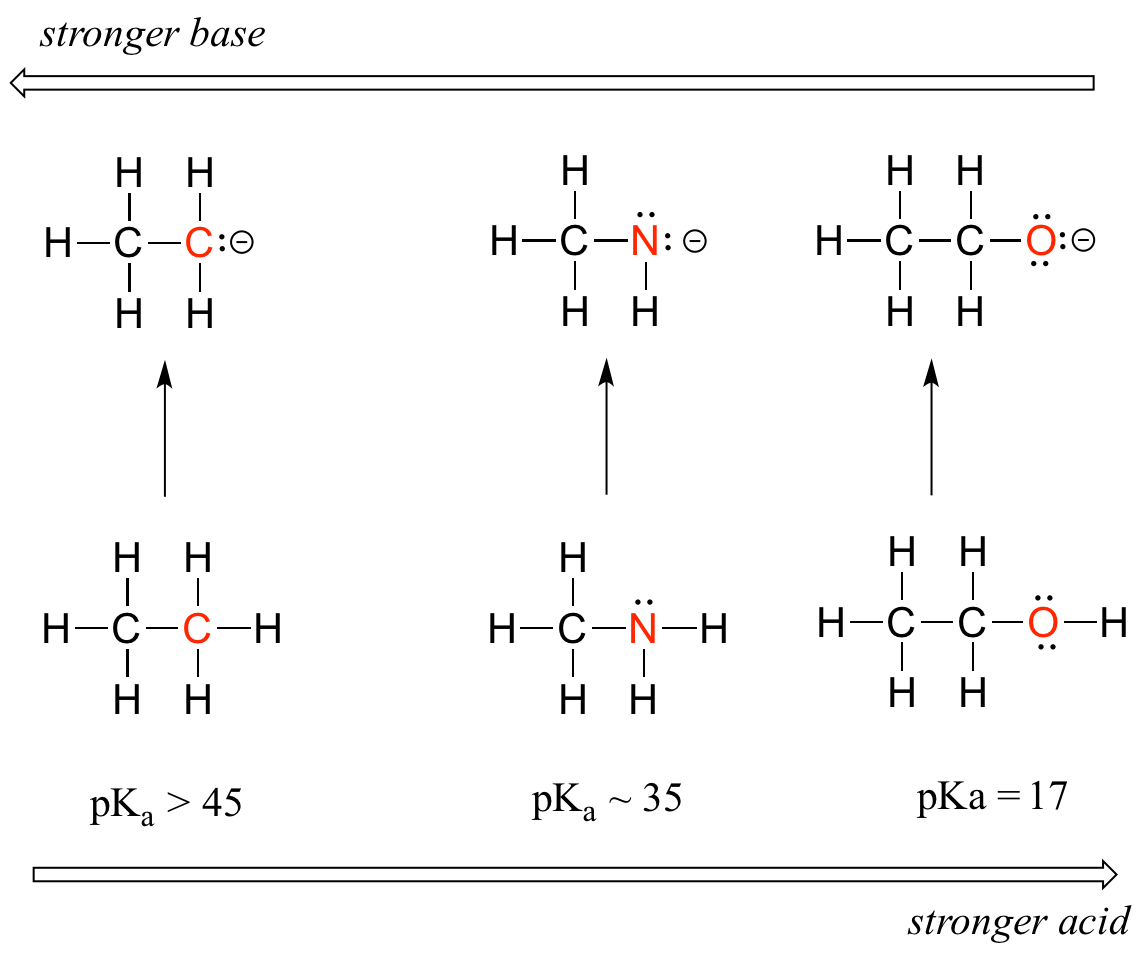

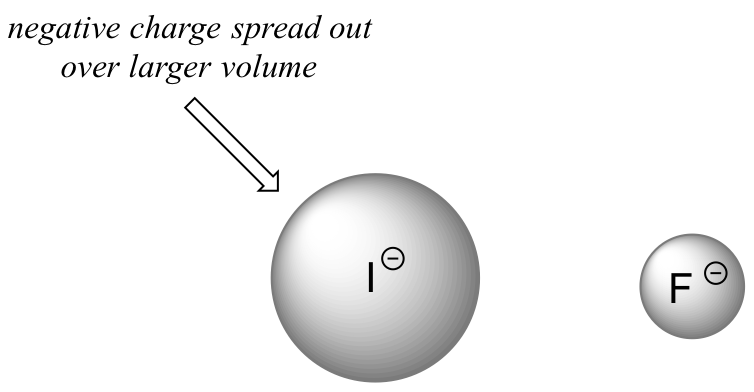
 A Cookie Monster le gustan mucho las galletas.
 A Indiana Jones no le gustan los serpientes.
 “¿Te gustan manzanas? ¿Cómo te gustan esas manzanas?”


![Description Dansk: Joseph Marin Kronheims farveillustration (efter George Baxters metode) fra 1880 af Johannes' Åbenbaring 22:17, fra The Sunday at Home: A Family Magazine for Sabbath Reading udgivet af Religious Tract Society. English: Kronheim's Baxter process illustration of Revelation 22:17 (King James' Version), from page 366 of the 1880 omnibus printing of The Sunday at Home. Scanned at 800 dpi. The greyish border around the flowers is a metallic silver ink, however, shininess cannot be reproduced in an electronic medium. Français : Illustration du verset Ap 22,17, de l'apocalypse (version autorisée par le roi Jacques), page 366 de l'édition omnibus du Sunday at home. Version numérisée à 800 dpi. La bordure apparement grisée de l'image est argenté sur l'original, une couleur qui ne peut être fidèlement numérisée. Date 1880 Source The Sunday at Home: A Family Magazine for Sabbath Reading, 1880 [collected volume], London, Religious Tract Society, Paternoster Row, 164 Picadilly. Author Joseph Martin Kronheim (1810-1896) Permission (Reusing this file) Public domain This work is in the public domain in its country of origin and other countries and areas where the copyright term is the author's life plus 70 years or less. Dialog-warning.svg You must also include a United States public domain tag to indicate why this work is in the public domain in the United States. Note that a few countries have copyright terms longer than 70 years: Mexico has 100 years, Jamaica has 95 years, Colombia has 80 years, and Guatemala and Samoa have 75 years. This image may not be in the public domain in these countries, which moreover do not implement the rule of the shorter term. Côte d'Ivoire has a general copyright term of 99 years and Honduras has 75 years, but they do implement the rule of the shorter term. Copyright may extend on works created by French who died for France in World War II (more information), Russians who served in the Eastern Front of World War II (known as the Great Patriotic War in Russia) and posthumously rehabilitated victims of Soviet repressions (more information). This file has been identified as being free of known restrictions under copyright law, including all related and neighboring rights. Other versions File:Joseph Martin Kronheim - The Sunday at Home 1880 - Revelation 22-17 original scan.jpg: Original Scan (JPEG) File:Joseph Martin Kronheim - The Sunday at Home 1880 - Revelation 22-17 original scan.png: Original Scan (Archival PNG) File:Joseph Martin Kronheim - The Sunday at Home 1880 - Revelation 22-17.jpg: Cleaned-up version (JPEG) File:Joseph Martin Kronheim - The Sunday at Home 1880 - Revelation 22-17.png: Cleaned-up version (Archival PNG) POTY Featured picture Wikimedia CommonsWikipedia This is a featured picture on Wikimedia Commons (Featured pictures) and is considered one of the finest images. Cscr-featured.svgSound-icon-empty.svgThis is a featured picture on the English language Wikipedia (Featured pictures) and is considered one of the finest images. If you have an image of similar quality that can be published under a suitable copyright license, be sure to upload it, tag it, and nominate it. العربية | অসমীয়া | Azərbaycanca | Беларуская (тарашкевіца) | বাংলা | Català | Čeština | Cymraeg | Dansk | Deutsch | Zazaki | Ελληνικά | English | Esperanto | Español | Eesti | Euskara | فارسی | Тоҷикӣ | Suomi | Français | Galego | עברית | हिन्दी | Hrvatski | Magyar | Հայերեն | Bahasa Indonesia | Italiano | 日本語 | ქართული | Қазақша | 한국어 | 조선말 | Lëtzebuergesch | Lietuvių | Македонски | മലയാളം | मराठी | Bahasa Melayu | Malti | Plattdüütsch | Nederlands | Norsk nynorsk | Norsk | Polski | Português | Português do Brasil | Română | Русский | Slovenščina | Српски / srpski | Svenska | தமிழ் | ไทย | Tagalog | Türkçe | Татарча/tatarça | Українська | Tiếng Việt | Yorùbá | 中文(简体) | 中文(繁體) | 粵語 | +/− Applications-graphics.svg This is a retouched picture, which means that it has been digitally altered from its original version. Modifications: Cleaned up dirt, stains, small hairs, and other flaws due to age, fixed a few very minor misprints in this particular print, e.g. small ink blobs and slightly incomplete letters. Some selective sharpening.). VI seal Valued image This image has been assessed under the valued image criteria and is considered the most valued image on Commons within the scope: Baxter process illustration. You can see its nomination here.](https://commons.m.wikimedia.org/wiki/File:Joseph_Martin_Kronheim_-_The_Sunday_at_Home_1880_-_Revelation_22-17.jpg#mw-jump-to-license)


![Sister Cities International (SCI) is a nonprofit citizen diplomacy network that creates and strengthens partnerships between communities in the United States and those in other countries, particularly through the establishment of "sister cities". More than 2,000 cities, states and counties are partnered in 136 countries around the world.[1] The organization "strives to build global cooperation at the municipal level, promote cultural understanding and stimulate economic development".[2] As the official organization which links jurisdictions in the U.S. with communities worldwide, Sister Cities International recognizes, registers, and coordinates sister city, county, municipalities, oblasts, prefectures, provinces, regions, state, town, and village linkages. The U.S. sister city program began in 1956 when President Dwight D. Eisenhower proposed a people-to-people, citizen diplomacy initiative. Originally a program of the National League of Cities, Sister Cities International became a separate, nonprofit corporation in 1967, due to the growth and popularity of the U.S. program.](https://i0.wp.com/stoppauseplayfastforwardrewindejectrecord.us/blog1/wp-content/uploads/2018/02/sister-cities.jpg)


 and became


 stoppauseplayfastforwardrewindejectrecorddotnet