Prague is the capital of sex tourism! Masarikovo Rail Station 4.5 Duration: 35:17 Girls don’t like boring guys! Girls just want to have fun! And Denisse which I’ve met close to railway station proved me this once again. She was for the first time in Prague with her boyfriend and she came for parties and fun, but he preferred museums and exhibitions. And this young lady was so disappointed about her boyfriend, that she had nothing against our sex. And can you imagine even her submissive boyfriend said ‘Yes’ to money which I offered him. Modern guys have nothing in common with real brutal guys like me. I lead them to my flat, put his girl on a sofa and took off her top. She had no bra under it and I started to kiss her breasts with passion…
die^~m mentioned news of medical emergencies on airplane which would remind to^nan of trip family took to hawaii (saw jewish-like shop keepers saw india indian doctor friend of to^nddi.nh saw fat guy purportedly native islander
OFFICIAL Somewhere over the Rainbow – Israel “IZ” Kamakawiwoʻole
saw continental newcomer first job as waiter at italian restaurant exclaiming he did not know angst until serving us saw a brief second of wellness on treadmill at hotel) whence to^nddi.nh attended to a medical emergency and we later faced co^ quye^n passing on stairway when we got home …: other trips to hawaii include one on behalf of ibm international business machine for uncle o^ng david lowe’s group (because to^nan’s head was in a daze most of the time he was at ibm to^nan’s conscience is not disturbed should ibm though the exchange was unfair: if ibm has misgiving if to^nan were david to ibm’s goliath or if to^nan was a communist to ibm capitalist then perhaps ibm should speak its mind at any rate to^nan could assure none such for even though to^nan used apple macintosh at home and to^nan had made a cursing gesture at work because his head was in such daze he could hardly work the gesture was not directed at ibm and truly to^nan had wished is wishing and will continue to wish ibm prosper and live well and long) whence there was an early morning encounter with india indian hotel guest from the balcony who also witnessed some coincidental astronomical alignment that would hint that it was no earthly matter … same with the whale …; recently supposedly anh ma^~n went with european friend to hawaii and wine and feast and gained weight all the while ba’c ca^`n had to go to the hospital at home in paris, france; impotence and powerlessness create unintentional “ca` cho+’n” ‘abandonment’ illusions …
It is the only saying that appears in more than one Gospel,[13] and is a quote from Psalms 22:1. This saying is taken by some as an abandonment of the Son by the Father. Other theologians understand the cry as that of one who was truly human and who felt forsaken. Put to death by his foes, very largely deserted by his friends, he may have felt also deserted by God.[20]
Others point to this as the first words of Psalm 22 and suggest that Jesus recited these words, perhaps even the whole psalm, “that he might show himself to be the very Being to whom the words refer; so that the Jewish scribes and people might examine and see the cause why he would not descend from the cross; namely, because this very psalm showed that it was prophetized that He would suffer these things.”[21]
As in “To get stood up” or “To be stood up”
To have gone on a date, except to find that you’ve been left by yourself because your date never showed up.
1. I had a date with a really hot girl last week, but she stood me up after realizing she was way too good for me.
2. My sister got stood up by a jerk last night after going to the restaurant and she had to eat dinner all by herself. She’s never going to see that jerk again!
3. I was really looking forward to my date last night with Jenn. I even made the effort to cook a four-course dinner and light candles in the dining room. But sadly, I got stood up and all my effort was in vain.
4. If you’re stood up by a woman, that might be a sign that she just isn’t interested in you.
) incidences of “abandonment or abandoned behind” involving hawaii had one chicago precedence whence to^nan spent 2 years at fermilab abandoning home and family in ann arbor and pontiac and auburn hills … and one saigon vietnam precedence whence vietnamese refugees and bost people abandoned communist vietnam …
father on the other hand related how mother standing on the stairway said “tu+o+?ng anh cho leo ca^y chu+'” …
more seeming abandonment perhap: recently chu’ ha^n went to hospital and only to^nva(n and thie^n hu+o+ng are around … though of course supposedly there are anh nha^n vi~nh ddi`nh etc. …
as discussed in previous note ‘lotfi’ in regard to bf skinner’s reinforcement, buddha’s noble truth and blaise pascal’s wager are that the world abandons none since the world naturally tends toward “you’re ok/well; i’m ok/well” “muôn loài được bình thường sống lâu; everyone live well and long” …
1In the beginning was the Word, and the Word was with God, and the Word was God. 2The same was in the beginning with God. 3All things were made by him; and without him was not any thing made that was made. 4In him was life; and the life was the light of men. 5And the light shineth in darkness; and the darkness comprehended it not.
…
The Word Made His Dwelling among Us
14And the Word was made flesh, and dwelt among us, (and we beheld his glory, the glory as of the only begotten of the Father,) full of grace and truth. 15John bare witness of him, and cried, saying, This was he of whom I spake, He that cometh after me is preferred before me: for he was before me. 16And of his fulness have all we received, and grace for grace. 17For the law was given by Moses, but grace and truth came by Jesus Christ. 18No man hath seen God at any time; the only begotten Son, which is in the bosom of the Father, he hath declared him.
CBN.comWho is the Holy Spirit? How should we approach Him? What are His attributes? What does the Bible say about Him?
Lets start off with the introduction of the Holy Spirit. Its found right in the first chapter of Genesis in the second verse: “The earth was without form and void; and darkness was on the face of the deep, and the Spirit of God was hovering over the face of the waters. Then God said, ‘Let there be light;’ and there was light.” At the very beginning of Genesis, you have Gods Word, Jesus; you have God the Father; and you have the Holy Spirit: the Trinity all represented in creation.
The interesting part of this is the Hebrew word for spirit. We almost get a little spooky talking about the Holy Ghost, but the Hebrew word behind spirit is ruach, and it means “air in motion.” It is the same word for “breath.” It also means “life.” By resemblance to breath and air in motion, it means “spirit.” Thats where we get the translation, and the Hebrew word contains all those different meanings. If we just leave it with our English word “spirit,” were not getting the full attributes of what the Bible is trying to describe. Its trying to describe that theres a breath involved.
Going back to that first chapter in Genesis, if the Spirit of God was hovering over the face of the deep, and then God said, “Let there be light,” when you speak, its through your breath that the words take form. Just imagine that: God speaking, His breath comes out, and there you have the Word of God, “Let there be light.” That is where the Gospel of John says, “In the beginning was the Word, and the Word was with God, and the Word was God.” They are all separate, but at the same time, they are all one, just as when you breathe and you speak, your words can be one with you.
Lets take this into the New Testament because we have almost the same thing where Jesus is talking about the Holy Spirit. He says, “That which is born of the flesh is flesh, and that which is born of the Spirit is spirit. Do not marvel that I said to you, ‘You must be born again.’ The wind blows where it wishes, and you hear the sound of it, but cannot tell where it comes from and where it goes. So is everyone who is born of the Spirit” (John 3:608, NKJV).
Jesus is talking about the Holy Spirit, and Hes saying it is like wind. When you get into the Greek behind that, the Greek word is pneuma, which again means “a current of air,” “breath,” or a “breeze, ” and again by analogy, “a spirit.” So both the Hebrew and the Greek word are talking about breath. Its talking about wind.
Back in Creation, back in Genesis, youve got how we were made. “And the Lord God formed man of the dust of the ground, and breathed into his nostrils the breath of life; and man became a living being” (Genesis 2:6-7, NKJV). Some translations call that “a living soul.” Its from the breath of God that we actually get our life. And so now you get the linkage of how we were created. How we were created in the image of God is because of our breath, and it is because of the breath of God coming into us.
The same thing happens when we are born of the Spirit. When we are re-born, it is from the breath of God. In the Gospel of John, where He is giving to His disciples the Holy Spirit, just as God breathed on Adam and gave him the breath of life, Jesus breathed on His disciples in John chapter 20: “‘Peace to you! As the Father sent me, I also send you.’ And when He had said this, He breathed on them and said, ‘Receive the Holy Spirit'” (John 20:21-22, NKJV).
The Holy Spirit, the breath of God. When you get into that kind of analogy, you now understand better what the attributes are. Its no longer something spooky, but its something very close to you. Its as close to you as your very breath. The Bible says, “In Him we live and move and have our being.” I love the current praise song that says “You are the air I breathe, Your holy Presence in me.” We can literally breathe in the Presence of God and be filled with the Holy Spirit with our breath.
Jesus didnt just breathe on the disciples 2,000 years ago. Every time we are baptized in the Holy Spirit, it is Gods breath on us. Just imagine that. It is not a one-time thing. I think Christians today have gotten into the baptism of the Holy Spirit as some kind of one event. We have got that in Acts chapter 2, but we fail to look forward to Acts chapter 4 where they get baptized in the Holy Spirit again. It says very clearly in Acts chapter 4 they were all filled with the Holy Spirit as they were in a prayer meeting: “After they prayed, the place where they were meeting was shaken. And they were all filled with the Holy Spirit and spoke the Word of God boldly.” So it is not just in Acts chapter 2; it is also in Acts chapter 4. This means we can be filled with the Spirit continually.
…
Let me conclude with this. Its the conclusion that is found in the 150th Psalm. Its the very last word in Psalms. Its the very last Psalm. There are a 150 of them, and heres the very end of it. It says, “Let everything that has breath praise the Lord. Praise the Lord!”
Let your breath praise the Lord today!
Fig. 2 Part of a bubble-chamber picture from a neutrino experiment performed at the Fermilab (found at the University of Birmingham). A positron in flight annihilate with an electron. The photon that is produced materializes at a certain distance, along the line of flight, resulting a new electron-positron pair (marked with green)The Creation of Adam is a fresco painting by Michelangelo, which forms part of the Sistine Chapel’s ceiling, painted c. 1508–1512. It illustrates the Biblical creation narrative from the Book of Genesis in which God breathes life into Adam, the first man. The fresco is part of a complex iconographic scheme and is chronologically the fourth in the series of panels depicting episodes from Genesis.Michelangelo sistine chapel ceiling facts
vienthao tv show “lo+`i hay y’ dde.p” “no’i thi` de^~ la`m thi` kho'” and others and “lo+`i no”i kho^ng ma^’t tie^`n mua; lu+.a lo+`i ma` no’i cho vu+`a lo`ng nhau” … as mentioned in note lotfi sometimes it’s not easy, it is suggested in that note, for example because producing a note (or other artifacts such as a food dish, fashionable clothing, a building, a car, a piece of art, music, singing, poetry, a sculpture, etc.) like this one might have to exchange the rhythm of one’s breath and hence one’s homeostasis well-being for the rhymes and reasons of the note or the artifact … of course someone on tv movie recently mention 2 x 2 = 4 over and above the current delta system triumvirate such as america germany japan … those 3 or 4 are made possible by the people (presumably who is past letting their hormonal have the better of them like the buddha escaping into the forest in the dqrkmof the night wway from the courtesans to find an escape for all) mentioned in note lotfi for example the ones wearing plaid who often have ‘tu’ turned themselves into monks and nuns by ‘nailing’ “gluing” themselves into a rut or corner of some kind like positions on assembly line for the good of all … “one for all and all for one” …to such an extent that they become experts at whatever it is that their rut entail … and this means that they can often seemingly produce artifacts with ease (chuang-tzu normalization below is “daily”) all the while maintain their wellness well being the rhythm of the artifact production become one for “you’re ok/well; i’m ok/well” with the rhythm of their breath …
watched this in michigan did not meant this quote to be a commentary on communist vietnam general vo nguyen giap only to be one view of the monks and nuns for behind-the-scene appreciation that people are people everywhere … always had wished [after all in quyen/quynh quy ~ giap
] always will wish general vo nguyen giap and president nguyen van thieu and vice president ky and even president ngo dinh diem and people like mrs giap live well and long and “you’re ok/well; i’m ok/well” “muôn loài được bình thường sống lâu; everyone live well and long”
Lucy and Ethel wrap chocolates!
Laverne & Shirley Season 2 Opening and Closing Credits and Theme Song
Submitted photo by Ed Krauter/ Giap Thi Byers, left, of Seymour stands with her son, Tony Nguyen, who now lives in Oakland, California. Nguyen directed the documentary “Giap’s Last Day at the Ironing Board Factory” that is a part of this year’s Indy Film Fest. Part of it was filmed in Seymour, where Byers worked at Home Products International Inc. SUBMITTED by Ed Krauter
A few years ago, while visiting a farmers market in Oakland, California, Giap Thi Byers and her son, Tony Nguyen, went to a food stand that used ironing boards as dining tables.
Byers went up to one of the ironing boards and looked at the underside, which piqued her son’s curiosity.
“I walked over, and she looked at me and said, ‘I make these at work,’” said Nguyen, who was shocked by the news. “When I saw her inspecting the ironing board, it just dawned on me that I didn’t really know too much about my mother. I knew she worked in a factory, but I didn’t know exactly what kind of work she did.”
That spurred Nguyen, a 39-year-old filmmaker, to document his mother’s story. It initially was going to be a video for him to share with family and friends and be a memento for his mother.
But after he showed some of the footage to one of his mentors and award-winning filmmaker, Steven Okazaki, Nguyen was encouraged to make it a documentary.
After gaining approval from his mother’s bosses, Nguyen flew from Oakland to Seymour a couple of years ago to film his mother’s last day of working on the assembly line at Home Products International Inc., which is the only ironing board factory remaining in America.
“Giap’s Last Day at the Ironing Board Factory,” a half-hour documentary directed by Nguyen with producing and editing by Okazaki, will have its Midwest premiere at Indy Film Fest in Indianapolis as part of the Long Goodbye Short Films program. It will be shown at 11 a.m. Sunday and 6:30 p.m. Wednesday in the Deboest Lecture Hall at the Indianapolis Museum of Art.
Byers, who still lives in Seymour, and Nguyen, who is flying in from Oakland, will attend the showing and answer questions at the end.
The film also tells the story of how Byers, who was a Vietnamese refugee in 1975 when she fled the country after the fall of Saigon, ended up in Seymour. She was pregnant with her son at the time, and the film follows his childhood in Seymour.
This past spring, the film was shown at a documentary festival in Montana. It also was shown at other film festivals, including Los Angeles, San Francisco and Washington, D.C. In San Francisco, Nguyen won the Loni Ding Award in Social Issue Documentary.
Nguyen said his mother saw an early cut of the film, but Indianapolis will be the first time for her and other family members to see it together on the big screen. Nguyen’s sister, Kimberly Tran, who lives in Seymour, also is in the movie. He said he has several other family members who live in the area.
The film is a part of the Hoosier Lens series, which involves narrative or documentary films with strong production ties to Indiana. It cost more than $100,000 to make.
“I’m really excited about screening in Indiana and for the premiere to be at the Indy Film Fest,” said Nguyen, who visits the Hoosier State at least once a year. “I think that festival is a wonderful venue to showcase the best films out there, so I feel really honored to be a part of it.”
Several years after graduating from Seymour High School in 1994, Nguyen became a self-taught filmmaker. This is his second film. His first, an hourlong murder-mystery titled “Enforcing the Silence,” came out in 2011.
“Giap’s Last Day at the Ironing Board Factory” is the first of a three-part autobiographical series Nguyen has dubbed “Who Are You and What Are You Doing Here?”
That stems from the feelings Nguyen and his family felt in 1975 when they were the first Vietnamese refugee family in Seymour. Also coming to America were Byers’ brother and his wife and kids and Nguyen’s grandmother.
“A lot of Americans didn’t really want a lot of the refugees to come over because it was going to be such an influx of immigrants,” he said.
But there were some, especially religious people, who felt Americans needed to help the Vietnamese, he said.
Refugee settlement camps were set up around the country, and Nguyen and his family wound up in Pennsylvania. At the time, former State Sen. Joseph Corcoran led a committee at St. Ambrose Catholic Church in Seymour, and they decided to sponsor Byers and her family.
Corcoran helped Byers get a job, and she first worked at the former Excello Shirt Factory before spending 24 years at Home Products International.
Now 69, Byers is enjoying retired life. This past winter, she went to Vietnam for the first time since 1975.
“It was the first time for her to be together with all of her siblings in one place,” Nguyen said. “She still has two siblings that live there.”
Once the film goes through the festival phase, Nguyen said, the Center for Asian American Media will distribute it to be broadcast on PBS.
If you go
What: “Giap’s Last Day at the Ironing Board Factory” documentary showing during the Indy Film Fest
When: 11 a.m. Sunday and 6:30 p.m. Wednesday
Where: The Deboest Lecture Hall at the Indianapolis Museum of Art, 4000 Michigan Road, Indianapolis
Synopsis: In 1975, a seven-months pregnant Vietnamese refugee, Giap, escapes Saigon in a boat and, within weeks, finds herself working on an assembly line in Seymour. Thirty-five years later, her aspiring filmmaker son, Tony, decides to document her final day of work at the last ironing board factory in America. It turns into a painful but loving journey.
What Is the Respiratory System’s Role in Homeostasis?
Written by Joseph West
Most technological systems are primitive compared to the human body’s ability to precisely regulate numerous critical variables and intricate biological processes. This remarkable capacity to maintain a consistent internal environment is referred to as homeostasis. The respiratory system — which comprises the nose, the mouth, the lungs and several other organs involved in breathing — is involved in various important aspects of homeostasis.
Oxygen In, Carbon Dioxide Out
The respiratory system participates in a variety of homeostatic processes, and the two most important of these are maintaining pH and regulating gas exchange. Both of these homeostatic functions are related to the biochemical roles played by the two primary respiratory gases, carbon dioxide and oxygen. Oxygen enters the body as a component of the air we breathe and is processed by the lungs. Carbon dioxide, which is produced as a byproduct of cellular metabolism, travels through the bloodstream to the lungs and is exhaled.
Carbon dioxide and oxygen
The activity of the human body is a manifestation of the combined labors of trillions of microscopic cells. The body needs food to eat and air to breathe, and the requirements of individual cells are similar. The fundamental reaction that enables cellular life transforms glucose and oxygen into carbon dioxide, water and energy. This is why the supply of oxygen in the bloodstream is a critical aspect of homeostasis — with insufficient oxygen, cells cannot make energy. Carbon dioxide must also be carefully managed so that this waste product does not accumulate to problematic levels. By inhaling and exhaling, the respiratory system is able to take in oxygen and release carbon dioxide, and thus it plays a dominant role in homeostatic gas exchange.
The Proper pH
The acidity or alkalinity of a substance is measured by the pH scale, which typically ranges from 0 to 14. Many biological structures and processes are designed to operate within a narrow pH range. Proteins, for example, experience detrimental structural changes when exposed to an environment with improper pH. The pH of any substance depends on its concentration of hydrogen ions. The concentration of hydrogen ions in blood depends on the concentration of carbon dioxide, which is directly influenced by the respiratory system. Thus, the respiratory system plays a major role in maintaining the human bloodstream at the optimal pH.
Additional Respiratory Roles
The respiratory system participates in several other processes related to the body’s ability to remain consistently healthy and functional despite internal and external stresses. Exhaled breath, which is warm and contains moisture, is a means of regulating the body’s water content and internal temperature, and the movement of the lungs contributes to optimal blood circulation. The respiratory tract influences the composition of blood passing through the lungs, and it protects the body from the numerous microbes and contaminants that are inhaled along with air.
Joseph West has been writing about engineering, agriculture and religion since 2006. He is actively involved in the science and practice of sustainable agriculture and now writes primarily on these topics. He completed his copy-editing certificate in 2009 and holds a Bachelor of Science degree from the University of California-San Diego.
Photo Credits
Comstock Images/Stockbyte/Getty Images
so, in view of the risks perhaps one should adopt blaise pascal’s wager and try to produce rhymed-and-reasoned arts/artifacts that fulfill “art/artifact is ok/well; artist is ok/well” “you’re ok/well; i’m ok/well” “muôn loài được bình thường sống lâu; everyone live well and long” … which mean neither the the art/artifact nor the artist will not attract undue attention but are both “normalized” in the sense people will “have eyes/ears/mouth but as though could see/hear/say no evil artists/arts/artifacts only see/hear/say good/goodness/godness/godliness/god” …
James Legge’s translation of the complete Chuang Tzu (Zhuangzi
27 – Yü Yen, metaphorical language
1: Men assent to and praise views which agree with their own
Of my sentences nine in ten are metaphorical; of my illustrations seven in ten are from valued writers. The rest of my words are like the water that daily fills the cup, tempered and harmonised by the Heavenly element in our nature.
The nine sentences in ten which are metaphorical are borrowed from extraneous things to assist (the comprehension of) my argument. (When it is said, for instance),
‘A father does not act the part of matchmaker for his own son,’ (the meaning is that) ‘it is better for another man to praise the son than for his father to do so.’
The use of such metaphorical language is not my fault, but the fault of men (who would not otherwise readily understand me).
Men assent to views which agree with their own, and oppose those which do not so agree. Those which agree with their own they hold to be right, and those which do not so agree they hold to be wrong. The seven out of ten illustrations taken from valued writers are designed to put an end to disputations. Those writers are the men of hoary eld, my predecessors in time. But such as are unversed in the warp and woof, the beginning and end of the subject, cannot be set down as of venerable eld, and regarded as the predecessors of others. If men have not that in them which fits them to precede others, they are without the way proper to man, and they who are without the way proper to man can only be pronounced defunct monuments of antiquity.
Words like the water that daily issues from the cup, and are harmonised by the Heavenly Element (of our nature), may be carried on into the region of the unlimited, and employed to the end of our years. But without words there is an agreement (in principle). That agreement is not effected by words, and an agreement in words is not effected by it. Hence it is said,
‘Let there be no words.’
Speech does not need words. One may speak all his life, and not have spoken a (right) word; and one may not have spoken all his life, and yet all his life been giving utterance to the (right) words. There is that which makes a thing allowable, and that which makes a thing not allowable. There is that which makes a thing right, and that which makes a thing not right. How is a thing right? It is right because it is right. How is a thing wrong? It is wrong because it is wrong. How is a thing allowable? It is allowable because it is so. How is a thing not allowable? It is not allowable because it is not so. Things indeed have what makes them right, and what makes them allowable. There is nothing which has not its condition of right; nothing which has not its condition of allowability. But without the words of the (water-) cup in daily use, and harmonised by the Heavenly Element (in our nature), what one can continue long in the possession of these characteristics?
All things are divided into their several classes, and succeed to one another in the same way, though of different bodily forms. They begin and end as in an unbroken ring, though how it is they do so be not apprehended. This is what is called the Lathe of Heaven; and the Lathe of Heaven is the Heavenly Element in our nature.
may “you’re ok/well; i’m ok/well” “muôn loài được bình thường sống lâu; everyone live well and long” …
“a well/good eye for a well/good eye”
there is room enough in the wording for adjectives and adverbs etc…. and therefore for the best of blaise pascal’s wager … not “you’re not ok/well; i’m not ok/well” but “you’re ok/well; i’m ok/well” …
Exodus 21: 23And if any mischief follow, then thou shalt give life for life, 24 [good] Eye for [good] eye, [good] tooth for [good] tooth, [good] hand for [good] hand, [good] foot for [good] foot, 25Burning [stopped] for burning [stopped], wound [healed] for wound [healed], stripe [healed] for stripe [healed].
– Ananda, có luôn luôn nghĩa là có cái gì, không luôn luôn nghĩa là không cái gì. Tiếng có và tiếng không tự chúng không có nghĩa gì cả.
– Xin Thế Tôn giải rõ cho chúng con.
– Này nhé: không bao giờ cũng là không một cái gì, ví dụ không chợ búa, không trâu bò, không làng xóm, không có các vị khất sĩ. Ta không thể nói không một cách suông cụt được.
may “you’re ok/well; i’m pk/well” “muôn loài được bình thường sống lâu; everyone live well and long” …
Aarti is derived from the Tamil word IAST, aram+thee. Aram(ஆரம்) means circular and thee means fire, which means something that removes rātrī, darkness (or light waved in darkness before an icon).[1][2][3] Another word from which Aarti is thought to be derived is the Sanskrit word Aaraartikyam (Sanskrit: आरार्तिक्यं).[citation needed] A Marathi language reference says[4] it is also known as Mahaneeranjana (Sanskrit: महानीराञ्जना)[5]
Aarti is said to have descended from the Vedic concept of fire rituals, or homa. In the traditional aarti ceremony, the flower represents the earth (solidity), the water and accompanying handkerchief correspond with the water element (liquidity), the ghee or oil lamp represents the fire component (heat), the peacock fan conveys the precious quality of air (movement), and the yak-tail fan represents the subtle form of ether (space). The incense represents a purified state of mind, and one’s “intelligence” is offered through the adherence to rules of timing and order of offerings. Thus, one’s entire existence and all facets of material creation are symbolically offered to the Lord via the aarti ceremony.[6] The word may also refer to the traditional Hindu devotional song that is sung during the ritual.
Aarti can be an expression of many things including love, benevolence, gratitude, prayers, or desires depending on the object it is done to/ for. For example, it can be a form of respect when performed to elders, prayers when performed to deities, or hope when performed for homes or vehicles. Emotions and prayers are often silent while doing Aarti, but this is determined by the person carrying out the ritual or the holiday involved. It’s also believed that goodwill and luck can be taken through symbolic hand movements over the flame.
When aarti is performed, the performer faces the deity of god (or divine element, e.g. Ganges river) and concentrates on the form of god by looking into the eyes of the deity (it is said that eyes are the windows to the soul) to get immersed. The flame of the aarti illuminates the various parts of the deity so that the performer and onlookers may better see and concentrate on the form. Aarti is waved in circular fashion, in clockwise manner around the deity. After every circle (or second or third circle), when Aarti has reached the bottom (6–8 o’clock position), the performer waves it backwards while remaining in the bottom (4–6 o’clock position) and then continues waving it in clockwise fashion. The idea here is that aarti represents our daily activities, which revolves around god, a center of our life. Looking at god while performing aarti reminds the performer (and the attendees of the aarti) to keep god at the center of all activities and reinforces the understanding that routine worldly activities are secondary in importance. This understanding would give the believers strength to withstand the unexpected grief and keeps them humble and remindful of god during happy moments. Apart from worldly activities aarti also represents one’s self – thus, aarti signifies that one is peripheral to godhead or divinity. This would keep one’s ego down and help one remain humble in spite of high social and economic rank. A third commonly held understanding of the ritual is that aarti serves as a reminder to stay vigilant so that the forces of material pleasures and desires cannot overcome the individual. Just as the lighted wick provides light and chases away darkness, the vigilance of an individual can keep away the influence of the material world.[8]
Aarti is not only limited to god. Aarti can performed not only to all forms of life, but also inanimate objects which help in progress of the culture. This is exemplified by performer of the aarti waving aarti to all the devotees as the aarti comes to the end – signifying that everyone has a part of god within that the performer respects and bows down to. It is also a common practice to perform aarti to inanimate objects like vehicles, electronics etc. at least when a Hindu starts using it, just as a gesture of showing respect and praying that this object would help one excel in the work one would use it for. It is similar to the ritual of doing auspicious red mark(s) using kanku (kumkum) and rice.
A Ram Sam Sam | Mother Goose Club Playhouse Kids Video
recent note “put out or put up” … “a ram sam sam gulik rafiq” … “win goat sa’m ho^’i [because] gullible friend ra/out kho^ng nha^~n” gauri anandi jadit jadit’s family gauri’s family all have personal nha^~n forbearance (“each has his/her own cross to bear”: Matt 10:38, jesus said: And he that taketh not his cross, and followeth after me, is not worthy of me.) and if each does not realize this then each might very possibly come to regret when find out the other’s nha^~n …
U+5FCD, tổng 7 nét, bộ tâm 心 + 3 nét
phồn & giản thể, hình thanh & hội ý
Từ điển phổ thông
1. chịu đựng, nhẫn nhịn
2. nỡ, đành
Từ điển trích dẫn
1. (Động) Nhịn, chịu đựng. ◎Như: “kiên nhẫn” 堅忍 vững lòng chịu đựng, “dong nhẫn” 容忍 khoan dung. ◇Liêu trai chí dị 聊齋志異: “Nữ nhẫn tiếu nhi lập, sanh ấp chi” 女忍笑而立, 生揖之 (Anh Ninh 嬰寧) Cô gái nhịn cười mà đứng đó, sinh vái chào.
2. (Động) Nỡ, làm sự bất nhân mà tự lấy làm yên lòng. ◎Như: “nhẫn tâm hại lí” 忍心害理 nỡ lòng làm hại lẽ trời. ◇Đỗ Phủ 杜甫: “Nam thôn quần đồng khi ngã lão vô lực, Nhẫn năng đối diện vi đạo tặc” 南村群童欺我老無力, 忍能對面為盜賊 (Mao ốc vi thu phong sở phá ca 茅屋為秋風所破歌) Lũ trẻ xóm nam khinh ta già yếu, Nhẫn tâm làm giặc cướp ngay trước mặt ta.
Từ điển Thiều Chửu
① Nhịn, như làm việc khó khăn cũng cố làm cho được gọi là kiên nhẫn 堅忍, khoan dong cho người không vội trách gọi là dong nhẫn 容忍, v.v.
② Nỡ, làm sự bất nhân mà tự lấy làm yên lòng gọi là nhẫn. Như nhẫn tâm hại lí 忍心害理 nỡ lòng làm hại lẽ trời.
Từ điển Trần Văn Chánh
① Nhịn, nén, chịu đựng: 是可忍,孰不可忍 Quyết không thể nhịn được!;
② Tàn nhẫn, nỡ lòng, đang tâm: 忍心害理 Nỡ lòng hại lẽ trời; 忍暴滋甚 Ngày một thêm tàn bạo (Hậu Hán thư); 殘忍 Tàn nhẫn, ác, tàn ác.
“A Ram Sam Sam” is a popular song all over the world. The phrase “a ram sam sam” has no actual meaning.
A Ram Sam Sam
A Ram Sam Sam
Action Song
Action Song
(Moroccan Arabic)
(English)
A ram sam sam, a ram sam sam
Guli guli guli guli
Guli ram sam sam
A ram sam sam, a ram sam sam
Guli guli guli guli
Guli ram sam sam
A rafiq, a rafiq
Guli guli guli guli
Guli ram sam sam
A rafiq, a rafiq
Guli guli guli guli
Guli ram sam sam
A ram sam sam, a ram sam sam
Tell me, tell me, tell me,
Tell me, ram sam sam
A ram sam sam, a ram sam sam
Tell me, tell me, tell me,
Tell me, ram sam sam
Friend, friend,
Tell me, tell me, tell me,
Tell me, ram sam sam
Friend, friend,
Tell me, tell me, tell me,
Tell me, ram sam sam.
Notes
Guli is pronounced as “gool-lee”.
The Arabic word “rafiq” means companion, friend, mate, comrade or colleague.
According to the book, “Daily Life in the Medieval Islamic World” (2005) by James E. Lindsay, in Medieval times, “rafiq” referred to a traveling companion. People always traveled with a rafiq for safety.
Game Instructions
-On the phrase, “A ram sam sam” – Clap hands on your lap.
-On “Guli guli” – Spin hand over hand in a circle.
-On “A rafiq” – Hold hands apart miming that they’re pulling apart something gooey.
The lyrics are :A ram sam sam, a ram sam samGuli guli guli guli guli ram sam samA ram sam sam, a ram sam samGuli guli guli guli guli ram sam samA rafiq, a rafiqGuli guli guli guli guli ram sam sam A rafiq, a rafiqGuli guli guli guli guli ram sam sam
A Ram Sam Sam is a folk song originally from Morocco. The phrase “a ram sam sam” has no real meaning. “Guli” means “tell me/you say to me” in Moroccan Arabic. “ A rafiq” means “friend/travelling companions”. Its fun to coordinate actions with singing.
I do the following actions with the words, as learned during teacher training.
“a ram sam sam”: Fists pounding, right over left, then left over right
“guli guliguli guliguli”: spinning index fingers on either side of the head
“a rafiq”: Pulling hands apart as if something is gooey
viet tv commentator quoted the following as if to remind the rhyme “ram” …
Thirty years ago there were 50,000 Christians in south-eastern Turkey speaking a dialect of Aramaic – the language of Christ. Now there are 2,500. Talking to one of them, the BBC’s Jeremy Bristow learned that instead of Three Kings, there might actually have been 12.
Fresh out of his farm clothes, Habib the mayor now sits at his table in a crisply ironed shirt. He’s a gentle, almost diffident man in his early 50s, but he can form his letters with a calm assurance. He’s the custodian of a dying language.
Dipping his pen into the inkwell, he momentarily pauses, then starts to write. The broad nib moves right to left in neat black flicks and dashes, some vertical, some slanted, some horizontal, often with a deft flourish at the end. Sometimes Habib fashions a triangle, sometimes a circle, sometimes he adorns the shapes with a dot, indicating a vowel.
Habib writes Syriac
The script that is emerging before me looks like Arabic. It’s not… or not quite. It’s Syriac, a dialect of ancient Aramaic.
“Look, let me show you,” he says. “This letter is Olaf in our script, Alef in Arabic. See here, this letter is Lomad, it resembles Lam in Arabic. And He is Ha. Written together, they spell Aloho in Aramaic, the equivalent of Allah in Arabic. So many words from the Koran come from Aramaic.”
For 1,000 years, Aramaic was written and spoken right across Middle East. It was the language spoken by Jesus and his followers. The Jewish holy book, the Talmud, was written in Aramaic, and scholars say Arabic script is derived from it. But now, if Aramaic was an animal species, it would be declared critically endangered.
Habib, a Syriac Christian, is one of just 2,500 Syriacs who still live in this remote part of south-east Turkey. They call this region, their homeland, Tur Abdin. In Aramaic this means the Mount of the Servants of God.
How many Kings / Magi / Wise men?
The Biblical source of the story of the wise men is the gospel of Matthew – Matthew doesn’t say how many there were, he just says they brought three gifts: gold, frankincense and myrrh
St Jacob refers to 12 kings
Michael the Syrian (St Michael the Great) names 11 kings: Dahdandur, son of Artaban; Shuf, son of Gudfar; Arshak, son of Mahduq; Zarwand, son of Warwadud; Aryo, son of Kasro; Artahshasht, son of Hamit; Ashtanbuzan, son of Shishron; Mahduq, son of Hoham; Ahshiresh, son of Sahban; Sardanh, son of Baldan; Marduk, son of Bel
Melchior, Balthasar and Caspar belong to a different tradition
All of the stories are thought likely to be legends
Once upon a time there was a flourishing Christian civilisation here. The landscape boasts hundreds of monasteries and churches – many now in ruins, many surmounted by mosques.
Take for example, Habib’s village of Hah, where he’s mayor, or Anitli as it is known in Turkish. A mere 20 Syriac families now live among the ruins of what was once a cathedral city with thousands of houses. Their homes are built among the remains of great buildings. Crumbling walls and giant archways loom above them.
A ruined cathedral in Hah
Six hundred years ago Hah was sacked by the armies of Timur the Lame, better known in English history as Tamberlaine. This was just one catastrophe in a long history of intermittent persecutions and occasional acts of terror that religious minorities like the Syriacs have had to endure in this part of the Middle East.
Habib’s family have survived by holding out in their fortress-like farmhouse that still stands above the village. Five other related families also live within this bastion, towering walls on the outside, farmyards within.
Habib says his family, the Beth Henno, have been here since records began. But so many Syriac Christians have left for Istanbul, for Sweden, Germany, Australia. In the last three decades they’ve been caught up in the brutal war between the Turkish state and the Kurdish Workers Party, the PKK. They’ve been threatened and driven out by both sides. In the 1980s 50,000 lived in Tur Abdin, now less than 5% of that number remain.
Habib and his wife, Leman, are doing their best to boost the numbers, raising seven children on their farm.
We walk down through the village, in the shadow of crumbling towers and gaping vaults, entering the courtyard of the Church of the Yoldath Aloho, the Mother of God. As I enter the nave I know I am standing in history. Is that the smell of ancient cement, or is it rotting plaster?
The walls and niches are covered in a riot of carved decorations covering arches that support a soaring octagonal dome. It’s here that Habib and the villagers still come to chant the hymns of Saint Ephraim, as their ancestors have done since the Church was built, nearly 1,500 years ago.
Find out more
From Our Own Correspondent has insight and analysis from BBC journalists, correspondents and writers from around the world
They will be here at Christmas. Habib tells me a local legend. Just over 2,000 years ago an auspicious star appeared in the night sky. Twelve kings from the East gathered here at Hah. A select three went on to Bethlehem bearing gifts to greet the newborn Christ. A grateful Mary, mother of God, gave them a piece of the baby’s swaddling clothes. When the three kings returned to Hah, the holy baby-wrap turned to gold. Awed by this miracle, the Kings founded this church.
As we walk back in to the courtyard, I hear the village children reciting, Aramaic in class. I ask Habib, what the future is for the Syriac community here in Tur Abdin, the Mount of the worshipers of God. “We won’t give up,” he says. “But I fear, in the end, we are too few.”
eagles song “lying eyes” … tv co dau 8 tuoi the eyes of asa’s guru and the eyes of the woman thought to be a witch by the villagers …
Description English: A4-sized poster filled with the first 10,000 digits of π. 10,001 digits are actually listed on the poster – this is because of the 3 preceding the decimal mark. They were checked against the following sources: [1], [2], [3] Date 2 May 2011 Source Own work Author User:LoStrangolatore Inkscape-un.svg This W3C-unspecified vector image was created with Inkscape. Licensing Edit w:en:Creative Commons attribution share alike This file is licensed under the Creative Commons Attribution-Share Alike 3.0 Unported license. You are free: to share – to copy, distribute and transmit the work to remix – to adapt the work Under the following conditions: “can’t judge a book by its cover” can’t judge the guru or the village outcast by their eyes … just as outwardly or by their “eyes” one digit of pi = 3.14159265… might be either the same or different from another digit yet the important thing is that there is the same “unsearchable””randomness” that rules them all … underneath the eyes of the guru and the outcast is the same good god divinity … they all have the same good god buddha/brahma nature inside/underneath … “it’s all good” … cannot judge by mere appearances …
All is best, though we oft doubt, 25
What th’ unsearchable dispose
Of highest wisdom brings about,
And ever best found in the close.
Oft he seems to hide his face,
But unexpectedly returns 30
And to his faithful champion hath in place
Bore witness gloriously;
john milton, samson agonist
there’s a divinity that shapes our ends roughhewn them how we will …
You Belong To Me – The Doobie Brothers … the blippi excavator song that bi watches sounds like the police song “every breath you take” …
gauri confronts jadit’s family about her funding getting cut … before she went perhaps sivani perhaps third-eye-blind “aunt’ cunda/kunda (perhaps same name as person giving buddha his last supper) perhaps her father or mother or her teacher baba suggested something to the effect “you would have no self-respect if you don’t forbear (“turn the other cheek”) …” …
U+5FCD, tổng 7 nét, bộ tâm 心 + 3 nét
phồn & giản thể, hình thanh & hội ý
Từ điển phổ thông
1. chịu đựng, nhẫn nhịn
2. nỡ, đành
Từ điển trích dẫn
1. (Động) Nhịn, chịu đựng. ◎Như: “kiên nhẫn” 堅忍 vững lòng chịu đựng, “dong nhẫn” 容忍 khoan dung. ◇Liêu trai chí dị 聊齋志異: “Nữ nhẫn tiếu nhi lập, sanh ấp chi” 女忍笑而立, 生揖之 (Anh Ninh 嬰寧) Cô gái nhịn cười mà đứng đó, sinh vái chào.
2. (Động) Nỡ, làm sự bất nhân mà tự lấy làm yên lòng. ◎Như: “nhẫn tâm hại lí” 忍心害理 nỡ lòng làm hại lẽ trời. ◇Đỗ Phủ 杜甫: “Nam thôn quần đồng khi ngã lão vô lực, Nhẫn năng đối diện vi đạo tặc” 南村群童欺我老無力, 忍能對面為盜賊 (Mao ốc vi thu phong sở phá ca 茅屋為秋風所破歌) Lũ trẻ xóm nam khinh ta già yếu, Nhẫn tâm làm giặc cướp ngay trước mặt ta.
Từ điển Thiều Chửu
① Nhịn, như làm việc khó khăn cũng cố làm cho được gọi là kiên nhẫn 堅忍, khoan dong cho người không vội trách gọi là dong nhẫn 容忍, v.v.
② Nỡ, làm sự bất nhân mà tự lấy làm yên lòng gọi là nhẫn. Như nhẫn tâm hại lí 忍心害理 nỡ lòng làm hại lẽ trời.
Từ điển Trần Văn Chánh
① Nhịn, nén, chịu đựng: 是可忍,孰不可忍 Quyết không thể nhịn được!;
② Tàn nhẫn, nỡ lòng, đang tâm: 忍心害理 Nỡ lòng hại lẽ trời; 忍暴滋甚 Ngày một thêm tàn bạo (Hậu Hán thư); 殘忍 Tàn nhẫn, ác, tàn ác.
1Though I speak with the tongues of men and of angels, and have not charity, I am become as sounding brass, or a tinkling cymbal. 2And though I have the gift of prophecy, and understand all mysteries, and all knowledge; and though I have all faith, so that I could remove mountains, and have not charity, I am nothing. 3And though I bestow all my goods to feed the poor, and though I give my body to be burned, and have not charity, it profiteth me nothing.
4Charity suffereth long, and is kind; charity envieth not; charity vaunteth not itself, is not puffed up, 5Doth not behave itself unseemly, seeketh not her own, is not easily provoked, thinketh no evil; 6Rejoiceth not in iniquity, but rejoiceth in the truth; 7Beareth all things, believeth all things, hopeth all things, endureth all things.
8Charity never faileth: but whether there be prophecies, they shall fail; whether there be tongues, they shall cease; whether there be knowledge, it shall vanish away. 9For we know in part, and we prophesy in part. 10But when that which is perfect is come, then that which is in part shall be done away. 11When I was a child, I spake as a child, I understood as a child, I thought as a child: but when I became a man, I put away childish things. 12For now we see through a glass, darkly; but then face to face: now I know in part; but then shall I know even as also I am known. 13And now abideth faith, hope, charity, these three; but the greatest of these is charity.
But there’s a danger in loving somebody to much,
and it’s bad when you know it’s your heart you can’t trust.
There’s a reason why people don’t stay where they are.
Baby, sometimes love just ain’t enough.
Now, I could never change you,
I don’t want to blame you.
Baby, you don’t have to take the fall
patti smith, “Sometimes Love Just Ain’t Enough”
truck “clock freight” (perhaps “freight” ~ “fright”/”afraid”/”fear”; “clock” ~ “time”) spotted outside of safeway grocery a week or two ago … after love and anger, fear means you’re very close to timelessness (song at 99 ranch sounds like “close to you” 1/11/2019) and
timelessness is “you’re ok/well; i’m ok/well” “muôn loài được bình thường sống lâu; everyone live well and long” …
Jannie Pretend Play w/ Kids Make Up Toys & Dress Up as Cute Disney Princesses
(sounds like the opposite of fleetwood mac song landslide which describes how fear is change is time [which is “sensed” through the buddha’s noble truth] and fearless is unchanging is timelessness … “there’s nothing to fear/change but fear/change itself” franklin roosevelt … actually you’re fearing fear you don’t have to fear what’s not fear/fearful … “love actually” … it’s actually is the sensible noble truth of time trying to approach/become the insensible nobility of timelessness …
I took my love, and I took it down
I climbed a mountain, and I turned around
And I saw my reflection in the snow-covered hills
‘Til the landslide brought me down
Oh, mirror in the sky, what is love?
Can the child within my heart rise above?
Can I sail through the changin’ ocean tides?
Can I handle the seasons of my life?
Mm I don’t know, no uh uh I don’t know
Well, I’ve been afraid of changin’
‘Cause I built my life around you
But time makes you bolder
Children get older
And I’m getting older too, oh yes
I’m getting older too
So https://www.songfacts.com/facts/fleetwood-mac/landslide
This song is about a father-daughter relationship. Stevie wrote it on the guitar in about five minutes in Aspen, Colorado. She was surrounded by mountains and thinking, “Wow, all this snow could just come tumbling down around me and there is nothing I can do about it.” When she feels like this she just goes to a room and writes her thoughts down so she can read it and ponder what she has written.
Nicks said of this song: “My dad did have something to do with it, but he absolutely thinks that he was the whole complete reason it was ever written. I guess it was about September 1974, I was home at my dad and Mom’s house in Phoenix, and my father said, ‘You know, you really put a lot of time into this [her singing career], maybe you should give this six more months, and if you want to go back to school, we’ll pay for it. Basically you can do whatever you want and we’ll pay for it – I have wonderful parents, and I went, ‘cool, I can do that.’ Lindsey and I went up to Aspen, and we went to somebody’s incredible house, and they had a piano, and I had my guitar with me, and I went into their living room, looking out over the incredible Aspen skyway, and I wrote ‘Landslide.’ Three months later, Mick Fleetwood called. On New Year’s Eve, 1974, called and asked us to join Fleetwood Mac. So it was three months, I still had three more months to go to beat my six month goal that my dad gave me.”
Suggestion credit:
Mike – Mountlake Terrace, Washington – USA, for above 2
Nicks wrote this the night before her dad, who was the president of Greyhound Bus Lines, was operated on at the Mayo Clinic.
Suggestion credit:
Todd – Atlanta, GA
Lindsey and Stevie were recording as a duo using the name Buckingham-Nicks before they were asked to join Fleetwood Mac. They had already released an album and were planning to include this on their next one. When Stevie wrote “Landslide” and “Rhiannon,” Lindsey was on the road with the Everly Brothers backing them up on guitar.
Reflecting on this song in 2014, Nicks told the New York Times: “I wrote ‘Landslide’ in 1973, when I was 27, and I did already feel old in a lot of ways. I’d been working as a waitress and a cleaning lady for years. I was tired.”
Fleetwood Mac – Landslide (Official Music Video) “man must endure the going hence even as the coming hither. ripeness/chi’n/china is all” … “the more things change the more they remain the same”: “standing wave”: out of many changes/waves one unchanging remains … e pluribus unum … song “i am who i am; you are who you are” … bible “i am who/that i am” … “thu+’c khuy mo+’i bie^’t dde^m da`i; o+? la^u mo+’i bie^’t lo`ng ngu+o+`i co’ nha^n co’ lu+o+ng ta^m co’ dda.t/achieve “you’re ok/well; i’m ok/well” “muôn loài được bình thường sống lâu; everyone live well and long” ddu+o+.c …
)
prof longo to to^nan: “let me bounce some idea off you” … : we are only “mirrors” (jannie play pretend above) for one another: you fright/fear because you cause/plan/think/act fright/fear for others …
Barney Theme Song [Best Original HQ]:p
to^nan (and family) only earn/learn/aim/love/plan/will/dream/wish/pray “you’re ok/well; i’m ok/well” “muôn loài được bình thường sống lâu; everyone live well and long” so if you fear to^nan it is because you must have planned on (“trick or treat”) making to^nan fear you … “the tathagatas/buddhas are only teachers/catalysts/mirrors/security-blankets: you yourself must make the effort: work out your salvation with diligence” …
tv co dau 8 tuoi, like sivani, aunt cunda/kundamthe landlord got a chance (with mirror mirror) to see both sides now (song from both sides now)–her husband and his lover in the form of jagat and gauri–so she could make peace with him yet … likewise gauri got to see the other side that is anandi in the form of aunt kunda/cunda so gauri could make peace with anandi and yet … in tv series outlander below present day problems got a hint of their cause in the past specifically in past treatment of native american indians and so the problems could see perhaps the resolution …
O wad some Power the giftie gie us
To see oursels as ithers see us!
It wad frae mony a blunder free us,
An’ foolish notion:
What airs in dress an’ gait wad lea’e us,
An’ ev’n devotion!
Robert Burns, To A Louse – On Seeing One On A Lady’s Bonnet, At Church
the mirror is “deep” (since it can accommodate all things can mirror all things) and it is sort of vacuous, empty, “nothing” and passive (it only does “THIS arises; THAT arises”): you yourself must actively (e.g. by “providing” the ‘arising’ with an object/objective such as for example the objective/goal of “your living well and long arises; my living well and long arises” or “you’re ok/well; i’m ok/well”) be the “something” …
Summary[edit] Description: Laos Plain of Jars with Hmong Girls – site 1. Capture date: December 2005 Photographer: Oliver Spalt
truyen-co-tich-truyen-chum-vang-chum-ran from http://truyencotich.biz/truyen-co-tich-viet-nam/truyen-co-tich-truyen-chum-vang-chum-ran.html Tôi rất thích nhạc cảnh Thằng Bờm, vì tôi đem được vào màn ca vũ đó một ý nghĩa hơi khác với quan niệm của mọi người. Đó là sự trao đổi giữa một người giầu có nhưng không an nhàn với một chú bé an nhàn nhưng không đủ ăn. Khi Thằng Bờm và Phó Ông biết chia cho nhau cái có của mình, trao đổi cho nhau hạnh phúc thì cả hai đều sung sướng. Nhạc cảnh này được một nữ vũ sư người Mỹ dàn cảnh với những vũ sinh đóng vai trâu, bò, chim, cá và gỗ lim cùng múa hát với Thằng Bờm và Phú Ông. Với Trung Tâm THẾ GIỚI NGHỆ THUẬT, tôi có những nhạc cảnh như Truyện Tình Sơn Nữ, Chum Vàng, Mài Dao Dạy Vợ. Nhạc cảnh Chum Vàng cũng giống như nhạc cảnh Thằng Bờm, là một chuyện cổ tích bình dân do tôi phóng tác. …Có một đôi vợ chồng nghèo, làm nghề nông, suốt đời vất vả, lam lũ. Một hôm, chồng ra ruộng khoai (hay ruộng lúa), đang (cầy sâu hay) cuốc bẫm thì đào được một cái chum. Mở nắp chum ra, thấy chum đựng đầy vàng bạc châu báu. Người chồng bèn đậy nắp chum lại rồi để chum bên bờ ruộng. Về nhà khoe vợ là mình đào được cái chum vàng. Vợ hỏi : – Của trời cho, sao không khiêng chum vàng về ? Để đó, người ta khiêng đi còn gì ? Chồng đáp : – Nếu thật sự là của trời cho, thì tự nhiên chum vàng sẽ về nhà, chẳng đứa nào lấy được ! Đang lúc vợ chồng trò chuyện thì có hai thằng kẻ trộm ngồi rình ở ngoài cửa (hay dưới gầm giường), chúng nó nghe hết cả. Hai thằng chạy ra bờ ruộng thì quả nhiên thấy cái chum nằm đó. Chúng vội vàng khiêng cái chum về nhà và khi mở nắp chum ra thì chẳng thấy vàng bạc đâu cả, chỉ thấy trong chum toàn là rắn, rết ! Chúng sợ quá đem chum giấu ở một nơi. Sáng hôm sau, người chồng ra ruộng thì thấy mất cái chum. Khi về nhà, vợ hỏi : – Chum đâu ? Chồng đáp : – Trời lấy lại chum vàng rồi ! Hai kẻ trộm lại đã ngồi rình và nghe nói vậy, chúng bực quá, chạy đi khiêng cái chum đặt lại chỗ cũ, cho vợ chồng này sẽ bị rắn cắn. Hôm sau, chồng ra ruộng lại thấy cái chum, về nhà khoe vợ : – Trời cho lại cái chum vàng rồi. Vợ bảo : -Thế sao không khiêng về ? Chồng đáp : – Trời đã cho lại cái chum thì chum sẽ về nhà mình cho mà xem. Hai thằng kẻ trộm lại cũng ngồi rình và nghe nói vậy, chúng tức quá chạy đi khiêng cái chum đặt ngay trước sân nhà, cho vợ chồng này chết vì rắn cắn. Sáng hôm sau, vừa mở cửa ra sân thấy cái chum vàng nằm chình ình ngay đó, chồng bảo vợ : – Thấy chưa ? Ta nói có sai đâu ? Trời đã cho thì tự nhiên cái chum vàng sẽ bò về tận nhà mình ! Phạm Duy Hồi Ký Phạm Duy IV – Thời Hải Ngoại from http://vietmessenger.com/books/?action=print&title=hoikyphamduythoihaingoai&page=27
co dau 8 tuoi gauri suggest jagat to come to hoi nghi y te^’ quo^’c te^’ with her … hoi nghi dien hong … die^~m real name is dien dong … well, if you add her sister name die^.p ~ di.p ~ opportunity/spontaneity/timing to her other sister’s name ye^’n ~ ye^n ~ timelessness then you have the fearlessness/decision/choice which is actually no choice because of both coverage ~ bao ~ ba?o of die^~m (
belle or bella or beautiful woman: the sound of bells are used to “attract” attention just like the sa(‘c beauty prettyness of a beautiful woman is used to arrest/attract attention …
… attraction ~ love ~ lo ve^` … song “any love is good love …” … any conditional beauty/love is good beauty/love (In the United States, the Miranda warning is a type of notification customarily given by police to criminal suspects in police custody (or in a custodial interrogation) advising them of their right to silence; that is, their right to refuse to answer questions or provide information to law enforcement or other officials. These rights are often referred to as Miranda rights. The purpose of such notification is to preserve the admissibility of their statements made during custodial interrogation in later criminal proceedings.
A typical Miranda warning can read as follows:[citation needed]
You have the right to remain silent. Anything you say will be used against you in a court of law. You have the right to have an attorney. If you cannot afford one, one will be appointed to you by the court. With these rights in mind, are you still willing to talk with me about the charges against you?
The Miranda warning is part of a preventive criminal procedure rule that law enforcement are required to administer to protect an individual who is in custody and subject to direct questioning or its functional equivalent from a violation of his or her Fifth Amendment right against compelled self-incrimination.
MIRANDA
There’s nothing ill can dwell in such a temple.
If the ill spirit have so fair a house,
Good things will strive to dwell with ’t.
MIRANDA
A man as handsome as that can’t have anything evil in him. If the devil had such a beautiful house as his body, then good things would fight to live in it.
william shakespeare “the tempest”
“‘it’s all good/god’ and ‘in god we trust”” …) because (No force however great
can stretch a cord however fine
into an horizontal line
which is accurately straight.
william whewell
it’s sir isaac newton mathematical limit “‘bone’ of contention”/”‘meat’ for discussion”/illusion like a mechanical spring that seemingly can be compressed until it cannot be compressed any more or like a string that can seemingly be stretched until it cannot be stretched any more … all conditionals/choices/votes/deliberations/times leads to unchangeable [“unchageability” is “bi” of “từ bi hỷ xả”] unconditional/automatic/spontaneity/naturalness/choicelessness/timelessness of “you’re ok/well; i’m ok/well” “muôn loài được bình thường sống lâu; everyone live well and long” … ) all conditional beauty/love eventually leads to the unconditional beauty/love of “you’re ok/well; i’m ok/well” “muôn loài được bình thường sống lâu; everyone live well and long” … Chương 33: Cái đẹp không tàn hoại
Chỉ có một cái đẹp không bao giờ tàn hoại và không gây khổ đau: đó là lòng từ bi và tâm giải thoát. Từ bi là thứ tình thương không có điều kiện và không cần sự đền trả. Tâm giải thoát cũng là thứ tâm không thối chuyển, như con gà con một khi ra khỏi vỏ trứng rồi thì không còn chui trở lại nằm trong vỏ trứng nữa. Đã không còn lệ thuộc vào điều kiện cho nên cái đẹp của lòng từ bi và tâm giải thoát là cái đẹp chân thực, và niềm an lạc do cái đẹp ấy cống hiến cũng do đó mà là thứ an lạc chân thực. Này các vị khất sĩ, các vị hãy tinh tiến mà thực hiện cho được cái đẹp ấy.
Kaludayi và các vị khất sĩ có mặt đều rất sung sướng được nghe lời Bụt dạy.
tonan is reading about veche bell (discuss with father and to^nddi.nh the process of making decisions how circumstances change with time so that opinions/decisions change with time so that at the last minute the choices can seem like no choice [consider how abraham lincoln’s choice have to be different from the other two choices {because of entropy or the original sin of creating a world of souls/uniquesnesses/differences instead of a point-like singularity} like between a rock and a hard place so that his choice ended up having being “framed” by the other past historical choices to be the “middle path” choice and his choice in turn goes on to “frame” future choices in william riker’s “the art of political manipulations”; “edge” ~ “limit” the “key to the kingdom” is love … song “as long as i know how to [conditionally or unconditionally] love [“you’re ok/well; i’m ok/well” “muôn loài được bình thường sống lâu; everyone live well and long”] i will survive …” …
sensible time attempting to describe/approach insensible timelessness or infinity/eternity: sir isaac newton idea of a mathematical limit and hegel’s anti-thesis and thesis leading to synthesis
Influences on Karl Marx are generally thought to have been derived from three sources [generally they are reactions to judeo-christianity (which are reactions to {i.e. differences from} greeko-roman) again because of the babylonia of original sin of creating a world of souls/uniquenesses/differences instead of a point-like singularity: lutheran, protestant, anglican church, etc. and of course science: each generation children attempting to be different or make a difference from their parent’s generation
The Times They Are A Changin Bob Dylan @ the White House Live
Come gather ’round people
Wherever you roam
see “gathering” to moscow and gathering by veche bells and gathering by chinese bronzes below … also,
The Sanskrit term Upaniṣad (from upa “by” and ni-ṣad “sit down”)[28] translates to “sitting down near”, referring to the student sitting down near the teacher while receiving spiritual knowledge.[29] Other dictionary meanings include “esoteric doctrine” and “secret doctrine”. Monier-Williams‘ Sanskrit Dictionary notes – “According to native authorities, Upanishad means setting to rest ignorance by revealing the knowledge of the supreme spirit.”[30]
Adi Shankaracharya explains in his commentary on the Kaṭha and Brihadaranyaka Upanishad that the word means Ātmavidyā, that is, “knowledge of the self“, or Brahmavidyā “knowledge of Brahma”. The word appears in the verses of many Upanishads, such as the fourth verse of the 13th volume in first chapter of the Chandogya Upanishad. Max Müller as well as Paul Deussen translate the word Upanishad in these verses as “secret doctrine”,[31][32] Robert Hume translates it as “mystic meaning”,[33] while Patrick Olivelle translates it as “hidden connections”.[34]
The authorship of most Upanishads is uncertain and unknown. Radhakrishnan states, “almost all the early literature of India was anonymous, we do not know the names of the authors of the Upanishads”.[35] The ancient Upanishads are embedded in the Vedas, the oldest of Hinduism’s religious scriptures, which some traditionally consider to be apauruṣeya, which means “not of a man, superhuman”[36] and “impersonal, authorless”.[37][38][39] The Vedic texts assert that they were skillfully created by Rishis (sages), after inspired creativity, just as a carpenter builds a chariot.[40]
The various philosophical theories in the early Upanishads have been attributed to famous sages such as Yajnavalkya, Uddalaka Aruni, Shvetaketu, Shandilya, Aitareya, Balaki, Pippalada, and Sanatkumara.[35][41]Women, such as Maitreyi and Gargi participate in the dialogues and are also credited in the early Upanishads.[42] There are some exceptions to the anonymous tradition of the Upanishads. The Shvetashvatara Upanishad, for example, includes closing credits to sage Shvetashvatara, and he is considered the author of the Upanishad.[43]
Many scholars believe that early Upanishads were interpolated[44] and expanded over time.
The Sanskrit term Upaniṣad (from upa “by” and ni-ṣad “sit down”)[28] translates to “sitting down near”, referring to the student sitting down near the teacher while receiving spiritual knowledge.[29] Other dictionary meanings include “esoteric doctrine” and “secret doctrine”. Monier-Williams‘ Sanskrit Dictionary notes – “According to native authorities, Upanishad means setting to rest ignorance by revealing the knowledge of the supreme spirit.”[30]
Adi Shankaracharya explains in his commentary on the Kaṭha and Brihadaranyaka Upanishad that the word means Ātmavidyā, that is, “knowledge of the self“, or Brahmavidyā “knowledge of Brahma”. The word appears in the verses of many Upanishads, such as the fourth verse of the 13th volume in first chapter of the Chandogya Upanishad. Max Müller as well as Paul Deussen translate the word Upanishad in these verses as “secret doctrine”,[31][32] Robert Hume translates it as “mystic meaning”,[33] while Patrick Olivelle translates it as “hidden connections”.[34]
The authorship of most Upanishads is uncertain and unknown. Radhakrishnan states, “almost all the early literature of India was anonymous, we do not know the names of the authors of the Upanishads”.[35] The ancient Upanishads are embedded in the Vedas, the oldest of Hinduism’s religious scriptures, which some traditionally consider to be apauruṣeya, which means “not of a man, superhuman”[36] and “impersonal, authorless”.[37][38][39] The Vedic texts assert that they were skillfully created by Rishis (sages), after inspired creativity, just as a carpenter builds a chariot.[40]
The various philosophical theories in the early Upanishads have been attributed to famous sages such as Yajnavalkya, Uddalaka Aruni, Shvetaketu, Shandilya, Aitareya, Balaki, Pippalada, and Sanatkumara.[35][41]Women, such as Maitreyi and Gargi participate in the dialogues and are also credited in the early Upanishads.[42] There are some exceptions to the anonymous tradition of the Upanishads. The Shvetashvatara Upanishad, for example, includes closing credits to sage Shvetashvatara, and he is considered the author of the Upanishad.[43]
Many scholars believe that early Upanishads were interpolated[44] and expanded over time.
father wants to^nan to give to^nddu+’c this book (perhaps for completeness King James Bible Matthew 4:4
But he answered and said, It is written, Man shall not live by bread alone, but by every word that proceedeth out of the mouth of God.) but it came too late when to^nddu+’c was visting california this past christmas for lack of fund … maybe to^nan will send it later …
đăng 05:10, 8 thg 6, 2013 bởi Lỗ Bình Sơn [ đã cập nhật 03:17, 21 thg 8, 2015 ]
1
2
3
4
人之初,性本善;
性相近,習相遠。
苟不教,性乃遷;
教之道,貴以專。
Nhân chi sơ, tính bổn thiện;
Tính tương cận, tập tương viễn.
Cẩu bất giáo, tính nãi thiên;
Giáo chi đạo, quý dĩ chuyên.
Người ta lúc đầu vốn có cái tính tốt lành
Tính ấy gần giống nhau nhưng do thói tục mà khác nhau
Nếu không dạy thì cái tính ấy thay đổi.
Cách giáo dục là lấy chuyên làm trọng.
Phàm con người ta mới sinh ra đều có cái bản tánh tốt lành. Vì cái tánh lành ấy giống nhau nên giúp họ gần nhau; nhưng khi lớn lên, hòa nhập với xã hội, nhiễm nhiều thói tục ở đời khiến cho tính tình của họ khác đi và thành ra xa nhau. Nếu như con người ta chẳng được giáo dục, dạy dỗ thì tánh lành thuở ban đầu ấy sẽ trở nên thay đổi tùy theo môi trường mà họ tiếp xúc. Về đường lối giáo dục, dạy dỗ con cái thì lấy đức chuyên làm trọng.
Feuerbach [turned the bible “and god created man in His image …” upside down] argued that God is really a creation of man and that the qualities people attribute to God are really qualities of humanity. Accordingly, Marx argued that it is the material world that is real and that our ideas of it are consequences, not causes, of the world. Thus, like Hegel and other philosophers, Marx distinguished between appearances and reality. However, he did not believe that the material world hides from us the real world of the ideal; on the contrary, he thought that historically and socially specific ideology prevented people from seeing the material conditions of their lives clearly.
The Bodhisattva of Compassion,
when he meditated deeply,
saw the emptiness of all five skandhas
and sundered the bonds that caused him suffering.
Here then,
form is no other than emptiness,
emptiness no other than form.
Form is only emptiness,
emptiness only form.
Feeling, thought and choice,
consciousness itself,
are the same as this.
All things are the primal void,
which is not born or destroyed,
nor is it stained or pure,
nor does it wax or wane.
So, in emptiness, no form,
no feeling, thought or choice,
nor is there consciousness.
No eye, ear, nose, tongue, body, mind.
No colour, sound, smell,
taste, touch or what the mind takes hold of,
nor even act of sensing.
No ignorance nor all that comes of it,
no withering, no death,
no end of them.
Nor is there pain, or cause of pain,
or cease in pain,
or noble path to lead from pain,
nor even wisdom to attain.
Attainment too is emptiness!
So know that the Bodhisattva,
holding to nothing whatever
but dwelling in prajna wisdom,
is freed from delusive hindrance,
rid of the fears bred by it,
and reaches clearest Nirvana.
All Buddhas of past and present,
Buddhas of future time,
Using this prajna wisdom
Attain full and perfect enlightenment.
Hear then the great dharani,
the radiant peerless mantra,
the prajnaparamita
whose words allay all pain,
hear and believe its truth!
Gate Gate Paragate Parasamgate Bodhi Svaha;
the “unreal” insensible pendulum wave formed by playing connecting the dots with the “real” non-connected/un-connected independent uncoupled pendula is actually the bridge that might allow one pendulum to sensibly “sense” {“feeling, thought, choice, consciousness etc.” in the prajnaparamita”}, or make sense of, the other pendula …
Pendulum Waves
10,570,397 views
40K
436
SHARE
SAVE
Harvard Natural Sciences Lecture Demonstrations
Published on Jun 9, 2010
SUBSCRIBE 24K
Fifteen uncoupled simple pendulums of monotonically increasing lengths dance together to produce visual traveling waves, standing waves, beating, and (seemingly) random motion.
The period of one complete cycle of the dance is 60 seconds. The length of the longest pendulum has been adjusted so that it executes 51 oscillations in this 60 second period. The length of each successive shorter pendulum is carefully adjusted so that it executes one additional oscillation in this period. Thus, the 15th pendulum (shortest) undergoes 65 oscillations.
Our apparatus was built from a design published by Richard Berg [Am J Phys 59(2), 186-187 (1991)] at the University of Maryland. The particular apparatus shown here was built by our own Nils Sorensen.
9iframe width=”560″ height=”315″ src=”https://www.youtube.com/embed/enMSwz5BWGo” frameborder=”0″ allow=”accelerometer; autoplay; encrypted-media; gyroscope; picture-in-picture” allowfullscreen)(/iframe) How Indians Build Canoes ( 1946 in Color )
it’s different from the “simple” dugout canoe of he pacific northwest indians …
(iframe width=”560″ height=”315″ src=”https://www.youtube.com/embed/R_HOla2FjFE” frameborder=”0″ allow=”accelerometer; autoplay; encrypted-media; gyroscope; picture-in-picture” allowfullscreen)(/iframe) 1-Introduction – NW Coast Indian Canoe Project
but is comparable to the eskimo inuit nanook kayak
(iframe width=”560″ height=”315″ src=”https://www.youtube.com/embed/tKbwNdes0SY” frameborder=”0″ allow=”accelerometer; autoplay; encrypted-media; gyroscope; picture-in-picture” allowfullscreen)(/iframe) Tuktu- 2- The Big Kayak (how to build a kayak out of driftwood)
;
1491 new revelations about America before Columbus by Charles c mann
some people have suggested that the times were such that the revolutions in france and ina america against england and the subsequent declarations of independence and constitutions have substances that are familiar/similar to the iroquois confederacy constitution …
The Iroquois (/ˈɪrəkwɔɪ/ or /ˈɪrəkwɑː/) or Haudenosaunee (/ˈhoʊdənoʊˈʃoʊni/)[1] (People of the Longhouse) are a historically powerful northeast Native Americanconfederacy. They were known during the colonial years to the French as the Iroquois League, and later as the Iroquois Confederacy, and to the English as the Five Nations, comprising the Mohawk, Onondaga, Oneida, Cayuga, and Seneca. After 1722, they accepted the Tuscarora people from the Southeast into their confederacy and became known as the Six Nations.
The Iroquois have absorbed many other peoples [like columbus and european immigrant/colonists and other immigrants/refugees from the rest of the world like vietnamese refugees and boat peoples
kink.com public disgrace yoha
] into their tribes as a result of warfare, adoption of captives, and by offering shelter to displaced peoples. Culturally all are considered members of the clans and tribes into which they are adopted by families.
The historic St. Lawrence Iroquoians, Wyandot (Huron), Erie, and Susquehannock, all independent peoples, also spoke Iroquoian languages. In the larger sense of linguistic families, they are often considered Iroquoian peoples because of their similar languages and cultures, all culturally and linguistically descended from the Proto-Iroquoian people and language; however, they were traditionally enemies of the nations in the Iroquois League.[2] In addition, Cherokeeis an Iroquoian language. The Cherokee people are believed to have migrated south from the Great Lakes area in ancient times, settling in the backcountry of the Southeast United States, including what is now Tennessee.
The most common name for the confederacy, Iroquois, is of somewhat obscure origin. The first time it appears in writing is in the account of Samuel de Champlain of his journey to Tadoussac in 1603, where it occurs as “Irocois”.[3] Other spellings appearing in the earliest sources include “Erocoise”, “Hiroquois”, “Hyroquoise”, “Irecoies”, “Iriquois”, “Iroquaes”, “Irroquois”, and “Yroquois”, as the French transliterated the term into their own phonetic system.[4] In the French spoken at the time, this would have been pronounced as [irokwe] or [irokwɛ].[5] Over the years, several competing theories have been proposed for this name’s ultimate origin—the earliest such proposal is by the Jesuit priest Pierre François Xavier de Charlevoix, who wrote in 1744:
The name Iroquois is purely French, and is formed from the [Iroquoian-language] term Hiro or Hero, which means I have said—with which these Indians close all their addresses, as the Latins did of old with their dixi—and of Koué, which is a cry sometimes of sadness, when it is prolonged, and sometimes of joy, when it is pronounced shorter.[6]
…
Formation of the League
Iroquois painting of Tadodaho receiving two Mohawk chiefs
The Iroquois League was established prior to European contact, with the banding together of five of the many Iroquoian peoples who had emerged south of the Great Lakes.[38][a] Reliable sources link the origins of the Iroquois confederacy to 1142 and an agricultural shift when corn was adopted as a staple crop.[39] Many archaeologists and anthropologists believe that the League was formed about 1450.[40][41] Arguments have been made for an earlier date.[note1 1] One theory argues that the League formed shortly after a solar eclipse on August 31, 1142, an event thought to be expressed in oral tradition about the League’s origins.[42][43][44] They subsequently created a highly egalitarian society. One British colonial administrator declared in 1749 that the Iroquois had “such absolute Notions of Liberty that they allow no Kind of Superiority of one over another, and banish all Servitude from their Territories.”[45]
Anthropologist Dean Snow argues that the archaeological evidence does not support a date earlier than 1450. He has said that recent claims for a much earlier date “may be for contemporary political purposes”.[46]:p.231 In contrast, other scholars note that at the time when anthropological studies were made, researchers consulted only male informants, although the Iroquois people had distinct oral traditions held by males and females. Thus half of the historical story, that told by women, was lost.[47] For this reason, origin tales tend to emphasize Deganawidah and Hiawatha, while the role of Jigonsaseh largely remains unknown because this part of the oral history was held by women.[47]
According to oral traditions, the League was formed through the efforts of two men and one woman. They were Dekanawida, sometimes known as the Great Peacemaker, Hiawatha, and Jigonhsasee, known as the Mother of Nations, whose home acted as a sort of United Nations. They brought the Peacemaker’s message, known as the Great Law of Peace, to the squabbling Iroquoian nations, who were fighting, raiding and feuding with one another and other tribes, both Algonkian and Iroquoian. Five nations originally joined as the League, giving rise to the many historic references to Five Nations of the Iroquois[b] or as often, just The Five Nations.[38]With the addition of the southern Tuscarora in the 18th century, these original five tribes are the ones that still compose the Haudenosaunee in the early 21st century: the Mohawk, Onondaga, Oneida, Cayuga, and Seneca.
Other Iroquoian-language peoples,[48] including the populous Wyandot (Huron), with related social organization and cultures, became extinct as tribes as a result of disease and war.[c] They did not join the League when invited[d] and were much reduced after the Beaver Wars and high mortality from Eurasian infectious diseases. While the First Nations and Native Americans sometimes tried to remain neutral in the various colonial frontier wars, some also allied with one nation or another, through the French and Indian War. The Six Nations were split in their alliances between the French and British in that war, the North American front of the Seven Years’ War. In warfare the tribes were decentralized, and often bands acted independently.
According to legend, an evil Onondaga chieftain named Tadodaho was the last converted to the ways of peace by The Great Peacemaker and Hiawatha. He was offered the position as the titular chair of the League’s Council, representing the unity of all nations of the League.[49] This is said to have occurred at Onondaga Lakenear present-day Syracuse, New York. The title Tadodaho is still used for the League’s chair, the fiftieth chief who sits with the Onondaga in council.
With the formation of the League, internal conflicts were minimized. The council of fifty thereafter ruled on disputes, seeking consensus in their decisions.[38] Raids within the member tribes ended, and they directed warfare against competitors. This allowed the Iroquois to increase in numbers while their rivals declined.[38] The political cohesion of the Iroquois rapidly became one of the strongest forces in 17th- and 18th-century northeastern North America. The confederacy did not speak for all five tribes, which continued to act independently. But about 1678,[38] the council exerted more power in negotiations with the colonial governments of Pennsylvania and New York.[38] Thereafter, the editors of American Heritage write the Iroquois became very adroit at playing the French off against the British,[38] as individual tribes had played the Swedes, Dutch, and English.[38] The editors of American Heritage magazine suggest the Iroquois spokesmen were as politically sophisticated as many a modern politician.[38]
As has been noted above, other Iroquoian-language peoples were encountered by early European colonists. While the tribes raided each other, they also traded with the members of the Iroquois who were nearby.[38] The explorer Robert La Salle in the 17th century identified the Mosopelea as among the Ohio Valley peoples defeated by the Iroquois in the early 1670s.[50] The Erie and peoples of the upper Allegheny valley declined earlier during the Beaver Wars. By 1676 the Susquehannock[e] were known to be broken as a power from the effects of three years of epidemic disease, war with the Iroquois, and frontier battles, as settlers took advantage of the weakened tribe.[38]
According to one theory of early Iroquois history, after becoming united in the League, the Iroquois invaded the Ohio River Valley in the territories that would become the eastern Ohio Country down as far as present-day Kentucky to seek additional hunting grounds. They displaced about 1200 Siouan-speaking tribepeople of the Ohio River valley, such as the Quapaw (Akansea), Ofo (Mosopelea), and Tutelo and other closely related tribes out of the region. These tribes migrated to regions around the Mississippi River and the piedmont regions of the east coast.[51]
Expansion
) suggestive of commonality with people near viking area (i.e. novgorod< lithuania) … yet russia did practically “give away” Alaska … and likewise france did also its stake (louisiana) in america leaving captain john smith (joseph conrad’s heart of darkness and Frances ford coppola’s apocalypse now) and Pocahontas remain …
Recognizable for its crack, the Liberty Bell remains significant today for its message of liberty. NPS photo The Liberty Bell bears a timeless message: “Proclaim Liberty Throughout All the Land Unto All the Inhabitants thereof” Go beyond the iconic crack to learn how this State House bell was transformed into an extraordinary symbol. Abolitionists, women’s suffrage advocates and Civil Rights leaders took inspiration from the inscription on this bell. Plan your visit to the Liberty Bell Center to allow time to view the exhibits, see the film, and gaze upon the famous cracked bell. No tickets are required and hours vary seasonally. From Signal to Symbol The State House bell, now known as the Liberty Bell, rang in the tower of the Pennsylvania State House. Today, we call that building Independence Hall. Speaker of the Pennsylvania Assembly Isaac Norris first ordered a bell for the bell tower in 1751 from the Whitechapel Foundry in London. That bell cracked on the first test ring. Local metalworkers John Pass and John Stow melted down that bell and cast a new one right here in Philadelphia. It’s this bell that would ring to call lawmakers to their meetings and the townspeople together to hear the reading of the news. Benjamin Franklin wrote to Catherine Ray in 1755, “Adieu, the Bell rings, and I must go among the Grave ones and talk Politicks.” It’s not until the 1830’s that the old State House bell would begin to take on significance as a symbol of liberty. Listen to the story of the Liberty Bell in this audio podcast. The Crack No one recorded when or why the Liberty Bell first cracked, but the most likely explanation is that a narrow split developed in the early 1840’s after nearly 90 years of hard use. In 1846, when the city decided to repair the bell prior to George Washington’s birthday holiday (February 23), metal workers widened the thin crack to prevent its farther spread and restore the tone of the bell using a technique called “stop drilling”. The wide “crack” in the Liberty Bell is actually the repair job! Look carefully and you’ll see over 40 drill bit marks in that wide “crack”. But, the repair was not successful. The Public Ledger newspaper reported that the repair failed when another fissure developed. This second crack, running from the abbreviation for “Philadelphia” up through the word “Liberty”, silenced the bell forever. No one living today has heard the bell ring freely with its clapper, but computer modeling provides some clues into the sound of the Liberty Bell. The Inscription The Liberty Bell’s inscription is from Leviticus 25:10: “Proclaim Liberty Throughout All the Land Unto All the Inhabitants thereof.” This Old Testament verse refers to the “Jubilee”, or the instructions to the Israelites to return property and free slaves every 50 years. Speaker of the Pennsylvania Assembly Isaac Norris chose this inscription for the State House bell in 1751, possibly to commemorate the 50th anniversary of William Penn’s 1701 Charter of Privileges which granted religious liberties and political self-government to the people of Pennsylvania. The inscription of liberty on the State House bell (now known as the Liberty Bell) went unnoticed during the Revolutionary War. After the war, abolitionists seeking to end slavery in America were inspired by the bell’s message. The Meaning The State House bell became a herald of liberty in the 19th century. “Proclaim Liberty Throughout All the Land Unto All the Inhabitants thereof,” the bell’s inscription, provided a rallying cry for abolitionists wishing to end slavery. The Anti-Slavery Record, an abolitionist publication, first referred to the bell as the Liberty Bell in 1835, but that name was not widely adopted until years later. Millions of Americans became familiar with the bell in popular culture through George Lippard’s 1847 fictional story “Ring, Grandfather, Ring”, when the bell came to symbolize pride in a new nation. Beginning in the late 1800s, the Liberty Bell traveled across the country for display at expositions and fairs, stopping in towns small and large along the way. For a nation recovering from wounds of the Civil War, the bell served to remind Americans of a time when they fought together for independence. Movements from Women’s Suffrage to Civil Rights embraced the Liberty Bell for both protest and celebration. Pennsylvania suffragists commissioned a replica of the Liberty Bell. Their “Justice Bell” traveled across Pennsylvania in 1915 to encourage support for women’s voting rights legislation. It then sat chained in silence until the passage of the 19th Amendment in 1920. Now a worldwide symbol, the bell’s message of liberty remains just as relevant and powerful today: “Proclaim Liberty Throughout All the Land Unto All the Inhabitants thereof” Bell Facts The two lines of text around the top of the bell include the inscription of liberty, and information about who ordered the bell (Pennsylvania Assembly) and why (to go in their State House): Proclaim LIBERTY throughout all the Land unto all the Inhabitants thereof Lev. XXV X By Order of the ASSEMBLY of the Province of PENSYLVANIA [sic] for the State House in Philada The information on the face of the bell tells us who cast the bell (John Pass and John Stow), where (Philadelphia) and when (1753): Pass and Stow Philada MDCCLIII The bell weighed 2,080 lbs. at order. It is made of bronze. It’s 70% copper, 25% tin and contains small amounts of lead, gold, arsenic, silver, and zinc. The bell’s wooden yoke is American elm, but there is no proof that it is the original yoke for this bell. While there is evidence that the bell rang to mark the Stamp Act tax and its repeal, there is no evidence that the bell rang on July 4 or 8, 1776.Tradition attributes the start of bell production in Valday to the crash of the veche Novgorod bell there at the end of the XV century. According to the legend famous yamschitsky Valday bells were born of its chips… …In 1478 the veche Novgorod bell, that used to summon the city assembly (or veche), was ordered to be taken from the Sofia belfry and sent to Moscow by Tsar Ivan the Third so that it sounded in harmony with all Russian bells and did not preach freedom any more. But the Novgorod bell never reached the capital. On one of the slopes of the Valday hills the sledge, which was carrying a bell, rolled down and the frightened horses raced at a gallop, the bell fell from the cart, and having fallen into a ravine, shattered. Countless pieces turned into small bells. Local residents picked them and began to cast their own bells in its model, carrying the glory of Novgorod freemen around the world… Another popular belief (and there are many) refers the beginning of a bell cast in Valday to the XVII century. In 1656 the Sovereign’s master Alexander Grigoriev molded Nikon bell in Iversky Monastery. The rest of the cast bronze the master gave to the citizens, who had helped him. Since then, they say, the bells have been cast in Valday… Yamschitsky bells were necessary in the main, very busy road of Russia — Moscow – Petersburg tract. The center of their production originated in Valday, that was located in the middle of the way. Local craftsmen had long been famous for blacksmith products – in the smithy they began to cast first Valday bells. Valday is generally recognized to be the first center of casting of yamschitsky bells. The technology of their production differs from casting of church bells and was first developed in Russia, thus a yamschitsky bell (and especially the Valday one) is exclusively Russian, national phenomenon. Slobodskoy of Vyatka province, the city of Tyumen, Kasimov of Ryazan province, Purekh village of Nizhny Novgorod province and other cities began to cast yamschitsky bells by the example of Valday. Yamschitsky bell was a signaling tool, that determined the safety of movement, as well as a musical instrument, that accompanied the singing of the driver. The bell ordained the rhythm of movement of horses, hurrying them up or giving the opportunity to rest in a measured step. The bell informed about a forthcoming carriage and performed another set of functions, which brightened the difficult travel conditions of Russian roads. Over the years the Valday bell workshops turned into plants, but after the October Revolution they ceased to exist. As time passed people kept believing that they could have a Valday bell made from a chip of the veche Novgorod bell, and its fragments scattered under the Valday hills were enough for everyone, its glory and power was enough for everyone. Nowadays the Gift of Valday – Valday bells – are produced at the Novgorod plant of metalwork Olevs in memory of the ancient Novgorod land and the legendary veche bell. You can buy a Valday bell in the Red Izba tourist information center (5 Sennaya square): Polished souvenir bells (cast bronze) – from 120 rubles Polished and blackened engraved bells – from 260 rubles Bells with handle heart – from 500 rublesVithya Venkatachalam Vithya Venkatachalam saved to PongalCow decorated for Mattu Pongal
Bronzes (simplified Chinese: 青铜器; traditional Chinese: 青銅器; pinyin: qīng tóng qì; Wade–Giles: ch’ing t’ong ch’i) are some of the most important pieces of ancient Chinese art, warranting an entire separate catalogue in the Imperial art collections. The Chinese Bronze Age began in the Xia Dynasty (ca. 2070 – ca. 1600 BC), and bronze ritual containers form the bulk of collections of Chinese antiquities, reaching its zenith during the Shang Dynasty (1600–1046 BC) and the early part of the Zhou Dynasty (1045–256 BC).
The majority of surviving Chinese ancient bronze artefacts are ritual forms rather than their equivalents made for practical use, either as tools or weapons. Weapons like daggers and axes had a sacrificial meaning, symbolizing the heavenly power of the ruler. The strong religious associations of bronze objects brought up a great number of vessel types and shapes which became regarded as classic and totemic and were copied, often in other media such as Chinese porcelain, throughout subsequent periods of Chinese art.
The ritual books of old China minutely describe who was allowed to use what kinds of sacrificial vessels and how much. The king of Zhou used 9 dings and 8 gui vessels, a duke was allowed to use 7 dings and 6 guis, a baron could use 5 dings and 3 guis, a nobleman was allowed to use 3 dings and 2 guis. Turning to actual archaeological finds, the tomb of Fu Hao, an unusually powerful Shang queen, contained her set of ritual vessels, numbering over two hundred, which are also far larger than the twenty-four vessels in the tomb of a contemporary nobleman. Her higher status would have been clear not only to her contemporaries, but also, it was believed, to her ancestors and other spirits.[5]Many of the pieces were cast with inscriptions using the posthumous form of her name, indicating there were made especially for burial in the tomb.[6]
Metallurgy and origin
The origin of the ores or metals use for Shang and other early chinese bronze is a current (2018) topic of research. As with other early civilisations (Egypt, Mesopotamia, Indus) the Shang period development was centered on river valleys, and driven in part by the introduction of intensive agriculture – in China such areas lacked ore deposits and required the import of metallurgical material. Typical Shang period bronzes contain over 2% lead, unlike contemporary coppers of the Eurasian Steppe. Analysis of the ore/metals origins has been based on lead content and trace isotope analysis.[7] In the case of Shang period bronzes, various sites, from early to late Shang period, numerous samples of the bronze alloy are characterized by high radiogenicLead isotope content (derived from both uranium and thorium decay), unlike most known native Chinese lead ores. Potential speculative sources of the ore include Qinling, middle to lower Yangtze area, and south-west china; the possibility that ore or metal was imported from Africa in this period has been proposed, based on potential isotopic matches, but challenged and rejected by other researchers. Pre-Shang (Erlitou culture) bronzes do not contain the radiogenic lead isotopes.[7]
Classification of pieces in the Imperial collection
The appreciation, creation and collection of Chinese bronzes as pieces of art and not as ritual items began in the Song dynasty and reached its zenith in the Qing dynasty during the reign of the Qianlong Emperor, whose massive collection is recorded in the catalogues known as the Xiqing gujian (西清古鑑) and the Xiqing jijian (西清繼鑑). Within those two catalogues, the bronzeware is categorized according to use:
Sacrificial vessels (祭器, jìqì),
Wine vessels (酒器, jiǔqì),
Food vessels (食器, shíqì),
Water vessels (水器, shuǐqì),
Musical instruments (樂器, yuèqì),
Weapons (兵器, bīngqì),
Measuring containers (量器, liángqì),
Ancient money (錢幣, qiánbì), and
Miscellaneous (雜器, záqì).
The most highly prized are generally the sacrificial and wine vessels, which form the majority of most collections. Often these vessels are elaborately decorated with taotie designs.
Sacrificial vessels
Dǐng (鼎) Sacrificial vessel (祭器), originally a cauldron for cooking and storing meat (食器). The Shang prototype has a round bowl, wider than it is tall, set on three legs (足); there are two short handles on each side (耳). Later examples became larger and larger and were considered a measure of power. It is considered the single most important class of Chinese bronzeware in terms of its cultural importance. There is a variation called a fāngdǐng (方鼎) which has a square bowl and four legs at each corner. There exist rare forms with lids. 西清古鑒 contains over two hundred examples, and this is the most highly regarded of all Chinese bronzes.
Dòu (豆): Sacrificial vessel (祭器) that was originally a food vessel. Flat, covered bowl on a long stem.
Fǔ (簠): Rectangular dish, triangular in vertical cross-section. Always with a lid shaped like the dish.
Zūn (尊 or 樽 or 鐏): Wine vessel and sacrificial vessel (器為盛酒亦祭用也). Tall cylindrical wine cup, with no handles or legs. The mouth is usually slightly broader than the body. In the late Zhōu (周) dynasty, this type of vessel became exceedingly elaborate, often taking the shape of animals and abandoning the traditional shape. These later types are distinguished from gōng (觥) by retaining a small, roughly circular mouth. This type of vessel forms the second largest group of objects in the Xiqing gujian, after the dǐng (鼎).
Zǔ (俎): Flat rectangular platform with square legs at each corner. Not represented in the Xiqing gujian.
Yí (彝): Sacrificial vessel. Two forms: A. Large squat round pot with two handles; B. Tall box-like container, the base narrower than the mouth with a roof-like lid. Later became a generic name for all sacrificial vessels.
Later zun in the shape of an ox
Wine vessels
Gōng (觥, not pronounced guāng): Wine vessel often elongated and carved in the shape of an animal. There is always a cover and the mouth of the vessel usually covers the length of the vessel. This is not a classification used in the Xiqing gujian; objects of this type are classed under 匜 (Yi (vessel)).
Gū (觚): Tall wine cup with no handles, the mouth larger than its base.
Hé (盉): A wine vessel shaped like a tea pot with three legs. It has a handle (pàn 鋬) and a straight spout that points diagonally upwards.
Jiǎ (斝): A cauldron for warming wine. Like a dǐng (鼎) except the body is taller than it is broad, and it may have two sticks (柱) sticking straight up from the brim, acting as handles.
Jué (角, not pronounced jiǎo): A wine cup similar to a 爵, except the spout and brim extension are identical and there is a cover.
Jué (爵): A wine cup with three legs, a spout (流) with a pointed brim extension (尾) diametrically opposite, plus a handle (鋬).
Léi (罍): Vessel for wine with a round body, a neck, a cover and a handle on either side of the mouth.
Lì (鬲): Cauldron with three legs. Similar to a dǐng (鼎) except the legs blend into the body or have large swellings on top.
Zhī (卮/巵/梔): Wine vessel, and also a measuring container. Like a píng(瓶), except shorter and broader.
Zhōng (鍾): A wine vessel with no handles.
Zun (尊/樽/鐏): Wine vessel and sacrificial vessel (器為盛酒亦祭用也). Tall cylindrical wine cup, with no handles or legs. The mouth is usually slightly broader than the body. In the late Zhou Dynasty, this type of vessel became exceedingly elaborate, often taking the shape of animals and abandoning the traditional shape. These later types are distinguished from gōng (觥) by retaining a small, roughly circular mouth. This type of vessel forms the second largest group of objects in the Xiqing gujian, after the dǐng (鼎).
Food vessels
Covered Food Container (dou), 6th Century B.C.[9] The Walters Art Museum.
Duì (敦, not pronounced dūn): Spherical dish with a cover to protect its contents from dust and other contaminants.
Pán (盤): Round curved dish for food. May have no legs, or it may have three or four short legs.
Yǒu (卣): Covered pot with a single looping handle attached on opposite sides of the mouth of the vessel.
Zèng (甑): A rice pot; referred to as a 腹 fu4 in Xiqing gujian. Has no separate category in 西清古鑑: see yǎn (甗).
Water vessels
Bù (瓿): see pǒu (瓿)
Dǒu 斗: Scoop. Tall bowl with a long handle.
Móu (鍪): A vase with two handles. Vessels of this type are classed as hú (壺) in the Xiqing gujian.
Píng (瓶): Tall vase with a long slender neck opening up to a narrow mouth.
Pǒu (瓿, pronounced bù in China): A small bronze wèng (甕).
Wèng (瓮 or 甕): Round mouthed, round bellied jar with no foot for holding water or wine. Now commonly used to hold ashes.
Yàndī (硯滴): Water container for an ink stone; often in the shape of an animal with a long thin dropper to control the amount of water dispensed.
Yí (匜): A bowl or ewer with a spout; May be elaborately shaped like an animal.
Yú (盂): Basin for water. May have up to four decorative handles around the edge; no brim.
Zhì (觶): Broad-mouthed vase, similar in shape to a hú (壺), but with no handles.
Zhōng (盅): Small cup with no handles. Not represented in Xiqing gujian.
Musical instruments
Bó (鈸): Cymbals. Not represented in the Xiqing gujian. See náo (鐃).
Gǔ (鼓): A drum.
Líng (鈴): A small bell (as might be hung from ribbons). This item is not represented in Xiqing gujian.
Náo (鐃): Cymbals. Not represented in Xiqing gujian. See also bó (鈸).
Zhōng (鐘): A large bell, as might stand in a tower.
Weapons
Duì (鐓, not pronounced dūn): Bronze decoration for the end of a spear or halberd handle; often with an animal motif.
Jiàn (劍): A sword. There are only three examples in Xiqing gujian.
Nǔjī (弩機): Crossbow mechanism. There are only two examples in the Xiqing gujian.
Pī (鈹): A type of sword.
Zú (鏃): An arrow head.
Measuring containers
Zhī (卮 or 巵 or 梔): A wine vessel and also a measuring container. Like a píng (瓶), except shorter and broader.
Ancient money
Bù (布) or bùwén (布文): Ancient money (錢幣). Rectangular with two legs and a head. Type of qián (錢)
Fúyìnqián (符印錢): Taoist amulet minted in the shape of a yuán (圓), usually with an incantation on the obverse and picture on the reverse.
Qián (錢): Ancient money (錢幣). Well represented in 西清古鑑; occurs in three types: 布, 刀, 圓(元) q.v.
Yuán (圓): Also called yuánbì (圓幣), yuánbǎo (元寶), or yuánqián (元錢). Circular coins with a hole in the middle, usually made of copper or bronze; what most Westerners think of as ‘Chinese money’. Also see fúyìnqián (符印錢).
Miscellaneous
Biǎozuò (表座) Cylindrical container with added animal motif. There are only three examples in the Xiqing gujian.
Jiàn (鑑 or 鑒): Refers to two different objects: either a tall, broad bronze dish for water, or a circular bronze mirror, usually with intricate ornamentation on the back. The modern meaning is a mirror.
Jué (钁): Farming implement shaped like a pickaxe, but used as a hoe. 西清古鑑 contains only two examples; the rubric states: 按說文大鉏也又博雅斫謂之钁 “According to the Shouwen [an ancient Chinese dictionary] it is a large hoe, that is called a jué by the learned.” Only the bronze heads of the two examples survive, because the wooden handles have long rotted away.
Lú (鑪): A brazier. These are a nebulously classified group of bronze vessels and there are a number of forms: A. It may similar to a dǐng (鼎) with very short legs sitting on a pán (盤); or B., a duì (敦) on a pán (盤); or C., like a dòu (豆) on a pán (盤).
Shūzhèn (書鎮): Paper weight. Usually solid bronze, moulded in the shape of a reclining or crouching animal (three recorded in Xiqing gujian).
Xǔ (盨): A vessel with two ears and lid, serving as a food container (may not appear in the “Imperial Collection”).
The taotie pattern, the most popular bronze ware decorative design in the Shang and dynasties, was named by scholars of the Song dynasty (960-1279) according to records in literature of the Warring States period of Master Lu’s Spring and Autumn Annals.
The typical taotie pattern is a full-face round-eyed animal head, with sharp teeth and horns. In all of these patterns, the eyes are always the focus. The huge eyes leave an awesome impression on viewers even from a distance. The taotie pattern features rich variations from one bronze ware pieces to another because one ceramic mold could only cast one bronze work in the early days of casting. The most obvious difference between taotie patterns are the horns, some have ox horns, some sheep horns, and some have tiger’s ears. People can distinguish the animal origin from the different image.
^ ab Liu, S.; Chen, K.L.; Rehren, Th.; Mei, J.J.; Chen, J.L.; Liu, Y.; Killick, D. (2018), “DID CHINA IMPORT METALS FROM AFRICA IN THE BRONZE AGE?”, Archaeometry, 60 (1): 105–117, doi:10.1111/arcm.12352
Sickman, Laurence, in: Sickman L & Soper A, “The Art and Architecture of China”, Pelican History of Art, 3rd ed 1971, Penguin (now Yale History of Art), LOC 70-125675
Wang Tao (ed.) Mirroring China’s Past: Emperors, Scholars, and their Bronzes (with chapters by Sarah Allan, Jeffrey Moser, Su Rongyu, Zhixin Sun, Zhou Ya, Liu Yu and Lu Zhang), Art Institute of Chicago/Yale Books, 2018, to coincide with a major exhibition in 2018.[1][2]
exterior derivative –c.f.previous notes tattoo breasts–and starz tv series time-traveling outlander “you live in a brothel and you take your wife there …” (movie wonder woman; renormalization: do it over and over until you do right by native american indians “in order to form a more perfect union …” perhaps even an eternal one where everyone –native and non-native–live well and long forever … past present future …) and castle toy and kink.com castle …
http://www.socketsite.com/archives/2018/03/plans-for-the-armory-in-san-francisco-revealed.html While the developer who recently paid $65 million for the landmark San Francisco Armory in the Mission has ties to the Soho House chain of private clubs and hotels, the zoning of the parcel upon which the Armory sits (Urban Mixed Use) would have to be changed to allow for its conversion into a hotel. In addition, while the Armory’s 40,000-square-foot drill court has been legally converted to allow for its use as a nighttime entertainment venue, the remainder of the 178,000-square-foot Armory complex, which includes a 54,000-square-foot basement level, remains classified as Production, Distribution and Repair (PDR) space. And while San Francisco’s Proposition X, which was adopted by voters in 2016, generally prohibits the outright demolition or conversion of large-scale PDR space in the Mission, there is a grandfather clause for the Armory, for which an office conversion was already being explored and which would allow up to 60 percent of its PDR space to be converted to another conforming use. As such, the Armory’s new owners are quietly pushing forward with plans to convert 49,999 square feet of PDR space across the Armory’s existing second, third and fourth floors, which currently total 58,560 square feet, into upscale offices while preserving 25,210 square feet of PDR space on the Armory’s ground floor, 53,500 square feet of PDR space in the basement, and the existing drill court’s use as an entertainment venue, at least in the near-term. We’ll keep you posted and plugged-in.kink.com public disgrace yoha
tv co dau 8 tuoi baba (suggestive of president bush sr among other) tells gauri why her money got cut off …
Bio Had enough pretty teen girls next door? Done with tight-skirted businesswomen and teachers? Can’t get excited about boring busty bombshells? You’re looking for something different, something alternative. Enter Alt Porn superstar Bonnie Rotten. AVN had to invent a whole new genre and award just to give Bonnie the praise she deserves. This is one hardcore chick who’d feel right at home fighting zombies during an apocalypse and then blowing all the survivors back in the bunker. She is a super slut with a super take-no-shit attitude that horny wimps and shy girls can’t help fantasizing about, because Bonnie will bring out the freak in anybody. Covered in ink and comfortable in leather, latex and vinyl, she’s not your Sunday brunch with the family girl. Especially with those spider web tats on her magnificent tits… just try not to get caught in her web of kink. Originally from Ohio, home to factories, buckeyes, cheep beer and chili, she worked her way up as fetish model and exotic dancer before becoming the hardcore princess of darkness she is today. Her big penetration into the scene was the chart-topping “Meet Bonnie”, which led to the even bigger “The Gangbang of Bonnie Rotten”. Like all successful slut stars, Bonnie is trying on the director’s cap and we’re excited to see her stuff. She’s also getting a bit of business class with her own production company. That being said, she’s showing no signs of disappearing from our screens any time soon, as every year her stock keeps going up, much like our dicks do when we watch some of that Rotten action.The Wife and the Servant Date: November 19, 2010 With: James Deen, Charley Chase, Katie Kox Director: Marty Average Rating: 88 ratings Tags: Anal, Ball Gag, BDSM, Big Tits, Blonde, Blowjob, Bondage, Brunette, Bush, Chains, Choking, Clover Clamps, Collar, Corporal Punishment, Domination, Facefucking, Hair Pulling, Hitachi, Humiliation, Leather, master, Nipple Clamps, Rimming, Role Play, Rope Bondage, Rough Sex, Slave, Small Tits, Smothering, Spanking, Stocks, Straight, Submission, Tattoo, Threesome, Vaginal Penetration, Weights, Whipping, Zapper Photo number 13 from The Wife and the Servant shot for Sex And Submission on Kink.com. Featuring James Deen, Charley Chase and Katie Kox in hardcore BDSM & Fetish porn. Photo number 14 from The Wife and the Servant shot for Sex And Submission on Kink.com. Featuring James Deen, Charley Chase and Katie Kox in hardcore BDSM & Fetish porn. Photo number 15 from The Wife and the Servant shot for Sex And Submission on Kink.com. Featuring James Deen, Charley Chase and Katie Kox in hardcore BDSM & Fetish porn. Photo number 1 from The Wife and the Servant shot for Sex And Submission on Kink.com. Featuring James Deen, Charley Chase and Katie Kox in hardcore BDSM & Fetish porn. Photo number 2 from The Wife and the Servant shot for Sex And Submission on Kink.com. Featuring James Deen, Charley Chase and Katie Kox in hardcore BDSM & Fetish porn. Photo number 3 from The Wife and the Servant shot for Sex And Submission on Kink.com. Featuring James Deen, Charley Chase and Katie Kox in hardcore BDSM & Fetish porn. Photo number 4 from The Wife and the Servant shot for Sex And Submission on Kink.com. Featuring James Deen, Charley Chase and Katie Kox in hardcore BDSM & Fetish porn. Photo number 5 from The Wife and the Servant shot for Sex And Submission on Kink.com. Featuring James Deen, Charley Chase and Katie Kox in hardcore BDSM & Fetish porn. Photo number 6 from The Wife and the Servant shot for Sex And Submission on Kink.com. Featuring James Deen, Charley Chase and Katie Kox in hardcore BDSM & Fetish porn. Photo number 7 from The Wife and the Servant shot for Sex And Submission on Kink.com. Featuring James Deen, Charley Chase and Katie Kox in hardcore BDSM & Fetish porn. Photo number 8 from The Wife and the Servant shot for Sex And Submission on Kink.com. Featuring James Deen, Charley Chase and Katie Kox in hardcore BDSM & Fetish porn. Photo number 9 from The Wife and the Servant shot for Sex And Submission on Kink.com. Featuring James Deen, Charley Chase and Katie Kox in hardcore BDSM & Fetish porn. Photo number 10 from The Wife and the Servant shot for Sex And Submission on Kink.com. Featuring James Deen, Charley Chase and Katie Kox in hardcore BDSM & Fetish porn. Photo number 11 from The Wife and the Servant shot for Sex And Submission on Kink.com. Featuring James Deen, Charley Chase and Katie Kox in hardcore BDSM & Fetish porn. Photo number 12 from The Wife and the Servant shot for Sex And Submission on Kink.com. Featuring James Deen, Charley Chase and Katie Kox in hardcore BDSM & Fetish porn. Photo number 13 from The Wife and the Servant shot for Sex And Submission on Kink.com. Featuring James Deen, Charley Chase and Katie Kox in hardcore BDSM & Fetish porn. Photo number 14 from The Wife and the Servant shot for Sex And Submission on Kink.com. Featuring James Deen, Charley Chase and Katie Kox in hardcore BDSM & Fetish porn. Photo number 15 from The Wife and the Servant shot for Sex And Submission on Kink.com. Featuring James Deen, Charley Chase and Katie Kox in hardcore BDSM & Fetish porn. Photo number 1 from The Wife and the Servant shot for Sex And Submission on Kink.com. Featuring James Deen, Charley Chase and Katie Kox in hardcore BDSM & Fetish porn. Photo number 2 from The Wife and the Servant shot for Sex And Submission on Kink.com. Featuring James Deen, Charley Chase and Katie Kox in hardcore BDSM & Fetish porn. Photo number 3 from The Wife and the Servant shot for Sex And Submission on Kink.com. Featuring James Deen, Charley Chase and Katie Kox in hardcore BDSM & Fetish porn. Charley Chase and Katie Kox are hot and busty submissives in this great role play shot in the beautiful lavish UpperFloor! Charley plays the wife of a cruel master who breaks the rules of conduct in his mansion. She is humiliated by being sexually punished in front of the servant who later participates. Both girls get tied up and beg for forgiveness as they are ruthlessly fucked and disciplined!
Leans on Heaven
Jamie and Claire rescue Jamie’s drunken associate, Mr. Willoughby, from a tavern. He has apparently annoyed a prostitute. Jamie pays her for her trouble, then introduces Claire as his wife. He entreats Mr. Willoughby to entertain Claire while he’s doing his business, and the little man obliges.
Meanwhile, Jamie is meeting with the tavern owner, who is trying to gouge him for more money. Jamie isn’t having it. Jamie comes to retrieve Claire. By this time, it’s night.
Mr. Willoughby.
“It’s not much, but it’s convenient.”
Jamie brings Claire “home”, which is really Madame Jeanne’s brothel. Claire is more than a bit taken aback, but none so much as the Madame, when he introduces Claire as his wife. Now Jamie must explain to a horrified Claire why he lives in a brothel. Jeanne keeps a room for Jamie, as one of his best customers – because it’s warm and convenient for him – he can rest or eat at any hour, regardless of where he’s been. Claire seems to buy it, but Jamie’s tone turns serious. “Sassenach, why have you come back?” She’s incredulous, but he presses the issue. “Have you come back to be my wife, again?” She hedges again. He points out that the two know each other less than they did when they were first married. He makes it extremely clear that he wants her – has ALWAYS wanted her. “But I must know. Do you want me?” A thousand times yes, Jamie!
If Claire doesn’t want him, I volunteer as tribute.
“Bloody well say something!”
Jamie and Claire sit down over dinner and wine and get to know one another once more. Finally, it is time for bed. The two slowly undress each other, savoring the moment. Jamie can’t resist helping her with his pants. He’s been eager to get out of them ever since he saw her! Jamie gets Claire undressed and simply looks at her for a long moment. She blushes and crosses her arms in front of herself. “Christ, Claire,” Jamie breathes. “You’re the most beautiful woman I’ve ever seen.”
Claire gets shy.
“Do it now, and don’t be gentle!”
The two get to know one another again in the biblical sense, and it’s sexy, funny, awkward, urgent, and sweet. “Is that how you felt, the first time?” Claire asks. “It has always been forever for me,” Jamie replies.
Jannie Pretend Play w/ Giant Disney PRINCESS Cinderella Doll House Kids Toys
1934_65 edward hicks peaceable kingdom
timelessness is “you’re ok/well; i’m ok/well” “muôn loài được bình thường sống lâu; everyone live well and long” …
.”turtle” dahlia and other “turtles” in her class at …… learned and sang “jingle bells” together this past christmas …
“The earliest bells seem to have been made for the collars of horses and dogs and other pets,” says Keith Wilson, curator of ancient Chinese art at the Smithsonian’s Freer and Sackler Galleries. “To try and find the critters, I think. There is also evidence of them as horse trappings. Like jingle bells.”
Wilson is the curator of the new Sackler exhibition “Resound: Ancient Bells of China,” which features more than 60 Bronze Age Chinese bells, some of which are being displayed to the public for the first time. It is the first exhibition at the museum ever to be dedicated solely to the subject. The collection reaches across the entire timeline of the era, and shows how bells evolved from trinkets into sophisticated musical instruments and important politi
“It’s not just another bell tradition,” says Wilson. “We’re looking at a very early period of human civilization, and there aren’t that many cultures that achieved this at a similar historical point.”
“Resound: Ancient Bells of China,” goes on view at the Smithsonian’s Arthur M. Sackler Gallery in Washington, D.C. October 14, 2017.
Like this article? SIGN UP for our newsletter
Jackson Landers is an author, science writer and adventurer based out of Charlottesville, Virginia, specializing in wildlife out of place. His most recent book, Eating Aliens, chronicles a year and a half spent hunting and fishing for invasive species and finding out whether we can eat our way out of some ecological disasters.
They will tell you you can’t sleep alone in a strange place
Then they’ll tell you can’t sleep with somebody else
Ah but sooner or later you sleep in your own space
Either way it’s O.K. you wake up with yourself
my life by billy joel
the past is often blamed/rejected/misunderstood by the present which in turn is often blamed/rejected/misunderstood by the future …: it is because of original sin of creating a world of souls/differences/uniquenesses instead of a point-like singularity that each wrongly mis-criticizes/mis-blames/mis-judges the others …
tv co dau 8 tuoi gauri siva anandi … and jadit … start to misunderstand and reject one] another even when for example siva supposedly have seen both sides gauri and anandi she actually still did not have the whole picture and continued to misjudge …
Joni Mitchell – Both Sides Now (HD)
CritiquesMaster6,493,290 views
29K
972
SUBSCRIBE
4K
Published on Oct 19, 2010
Joni’s Mitchell title “Both Sides Now” from her “Both Sides Now” album.
All rights reserved to WMG, Sony & Joni Mitchell.
⇓⇓⇓ LYRICS ⇓⇓⇓
Rows and flows of angel hair
And ice cream castles in the air
And feather canyons everywhere
I’ve looked at clouds that way
But now they only block the sun
They rain and snow on everyone
So many things I would have done
But clouds got in my way
I’ve looked at clouds from both sides now
From up and down, and still somehow
It’s cloud illusions I recall
I really don’t know clouds at all
Moons and Junes and Ferris wheels
The dizzy dancing way you feel
As every fairy tale comes real
I’ve looked at love that way
But now it’s just another show
You leave ’em laughing when you go
And if you care, don’t let them know
Don’t give yourself away
I’ve looked at love from both sides now
From give and take, and still somehow
It’s love’s illusions I recall
I really don’t know love at all
Tears and fears and feeling proud
To say “I love you” right out loud
Dreams and schemes and circus crowds
I’ve looked at life that way
But now old friends are acting strange
They shake their heads, they say I’ve changed
Well something’s lost, but something’s gained
In living every day
I’ve looked at life from both sides now
From win and lose and still somehow
It’s life’s illusions I recall
I really don’t know life at all
I’ve looked at life from both sides now
From up and down and still somehow
It’s life’s illusions I recall
I really don’t know life at all
buddha is disgusted of his harem and, saying farewell to his wife and kid, he took off in search of enlightenment …; the great renunciation
ddi,dda^u thi~ ddi: entropy makes humanity go in search of solution to buddha’s encounters at the gates of his palace to eternal existence …
Na cahu na ca bhavissati na cetarahi vijjati
ekantam nindito poso
ekantam va pasamsito.
Yam ce vinnu pasamsanti
anuvicca suve suve
acchiddavuttim medhavim
pannasilasamahitam.
Nikkham jambonadasseva1
ko tam ninditumarahati
devapi nam pasamsanti
brahmunapi pasamsito.
Verse 227: It is not new, O Atula! It has always been done from ancient times. They blame one who is silent, they blame one who speaks much, they blame one who speaks little. There is no one in this world who is not blamed.
Verse 228: There never has been, there never will be, nor is there now, anyone who is always blamed or always praised.
Verses 229 – 230: If the wise praise him day after day, knowing him to be truly faultless, wise and endowed with knowledge and virtue, who would blame him, who is like a nikkha of pure gold? The devas praise him; he is praised even by the great Brahmas.
1. nikkham jambonadasseva: like a nikkha of jambonada gold. Jambonada gold which comes from Jambu river is the finest gold. A nikkha can be a weight-unit of gold, an ornament or a coin.
The Story of Atula the Lay-disciple
While residing at the Jetavana monastery, the Buddha uttered Verses (227) to (230) of this book, with reference to Atula and his companions.
Once, Atula and his companions numbering five hundred, wishing to listen to words of dhamma, went to Thera Revata. The thera however was very aloof like a lion; he did not say anything to them. They were very much dissatisfied and so they went to Thera Sariputta. When Thera Sariputta learned why they had come, he expounded exhaustively on the Abhidhamma. He also was not to their liking, and they grumbled that Thera Sariputta had been too lengthy and too profound. Next, Atula and his party approached Thera Ananda. Thera Ananda expounded to them the bare essentials of the Dhamma. This time, they remarked that Thera Ananda had been too brief and too sketchy. Finally they came to the Buddha and said to him, “Venerable Sir, we have come to listen to your teaching. We have been to other teachers before we come here, but we are not satisfied with any of them. Thera Revata did not bother to teach us and he just kept silent; Thera Sariputta was too exhaustive and the Dhamma he taught us was too difficult for us. As for Thera Ananda, he was too brief and too sketchy. We do not like any of their discourses.”
To them the Buddha said, “My disciples, blaming others is not something new. There is no one in this world who is never blamed; people would blame even a king, or even a Buddha. To be blamed or to be praised by a fool is of no consequence; one is truly blamed only when he is blamed by a wise man, and truly praised only when praised by a wise man.”
Then the Buddha spoke in verse as follows:
Verse 227: It is not new, O Atula! It has always been done from ancient times. They blame one who is silent, they blame one who speaks much, they blame one who speaks little. There is no one in this world who is not blamed.
Verse 228: There never has been, there never will be, nor is there now, anyone who is always blamed or always praised.
Verses 229 – 230: If the wise praise him day after day, knowing him to be truly faultless, wise and endowed with knowledge and virtue, who would blame him, who is like a nikkha of pure gold? The devas praise him; he is praised even by the great Brahmas.
At the end of the discourse Atula and his companions attained Sotapatti Fruition.
may “you’re ok/well; i’m ok/well” “muo^n loa`i dduo.c bint huong song o0s;
[doesn’t have to be worse or better, just “different” … dave mason’s song also normal curve in recent notes; each world includes both the materialistic as well as the spiritualistic]
after camera pans to ipad like the one to^nan has, the “brothers” [one, trung, is “faked” at this point in the movie] went for a drive through city street (discussing marriage proposal to one of the girls] where one can glimse of life [“it’s a different world”
A Different World | All 3 intros (Theme Songs) compared to haiti, plantation, uncle tom’s cabin, mama’s family, tom sawyer and huckle berry finn, ghettos, etc,…. for example …] like it was before the high rises went up in saigon before the bridge was build that punctuates the end of the movie where the lovers profess their loves …
The work of a Hollywood science advisor can be hard to spot. Rather than shoving science in the audience’s faces, it’s their job to make the world of a movie or TV show feel believable, from the physics of fight scenes to the theories that characters scrawl on the blackboard.
Science advisors are usually regular scientists working in fields like physics, astronomy, and chemistry; the main thing that often sets them apart from their peers is a passion for film and TV. Whether they’re meeting with actors, checking equations, or shaping plot points, here are some of the ways they contribute to your favorite pieces of pop culture.
Suicide is Painless (M.A.S.H Theme) … lots of people suggestive of di` tu+ co^ die^.p at 99 ranch today 1/22/2019 …
Through early morning fog I see
visions of the things to be
the pains that are withheld for me
I realize and I can see…
that suicide is painless
It brings on many changes
and I can take or leave it if I please.
First Las Vegas, Then Thousand Oaks. Now He Must Survive in Afghanistan. Dec. 26, 2018 Brendan Kelly, who survived both the Thousand Oaks and Las Vegas mass shootings, visited a memorial to victims at the Borderline Bar and Grill in Thousand Oaks, Calif.Emily Berl for The New York Times Brendan Kelly, who survived both the Thousand Oaks and Las Vegas mass shootings, visited a memorial to victims at the Borderline Bar and Grill in Thousand Oaks, Calif.Emily Berl for The New York Times THOUSAND OAKS, Calif. — At 22, Brendan Kelly has experienced more mass violence than anyone should face in a lifetime. He has used his 6’3” frame — twice — to protect friends during mass shootings, first in Las Vegas and then at his favorite bar in Thousand Oaks. In two weeks, he will deploy to Afghanistan for his first tour of duty as a Marine.
The game of life is hard to play
I’m gonna lose it anyway
The losing card I’ll someday lay
so this is all I have to say.
suicide is painless
It brings on many changes
and I can take or leave it if I please.
The sword of time will pierce our skins
It doesn’t hurt when it begins
But as it works its way on in
The pain grows stronger…watch it grin.
suicide is painless
It brings on many changes
and I can take or leave it if I please.
A brave man once requested me
to answer questions that are key
is it to be or not to be
and I replied ‘oh why ask me?’
suicide is painless
it brings on many changes
and I can take or leave it if I please.
…and you can do the same thing if you please……
MASH 4077 opening theme
Description Flag of the USSR Date 15 August 1980 Source http://pravo.levonevsky.org/, construction sheet: [1]. Author СССР Other versions Derivative works of this file: Communism template.svg CuartaParticiónDePolonia1939.svg Ukraine-USSR.png State Emblem of the Soviet Union.svg Colors Used colors: red rendered as RGB 205 0 0 yellow rendered as RGB 255 215 0 Soviet Union Flag Color Scheme SVG development W3C icon.svg The source code of this SVG is valid. Inkscape-yes.svg This flag was created with Inkscape. Licensing Public domain This work is not an object of copyright according to article 1259 of Book IV of the Civil Code of the Russian Federation No. 230-FZ of December 18, 2006. Shall not be objects of copyright: official documents of state government agencies and local government agencies of municipal formations, including laws, other legal texts, judicial decisions, other materials of legislative, administrative and judicial character, official documents of international organizations, as well as their official translations; state symbols and signs (flags, emblems, orders, any forms of money, and the like), as well as symbols and signs of municipal formations; works of folk art (folklore), which don’t have specific authors; news reports on events and facts, which have a purely informational character (daily news reports, television programs, transportation schedules, and the like). Coat of Arms of the Russian Federation.svg Comment – This license tag is also applicable to official documents, state symbols and signs of the Russian Soviet Federative Socialist Republic and the Union of Soviet Socialist Republics (union level[1]). Warning – This license tag is not applicable to drafts of official documents, proposed official symbols and signs, which can be copyrighted. Warning – This Russian official document, state symbol or sign (postage stamps, coins and banknotes mainly) may incorporate one or more works that can be copyrightable if separated from this document, symbol or sign. In such a case, this work is not an object of copyright if reused in its entirety but, at the same time, extracting specific portions from this work could constitute copyright infringement. For example, the denomination and country name must be preserved on postage stamps. ↑ Official documents, state symbols and signs of 14 other Soviet Republics are the subject of law of their legal successors. See respective license tags. Insignia This image shows a flag, a coat of arms, a seal or some other official insignia. The use of such symbols is restricted in many countries. These restrictions are independent of the copyright status. Communist symbol Legal disclaimer This image is or contains a symbol or symbols prohibited by law in the nations mentioned below, due to (variously) representations of communism, socialism, or similar governmental structures; or of parties/organizations associated with said: Ukraine’s Verkhovna Rada Georgia’s parliament Latvia’s Saeima Lithuania’s Constitutional Court passed Article 18818 of the Code of Administrative Offences Germany’s Criminal Code §86a, referring to the “use of symbols of unconstitutional organizations” outside the contexts of “art or science, research or teaching” Indonesia’s People’s Consultative Assembly Bans no longer in effect include: Hungary: Hungarian Criminal Code 269/B.§ 1993 Moldova: LPC192/2012ro,ru Poland: Art. 256 of the Dz.U. 1997 nr 88 poz. 553 of the criminal code has removed references to imagery and now only covers promotion of communist ideas United States: had state and city laws; Supreme Court declared these unconstitutional in Stromberg v. California, 283 U.S. 359 (1931) Imagery covered may include the hammer and sickleen, red star, emblems/insignias, flags or images of leaders. This file, which was originally posted to http://pravo.levonevsky.org/, was reviewed on 11 March 2017 by the administrator or reviewer Daphne Lantier, who confirmed that it was available there under the stated license on that date.Description Let Us Beat Swords Into Plowshares statue at the United Nations Headquarters, New York City. Photograph credit: Rodsan18 Date Source This file is lacking source information. Please edit this file’s description and provide a source. Author This file is lacking author information. Licensing PD-icon.svg This work is in the public domain in the United States because it was published in the United States between 1924 and 1977 without a copyright notice. See Commons:Hirtle chart for further explanation. Note that it may still be copyrighted in jurisdictions that do not apply the rule of the shorter term for US works (depending on the date of the author’s death), such as Canada (50 p.m.a.), Mainland China (50 p.m.a., not Hong Kong or Macao), Germany (70 p.m.a.), Mexico (100 p.m.a.), Switzerland (70 p.m.a.), and other countries with individual treaties. Беларуская | Čeština | Deutsch | English | Español | Français | Italiano | 日本語 | Македонски | Nederlands | Português | Русский | Slovenščina | ไทย | +/− Swords to ploughshares This article is about converting military technology. For the American veterans’ NPO, see Swords to Plowshares. Swords to ploughshares (or Swords to plowshares) is a concept in which military weapons or technologies are converted for peaceful civilian applications. The phrase originates from the Book of Isaiah: And many people shall go and say, Come ye, and let us go up to the mountain of the LORD, to the house of the God of Jacob; and He will teach us of His ways, and we will walk in His paths: for out of Zion shall go forth the law, and the word of the LORD from Jerusalem. And He shall judge among the nations, and shall rebuke many people: and they shall beat their swords into ploughshares, and their spears into pruning hooks: nation shall not lift up sword against nation, neither shall they learn war any more.—Isaiah 2:3–4 The ploughshare (Hebrew: אֵת ’êṯ, also translated coulter) is often used to symbolize creative tools that benefit humankind, as opposed to destructive tools of war, symbolized by the sword (Hebrew: חֶרֶב ḥereḇ), a similar sharp metal tool with an arguably opposite use. In addition to the original Biblical Messianic intent, the expression “beat swords into ploughshares” has been used by disparate social and political groups. An ongoing example as of 2013 is the dismantling of nuclear weapons and the use of their contents as fuel in civilian electric power stations, the Megatons to Megawatts Program. Nuclear fission development, originally accelerated for World War II weapons needs, has been applied to many civilian purposes since its use at Hiroshima and Nagasaki, including electricity and radiopharmaceutical production. Biblical references This analogy is used several times in the Old Testament or Tanakh, in both directions, such as in the following verses: And he shall judge among the nations, and shall rebuke many people: and they shall beat their swords into plowshares, and their spears into pruninghooks: nation shall not lift up sword against nation, neither shall they learn war any more. Beat your plowshares into swords and your pruninghooks into spears: let the weak say, I am strong. And he shall judge among many people, and rebuke strong nations afar off; and they shall beat their swords into plowshares, and their spears into pruninghooks: nation shall not lift up a sword against nation, neither shall they learn war any more. An expression of this concept can be seen in a bronze statue in the United Nations garden called Let Us Beat Swords into Plowshares, a gift from the Soviet Union sculpted by Evgeniy Vuchetich, representing the figure of a man hammering a sword into the shape of a plowshare. Practical applications After World War II, military surplus AFVs were sometimes converted into bulldozers, agricultural, and logging tractors, as seen in the American television series Axe Men.[1] Two are currently preserved at the Swords and Ploughshares Museum in Canada.[2][3] French farmers sometimes used modified versions of the obsolete FT-17 tank, and similar vehicles, based on the T-34 tank, remain in widespread use in the former USSR.[4] Robert Crawford, a British agricultural engineer and collector of classic tractors, owns a Sherman tank that was adapted to plow Lincolnshire’s fields in response to the shortage of crawler tractors.[5] From the 1970s onwards, several anti-war musicians play guitars made from military surplus weapons. Jamaican reggae star Pete Tosh famously owned a Stratocaster built around an M-16 rifle.[6] In the present day the Escopetarra, a guitar converted from the AK-47, is the signature instrument of César López, Souriya Sunshine and Sami Lopakka of the Finnish death metal band Sentenced.[7] Nitrogen mustard, developed from the chemical weapon mustard gas developed in World War I,[8] became the basis for the world’s first chemotherapy drug, mustine, developed through the 1940s.[9] Swedish aid organization IM Swedish Development Partner launched Humanium Metal, using metal from illegal handguns to create everyday objects. First product announced was headphones by Yevo.[10] In political and popular culture Twelve term US Congressman and three time presidential candidate Ron Paul wrote a book entitled Swords into Plowshares: A Life in Wartime and a Future of Peace and Prosperity, in which he discusses growing up during World War II and living his life through war after war.[11] In his farewell address, U.S. President Dwight Eisenhower, when speaking about the military-industrial complex stated: Until the latest of our world conflicts, the United States had no armaments industry. American makers of plowshares could, with time and as required, make swords as well. But now we can no longer risk emergency improvisation of national defense; we have been compelled to create a permanent armaments industry of vast proportions. Added to this, three and a half million men and women are directly engaged in the defense establishment. We annually spend on military security more than the net income of all United States corporations. For his first and second inaugurations, U.S. President Richard Nixon took the oath of office with his hand on two family Bibles, opened to Isaiah 2:2-4.[12][13][14] In their speeches at the signing of the 1979 Egypt–Israel Peace Treaty, Jimmy Carter, Anwar Sadat, and Menachem Begin all referenced the saying in calling for peace.[15] In Ronald Reagan’s Address to the 42nd Session of the United Nations General Assembly in New York, New York.[16] Cannot swords be turned to plowshares? Can we and all nations not live in peace? In our obsession with antagonisms of the moment, we often forget how much unites all the members of humanity. Perhaps we need some outside, universal threat to make us recognize this common bond. I occasionally think how quickly our differences world-wide would vanish if we were facing an alien threat from outside this world. And yet, I ask you, is not an alien force already among us? What could be more alien than war and the threat of war? The popular anti-war song “The Vine and Fig Tree” repeats the verse[17] And everyone neath their vine and fig tree shall live in peace and unafraid, Everyone neath their vine and fig tree shall live in peace and unafraid. And into ploughshares beat their swords Nations shall learn war no more. And into ploughshares beat their swords Nations shall learn war no more. The song “The End of the Innocence” by Don Henley (1989) uses the Joel inverted version of the phrase: O’ beautiful, for spacious skies But now those skies are threatening They’re beating plowshares into swords For this tired old man that we elected king “Heal the World” by Michael Jackson (1991): Create a world with no fear Together we’ll cry happy tears See the nations turn Their swords into plowshares Finale of the musical Les Misérables: They will live again in freedom In the garden of the Lord. They will walk behind the ploughshare, They will put away the sword. The chain will be broken And all men will have their reward. A poem by Israeli poet Yehuda Amichai: Don’t stop after beating the swords into plowshares, don’t stop! Go on beating and make musical instruments out of them. Whoever wants to make war again will have to turn them into plowshares first. See also Anti-war movement Operation Plowshare Plowshares Movement Guns vs butter Tactical to Practical Atomic gardening References Templar, Simon (11 October 2015). “Civilian Shermans: after the war – they went to work…” Retrieved 11 June 2017. Spoelstra, Hanno. “Shermans into ploughshares”. web.inter.nl.net. Retrieved 11 June 2017. “The Swords And Ploughshares Museum”. http://www.calnan.com. Retrieved 11 June 2017. “BBC NEWS – Monitoring – Media reports – Ukraine turns tank into tractor”. news.bbc.co.uk. Retrieved 11 June 2017. Spoelstra, Hanno. “Shermans into ploughshares”. web.inter.nl.net. Retrieved 11 June 2017. “More Than Music: Peter Tosh And His M16 Rifle Guitar”. Retrieved 11 June 2017. UNODC. “UNODC Perspectives No. 3 – Escopetarra: Instrument of peace”. http://www.unodc.org. Retrieved 11 June 2017. United States Department of State, Bureau of Arms Control, Verification and Compliance; United States Department of Commerce, Bureau of Industry and Security (May 2004). “Introduction to Industry Implementation of the Chemical Weapons Convention” (PDF). cwc.gov. Gilman A (May 1963). “The initial clinical trial of nitrogen mustard”. Am. J. Surg. 105 (5): 574–8. doi:10.1016/0002-9610(63)90232-0. PMID 13947966. Kleinman, Zoe (2018). “Illegal guns turned into headphones”. BBC News. Retrieved 2018-01-15. Paul, Ron (17 July 2015). “Swords into Plowshares”. Ron Paul Institute for Peace and Prosperity. Retrieved 11 June 2017 – via Amazon. United Press International (UPI) (20 January 1973). “Protestors’ shouts mar inaugural ceremonies”. Retrieved 18 October 2017. http://time.com/4639596/inauguration-day-presidents-bible-passages/ Ross, Scott (21 January 2013). “Obama’s Inaugural Bibles: Lincoln, MLK”. NBC 6 South Florida. Retrieved 18 October 2017. Public Papers of the Presidents of the United States, Jimmy Carter. Office of the Federal Register. 1979. pp. 518–520. “Ronald Reagan Presidential Library Archives”. UTexas.edu. 1987-09-21. Retrieved 2013-01-01. “Greenham Common Women’s Peace Camp Songbook”. Fredsakademiet.dk. Retrieved 2013-01-01. https://en.m.wikipedia.org/wiki/Swords_to_ploughshares
Divine Counselor by Harry Anderson depicts a business man in his office listening intently to the wise counsel of Jesus. This print was issued & released in 1945
above it is said “each world runs its own gamut/scale/ladder from materialistic to spiritualistic” … people say that the high rises are “their pulpits” [helipad in saigon high rise] … spiritual core inside … see paul simon’s song “you can call me al” …
A man walks down the street
It’s a street in a strange world
Maybe it’s the third world
Maybe it’s his first time around
He doesn’t speak the language
He holds no currency
He is a foreign man
He is surrounded by the sound, the sound
Cattle in the marketplace
Scatter-lings and orphanages
He looks around, around
He sees angels in the architecture
Spinning in infinity
He says, “Amen!” and “Hallelujah!”
from genesis of the old testament to the gospels of the passions of the christ of the new testament …
First when there’s nothing
But a slow glowing dream
That your fear seems to hide
Deep inside your mind
All alone I have cried
Silent tears full of pride
In a world made of steel
Made of stone
Well, I hear the music
Close my eyes, feel the rhythm
Wrap around
Take a hold of my heart
What a feeling
Bein’s believin’
I can have it all
Now I’m dancing for my life
Take your passion
And make it happen
Pictures come alive
You can dance right through your life
Now I hear the music
Close my eyes, I am rhythm
In a flash
It takes hold of my heart
What a feeling
Bein’s believin’
I can have it all
Now I’m dancing for my life
irene cara, “what a feeling” from movie flashdance …
“It’s Still Rock N Roll to Me” Billy Joel@Madison Square Garden New York 11/30/16
well, people say “ở nhà tây, lấy vợ nhật, ăn cơm tầu” …
some people might be able to bridge from the hormone-driven (war, money, fame and fortune, sex, etc.) but all too practical “Madonna the material girl” (the Mother virgin mary’s child, jesus, preaches “man does not live by bread alone …” and appeals to the Father in the “lord’s prayer” for help with bread …) world to the spiritual biblical core of science (also “practical” in a spiritual kind of way: the search for a way back to the garden of eden have engaged not only jesus and muhammad and noah and moses and adam and eve but also buddha lao-tzu confucius not to mention shakespeare newton etc. … we can’t sit for too long before entropy impells us to search …) …
Alan Alda describes the approach to the series Scientific American Frontiers, for which he serv..
Brian Greene and Alan Alda Discuss Why Einstein Hated Quantum Mechanics
The Doctrine of the Mean
By Confucius
Written ca. 500 B.C.E
What Heaven has conferred is called The Nature; an accordance with this nature is called The Path of duty; the regulation of this path is called Instruction.
The path may not be left for an instant. If it could be left, it would not be the path. On this account, the superior man does not wait till he sees things, to be cautious, nor till he hears things, to be apprehensive.
There is nothing more visible than what is secret, and nothing more manifest than what is minute. Therefore the superior man is watchful over himself, when he is alone.
While there are no stirrings of pleasure, anger, sorrow, or joy, the mind may be said to be in the state of Equilibrium. When those feelings have been stirred, and they act in their due degree, there ensues what may be called the state of Harmony. This Equilibrium is the great root from which grow all the human actings in the world, and this Harmony is the universal path which they all should pursue.
Let the states of equilibrium and harmony exist in perfection, and a happy order will prevail throughout heaven and earth, and all things will be nourished and flourish.
The Great Learning
By Confucius
Written ca. 500 B.C.E
What the great learning teaches, is to illustrate illustrious virtue; to renovate the people; and to rest in the highest excellence.
The point where to rest being known, the object of pursuit is then determined; and, that being determined, a calm unperturbedness may be attained to. To that calmness there will succeed a tranquil repose. In that repose there may be careful deliberation, and that deliberation will be followed by the attainment of the desired end.
Things have their root and their branches. Affairs have their end and their beginning. To know what is first and what is last will lead near to what is taught in the Great Learning.
The ancients who wished to illustrate illustrious virtue throughout the kingdom, first ordered well their own states. Wishing to order well their states, they first regulated their families. Wishing to regulate their families, they first cultivated their persons. Wishing to cultivate their persons, they first rectified their hearts. Wishing to rectify their hearts, they first sought to be sincere in their thoughts. Wishing to be sincere in their thoughts, they first extended to the utmost their knowledge. Such extension of knowledge lay in the investigation of things.
Things being investigated, knowledge became complete. Their knowledge being complete, their thoughts were sincere. Their thoughts being sincere, their hearts were then rectified. Their hearts being rectified, their persons were cultivated. Their persons being cultivated, their families were regulated. Their families being regulated, their states were rightly governed. Their states being rightly governed, the whole kingdom was made tranquil and happy.
From the Son of Heaven down to the mass of the people, all must consider the cultivation of the person the root of everything besides.
It cannot be, when the root is neglected, that what should spring from it will be well ordered. It never has been the case that what was of great importance has been slightly cared for, and, at the same time, that what was of slight importance has been greatly cared for.
the confucian “root” and then affirmation “Let the states of equilibrium and harmony exist in perfection, and a happy order will prevail throughout heaven and earth, and all things will be nourished and flourish.” is equivalent to the biblical and metaphorical foundation of modern science … [incidentally note the similarity of the “series” tu thân, tề gia trị quốc bình thiên hạ đạt cái TAO không tên” with the newton cauchy-schawartz definition of mathematical limit
In mathematics, the limit of a sequence is the value that the terms of a sequence “tend to”.[1] If such a limit exists, the sequence is called convergent. A sequence which does not converge is said to be divergent.[2] The limit of a sequence is said to be the fundamental notion on which the whole of analysis {
Given any real number, one may easily construct a sequence that converges to that number by taking decimal approximations. For example, the sequence converges to . Note that the decimal representation is the limitof the previous sequence, defined by
]
the bridge is simple, through the hormone-driven fog, aim for “you’re ok/well; i’m ok/well” “muôn loài được bình thường sống lâu; everyone live ưell and long” …
may “you’re ok/well; i’m ok/well” “muôn loài được bình thường sống lâu; everyone live well and long” …
father’s birthday today: we celebrated yesterday with chiffon cake from paris baguette as ton duc is returning to connecticut yale and duc’s place today … supposedly chu’ ha^n will be coming home from the hospital after falling out of bed …
happy new year and may “you’re ok/well; i’m ok/well” “muôn loài được bình thường sống lâu; everyone live well and long” …
1/1/2019
since die^~m announced her pregnancy, the neighbors have brought out their mustangs (one white one black) again instead of hiding them out in their garages … like birth control or population control or something of some sort … if one were to jump into hyperspace to connect the dots but who knows could be anything … (see hidden terrorist lifeforms that feed and fed information instead of money and valuables in previous note lotfi …) …
Father Mother and Child supposed to be independent and supposed to be tro+`i sinh tro+`i du+o+~ng tro+`i sinh voi tro+`i sinh co? god provides for even the lilies of the field and the sparrow how much more would god provides for you therefore be not anxious (terrorized) for tomorrow (newborns etc.) for tomorrow will care for itself sufficient unto the day is the evil thereof tomorrow is another day …
may “you’re ok/well; i’m ok/well” “muo^n loa`i ddu+o+.c bi`nh thu+o+`ng so^’ng la^u; everyone live well and long” …
12/29/2014
to^nan woke up having a nose that doesn’t “flow” … sinus mucus all dried … drank a cup of water and almost immediately with some hoa.t ddo^.ng mild activities just moving about the house within 5-10 minutes the nose started to flow again … house feels overheated with stale air so refresh for 5-10 minutes by opening windows before die^~m said to close the window again because she’s cold … to^nan does not feel cold with breakfast of bowl of rice and salt and cup of coffee + chocolate + corn syrup creamer + sugar … feel very normal again …: dahlia nose is in smilar state all dried … she has been barfing throwing up three or more times a day all of her meal … don’t know if she is getting enough fluid … her teeth are coming out … and she’s more lethargic than usual … possibly mild fever … die^~m said to to^n ddi.nh it’s now about 6 months and time for another doctor check up … : mother actually recommends reduce milk portion until dahlia gets better … mother herself is feeling sick also … dizzy … fever … she’s having some plain rice porridge … : hope everyone will be well …


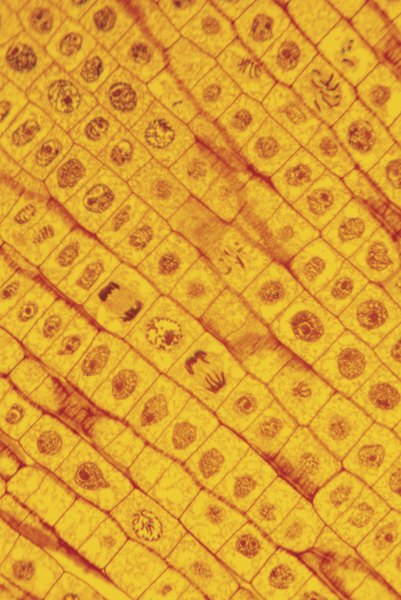




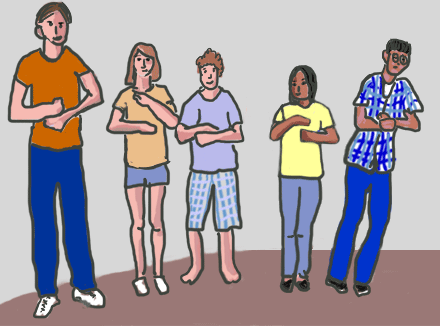
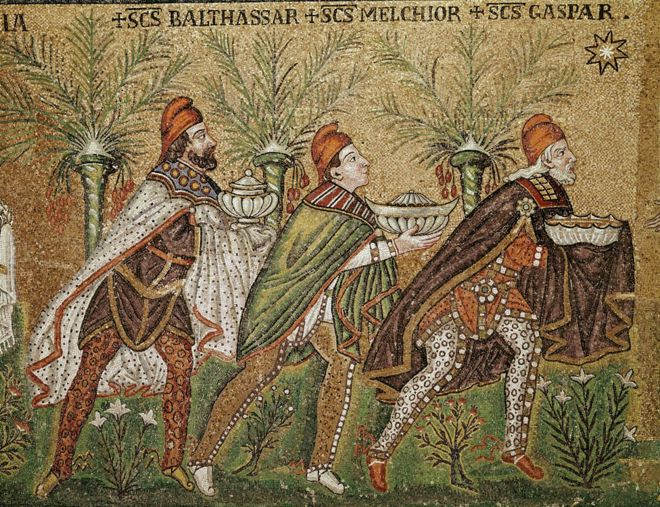 Getty Images
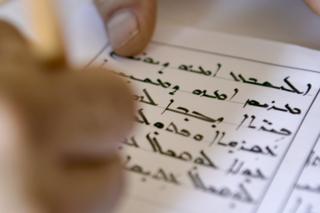
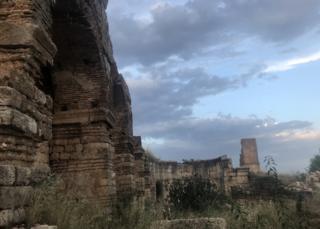
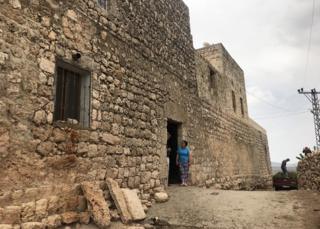
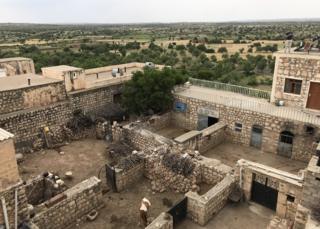
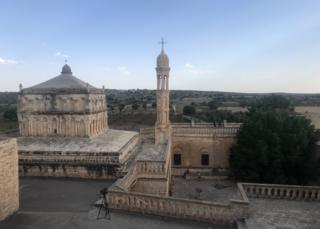

![Description English: A4-sized poster filled with the first 10,000 digits of π. 10,001 digits are actually listed on the poster - this is because of the 3 preceding the decimal mark. They were checked against the following sources: [1], [2], [3] Date 2 May 2011 Source Own work Author User:LoStrangolatore Inkscape-un.svg This W3C-unspecified vector image was created with Inkscape. Licensing Edit w:en:Creative Commons attribution share alike This file is licensed under the Creative Commons Attribution-Share Alike 3.0 Unported license. You are free: to share – to copy, distribute and transmit the work to remix – to adapt the work Under the following conditions:](https://commons.m.wikimedia.org/wiki/File:10,000_digits_of_pi_-_poster.svg)


 “man must endure the going hence even as the coming hither. ripeness/chi’n/china is all” … “the more things change the more they remain the same”: “standing wave”: out of many changes/waves one unchanging remains … e pluribus unum … song “i am who i am; you are who you are” … bible “i am who/that i am” … “thu+’c khuy mo+’i bie^’t dde^m da`i; o+? la^u mo+’i bie^’t lo`ng ngu+o+`i co’ nha^n co’ lu+o+ng ta^m co’ dda.t/achieve “you’re ok/well; i’m ok/well” “muôn loài được bình thường sống lâu; everyone live well and long” ddu+o+.c …
![Summary[edit] Description: Laos Plain of Jars with Hmong Girls - site 1. Capture date: December 2005 Photographer: Oliver Spalt](https://i0.wp.com/stoppauseplayfastforwardrewindejectrecord.us/blog1/wp-content/uploads/2016/09/Plainofjars_1.jpg)


 “edge” ~ “limit”


![Recognizable for its crack, the Liberty Bell remains significant today for its message of liberty. NPS photo The Liberty Bell bears a timeless message: "Proclaim Liberty Throughout All the Land Unto All the Inhabitants thereof" Go beyond the iconic crack to learn how this State House bell was transformed into an extraordinary symbol. Abolitionists, women's suffrage advocates and Civil Rights leaders took inspiration from the inscription on this bell. Plan your visit to the Liberty Bell Center to allow time to view the exhibits, see the film, and gaze upon the famous cracked bell. No tickets are required and hours vary seasonally. From Signal to Symbol The State House bell, now known as the Liberty Bell, rang in the tower of the Pennsylvania State House. Today, we call that building Independence Hall. Speaker of the Pennsylvania Assembly Isaac Norris first ordered a bell for the bell tower in 1751 from the Whitechapel Foundry in London. That bell cracked on the first test ring. Local metalworkers John Pass and John Stow melted down that bell and cast a new one right here in Philadelphia. It's this bell that would ring to call lawmakers to their meetings and the townspeople together to hear the reading of the news. Benjamin Franklin wrote to Catherine Ray in 1755, "Adieu, the Bell rings, and I must go among the Grave ones and talk Politicks." It's not until the 1830's that the old State House bell would begin to take on significance as a symbol of liberty. Listen to the story of the Liberty Bell in this audio podcast. The Crack No one recorded when or why the Liberty Bell first cracked, but the most likely explanation is that a narrow split developed in the early 1840's after nearly 90 years of hard use. In 1846, when the city decided to repair the bell prior to George Washington's birthday holiday (February 23), metal workers widened the thin crack to prevent its farther spread and restore the tone of the bell using a technique called "stop drilling". The wide "crack" in the Liberty Bell is actually the repair job! Look carefully and you'll see over 40 drill bit marks in that wide "crack". But, the repair was not successful. The Public Ledger newspaper reported that the repair failed when another fissure developed. This second crack, running from the abbreviation for "Philadelphia" up through the word "Liberty", silenced the bell forever. No one living today has heard the bell ring freely with its clapper, but computer modeling provides some clues into the sound of the Liberty Bell. The Inscription The Liberty Bell's inscription is from Leviticus 25:10: "Proclaim Liberty Throughout All the Land Unto All the Inhabitants thereof." This Old Testament verse refers to the "Jubilee", or the instructions to the Israelites to return property and free slaves every 50 years. Speaker of the Pennsylvania Assembly Isaac Norris chose this inscription for the State House bell in 1751, possibly to commemorate the 50th anniversary of William Penn's 1701 Charter of Privileges which granted religious liberties and political self-government to the people of Pennsylvania. The inscription of liberty on the State House bell (now known as the Liberty Bell) went unnoticed during the Revolutionary War. After the war, abolitionists seeking to end slavery in America were inspired by the bell's message. The Meaning The State House bell became a herald of liberty in the 19th century. "Proclaim Liberty Throughout All the Land Unto All the Inhabitants thereof," the bell's inscription, provided a rallying cry for abolitionists wishing to end slavery. The Anti-Slavery Record, an abolitionist publication, first referred to the bell as the Liberty Bell in 1835, but that name was not widely adopted until years later. Millions of Americans became familiar with the bell in popular culture through George Lippard's 1847 fictional story "Ring, Grandfather, Ring", when the bell came to symbolize pride in a new nation. Beginning in the late 1800s, the Liberty Bell traveled across the country for display at expositions and fairs, stopping in towns small and large along the way. For a nation recovering from wounds of the Civil War, the bell served to remind Americans of a time when they fought together for independence. Movements from Women's Suffrage to Civil Rights embraced the Liberty Bell for both protest and celebration. Pennsylvania suffragists commissioned a replica of the Liberty Bell. Their "Justice Bell" traveled across Pennsylvania in 1915 to encourage support for women's voting rights legislation. It then sat chained in silence until the passage of the 19th Amendment in 1920. Now a worldwide symbol, the bell's message of liberty remains just as relevant and powerful today: "Proclaim Liberty Throughout All the Land Unto All the Inhabitants thereof" Bell Facts The two lines of text around the top of the bell include the inscription of liberty, and information about who ordered the bell (Pennsylvania Assembly) and why (to go in their State House): Proclaim LIBERTY throughout all the Land unto all the Inhabitants thereof Lev. XXV X By Order of the ASSEMBLY of the Province of PENSYLVANIA [sic] for the State House in Philada The information on the face of the bell tells us who cast the bell (John Pass and John Stow), where (Philadelphia) and when (1753): Pass and Stow Philada MDCCLIII The bell weighed 2,080 lbs. at order. It is made of bronze. It's 70% copper, 25% tin and contains small amounts of lead, gold, arsenic, silver, and zinc. The bell's wooden yoke is American elm, but there is no proof that it is the original yoke for this bell. While there is evidence that the bell rang to mark the Stamp Act tax and its repeal, there is no evidence that the bell rang on July 4 or 8, 1776.](https://i0.wp.com/stoppauseplayfastforwardrewindejectrecord.us/blog1/wp-content/uploads/2019/01/47ED0D03-B5D2-46FE-A65A-2EC8E6D10994.jpeg)


 ddi,dda^u thi~ ddi: entropy makes humanity go in search of solution to buddha’s encounters at the gates of his palace to eternal existence …
 after camera pans to ipad like the one to^nan has, the “brothers” [one, trung, is “faked” at this point in the movie] went for a drive through city street (discussing marriage proposal to one of the girls] where one can glimse of life [“it’s a different world”


![Description Flag of the USSR Date 15 August 1980 Source http://pravo.levonevsky.org/, construction sheet: [1]. Author СССР Other versions Derivative works of this file: Communism template.svg CuartaParticiónDePolonia1939.svg Ukraine-USSR.png State Emblem of the Soviet Union.svg Colors Used colors: red rendered as RGB 205 0 0 yellow rendered as RGB 255 215 0 Soviet Union Flag Color Scheme SVG development W3C icon.svg The source code of this SVG is valid. Inkscape-yes.svg This flag was created with Inkscape. Licensing Public domain This work is not an object of copyright according to article 1259 of Book IV of the Civil Code of the Russian Federation No. 230-FZ of December 18, 2006. Shall not be objects of copyright: official documents of state government agencies and local government agencies of municipal formations, including laws, other legal texts, judicial decisions, other materials of legislative, administrative and judicial character, official documents of international organizations, as well as their official translations; state symbols and signs (flags, emblems, orders, any forms of money, and the like), as well as symbols and signs of municipal formations; works of folk art (folklore), which don't have specific authors; news reports on events and facts, which have a purely informational character (daily news reports, television programs, transportation schedules, and the like). Coat of Arms of the Russian Federation.svg Comment – This license tag is also applicable to official documents, state symbols and signs of the Russian Soviet Federative Socialist Republic and the Union of Soviet Socialist Republics (union level[1]). Warning – This license tag is not applicable to drafts of official documents, proposed official symbols and signs, which can be copyrighted. Warning – This Russian official document, state symbol or sign (postage stamps, coins and banknotes mainly) may incorporate one or more works that can be copyrightable if separated from this document, symbol or sign. In such a case, this work is not an object of copyright if reused in its entirety but, at the same time, extracting specific portions from this work could constitute copyright infringement. For example, the denomination and country name must be preserved on postage stamps. ↑ Official documents, state symbols and signs of 14 other Soviet Republics are the subject of law of their legal successors. See respective license tags. Insignia This image shows a flag, a coat of arms, a seal or some other official insignia. The use of such symbols is restricted in many countries. These restrictions are independent of the copyright status. Communist symbol Legal disclaimer This image is or contains a symbol or symbols prohibited by law in the nations mentioned below, due to (variously) representations of communism, socialism, or similar governmental structures; or of parties/organizations associated with said: Ukraine's Verkhovna Rada Georgia's parliament Latvia's Saeima Lithuania's Constitutional Court passed Article 18818 of the Code of Administrative Offences Germany's Criminal Code §86a, referring to the "use of symbols of unconstitutional organizations" outside the contexts of "art or science, research or teaching" Indonesia's People's Consultative Assembly Bans no longer in effect include: Hungary: Hungarian Criminal Code 269/B.§ 1993 Moldova: LPC192/2012ro,ru Poland: Art. 256 of the Dz.U. 1997 nr 88 poz. 553 of the criminal code has removed references to imagery and now only covers promotion of communist ideas United States: had state and city laws; Supreme Court declared these unconstitutional in Stromberg v. California, 283 U.S. 359 (1931) Imagery covered may include the hammer and sickleen, red star, emblems/insignias, flags or images of leaders. This file, which was originally posted to http://pravo.levonevsky.org/, was reviewed on 11 March 2017 by the administrator or reviewer Daphne Lantier, who confirmed that it was available there under the stated license on that date.](https://commons.m.wikimedia.org/wiki/File:Flag_of_the_Soviet_Union.svg#mw-jump-to-license)
![Description Let Us Beat Swords Into Plowshares statue at the United Nations Headquarters, New York City. Photograph credit: Rodsan18 Date Source This file is lacking source information. Please edit this file's description and provide a source. Author This file is lacking author information. Licensing PD-icon.svg This work is in the public domain in the United States because it was published in the United States between 1924 and 1977 without a copyright notice. See Commons:Hirtle chart for further explanation. Note that it may still be copyrighted in jurisdictions that do not apply the rule of the shorter term for US works (depending on the date of the author's death), such as Canada (50 p.m.a.), Mainland China (50 p.m.a., not Hong Kong or Macao), Germany (70 p.m.a.), Mexico (100 p.m.a.), Switzerland (70 p.m.a.), and other countries with individual treaties. Беларуская | Čeština | Deutsch | English | Español | Français | Italiano | 日本語 | Македонски | Nederlands | Português | Русский | Slovenščina | ไทย | +/− Swords to ploughshares This article is about converting military technology. For the American veterans' NPO, see Swords to Plowshares. Swords to ploughshares (or Swords to plowshares) is a concept in which military weapons or technologies are converted for peaceful civilian applications. The phrase originates from the Book of Isaiah: And many people shall go and say, Come ye, and let us go up to the mountain of the LORD, to the house of the God of Jacob; and He will teach us of His ways, and we will walk in His paths: for out of Zion shall go forth the law, and the word of the LORD from Jerusalem. And He shall judge among the nations, and shall rebuke many people: and they shall beat their swords into ploughshares, and their spears into pruning hooks: nation shall not lift up sword against nation, neither shall they learn war any more.—Isaiah 2:3–4 The ploughshare (Hebrew: אֵת ’êṯ, also translated coulter) is often used to symbolize creative tools that benefit humankind, as opposed to destructive tools of war, symbolized by the sword (Hebrew: חֶרֶב ḥereḇ), a similar sharp metal tool with an arguably opposite use. In addition to the original Biblical Messianic intent, the expression "beat swords into ploughshares" has been used by disparate social and political groups. An ongoing example as of 2013 is the dismantling of nuclear weapons and the use of their contents as fuel in civilian electric power stations, the Megatons to Megawatts Program. Nuclear fission development, originally accelerated for World War II weapons needs, has been applied to many civilian purposes since its use at Hiroshima and Nagasaki, including electricity and radiopharmaceutical production. Biblical references This analogy is used several times in the Old Testament or Tanakh, in both directions, such as in the following verses: And he shall judge among the nations, and shall rebuke many people: and they shall beat their swords into plowshares, and their spears into pruninghooks: nation shall not lift up sword against nation, neither shall they learn war any more. Beat your plowshares into swords and your pruninghooks into spears: let the weak say, I am strong. And he shall judge among many people, and rebuke strong nations afar off; and they shall beat their swords into plowshares, and their spears into pruninghooks: nation shall not lift up a sword against nation, neither shall they learn war any more. An expression of this concept can be seen in a bronze statue in the United Nations garden called Let Us Beat Swords into Plowshares, a gift from the Soviet Union sculpted by Evgeniy Vuchetich, representing the figure of a man hammering a sword into the shape of a plowshare. Practical applications After World War II, military surplus AFVs were sometimes converted into bulldozers, agricultural, and logging tractors, as seen in the American television series Axe Men.[1] Two are currently preserved at the Swords and Ploughshares Museum in Canada.[2][3] French farmers sometimes used modified versions of the obsolete FT-17 tank, and similar vehicles, based on the T-34 tank, remain in widespread use in the former USSR.[4] Robert Crawford, a British agricultural engineer and collector of classic tractors, owns a Sherman tank that was adapted to plow Lincolnshire's fields in response to the shortage of crawler tractors.[5] From the 1970s onwards, several anti-war musicians play guitars made from military surplus weapons. Jamaican reggae star Pete Tosh famously owned a Stratocaster built around an M-16 rifle.[6] In the present day the Escopetarra, a guitar converted from the AK-47, is the signature instrument of César López, Souriya Sunshine and Sami Lopakka of the Finnish death metal band Sentenced.[7] Nitrogen mustard, developed from the chemical weapon mustard gas developed in World War I,[8] became the basis for the world's first chemotherapy drug, mustine, developed through the 1940s.[9] Swedish aid organization IM Swedish Development Partner launched Humanium Metal, using metal from illegal handguns to create everyday objects. First product announced was headphones by Yevo.[10] In political and popular culture Twelve term US Congressman and three time presidential candidate Ron Paul wrote a book entitled Swords into Plowshares: A Life in Wartime and a Future of Peace and Prosperity, in which he discusses growing up during World War II and living his life through war after war.[11] In his farewell address, U.S. President Dwight Eisenhower, when speaking about the military-industrial complex stated: Until the latest of our world conflicts, the United States had no armaments industry. American makers of plowshares could, with time and as required, make swords as well. But now we can no longer risk emergency improvisation of national defense; we have been compelled to create a permanent armaments industry of vast proportions. Added to this, three and a half million men and women are directly engaged in the defense establishment. We annually spend on military security more than the net income of all United States corporations. For his first and second inaugurations, U.S. President Richard Nixon took the oath of office with his hand on two family Bibles, opened to Isaiah 2:2-4.[12][13][14] In their speeches at the signing of the 1979 Egypt–Israel Peace Treaty, Jimmy Carter, Anwar Sadat, and Menachem Begin all referenced the saying in calling for peace.[15] In Ronald Reagan's Address to the 42nd Session of the United Nations General Assembly in New York, New York.[16] Cannot swords be turned to plowshares? Can we and all nations not live in peace? In our obsession with antagonisms of the moment, we often forget how much unites all the members of humanity. Perhaps we need some outside, universal threat to make us recognize this common bond. I occasionally think how quickly our differences world-wide would vanish if we were facing an alien threat from outside this world. And yet, I ask you, is not an alien force already among us? What could be more alien than war and the threat of war? The popular anti-war song "The Vine and Fig Tree" repeats the verse[17] And everyone neath their vine and fig tree shall live in peace and unafraid, Everyone neath their vine and fig tree shall live in peace and unafraid. And into ploughshares beat their swords Nations shall learn war no more. And into ploughshares beat their swords Nations shall learn war no more. The song "The End of the Innocence" by Don Henley (1989) uses the Joel inverted version of the phrase: O' beautiful, for spacious skies But now those skies are threatening They're beating plowshares into swords For this tired old man that we elected king "Heal the World" by Michael Jackson (1991): Create a world with no fear Together we'll cry happy tears See the nations turn Their swords into plowshares Finale of the musical Les Misérables: They will live again in freedom In the garden of the Lord. They will walk behind the ploughshare, They will put away the sword. The chain will be broken And all men will have their reward. A poem by Israeli poet Yehuda Amichai: Don’t stop after beating the swords into plowshares, don’t stop! Go on beating and make musical instruments out of them. Whoever wants to make war again will have to turn them into plowshares first. See also Anti-war movement Operation Plowshare Plowshares Movement Guns vs butter Tactical to Practical Atomic gardening References Templar, Simon (11 October 2015). "Civilian Shermans: after the war - they went to work..." Retrieved 11 June 2017. Spoelstra, Hanno. "Shermans into ploughshares". web.inter.nl.net. Retrieved 11 June 2017. "The Swords And Ploughshares Museum". www.calnan.com. Retrieved 11 June 2017. "BBC NEWS - Monitoring - Media reports - Ukraine turns tank into tractor". news.bbc.co.uk. Retrieved 11 June 2017. Spoelstra, Hanno. "Shermans into ploughshares". web.inter.nl.net. Retrieved 11 June 2017. "More Than Music: Peter Tosh And His M16 Rifle Guitar". Retrieved 11 June 2017. UNODC. "UNODC Perspectives No. 3 - Escopetarra: Instrument of peace". www.unodc.org. Retrieved 11 June 2017. United States Department of State, Bureau of Arms Control, Verification and Compliance; United States Department of Commerce, Bureau of Industry and Security (May 2004). "Introduction to Industry Implementation of the Chemical Weapons Convention" (PDF). cwc.gov. Gilman A (May 1963). "The initial clinical trial of nitrogen mustard". Am. J. Surg. 105 (5): 574–8. doi:10.1016/0002-9610(63)90232-0. PMID 13947966. Kleinman, Zoe (2018). "Illegal guns turned into headphones". BBC News. Retrieved 2018-01-15. Paul, Ron (17 July 2015). "Swords into Plowshares". Ron Paul Institute for Peace and Prosperity. Retrieved 11 June 2017 – via Amazon. United Press International (UPI) (20 January 1973). "Protestors' shouts mar inaugural ceremonies". Retrieved 18 October 2017. http://time.com/4639596/inauguration-day-presidents-bible-passages/ Ross, Scott (21 January 2013). "Obama's Inaugural Bibles: Lincoln, MLK". NBC 6 South Florida. Retrieved 18 October 2017. Public Papers of the Presidents of the United States, Jimmy Carter. Office of the Federal Register. 1979. pp. 518–520. "Ronald Reagan Presidential Library Archives". UTexas.edu. 1987-09-21. Retrieved 2013-01-01. "Greenham Common Women's Peace Camp Songbook". Fredsakademiet.dk. Retrieved 2013-01-01. https://en.m.wikipedia.org/wiki/Swords_to_ploughshares](https://en.m.wikipedia.org/wiki/File:Image-UN_Swords_into_Plowshares_Statue.JPG)





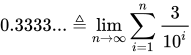

 stoppauseplayfastforwardrewindejectrecorddotnet
