at hobby lobby … bull in china shop … old fashioned and modern toys such as robot although come to think of it robot is actually also a classic old fashioned toy … beautiful people …
lost in space robot danger will robinson from http://thatsetoys.com/lost-in-space-b9-robot-danger-danger-will-robinson-license-tag-by-tin10-collectibles/Today’s Doodle celebrates Olga Ladyzhenskaya, a Russian mathematician who triumphed over personal tragedy and obstacles to become one of the most influential thinkers of her generation. Born in the rural town of Kologriv on this day in 1922, Ladyzhenskaya was inspired to love algebra by her father, a mathematician descended from Russian nobility. She was just 15 years old when her father was jailed and executed by Soviet authorities who accused him of being an “enemy of the state.” Subsequently, her mother and sisters sold dresses, shoes, and soap to make ends meet. Despite graduating from secondary school with excellent grades, she was later denied admission to Leningrad State University because of her family name. After years of teaching math to secondary school students, Ladyzhenskaya finally got the chance to attend Moscow State University, studying under the renowned mathematician Ivan Petrovsky. There, she earned her PhD and went on to head the Laboratory of Mathematical Physics at the Steklov Mathematical Institute. Later, she elected to stay in Russia despite the collapse of the Soviet Union and the economic pressures that followed. The author of more than 250 papers, Ladyzhenskaya’s methods for solving partial differential equations remain profoundly influential. A member of the St. Petersburg Mathematical Society since 1959, she became its president in 1990. Beyond mathematics, she was also a lover of nature and the arts. Recognized by numerous international institutions, she was awarded the Lomonosov Gold Medal by the Russian Academy of Sciences in 2002 for her impressive contributions to the world of mathematics. Happy 97th birthday, Olga!https://en.m.wikipedia.org/wiki/Detroit_Industry_Murals Description Overview of Detroit Industry, North Wall, 1932-33, fresco by Diego Rivera. Detroit Institute of Arts. Source Detroit Institute of Arts Date 1932-33 Author Diego Rivera Permission (Reusing this file) see http://www.dia.org/object-info/09ec176f-e53f-40d8-a5c2-9889eea5f3ad.aspx?position=3; a careful search of the image shows no copyright notice of any sort Licensing Edit This work is in the public domain because it was published in the United States between 1924 and 1977 inclusive, without a copyright notice. Unless the author has been dead for several years, it is not in the public domain in countries that do not apply the rule of the shorter term for US works. This includes Canada, China (not Hong Kong, Macao, or Taiwan Area), Germany, Mexico, Switzerland, and other countries with individual treaties. See also further explanation.mary Edit Low resolution, fair use image of Detroit Industry, South Wall, 1932-33, fresco by Diego Rivera. Detroit Institute of Arts. Licensing Edit This image is of a drawing, painting, print, or other two-dimensional work of art, and the copyright for it is most likely owned by either the artist who produced the image, the person who commissioned the work, or their heirs. It is believed that the use of low-resolution images of works of art for critical commentary on the work in question, the artistic genre or technique of the work of art or the school to which the artist belongs on the English-language Wikipedia, hosted on servers in the United States by the non-profit Wikimedia Foundation, qualifies as fair use under United States copyright law. Any other uses of this image, on Wikipedia or elsewhere, might be copyright infringement. See Wikipedia:Non-free content for more information. Non-free media information and use rationale for National Register of Historic Places listings in Downtown and Midtown Detroit, Michigan Description Murals by Diego Rivera in the Rivera Court of the Detroit Institute of Arts Source Self-made photograph by User:Cactus.man Article National Register of Historic Places listings in Downtown and Midtown Detroit, Michigan Portion used Single-wall section of set of 4 full-wall murals Low resolution? Yes Purpose of use To illustrate the murals as a historic feature of Detroit and the United States Replaceable? The murals are a work of art of unique historic significance; their historic value cannot be fully described without providing an image of the murals themselves. Non-free media information and use rationale for List of National Historic Landmarks in Michigan Description Murals by Diego Rivera in the Rivera Court of the Detroit Institute of Arts Source Self-made photograph by User:Cactus.man Article List of National Historic Landmarks in Michigan Portion used Single-wall section of set of 4 full-wall murals Low resolution? Yes Purpose of use To illustrate the murals as a historic feature of Michigan and the United States Replaceable? The murals are a work of art of unique historic significance; their historic value cannot be fully described without providing an image of the murals themselves. Fair use rationale in Diego Rivera Edit There is no alternative, public domain or free-copyrighted replacement image available. Inclusion of the image is for information, education and analysis only. The text discussing the significance of this art work, or referencing it as a key example of the artists work, is enhanced by inclusion of the image. The image is a low resolution copy of the original work, and of such low quality that it will not affect potential sales of the art work. Fair use rationale in Steve “Pablo” Davis Edit There is no alternative, public domain or free-copyrighted replacement image available. Inclusion of the image is for information, education and analysis only. The text discussing the significance of this art work, or referencing it as a key example of the artists work, is enhanced by inclusion of the image. The image is a low resolution copy of the original work, and of such low quality that it will not affect potential sales of the art work. Fair use rationale in Detroit Industry Murals Edit There is no alternative, public domain or free-copyrighted replacement image available. Inclusion of the image is for information, education and analysis only. The text discussing the significance of this art work, or referencing it as a key example of the artists work, is enhanced by inclusion of the image. The image is a low resolution copy of the original work, and of such low quality that it will not affect potential sales of the art work.
Mẹ ngồi nguyện cầu hằng bao đêm
Lời kinh vọng xa thật êm đềm
Mẹ cầu cho con. Vượt qua ngày tròn
Mẹ cầu cho em tuổi trời xanh còn nguyên đừng biến mất
Người về một ngày một lưa thưa
Người đi càng đêm càng đông dần
Từng dài âu lo. Từng đêm đợi chờ. Mộng thật cam go
Miễn là mai niềm đau thành nụ cười
Xin cho me. Tròn lời kinh đêm nay
Người sẽ về. Trước khi mẹ khuất núi
Xin cho me. Ngoài trời im kinh động.
Người sẽ về. Dù rách rưới tả tơi.
Người về một giờ một đông thêm
Người đi càng giây càng thưa dần
Rồi ngày sinh ly. Rồi đêm từ biệt.
Còn lại đêm nay với vòng tay tình yêu người và người
Lời nguyện cầu này cho nhau
Từ khi loạn ly vào đêm đầu
Tình người tiêu hao. Niềm tin bội bạc
Gà giục sang canh mãi ngoài hiên đầu tỏ tròn tiếng gáy
Lạnh lùng một ngày một qua mau
Lời kinh mù sương mờ trên đầu
Mộng chờ sau đêm. Ngày mai thật lạ. Thù hằn anh em
Bỗng nhìn nhau gọi nhau thật đậm đà
Xin cho me. Trọn niềm tin đêm nay.
Người sẽ về. Trước khi trời bủa tối
Xin cho me. Một giờ im kinh động.
Người sẽ về. Dù rách rưới tả tơi
Người về một giờ một đông thêm
Người đi càng giây càng không còn
Một thời điêu linh. Một phen hoạn nạn
Còn lại hôm nay những lời kinh tình yêu đầy nhiệm mầu
“the buddhas/tathagatas are only teachers/catalysts: you yourself must make,the effort: work out your salvation with diligence” … industrialness … “may your hands always be busy” …it’s a part of eternity it’s a part of being forever young … your soul your form prescribes how much you sleep how much you poop how much you eat and how much you work how much you play and you simply have to fulfill what your form and soul prescribe … and no one can touch that god-dictatated noble prescription …the same is true with other people they have their own prescribed amount for sleeping pooping eating working playing that no one–including you–can change/touch … you and them can only catalyze–like lotus in the mud untouched by mud–one another is all …may you always do for others and let others do for you … pendulum wave …
Bob Dylan’s “Forever Young”
815,541 views
1.9K
75
SHARE
SAVE
Simon & Schuster Books
Published on Jun 3, 2009
SUBSCRIBE 51K
Learn more about Forever Young at http://books.simonandschuster.com/For… Look inside the pages of Bob Dylan’s “Forever Young” and listen to the singer perform.
Category
Music
Forever Young
WRITTEN BY: BOB DYLAN
May God bless and keep you always
May your wishes all come true
May you always do for others
And let others do for you
May you build a ladder to the stars
And climb on every rung
May you stay forever young
Forever young, forever young
May you stay forever young
May you grow up to be righteous
May you grow up to be true
May you always know the truth
And see the lights surrounding you
May you always be courageous
Stand upright and be strong
May you stay forever young
Forever young, forever young
May you stay forever young
Happy International Women’s Day 2019! Today’s interactive, slideshow Doodle is told by and made by women. In it, we showcase inspirational quotes across various languages by thirteen international female trailblazers—both past and present. Connecting to the larger theme of “women empowering women,” the quotes were also designed by a talented group of female guest artists from around the globe. The process of choosing the thirteen quotes was extremely difficult, but we aimed to include a diverse representation of voices on a day which celebrates the past, present, and future community of diverse women around the world. Learn more about the women who made today’s Doodle possible below!
the secretary of randall lab building on university of michigan ann arbor campus used to be ada …
Ada Lovelace
Augusta Ada King, Countess of Lovelace (néeByron; 10 December 1815 – 27 November 1852) was an English mathematician and writer, chiefly known for her work on Charles Babbage‘s proposed mechanical general-purpose computer, the Analytical Engine. She was the first to recognise that the machine had applications beyond pure calculation, and published the first algorithm intended to be carried out by such a machine. As a result, she is sometimes regarded as the first to recognise the full potential of a “computing machine” and the first computer programmer.[2][3][4]
Lovelace was the only legitimate child of the poet Lord Byron and his wife Anne Isabella “Annabella” Milbanke, Lady Wentworth.[5] All of Byron’s other children were born out of wedlock to other women.[6] Byron separated from his wife a month after Ada was born and left England forever four months later. He commemorated the parting in a poem that begins, “Is thy face like thy mother’s my fair child! ADA! sole daughter of my house and heart?”.[7] He died of disease in the Greek War of Independence when Ada was eight years old. Her mother remained bitter and promoted Ada’s interest in mathematics and logic in an effort to prevent her from developing her father’s perceived insanity. Despite this, Ada remained interested in Byron and was, upon her eventual death, buried next to him at her request. She was often ill in her childhood. Ada married William King in 1835. King was made Earl of Lovelace in 1838, Ada thereby becoming Countess of Lovelace.
Her educational and social exploits brought her into contact with scientists such as Andrew Crosse, Sir David Brewster, Charles Wheatstone, Michael Faraday and the author Charles Dickens, contacts which she used to further her education. Ada described her approach as “poetical science”[8] and herself as an “Analyst (& Metaphysician)”.[9]
When she was a teenager, her mathematical talents led her to a long working relationship and friendship with fellow British mathematician Charles Babbage, also known as “the father of computers”, and in particular, Babbage’s work on the Analytical Engine. Lovelace first met him in June 1833, through their mutual friend, and her private tutor, Mary Somerville.
Between 1842 and 1843, Ada translated an article by Italian military engineer Luigi Menabrea on the engine, supplementing it with an elaborate set of notes, simply called Notes. These notes contain what many consider to be the first computer program—that is, an algorithm designed to be carried out by a machine. Lovelace’s notes are important in the early history of computers. She also developed a vision of the capability of computers to go beyond mere calculating or number-crunching, while many others, including Babbage himself, focused only on those capabilities.[10] Her mindset of “poetical science” led her to ask questions about the Analytical Engine (as shown in her notes) examining how individuals and society relate to technology as a collaborative tool.[6]
“A Touch of the Poet” left to right, Brendan Ferrell, Matt McKenzie, and Julia McIlvaine | Vitor Martins
VENICE, Calif. — Like much of Eugene O’Neill, A Touch of the Poet is talky and redundant. It could have used a good editor. If staged as written, in four acts, it could be a very long evening in the theatre, tolerable only with the brightest stars in the three lead roles. (In this production there was one intermission.) It was originally intended as one of a long series of plays on American history, but only this one survives.
This is a late work, first staged in 1958 only after O’Neill’s death in 1953. Its Broadway premiere at the Helen Hayes Theatre starred the aging grande dame of American theatre herself, Helen Hayes, as the wife Nora in a submissive role unlike those magisterial portrayals she had offered her adoring public throughout a long career. Not among O’Neill’s most popular works, it has had only four Broadway productions, at approximately ten-year intervals. It’s understandable why.
Yet it cannot be dismissed either. O’Neill, after all, was a four-time Pulitzer Prize winner, and in 1936 won the Nobel Prize for Literature, the only American playwright ever to have done so. Many early plays, such as The Hairy Ape, recently produced to stunning effect in Los Angeles, showed him as an original and explosive talent.
One of the standard characteristics of an O’Neill play is his rumination on the effects of prodigious alcohol consumption in his family history, and in this play O’Neill does not shrink from the powerful draw of this theme. Known as really the first American playwright to go beyond inherited European dramatic models of melodrama and almost single-handedly establish a national theatre tradition, he is also aware of his Irishness. In Touch, however, a great deal of the “national” identity is subsumed in the lead character’s egregious treatment of women — his long-suffering wife and his headstrong daughter — and the boastfulness, nostalgic regret, drinking and street brawling for which the Irish in America became stereotyped.
Nor is this the Irishness of national liberation, a centuries-long story with equal parts tragedy and valor. Actually, the protagonist is a former officer in the British royal forces during the Napoleonic Era, who fought in Spain and was recognized by none other than Wellington for his bravery. To put it baldly, he was an Irishman who identified with the aristocracy and fought on the side of his British colonial oppressor to put down a man — contradictory as Napoleon was — who to millions of people represented liberty and the downfall of monarchies. “I have no future but the past,” he says.
The Byron-quoting Cornelius Melody (Matt McKenzie), now reduced to operating a modest bar, lives off his memories of military success in defense of reaction, even as those around him, his fellow Irishmen in America and his own daughter, love the Napoleonic gesture. O’Neill uses this contrast, as well as the use or the abandonment of the Irish brogue, as a symbol of immigration and assimilation, the values of the Old World and the New.
The setting is an unpretentious tavern outside of Boston that seemingly caters to an Irish-American crowd. All four acts take place in the dining room of the tavern. Upstairs, unseen, are the family living quarters. The year is 1828, specifically July 27th. The coming presidential election is in the forefront of people’s minds. The sitting sixth president, the aristocratic Bostonian John Quincy Adams — son of John Adams, the second president — is seen as out of touch with the common man. Opposing him is the upstart military man, General Andrew Jackson, who went on to win that election and re-election four years later. His term gave us the model of “Jacksonian democracy,” widely heralded as the spirit of the growing middle class, the further opening of the West, and the essential character of the new American republic. Banished forever were the pretenses and privileges of the “better” class of people embodied in the Adams family. Jackson’s image is on the $20 bill. Until recently, and maybe still in some places, Democratic Party fundraisers happily recalled this era by naming their dinners after Jefferson and Jackson.
Yet perceptions change over time. Only in later years the name of Andrew Jackson has come to symbolize not the growing democratization of America but the terrible price our civilization has paid for whatever democracy we have. Jackson himself was a slaveholder, and in the decades before his presidency he was a renowned and enthusiastic mass murderer of Native Americans whom the white Europeans saw as standing in the way of westward settlement. If American capitalism in an expansive phase in the early 19th century gave hope to thousands, later millions of immigrants from Europe, the prosperity they created, the wealth they began to accumulate, was built on an unsteady foundation — the backs of slaves and the natives’ stolen land.
O’Neill’s Irish immigrants in A Touch of the Poet are not thinking about slaves and native land, however. In O’Neill’s time the older image of Jackson still prevailed. This refraction through the looking glass of history is in part what makes the play less than satisfying today. We squirm at the contradictions of bourgeois democracy, …
“I stood Among them, but Not of Them” would be the irish o’neil’s apology for being in america of native american indian like a lotus untouched by the mud it grows in like chinese railroad track and like scottish tartans …
1In the beginning was the Word, and the Word was with God, and the Word was God. 2The same was in the beginning with God. 3All things were made by him; and without him was not any thing made that was made. 4In him was life; and the life was the light of men. 5And the light shineth in darkness; and the darkness comprehended it not.
6There was a man sent from God, whose name was John. 7The same came for a witness, to bear witness of the Light, that all men through him might believe. 8He was not that Light, but was sent to bear witness of that Light.
9That was the true Light, which lighteth every man that cometh into the world. 10He was in the world, and the world was made by him, and the world knew him not. 11He came unto his own, and his own received him not. 12But as many as received him, to them gave he power to become the sons of God, even to them that believe on his name: 13Which were born, not of blood, nor of the will of the flesh, nor of the will of man, but of God.
14And the Word was made flesh, and dwelt among us, (and we beheld his glory, the glory as of the only begotten of the Father,) full of grace and truth. 15John bare witness of him, and cried, saying, This was he of whom I spake, He that cometh after me is preferred before me: for he was before me. 16And of his fulness have all we received, and grace for grace. 17For the law was given by Moses, but grace and truth came by Jesus Christ. 18No man hath seen God at any time; the only begotten Son, which is in the bosom of the Father, he hath declared him.
Summary Edit Photograph taken in Scotland in August 1987 by Author. Boy 4 yrs 8 months Licensing Edit I, the copyright holder of this work, hereby publish it under the following licenses: Permission is granted to copy, distribute and/or modify this document under the terms of the GNU Free Documentation License, Version 1.2 or any later version published by the Free Software Foundation; with no Invariant Sections, no Front-Cover Texts, and no Back-Cover Texts. Subject to disclaimers. This work is licensed under the Creative Commons Attribution-ShareAlike 3.0 License. This licensing tag was added to this file as part of the GFDL licensing update. This work is licensed under the Creative Commons Attribution 2.5 License. You may select the license of your choice.
die^~m wears plaid today to san jose 3/9/2019 with tonddinh and bu and bi … while to^nan and mother went to hobby lobby second day in a row then to golden sand harbor for dimsum and 99 ranch and father stayed home ….
Watch how tracks are laid for China’s high-speed rail
107,380 views
463
55
SHARE
SAVE
New China TV
Published on Sep 6, 2017
SUBSCRIBE 375K
One steel rail track 500 meters long. Watch how tracks are laid for China’s high-speed rail.
Category
News & Politics
synopsis for The Song of Mu Lan by Jeanne M. Lee (Author): Mu Lan is at her loom when she hears the Emperor’s call to arms. She rides off to war in her father’s stead, embarking on a journey of ten thousand miles that takes her away from home for ten years. Her courage and valor bring her to the Emperor’s attention and to the Golden Court. When offered whatever she wishes as a reward, she asks only to go home. There she surprises her mother and father, sister and brother–but it is her comrades in arms who are most surprised of all. The Song of Mu Lan is closely translated from an ancient text and echoes the rhythms of Chinese,
When the Old Monkey King trying to save Little Monkey, Little Monkey undertakes a dangerous journey to find the Old Immortal and get a pill to save the old king. Along the way, he meets many supernatural creatures that teach him the skills he needs to complete his journey and to become immortal himself. In addition to giving him the pill, the Old Immortal also gives Little Monkey a new name, Sun Wukong, or Monkey King. Sun Wukong is a central figure in Chinese folklore, most notably in the 16th-century classic “Journey to the West.” Li’s telling differs from most versions, as there is little resemblance between the beloved trickster who seeks immortality out of boredom and the selfless hero shown here.
DescriptionThe arduous journey of a child bride, Anandi, from childhood to womanhood, as she strives to face every challenge and carve out her own identity. First episode date: July 21, 2008 Final episode date: July 31, 2016 Theme song: Choti Si Umar Number of episodes: 2,245 Networks: Colors, antv, Viacom 18, Nova televisionDescriptionThe arduous journey of a child bride, Anandi, from childhood to womanhood, as she strives to face every challenge and carve out her own identity. First episode date: July 21, 2008 Final episode date: July 31, 2016 Theme song: Choti Si Umar Number of episodes: 2,245 Networks: Colors, antv, Viacom 18, Nova television
tv co dau 8 tuoi asa and anandi fought and won the allowance (marriage and divorce respectively) to metamorphose into a new stage of their lives …
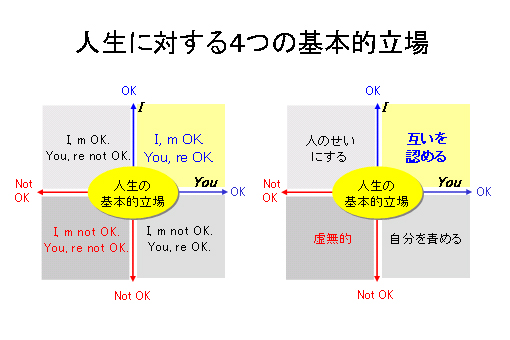
what plaid and zero-footprint tracks/paths amounts to …: loving oneself is actually equivalent to loving everyone to loving “you’re ok/well; i’m ok/well” “muôn loài được bình thường sống lâu; everyone live well and long” …
The third coin in the exciting Animal Architects series from the Royal Canadian Mint, this quarter-ounce fine silver coin portrays the Monarch caterpillar! This familiar little creature inches around in bright yellow, black and white stripes until it turns into the widely-recognized Monarch butterfly; the Monarch sports a distinct orange and black pattern, and is the most widespread butterfly in North America. The little caterpillar is considered an architect because of the intricate cocoon it spins for itself in its chrysalis stage: after spinning a silk pad on a twig or leaf, it will hang from it by its last legs in a ‘J’ shape. This phase leads to hormonal changes, and eventually, the metamorphosis into a beautiful butterfly. This coin, featuring a denomination of $3, is crafted in 99.99% fine silver and employs vibrant, selective colouring that brings the caterpillar and the milkweed leaf it is perched upon to life. The background, which displays the architectural creation of the caterpillar, hangs to foreshadow the chrysalis stage. Complimented with a beautiful mirror-like proof finish, this coin would make a worthy addition to any insect, Canadiana or nature-themed collection of silver. Features Produced By: RCM Denomination: 3Dollar Obverse: Queen Elizabeth II Reverse: Monarch caterpillar with selective colour application of caterpillar’s bright yellow, black and white stripes and bright green milkweed leaf, large chrysalis engraved in background Finish: Proof Series: Animal Architects Quantity Produced: 10,000 Artist: Trevor Tennant
The third coin in the exciting Animal Architects series from the Royal Canadian Mint, this quarter-ounce fine silver coin portrays the Monarch caterpillar! This familiar little creature inches around in bright yellow, black and white stripes until it turns into the widely-recognized Monarch butterfly; the Monarch sports a distinct orange and black pattern, and is the most widespread butterfly in North America. The little caterpillar is considered an architect because of the intricate cocoon it spins for itself in its chrysalis stage: after spinning a silk pad on a twig or leaf, it will hang from it by its last legs in a ‘J’ shape. This phase leads to hormonal changes, and eventually, the metamorphosis into a beautiful butterfly. This coin, featuring a denomination of $3, is crafted in 99.99% fine silver and employs vibrant, selective colouring that brings the caterpillar and the milkweed leaf it is perched upon to life. The background, which displays the architectural creation of the caterpillar, hangs to foreshadow the chrysalis stage. Complimented with a beautiful mirror-like proof finish, this coin would make a worthy addition to any insect, Canadiana or nature-themed collection of silver. Features Produced By: RCM Denomination: 3Dollar Obverse: Queen Elizabeth II Reverse: Monarch caterpillar with selective colour application of caterpillar’s bright yellow, black and white stripes and bright green milkweed leaf, large chrysalis engraved in background Finish: Proof Series: Animal Architects Quantity Produced: 10,000 Artist: Trevor Tennant
Metamorphosis From Caterpillar To Butterfly
816,565 views
2.4K
177
SHARE
SAVE
Veevid4u
Published on Apr 18, 2013
SUBSCRIBE 9K
See how the caterpillar changes to chrysalis, then emerges as a butterfly. This is a combination of 2 clips, the first chrysalis is of the monarch butterfly, the 2nd is the Swallowtail butterfly. I have another vid about the complete life cycle of the monarch, the caterpillar and emerging butterfly are both monarch. To see, click on link below:
Khî Wû Lun, or ‘The Adjustment of Controversies.’ (cont.)
9. Khü Tshiâo-tsze asked Khang-wû Tsze, saying, ‘I heard the Master (speaking of such language as the following):– “The sagely man does not occupy himself with worldly affairs. He does not put himself in the way of what is profitable, nor try to avoid what is hurtful; he has no pleasure in seeking (for anything from any one); he does not care to be found in (any established) Way; he speaks without speaking; he does not speak when he speaks; thus finding his enjoyment outside the dust and dirt (of the world).” The Master considered all this to be a shoreless flow of mere words, and I consider it to describe the course of the Mysterious Way.– What do you, Sir, think of it?’ Khang-wû Tsze replied, ‘The hearing of such words would have perplexed even Hwang-Tî, and how should Khiû be competent to understand them? And you, moreover, are too hasty in forming your estimate (of their meaning). You see the egg, and (immediately) look out for the cock (that is to be hatched from it); you see the bow, and (immediately) look out for the dove (that is to be brought down by it) being roasted. I will try to explain the thing to you in a rough way; do you in the same way listen to me.
‘How could any one stand by the side of the sun and moon, and hold under his arm all space and all time? (Such language only means that the sagely man) keeps his mouth shut, and puts aside questions that are uncertain and dark; making his inferior capacities unite with him in honouring (the One Lord). Men in general bustle about and toil; the sagely man seems stupid and to know nothing. He blends ten thousand years together in the one (conception of time); the myriad things all pursue their spontaneous course, and they are all before him as doing so.
…
‘Formerly, I, Kwang Kâu, dreamt that I was a butterfly, a butterfly flying about, feeling that it was enjoying itself. I did not know that it was Kâu. Suddenly I awoke, and was myself again, the veritable Kâu. I did not know whether it had formerly been Kâu dreaming that he was a butterfly, or it was now a butterfly dreaming that it was Kâu. But between Kâu and a butterfly there must be a difference. This is a case of what is called the Transformation of Things.’ http://nothingistic.org/library/chuangtzu/details.html
Book Details
author: Chuang Tzu, alt. Zhuangzi
title: The Writings of Chuang Tzu
publisher: Oxford University Press, 1891
subject: Taoism – Ethics – Philosophy
language: English
alt. author: James Legge, trans.
Editor’s Notes
This book is taken from James Legge’s translation The Writings of Chuang Tzu, found in volumes thirty-nine and forty of the Sacred Books of the East series, published by Oxford University Press in 1891. The book was prepared for the Internet in 2000, reformatted for the Internet in 2003, and reformatted again in 2009.
I last revisited this text on June 2nd, 2009.
https://lists.rootsweb.com/hyperkitty/list/ireland@rootsweb.com/thread/4478356/ leon uris trinity the frontispiece quote [IRELAND] Historical Novel “Trinity” by Leon URIS (1976) Jean R. 7/30/2007, 7:35:22 AM BOOK REVIEW: “There is no present or future – only the past, happening over and over again – now.” That is a line from Eugene O’Neill’s “A Moon for the Misbegotten.” In 1976 celebrated author Leon URIS published his powerful 751-page novel “Trinity,” set in Ireland between the period of the famine of the 1840s and the Easter Rising of 1916. Per the author, much background research went into his work which gives voice to the generations of Catholic hill farmers in Donegal fighting for survival against the harshness of the land and the injustice in their lives. His novel also attempts to give us insight into the times and events from the perspective of families of the British aristocracy, who ventured to Ireland to conquer, colonize and exploit. Also portrayed are the lives of devout Belfast shipyard workers whose Scottish-Presbyterian ancestors were planted in Ulster to secure the Crown’s interests. “This is his Trinity, the oil and water of the Irish epic that would never mix, their interrelations of love and hate in a terrible and beautiful drama spanning over half a century.” You should be able to find a copy in your local library if the subjecturis ~ urea and gout in previous notes about jame joyce a portrait of the artiwt aw a young man …
maybe even if the parts of humanity (the red man the white man the black man the yellow man etc.) are transformed (like the crysalis metamorphosis that changes a caterpillar into a butterfly) something singular (lonesome-dove “residue”) like the soul of humanity might yet abide/remain the same if the parts have enough conscience/love for one another and for the animals the plants the rocks the water etc of their third rock from the sun …
p. 411:
given the virginity of the landscapes … the challenging presence of the Indian and the Black, the Revelation caused by its recent discovery, the fertile Mestizo (crysalis-like) cultures (plural: red man is changed and in the image white man is changed and black man is changed and yellow man is changed) it has produced, America is far from having exhausted its stream of mythologies … But what is the whole history of America if not the chronicle of a marvelous reality ….
alejo carpentier”the kingdom of this world”
Americas: The Changing Face of Latin America and the Caribbean Winn, Peter Published by: Pantheon Books 1993The Organs-on-a-Chip technology is a new alternative way to screen drug candidates in a very early stage for efficacy and toxicity. The technology enables researchers to cultivate human cells representing organs under physiological conditions. Multiple organs can be placed on one chip and are interconnected to model the dynamics of a human organism. This is possible because 3D cell culture, microfluids and 3D printing technologies allow the cultivation of cells from patients who, for example, reflect the disease genotype or phenotype. Therefore, the translucent devices provide a window into the tissue structures, functions, and mechanical motions of hearts, lungs, kidneys, arteries, intestines and other organs – in other words, the inner workings of humans.
technologies and stuff that humanity exchanged and “paid” (“rent” see “zelda’s problem” porn above and below: that is, “justified”–justify the way of man/woman to man/woman and justify the way of god to man john milton and book of job– and assuaged and massaged conscience of humanity
Elton John – Someone Saved My Life Tonight (solo live 1976)
1,832,910 views
9K
325
SHARE
SAVE
sonyagu
Published on Mar 16, 2008
SUBSCRIBE 4.6K
elton john – someone saved my life tonight (solo live 1976)
Category
Music
there’s no escaping biblical “in the image” butterfly or not butterfly yet there is escape 1 corinthian10:13 in blaise pascal’s wager choice of the right kind of “in the image” (“someone saved my life”) namely in the choice of “you’re ok/well; i’m ok/well” …
Pascal’s Wagera model of interactions developed by Frank Ernst (historically: Blaise Pascal’s Wager) and is termed the ‘OK Corral’ (also called ‘OK Matrix’)https://www.nationalgeographic.com/magazine/2019/03/
“THIS arises; THAT arises” tro+`i sinh tro+`i du+o+~ng what is obvious is the el salvador rate is highest (the 18th street and the ms13 gangs)but what is not obvious can perhaps be inferred (18 year old ~ adult 13 year old ~ child republican democrat co^.ng ho`a co^.ng sa?n old and young) and furthermore perhaps the higher rate (it’s a marginal or differential rate and must have a reference whole or reference average to compare with to make sense to be “normalized” … in fact with a large enough reference it could be an actual decrease from an earlier historical rate) of decrease in population might be accounted (normalized) for by the global increase in all populations salvador’s and white and black and yellow … cost of living …
tv co dau 8 tuoi kananji pinches anandi’s cheek “so cute” as the latter told kananji not to lie like her such as about going to mumbai to obtain jadit’s divorce signature …
“My mural which I am painting now—it is about the marriage of the artistic expression of the North and of the South on this continent, that is all. I believe in order to make an American art, a real American art, this will be necessary, this blending of the art of the Indian, the Mexican, the Eskimo, with the kind of urge which makes the machine, the invention in the material side of life, which is also an artistic urge, the same urge primarily but in a different form of expression.” – Diego Rivera mestizo ~ invention … the cost of mestizos is to be bear/”borned” by all of humanity … a crysalis humanity …
anyway to be perfectly correct as described above no one can sleep poop eat etc for us and like wise no one can technologize for us can keep up with entropy for us meaning regardless of citing rent or native american indian as the cause the real cause is us we just have to shoulder our own burden of entro[ical change manifested as technologies …) for with the crysalis-like transformation of the red man the white man the black man the yellow man etc and myriad other creatures and plants and things …
Chiều nay sương khói lên khơi
Thùy dương rũ bến tơi bời
Làn mây hồng pha ráng trời
Sóng Đà Giang thuyền qua xứ người
Thuyền ơi! viễn xứ xa xưa
Một lần qua dạt bến lau thưa
Hò ơi! giọng hát thiên thu
Suối nguồn xa vắng, chiều mưa ngàn về
Nhìn về đường cô lý
Cô lý xa xôi
Đời nhịp sầu lỡ bước
Bước hoang mang rồi …!
Quay lại hướng làng
Đà Giang lệ ướt nồng
Mẹ già ngồi im bóng
Mái tóc tuyết sương
Mong con bạc lòng …
Chiều nay gửi tới quê xưa
Biết là bao thương nhớ cho vừa
Trời cao chìm rơi xuống đời
Biết là bao sầu trên xứ người
Mịt mờ sương khói lên hương
Lũ thùy dương rủ bóng ven sông
Chiều nay trên bến muôn phương
Có thuyền viễn xứ, nhổ neo lên đường …
on the evening of April 5, 1815, Mount Tambora, in the Indonesian archipelago, lost its head. So furious was the volcanic eruption that the top third of the 4,300-meter mountain disappeared. More than 10,000 people were incinerated, while an additional 30,000 across the world perished from the crop failures, famine, and disease that resulted from extreme weather triggered by the explosion. Volcanic ash blotted out much of the sun for more than a year, seeding wild rumors that the sun was dying. In Europe and North America, there were snowfalls in June, dry fogs, streaky sunsets, and unseasonal storms. The average global temperature dropped by a whole degree. The climate changed overnight.
Unexpectedly, however, this catastrophe spurred two remarkable works of apocalyptic literature in distant Europe. As we mark their bicentenary, these works can be viewed as forerunners to the literature of climate change.
The Organs-on-a-Chip technology is a new alternative way to screen drug candidates in a very early stage for efficacy and toxicity. The technology enables researchers to cultivate human cells representing organs under physiological conditions. Multiple organs can be placed on one chip and are interconnected to model the dynamics of a human organism. This is possible because 3D cell culture, microfluids and 3D printing technologies allow the cultivation of cells from patients who, for example, reflect the disease genotype or phenotype. Therefore, the translucent devices provide a window into the tissue structures, functions, and mechanical motions of hearts, lungs, kidneys, arteries, intestines and other organs – in other words, the inner workings of humans.The Organs-on-a-Chip technology is a new alternative way to screen drug candidates in a very early stage for efficacy and toxicity. The technology enables researchers to cultivate human cells representing organs under physiological conditions. Multiple organs can be placed on one chip and are interconnected to model the dynamics of a human organism. This is possible because 3D cell culture, microfluids and 3D printing technologies allow the cultivation of cells from patients who, for example, reflect the disease genotype or phenotype. Therefore, the translucent devices provide a window into the tissue structures, functions, and mechanical motions of hearts, lungs, kidneys, arteries, intestines and other organs – in other words, the inner workings of humans.
The more famous of the two is Mary Wollstonecraft Shelley’s , the mesmerizing and moving story of a hubristic scientist, Victor Frankenstein, who creates a yellow-skinned and watery-eyed monster in his laboratory—and then loses control of it. It has become the classic cautionary tale against what Shelley’s vainglorious scientist upholds as “the unquestioned belief that the products of science and technology are an unqualified blessing for mankind.” The other is the lesser known but equally haunting poem “Darkness,” by the romantic poet George Gordon Byron. It imagines the horrific end days of human life on an earth that has become “a lump of death—a chaos of hard clay.” These two works share a unique kinship: not only were they goaded into being by the gloomy Tambora weather, but they were conceived in the same month, July 1816, and in the same place—on the shores of a storm-lashed Lake Geneva, where Byron and the Shelleys had rented neighboring villas.
The Geneva Conference was a conference among several nations that took place in Geneva, Switzerland from April 26 – July 20, 1954.[1] It was intended to settle outstanding issues resulting from the Korean War and the First Indochina War.[2] The part of the conference on the Korean question ended without adopting any declarations or proposals, so is generally considered less relevant. The Geneva Accords that dealt with the dismantling of French Indochina proved to have long-lasting repercussions, however. The crumbling of the French Empire in Southeast Asia would create the eventual states of the Democratic Republic of Vietnam (North Vietnam), the State of Vietnam (the future Republic of Vietnam / South Vietnam), the Kingdom of Cambodia, and the Kingdom of Laos.
Diplomats from South Korea, North Korea, the People’s Republic of China(PRC), the Union of Soviet Socialist Republics (USSR), and the United States of America (US) dealt with the Korean side of the Conference. For the Indochina side, the Accords were between France, the Viet Minh, the USSR, the PRC, the US, the United Kingdom, and the future states being made from French Indochina.[3] The agreement temporarily separated Vietnam into two zones, a northern zone to be governed by the Viet Minhrebels, and a southern zone to be governed by the State of Vietnam, then headed by former emperor Bảo Đại. A Conference Final Declaration, issued by the British chairman of the conference, provided that a general election be held by July 1956 to create a unified Vietnamese state. Despite helping create the agreements, they were not directly signed onto nor accepted by delegates of both the State of Vietnam and the United States. In addition, three separate ceasefire accords, covering Cambodia, Laos, and Vietnam, were signed at the conference.
No Deal Reached Between Trump, Kim At 2nd Summit By Associated Press | Feb 27, 2019 @ 9:21 PM White House press secretary Sarah Sanders says the two leaders discussed denuclearization of the Korean Peninsula. She adds: “No agreement was reached at this time, but their respective teams look forward to meeting in the future.” Still, Sanders is describing the meetings between Trump and Kim as “very good and constructive.”
The story of how Frankenstein was born has passed into literary legend. The year 1816 was known by the clammy epithet of the Year Without a Summer; thunderstorms and what Mary described as “an almost perpetual rain” kept them indoors. The group of friends—which included Byron’s personal physician Dr. John Polidori and Claire Clairmont, Mary’s eighteen-year-old stepsister, who was madly in love with Byron and pregnant with his child—decided to pass the time by inventing ghost stories. Eighteen-year-old Mary Shelley came up with Frankenstein, whose opening page, shivery with icy winds, manifests a deep longing for a place where “the sun is forever visible.”
may “you’re ok/well; i’m ok/well” “muon loai duoc binh thuong song lau; everyone live well and long” …
El amor brujo (Love, the Magician, literally, Spell-bound Love or The Bewitched Love, sometimes translated as Wedded by Witchcraft) is a ballet composed in 1914–15 by Manuel de Falla to a libretto by Gregorio Martínez Sierra. In 1916, Falla arranged a rendition of the work for sextet and small orchestra and the following year he made a concert version, also for small orchestra. Later, he fashioned a piano suite from it and finally, a second ballet version (1925) that features expanded orchestration, elimination of the narration, small cuts and plot changes, and a different order to the numbers.[1]
The work is distinctively Andalusian in character with the songs in the Andalusian Spanish dialect of the Gypsies. The music contains moments of remarkable beauty and originality; it includes the celebrated Danza ritual del fuego, “Canción del fuego fatuo” (Song of Wildfire, or Song Of The Will-o’-the-Wisp), and the “Danza del terror” (Dance of Terror).
Versions and performance history
Gitanería
El amor brujo was commissioned in 1914 as a gitanería (gypsy piece) by Pastora Imperio, a renowned flamenco gypsy dancer. It was scored for cantaora voice, actors and chamber orchestra and performed at the Teatro Lara, Madrid, on 15 April 1915, unsuccessfully.
Orchestral version
The following year, Falla revised the work by cutting its length, enlarging the orchestration, removing the dialogue and reducing the vocal part to three short songs for mezzo-soprano. This version was performed on 28 March 1916, by the Madrid Symphony Orchestra under Enrique Fernández Arbós.
Ballet
In 1924 Falla finished a transformation of El amor brujo into a one-act ‘ballet pantomímico’; it is in this version that the work is best known to this day. Published by Chester, the ballet was given in Paris the next year (1925) and by the Philadelphia Civic Opera Company at Philadelphia’s Metropolitan Opera House on 17 March 1927, with mezzo-soprano Kathryn Noll and conductor Alexander Smallens.
Piano suite
Later, the composer arranged a suite for piano solo (catalog G. 69) of four movements from the 1925 ballet: “Pantomima”, “Danza del terror”, “Romance del pescador”, and Danza ritual del fuego.
Synopsis
El amor brujo is the story of an Andalusian gypsy woman called Candela. Although her affection is for a man named Carmelo, as a girl she was promised to be married to another man (then a boy). After many years Candela’s husband has died (at the hands of the husband of a woman named Lucia), but he continues to haunt his wife.
The entire village knows about the haunting, but still brands Candela as crazy because she dances every night with her husband’s ghost (“Danza del terror”). Candela, now a widow, is free to establish a relationship with Carmelo, but continues to be haunted by her husband’s ghost.
After a conversation with other women of the village, Candela finally comes to realise that her husband was unfaithful to her, despite all her efforts to make their marriage work; her husband’s lover is revealed to have been Lucia.
Candela and Carmelo get advice that a ritual dance is necessary to cast the ghost off (“Danza ritual del fuego“), but it does not work. The ghost is still obsessed with Candela’s soul.
Candela manages to trick Lucía to come that night, with the excuse of hooking her up with Carmelo. As she turns up, the nightly ritual of Candela’s dance with her husband’s ghost begins, but at the last moment Candela moves away from her husband and Lucía is taken away by her now dead lover (“Danza del juego de amor”).
Dawn breaks, Candela and Carmelo are now truly free to enjoy their love.
Movements
Introducción y escena (‘Introduction and scene’)
En la cueva (‘In the cave’)
Canción del amor dolido (‘Song of suffering love’)
El aparecido (El espectro) (‘The apparition’)
Danza del terror (‘Dance of terror’)
El círculo mágico (Romance del pescador) (‘The magic circle’)
In 1986, Spanish director Carlos Saura directed El amor brujo based on the ballet, starring and choreographed by Antonio Gades. It was the third in his trilogy of dance films, following Bodas de sangre (Blood Wedding) and Carmen. The film filled out the story with spoken dialogue, but nevertheless used the entire score of the ballet, along with additional songs and dances performed by characters in the film. The Orquesta Nacional de España was conducted by Jesús López-Cobos, and the cante jondo singer heard on the soundtrack was Rocío Jurado. A soundtrack album, now out of print, was issued by EMI.
Music
The section “Cancion del Fuego Fatuo” was recorded in 1960 by jazz musician Miles Davis as “Will O’ the Wisp” in an arrangement by Gil Evans for their album Sketches of Spain.
In 1967 Francisco Rovira Beleta directed a film version of el amor brujoIn 1986, Spanish director Carlos Saura directed El amor brujo based on the ballet, starring and choreographed by Antonio Gades. It was the third in his trilogy of dance films, following Bodas de sangre (Blood Wedding) and Carmen. The film filled out the story with spoken dialogue, but nevertheless used the entire score of the ballet, along with additional songs and dances performed by characters in the film. The Orquesta Nacional de España was conducted by Jesús López-Cobos, and the cante jondo singer heard on the soundtrack was Rocío Jurado. A soundtrack album, now out of print, was issued by EMI.In 1986, Spanish director Carlos Saura directed El amor brujo based on the ballet, starring and choreographed by Antonio Gades. It was the third in his trilogy of dance films, following Bodas de sangre (Blood Wedding) and Carmen. The film filled out the story with spoken dialogue, but nevertheless used the entire score of the ballet, along with additional songs and dances performed by characters in the film. The Orquesta Nacional de España was conducted by Jesús López-Cobos, and the cante jondo singer heard on the soundtrack was Rocío Jurado. A soundtrack album, now out of print, was issued by EMI.
El amor brujo (Love, the Magician, or Wedded by Witchcraft) or Carlos Saura Dance Trilogy, Part 3: El Amor Brujo is a 1986 Spanish musical film written and directed by Carlos Saura. It was directed and choreographed in the flamenco style by Maria Pagès. It is the third part of the Saura’s flamenco trilogy he made in the 1980s, after Bodas de sangre in 1981 and Carmen in 1983. The film was screened out of competition at the 1986 Cannes Film Festival.[1]
Candela, who is loved by Carmelo, marries José in a pre-arranged marriage decided by their respective fathers. José is in love with the flirtatious Lucía and dies defending her honor. Carmelo is mistakenly arrested for the killing, and spends several years in prison. After being released, he declares his love for Candela.
Although Candela is now “free” to marry Carmelo she is haunted (and obsessed) by the ghost of José, who reappears every night to dance with her. Candela, while speaking with Lucía, learns that José pursued her even after he married Candela. She renounces him, but is unable to shake his hold on her. Tía Rosario provides the solution – Lucia must dance with José, an act which will exorcise his ghost forever. (It is never made clear if Lucía actually gives up her life to join him, but she never reappears in the film after their dance scene.)
Soundtrack
The film fleshed out the story with spoken dialogue and several songs, but used the entire score of the ballet. The Orquesta Nacional de España was conducted by Jesús López-Cobos. The singer heard on the soundtrack was the late Rocío Jurado. A soundtrack album, now out of print, was issued by EMI.
after cnn https://www.cnn.com/2018/03/01/asia/india-holi-explainer-intl/index.html Mythological roots The roots of the festival lie in the Hindu legend of Holika, a female demon, and the sister of the demon, King Hiranyakashayap. Hiranyakashayap believed he was the ruler of the universe and superior to all the gods. But his son, Prahlad, followed the god Vishnu, the preserver and protector of the universe. A trial by fire would decide: Holika had an enchanted shawl that protect,her from flames so she planned on jumping into the flames with Pralad on her lap. It turned out she was consumed by the fire because she was immune to fire only if she was alone.DescriptionThe arduous journey of a child bride, Anandi, from childhood to womanhood, as she strives to face every challenge and carve out her own identity. First episode date: July 21, 2008 Final episode date: July 31, 2016 Theme song: Choti Si Umar Number of episodes: 2,245 Networks: Colors, antv, Viacom 18, Nova television
holika or the lovers of el amor brujo did not seem to have made the right/correct choice initially … although in their defense, what seems wrong choices might have been actually only nearsightedness of the part for the whole (the great problem of evil of the west: if god is omniscience and omnipotent why did god permit what seem like evil choices … [well, supposedly a hint of the answer is that it only “seems” “evil” because you cannot stand in the shoes of others nor walk quite the exact same mile with others but you are only perceiving and imagining what other’s experience might be for all you know the other might have thought of their own experience not as evil but as good … at least according to assumption/affirmation/insistence of 1 corinthians 10:13
New Living Translation
The temptations in your life are no different from what others experience. And God is faithful. He will not allow the temptation to be more than you can stand. When you are tempted, he will show you a way out so that you can endure.
1Though I speak with the tongues of men and of angels, and have not charity, I am become as sounding brass, or a tinkling cymbal. 2And though I have the gift of prophecy, and understand all mysteries, and all knowledge; and though I have all faith, so that I could remove mountains, and have not charity, I am nothing. 3And though I bestow all my goods to feed the poor, and though I give my body to be burned, and have not charity, it profiteth me nothing.
4Charity suffereth long, and is kind; charity envieth not; charity vaunteth not itself, is not puffed up, 5Doth not behave itself unseemly, seeketh not her own, is not easily provoked, thinketh no evil; 6Rejoiceth not in iniquity, but rejoiceth in the truth; 7Beareth all things, believeth all things, hopeth all things, endureth all things.
8Charity never faileth: but whether there be prophecies, they shall fail; whether there be tongues, they shall cease; whether there be knowledge, it shall vanish away. 9For we know in part, and we prophesy in part. 10But when that which is perfect is come, then that which is in part shall be done away. 11When I was a child, I spake as a child, I understood qas a child, I thought as a child: but when I became a man, I put away childish things. 12For now we see through a glass, darkly; but then face to face: now I know in part; but then shall I know even as also I am known. 13And now abideth faith, hope, charity, these three; but the greatest of these is charity.
Que Sera Sera – Doris Day
Genco
Que Sera Sera – Doris Day
Genco22000
6 years ago|4.5K views
When I was just a little girl
I asked my mother what will I be
Will I be pretty will I be rich
Here’s what she said to me
Que Sera Sera
Whatever will be will be
The future’s not ours to see
Que Sera Sera
What will be will be
When I grew up and fell in love
I asked my sweetheart what lies ahead
Will we have rainbows day after day
Here’s what my sweetheart said
Que Sera Sera22000
6 years ago|4.5K views
When I was just a little girl
I asked my mother what will I be
Will I be pretty will I be rich
Here’s what she said to me
Que Sera Sera
Whatever will be will be
The future’s not ours to see
Que Sera Sera
What will be will be
When I grew up and fell in love
I asked my sweetheart what lies ahead
Will we have rainbows day after day
Here’s what my sweetheart said
Que Sera Sera
“what will be will be” will be abiding faith, hope, charity of which charity is the greatest … according to 1 corinthians 13
and “what will be will be” will be “you’re ok/well; i’m ok/well” “muôn loài được bình thường sống lâu; everyone live well and long” … according to blaise pascal’s wager …
all choices other than the choice blaise pascal wagers on–namely “you’re ok/well; i’m ok/well”–are like fire/flames (for example the fire of “vicious circles” instead of good circles) … [incidentally, the choice pascal wagers on itself–namely “you’re ok/well; i’m ok/well”–is a type of “fire” itself, the “good” “fire” of hearth and home for example, because that choice tends to produce the result of “have eyes/ears/mouth but as though could only see/hear/say good/goodness/godness/godliness/god”: “darkness at noon” so to speak] …
our heater seems to be having some kind of problem making loud noises as we head toward vernal equinox …
Safari – Mar 8, 2019 at 11:38 PM
historical yearly temperature for detroit, mihistorical yearly temperature for new haven, connecticut
may “you’re ok/well; i’m ok/well” “muôn loài được bình thường sống lâu; everyone live well and long” …
thatscienceguy: As children we’re taught the process of a caterpillar turning into a butterfly, and the story normally goes along the lines of a hungry caterpillar eats and eats until it can eat no longer, then it hangs upside down and forms a chrysalis, from which a beautiful butterfly emerges. But what actually happens inside the cocoon? It’s actually quite surprising, the caterpillar does not merely change its body a bit and grow wings, no… It dissolves. Almost entirely. The caterpillar excretes an enzyme which decomposes all the tissues and fibres into basic organic material, leaving only a few ‘cell disks.’ These cell disks comprise all the different types of cells in an adult butterfly – its eyes, legs, wings, etc. The caterpillar is actually born with them but they just remain dormant until metamorphosis. Once all the caterpillars cells have been decomposed the adult cell disks then start to grow, using the organic materials left over, eventually forming the butterfly that emerges a few days later.eric carle the very hungry caterpillar
it’s true that the states of poops (“residues” e.g. DNA/RNA of genetics or complex residues of mathematics etc. or abiding “faith hope charity” residues of 1 corinthian 13; “man must endure/outlast the going hence even as the coming hither. ripeness is all” man’s forever endurance is a residue of sort; …) can be associated (pavlov) with specific causes yet one wonder if the law of entropy (digits of pi = 3.1415… randomness; chrysalis; mach’s principle; ubuntu; conditional genesis “THIS arises; THAT arises”; Pratītyasamutpāda (Sanskrit: प्रतीत्यसमुत्पाद pratītyasamutpāda; Pali: पटिच्चसमुप्पादpaṭiccasamuppāda), commonly translated as dependent origination, or dependent arising, is a key principle in Buddhist teachings,[note 1] which states that all dharmas (“phenomena”) arise in dependence upon other dharmas: “if this exists, that exists; if this ceases to exist, that also ceases to exist”.; etc.
Ernst Mach’s suggestion that inertial motion is not governed by Newton’s absolute space and time but by the totality of masses in the universe [1, 2, 3, 4] was the primary stimulus to Einstein’s creation of general relativity … The Definition of Mach’s Principle Julian Barbour (Submitted on 20 Jul 2010) Two definitions of Mach’s principle are proposed. Both are related to gauge theory, are universal in scope and amount to formulations of causality that take into account the relational nature of position, time, and size. One of them leads directly to general relativity and may have relevance to the problem of creating a quantum theory of gravity. Comments: To be published in Foundations of Physics as invited contribution to Peter Mittelstaedt’s 80th Birthday Festschrift. 30 pages Subjects: General Relativity and Quantum Cosmology (gr-qc) Journal reference: Found.Phys.40:1263-1284,2010 DOI: 10.1007/s10701-010-9490-7 Cite as: arXiv:1007.3368 [gr-qc] (or arXiv:1007.3368v1 [gr-qc] for this version)) or the (biblical book of job) unsearchable god isn’t at the bottom of it all … big one skinny one yellow one … etc. …[historical yearly temperature for dublin, ca the variations around the average curve …]… spice of life …
may “you’re ok/well; i’m ok/well” “muon loai duoc binh thuong song lau; everyone live well and long” …
tv’s co dau 8 tuoi gauri gauri’s mother jadit (this minute he takes after his mother sumitra mirroring the last person he encounters) sumitra gayna anandi hadron basan etc. seem to be illustrating something …kanaji might yet be an exception …: there seems to be sort of misunderstanding (viet tv quotes ecclesiastes “21Do not pay attention to every word that is spoken, …”) all around because everyone sort of have been going each their separate ways without first agreeing on a common target other than the target of their common god tha^`n linh that it will be all right for it’s all good it will be all good …
Joni Mitchell – Both Sides, Now [Original Studio Version, 1969]
the best fruit (best knowledge) from the tree of knowledge might be that: we think we know but we don’t really know … song ‘you ain’t seen nothing yet’ … but of course yet we can will if we can’t know (or can’t believe): though we might not be able to know good (especially since good is associated with “have eyes/ears/mouth but as though could only see/hear/say good/goodness/godness/godliness/god” that is to say we usually “know” by contrast/differences/differentials “black is what’s not white or is the opposite of white” but when we have good we can only see/hear/say good and hence we cannot know good having nothing to contrast good with [in fact the bible genesis affirms that –evidence to the contrary–this world is a good world “… and god saw that it was good …” … this world of ours is “the best of all possible worlds”]) we yet can will good: that is to say we can pray/wish/will/plan that it will be all good … in particular, we don’t really know you (be you communist, catholic, buddhist, chinese, black, etc.; dahlia says something today that sounds like “racism”) but we assume (“assume” ~ “will”) that you are good that your intentions are good (song “any love is good love”) …: such will (will = love: such love/will that does not depend on rhymes or reasons or conditions/conditional or understanding) is the same as unconditional love … unconditional love loves things apriori before things encounter conditions requiring understandings and follow-through’s and unconditional love loves things (that have come to require understanding) in the form of conditional love and unconditional love continues to love things aposteriori long after past all understandings …
so then we will wish/will good: may “you’re ok/well; i’m ok/well” “muôn loài được bình thường sống lâu; everyone live well and long” …
Ecclesiastes is presented as biography of “Kohelet” (or “Qoheleth”, meaning “Assembler”, but traditionally translated by Christians as “Teacher” or “Preacher”[2]). Kohelet’s story is framed by voice of the narrator, who refers to Kohelet in the third person, praises his wisdom, but reminds the reader that wisdom has its limitations and is not man’s main concern. Kohelet reports what he planned, did, experienced and thought. His journey to knowledge is, in the end, incomplete. The reader is not only to hear Kohelet’s wisdom, but to observe his journey towards understanding and acceptance of life’s frustrations and uncertainties: the journey itself is important.[3]
Few of the many attempts to uncover an underlying structure to Ecclesiastes have met with widespread acceptance; among them, the following is one of the more influential:[4]
Title (1:1)
Initial poem (1:2–11)
I: Kohelet’s investigation of life (1:12–6:9)
II: Kohelet’s conclusions (6:10–11:6)
Introduction (6:10–12)
A: Man cannot discover what is good for him to do (7:1–8:17)
B: Man does not know what will come after him (9:1–11:6)
Concluding poem (11:7–12:8)
Epilogue (12:9–14)
Verse 1:1 is a superscription, the ancient equivalent of a title page: it introduces the book as “the words of Kohelet, son of David, king in Jerusalem.”[5]
Most, though not all, modern commentators regard the epilogue (12:9–14) as an addition by a later scribe. Some have identified certain other statements as further additions intended to make the book more religiously orthodox (e.g., the affirmations of God’s justice and the need for piety).[6]
Chương 42: Không hiểu biết thì không thể thương yêu
Vua hỏi Bụt về điều mà vua còn thắc mắc và chưa giải quyết được xong xuôi:
– Sa môn Gotama, có người nói rằng ngài chủ trương không nên thương yêu, bởi vì càng thương nhiều thì càng lo lắng nhiều, càng thương nhiều thì càng sầu khổ nhiều, càng thương nhiều thì càng thất vọng nhiều. Trẫm nghĩ rằng điều đó có thể đúng, nhưng lòng trẫm vẫn không yên. Trẫm nghĩ nếu không có thương yêu thì cuộc đời sẽ khô khan và vô vị lắm. Xin ngài giải giùm những nghi nan ấy cho trẫm.
Bụt nhìn vua:
– Đại vương, câu hỏi của ngài rất hay, và nhiều người sẽ được khai sáng nhờ câu hỏi này. Tiếng thương yêu có nhiều nghĩa, ta phải xét cho kỹ về bản chất của từng loại thương yêu. Cuộc đời cần đến sự thương yêu, nhưng không phải là thứ thương yêu dựa trên căn bản của dục vọng, của đam mê và vướng mắc, của phân biệt và kỳ thị. Đại vương, có một thứ tình thương mà cuộc đời rất cần đến, đó là lòng từ bi. Từ là maitri, còn bi là karuna.
Đại vương, tình thương mà người đời thường nói tới là tình thương giữa cha mẹ và con cái, giữa vợ và chồng, giữa những người cùng trong họ hàng, cùng thân tộc, cùng giai cấp hoặc cùng quốc gia. Vì tình thương ấy còn dựa vào ý niệm “tôi” và “của tôi” cho nên bản chất của nó còn là sự vướng mắc và phân biệt.
Người ta chỉ muốn thương cha của mình, thương mẹ của mình, thương chồng của mình, thương vợ của mình, thương con của mình, thương cháu của mình, thương họ hàng của mình, thương đất nước của mình, cho nên người ta còn vướng mắc và phân biệt. Vướng mắc cho nên lo lắng về những bất trắc có thể xảy đến dù chúng chưa xảy đến, vướng mắc cho nên phải gánh chịu sầu đau và thất vọng mỗi khi có những bất trắc xảy đến.
Phân biệt cho nên có thái độ nghi kỵ, hờ hững và ghét bỏ đối với những người mình không thương. Vướng mắc và phân biệt đều là những nguyên nhân của khổ đau, khổ đau cho mình và cho người.
Đại vương, thứ tình thương mà muôn loài đang khao khát là lòng từ bi. Từ là thứ tình thương có thể đem đến an vui cho kẻ khác, bi là thứ tình thương có thể làm vơi đi những khổ đau của kẻ khác. Từ và bi là thứ tình thương không có điều kiện, không bắt buộc và không đòi hỏi bất cứ một sự đền đáp nào. Trong từ bi, người được thương không phải chỉ là cha ta, mẹ ta, vợ ta, chồng ta, con ta, huyết thống ta, giai cấp ta… Kẻ được thương là tất cả mọi người và mọi loài.
Trong từ và bi không có sự phân biệt ta và không ta, của ta và của không của ta. Vì không phân biệt nên không có vướng mắc. Từ và Bi chỉ đem lại niềm vui và làm giảm đi nỗi khổ; Từ và Bi không gây lo lắng sầu khổ và thất vọng. Thiếu từ bi, cuộc đời sẽ khô khan, khổ đau và buồn chán như đại vương nói. Có từ bi, cuộc đời sẽ có an lạc, hạnh phúc và tươi vui. Đại vương, ngài là bậc nhân chủ cầm đầu của cả một nước, dân chúng vương quốc ngài sẽ được thấm nhuần ân đức ngài nếu ngài tu tập được tâm Từ và tâm Bi.
Vua cúi đầu suy nghĩ một lúc. Sau đó vua ngửng lên hỏi Bụt:
– Trẫm có một gia đình để coi sóc, có một vương quốc phải chăm lo. Nếu trẫm không thương yêu gia đình của trẫm và dân chúng trong vương quốc của trẫm thì làm sao trẫm có thể coi sóc và chăm lo cho họ được? Xin Bụt soi sáng điểm này cho trẫm.
– Cố nhiên là đại vương phải thương yêu gia đình hoàng gia và phải thương yêu dân chúng của vương quốc. Nhưng tình thương yêu của đại vương có thể vượt khỏi phạm vi gia đình và vương quốc. Đại vương thương yêu và chăm sóc cho các hoàng tử và công chúa. Điều đó không ngăn cản việc đại vương có thể thương yêu và chăm sóc cho tất cả những người trẻ khác trong vương quốc như là thương yêu và chăm sóc chính con trai và con gái của đại vương. Nếu đại vương làm được như vậy thì tình thương hạn hẹp trở thành tình thương rộng lớn, và đột nhiên tất cả những người trẻ tuổi trong vương quốc đều trở nên con trai và con gái của đại vương. Đó đích thực là tâm từ bi. Đây không phải là một điều quá lý tưởng. Đây là một điều con người có thể thực hiện được, nhất là khi con người ấy có trong tay những phương tiện như đại vương. Nếu đại vương phát được nguyện lớn thì đại vương chắc chắn có thể làm được điều này.
– Nhưng còn những người trẻ tuổi trong các vương quốc khác?
– Không có gì ngăn cản đại vương thương yêu những người trẻ tuổi trong các vương quốc khác như con trai và con gái của ngài, dù những người này không nằm trong vùng cai trị của đại vương. Không phải vì thương yêu dân chúng của quốc gia mình mà mình không thể thương yêu dân chúng của các quốc gia khác.
– Thương yêu như thế nào? Họ có nằm dưới quyền cai trị của mình đâu?
Bụt nhìn vua:
– Sự giàu mạnh và an ổn của một quốc gia không phải được tạo nên bởi sự nghèo hèn và loạn lạc của những quốc gia khác. Đại vương, nền hòa bình và thịnh vượng lâu dài của một quốc gia chỉ có thể được xây dựng trên sự hòa hiếu giữa các quốc gia và ý hướng về một nền thịnh vượng chung. Nếu đại vương thực sự muốn cho vương quốc Kosala có hòa bình và những người trai trẻ trong vương quốc không phải xông pha nơi lửa đạn thì đại vương cũng phải giữ gìn làm sao cho các vương quốc kế cận cũng có hòa bình và để những trai trẻ các xứ đó cũng khỏi phải xông pha trong vòng lửa đạn. Chính sách ngoại giao và kinh tế của đại vương phải thực sự đi theo con đường của tâm từ bi thì đại vương mới có thể làm được chuyện này. Như vậy trong khi đại vương thương yêu và chăm sóc cho quốc gia Kosala, đại vương cũng chăm sóc cho các vương quốc khác như Magadha, Sasi, Videha, Sakya và Koliya.
Đại vương, mới năm ngoái đây, sau khi về thăm gia đình và vương quốc Sakya, tôi và nhiều vị khất sĩ có tới du hóa ở Arannakutila, thuộc lãnh thổ của quý quốc, sát chân núi Hy Mã Lạp Sơn. Ở đó tôi đã suy nghiệm về một chính sách trị nước căn cứ trên nguyên tắc bất bạo động. Tôi thấy các vị quốc vương rất có thể cai trị nghiêm minh, đem lại an hòa và hạnh phúc của muôn dân mà không cần sử dụng đến những biện pháp bạo động như chinh phạt, xử tử, giam hãm, tù đày v.v… Tôi đã nói những điều này với phụ vương tôi, vua Suddhodana. Nhân tiện đây tôi cũng muốn xác định điều đó với đại vương. Làm nhà chính trị giỏi, đại vương có thể trị nước mà không cần đến những phương thức bạo động, nếu ngài biết un đúc và nuôi dưỡng Từ Bi.
Vua thốt lên:
– Thật là kỳ diệu! Thật là kỳ diệu! Chưa bao giờ trẫm được nghe những lời giáo huấn mới lạ và sâu sắc như thế! Ngài thật là một bậc tôn quý trên đời! Những điều Bụt dạy, trẫm xin lĩnh giáo để về chiêm nghiệm, bởi vì trẫm biết những lời dạy ấy có những chiều sâu cần phải khám phá. Bây giờ trẫm xin hỏi ngài một câu hỏi thật đơn giản. Thói thường, thì tình thương của người đời bao giờ cũng ẩn chứa ý niệm phân biệt, và ít nhiều cũng mang tính chất đam mê và vướng mắc. Theo Bụt thì thứ tình thương đó có thể gây nên lo lắng, sầu khổ, và thất vọng. Vậy nếu không thương như thế thì ta phải thương làm sao? Ví dụ như trẫm đây, trẫm phải thương con cái của trẫm như thế nào để tránh được những lo lắng, sầu khổ và thất vọng?
– Không ai cấm cản chúng ta thương yêu, nhưng ta phải biết quán sát để thấy được bản chất của tình thương chúng ta. Tình thương theo lẽ thì phải làm cho người được thương yêu có an lạc và hạnh phúc, nhưng nếu chỉ là đam mê, là ích kỷ, là ý chí chiếm hữu thì tình thương này không thực sự là tình thương, tình thương này không làm cho người được thương có an lạc và hạnh phúc. Trái lại nó làm cho kẻ kia cảm thấy tù túng, lệ thuộc, mất hết tự do, mất hết phẩm cách của một con người có tự do. Tình thương trong trường hợp này chỉ là một tù ngục. Nếu người được thương không có hạnh phúc, nếu người ấy không chấp nhận cái nhà tù của sự chiếm hữu thì tình thương kia sẽ dần dần biến thành sự ghét bỏ và hận thù.
156 Countries Sing Together for the Starbucks Love Project
may “you’re ok/well; i’m ok/well” “muôn loài được bình thường sống lâu; everyone live well and long” …
Genesis 3 -19In the sweat of thy face shalt thou eat bread, till thou return unto the ground; for out of it wast thou taken: for dust thou art, and unto dust shalt thou return.
Job 1 -20Then Job arose, and rent his mantle, and shaved his head, and fell down upon the ground, and worshipped,
21And said, Naked came I out of my mother’s womb, and naked shall I return thither: the LORD gave, and the LORD hath taken away; blessed be the name of the LORD.
22In all this Job sinned not, nor charged God foolishly.
Ecclesiastes 1 -4One generation passeth away, and another generation cometh: but the earth abideth for ever.
5The sun also ariseth, and the sun goeth down, and hasteth to his place where he arose.
6The wind goeth toward the south, and turneth about unto the north; it whirleth about continually, and the wind returneth again according to his circuits.
7All the rivers run into the sea; yet the sea is not full; unto the place from whence the rivers come, thither they return again.
8All things are full of labour; man cannot utter it: the eye is not satisfied with seeing, nor the ear filled with hearing.
9The thing that hath been, it is that which shall be; and that which is done is that which shall be done: and there is no new thing under the sun.
1Though I speak with the tongues of men and of angels, and have not charity, I am become as sounding brass, or a tinkling cymbal. 2And though I have the gift of prophecy, and understand all mysteries, and all knowledge; and though I have all faith, so that I could remove mountains, and have not charity, I am nothing. 3And though I bestow all my goods to feed the poor, and though I give my body to be burned, and have not charity, it profiteth me nothing.
4Charity suffereth long, and is kind; charity envieth not; charity vaunteth not itself, is not puffed up, 5Doth not behave itself unseemly, seeketh not her own, is not easily provoked, thinketh no evil; 6Rejoiceth not in iniquity, but rejoiceth in the truth; 7Beareth all things, believeth all things, hopeth all things, endureth all things.
8Charity never faileth: but whether there be prophecies, they shall fail; whether there be tongues, they shall cease; whether there be knowledge, it shall vanish away. 9For we know in part, and we prophesy in part. 10But when that which is perfect is come, then that which is in part shall be done away. 11When I was a child, I spake as a child, I understood as a child, I thought as a child: but when I became a man, I put away childish things. 12For now we see through a glass, darkly; but then face to face: now I know in part; but then shall I know even as also I am known. 13And now abideth faith, hope, charity, these three; but the greatest of these is charity.
1 corinthian 13 suggests [vạn lý trường thành: there are always a miilion/godzillion reasons for everything and 1 corinthian 13 is only one reason: thus to be sure one should not be complacent–say with just one fitting reason–should not be jaded as pointed out about mass shootings in previous notes to the human conditions even if the human conditions seem to be happening only to other people while one is on cloud nine but one should always fear anger love rejoice quiet nothing doing or whatnot with reasons or without reason so that or so as to bring about “you’re ok/well; i’m ok/well” “muôn loài được bình thường lành mạnh sống lâu; everyone live well and long” … even if “you’re ok/well; i’m ok/well” “muôn loài được bình thường lành mạnh sống lâu; everyone live well and long” seems like but a carrot on a stick as mentioned in previous notes’ discussion of ubuntu {if ubuntu is only ‘in the image’ ‘mirror’ then it would have been as ‘nothing’ but supposedly it is ‘humanity’ is ‘good thoughts’ is the ‘good’ mirror is ‘you’re ok/well; i’m ok/well’ wellness mirror} … and that is blaise pascal’s wager … ‘you’re ok/well; i’m ok/well’ might seem like an unattainable or like an illusion especially because it produces ‘have eyes/ears/mouth but as though could only see/hear/say good/goodness/godness/god’ yet ‘you’re ok/well; i’m ok/well’ has to be aim at and strive for
Des’ree – You Gotta Be (Official Video)
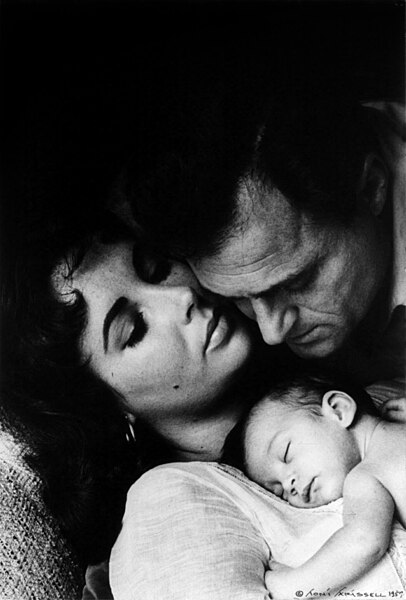
] that “a child” [“do thái” ~ “because of goliath/big/great/adult/harvest/pick fruit”] seems to have “disappeared” becoming “a man” …
Cat’s In The Cradle https://en.m.wikipedia.org/wiki/Cat%27s_in_the_Cradle
The song’s lyrics began as a poem written by Harry’s wife, Sandra “Sandy” Gaston; the poem itself was inspired by the awkward relationship between her first husband, James Cashmore, and his father, John, a politician who served as Brooklyn borough president. She was also inspired by a country music song she had heard on the radio.[4] Chapin also said the song was about his own relationship with his son, Josh,
child inside the man:
Yoko Ono John Lennon Woman
Vitruvius Technologos
5 years ago
Yoko Ono John Lennon Woman
“Woman”
(from “Imagine: John Lennon” soundtrack)
For the other half of the sky
Woman, I can hardly express,
My mixed emotion at my thoughtlessness,
After all I’m forever in your debt,
And woman, I will try to express,
My inner feelings and thankfulness,
For showing me the meaning of success,
Ooh, well, well,
Ooh, well, well,
Woman, I know you understand
The little child inside the man,
Please remember my life is in your hands,
And, woman, hold me close to your heart,
However distant don’t keep us apart,
After all it is written in the stars,
Ooh, well, well,
Ooh, well, well,
Woman, please let me explain,
I never meant to cause you sorrow or pain,
So let me tell you again and again and again,
I love you (yeah, yeah) now and forever,
I love you (yeah, yeah) now and forever,
I love you (yeah, yeah) now and forever,
I love you (yeah, yeah).
Peanuts Creator Charles Schulz Didn’t Like the Classic Comic’s Name Merrill FabryOctober 1, 2015 The April 9, 1965, cover of TIME The April 9, 1965, cover of TIME TIME When first daily Peanuts comic ran on Oct. 2, 1950—exactly 65 years ago this Friday—its creator, Charles M. Schulz, had plenty to be happy about. But not everything was sunny: he didn’t like the name that had been given to his creation. Schulz had previously published a cartoon called Li’l Folks, which included forerunners of the Peanuts characters, and didn’t want to change the name. Schulz told TIME in 1965, when the magazine ran a cover story about Charlie Brown’s place in American culture, “I wanted to keep Li’l Folks. I wanted a strip with dignity and significance. ‘Peanuts’ made it sound too insignificant.” So how did Peanuts get its name? Schulz was working as an art teacher at a Minneapolis art school when he sold his first cartoon in 1948 to the Saturday Evening Post. Li’l Folks came soon after, in the St. Paul Pioneer Press, which ran the strip anywhere the editor had space to put it. He stopped drawing it after a year, because the editor wouldn’t give him more money or a regular spot. At that point, Schulz, still working as an art teacher, pursued comic syndication contracts and was rejected from a number of services. In 1950 United Feature Syndicate accepted Schulz’s Li’l Folks. But before it could be published, the syndicate wanted to change the name. Al Capp’s strip Li’l Abner had premiered in 1934 and ran until 1977, and Tack Knight’s Little Folks comic ran in the 1930s, so Schulz’s title raised concerns over copyright infringement. A syndicate editor chose the name Peanuts, despite Schulz’s protests. The syndicate initially ran the comic strip in seven papers across the U.S., according the Charles M. Schulz Museum—adding that, even many years after the death of Li’l Folks, Schulz remained displeased at its new name. Even so, he didn’t let the name get in the way: Schulz would continue to work on Peanuts for the rest of his life. Read more about Charles Schulz and Peanuts, here in the TIME Vault: Good Grief Contact us at editors@time.com.
bà lạc in los angeles where dì tư cô diệp moved and then married joe and have bobo who recently it is reported supposedly by dì ba cô diễm is not drinking milk and eating with regular gusto …
from Shakespeare’s King Lear:
EDGAR
What, in ill thoughts again? Men [“everyman“: humanity including both man and woman] must endure [“endure” has several shades of meaning … because the serpent’s tongue is forked {dahlia showed ba’c ty’ “new trick” of changing a spoon into a fork this morning} … the “ill thoughts” shade of meaning is “accept” what is fated what is unchangeable etc. … the “come on” meaning is {“outlast” or} “abides forever” such as for example ecclesiastes “the earth abides forever”: biblical “in the image” suggests that the sun too “abides forever” … for example previous note discussion of the midnight sun
The midnight sun
WHERE THE SUN NEVER SETS
Like a prolonged sunset and sunrise all at once, this natural phenomena colours heaven and earth in a reddish yellow light. Welcome to “the land of the midnight sun”.
SLETTNES, NORDKYN. PHOTO: CHRISTOFFER ROBIN JENSEN
…………………………
WHAT IS THE MIDNIGHT SUN?
The midnight sun is a natural phenomenon that occurs during summer in places south of the Antarctic Circle and north of the Arctic Circle – including Northern Norway.
The earth is rotating at a tilted axis relative to the sun, and during the summer months, the North Pole is angled towards our star. That’s why, for several weeks, the sun never sets above the Arctic Circle.
Svalbard is the place in Norway where the midnight sun occurs for the longest period. Here, the sun doesn’t set between 20 April and 22 August.
It’s tempting to wonder about all the sights and experiences that have been made under the midnight sun through the ages – by people living off the sea in the Lofoten and Vesterålen archipelagos, or the Sami reindeer herders of the far north.
The phenomena has at least made a lasting impression on several Norwegian artists and writers. This excerpt is from Knut Hamsuns Pan (1894): “Night was coming on again; the sun just dipped into the sea and rose again, red, refreshed, as if it had been down to drink. I could feel more strangely on those nights than anyone would believe …”
LOFOTEN. PHOTO: JØRN ALLAN PEDERSEN / VISITNORWAY.COM
Travel to the areas above the Arctic Circle in Norway and live these moments yourself: Doing a whale safari or exploring the wilderness inland takes on a new dimension at night in the summer months, when you literally get to see the nature and wildlife in a different light.
If you’re not afraid of the sometimes chilly summer nights in the north, you could try a midnight swim – or pitch your tent in the wild and stay up with the sun. Many sights and activities are open at night during these weeks, so you can go midnight golfing, cycling, river paddling, or sea kayaking – or maybe just find a quiet spot to fish.
If you travel to the Arctic islands of Svalbard, the sun doesn’t set between April and late August. Here, you can do a midnight walk on a glacier or look at the reddish sky from a moving dogsled, experiencing the unique climate and nature near the North Pole.
mapping relation function “you believe what you want to believe …” Tom Petty and the Heartbreaker world K consisting of
previous notes suggest that like 1 corinthian 13 humanity might pass through life stages similar to human life stages and in one of these liffe stages of humanity it might so happen that humanity might be able to transcend all of the conditions supposedly prince siddartha the future buddha supposedly saw at the 4 gates to his palace and thus be able to realize the “abides forever” or “endure” forever condition … though previous notes pointed out because it is ‘the best of all possible worlds” and because entropy makes ‘sameness’ “boring” once [currently various cloning levels of the physical human is perhaps within reach; cloning of the human spirit/soul is something else; harry chapin song cat’s cradle] humanity have succeeded ‘abiding forever’ humanity might very well allow/submit itself to the illusion of {“sleep”} ‘the sun sets and the sun also rises and there’s nothing new under the sun’ even though the sun has always ‘abided forever’ …
Bob Dylan’s “Forever Young”
ROD STEWART & RUBY STEWART FOR EVER YOUNG (SUBTITULADA)
]
10Their going hence even as their coming hither.
Ripeness [“ripeness” ~ “chín” ~ “china-home of ‘ren’ 人”] is all. Come on.
8 Simple Rules (originally 8 Simple Rules for Dating My Teenage Daughter for the first season) is an American sitcom comedy television show, originally starring John Ritter and Katey Sagal as middle-class parents Paul and Cate Hennessy raising their three children. Kaley Cuoco, Amy Davidson, and Martin Spanjers co-starred as their teenage kids; Bridget, Kerry, and Rory Hennessy. The series ran on ABC from September 17, 2002 to April 15, 2005. The first season focused on Paul being left in charge of the kids after Cate takes a full-time job as a nurse, with comedic emphasis on his often strict rules concerning his daughters and dating. The series’ name and premise were derived from the book 8 Simple Rules for Dating My Teenage Daughter by W. Bruce Cameron.[1] https://en.m.wikipedia.org/wiki/8_Simple_Rules and https://en.m.wikipedia.org/wiki/8_Simple_Rules_(season_1) Summary Edit Non-free media information and use rationale – non-free video cover for 8 Simple Rules (season 1) Description This is the cover art of 8 Simple Rules: The Complete First Season. The cover art copyright is believed to belong to the publisher of the video or the studio which produced the video. Source It is believed that the cover art can or could be obtained from the publisher or studio. Article 8 Simple Rules (season 1) Portion used The entire front cover. Because the image is cover art, a form of product packaging, the entire image is needed to identify the product, properly convey the meaning and branding intended, and avoid tarnishing or misrepresenting the image. Low resolution? The copy is of sufficient resolution for commentary and identification but lower resolution than the original video cover. Copies made from it will be of inferior quality, unsuitable as artwork on pirate versions or other uses that would compete with the commercial purpose of the original artwork. Purpose of use Main infobox. The image is used for identification in the context of critical commentary of the work for which it serves as cover art. It makes a significant contribution to the user’s understanding of the article, which could not practically be conveyed by words alone. The image is placed in the infobox at the top of the article discussing the work, to show the primary visual image associated with the work, and to help the user quickly identify the work and know they have found what they are looking for. Use for this purpose does not compete with the purposes of the original work, namely the video cover creator’s ability to provide video cover design services and in turn marketing video to the public. Replaceable? As a video cover, the image is not replaceable by free content; any other image that shows the packaging of the video would also be copyrighted, and any version that is not true to the original would be inadequate for identification or commentary. Other information Use of the video cover in the article complies with Wikipedia non-free content policy and fair use under United States copyright law as described above. Licensing Edit This image is the cover of a videotape, DVD, Blu-ray, etc. and the copyright for it is most likely owned by either the publisher of the video or the studio which produced the video in question. It is believed that the use of low-resolution images of video covers to illustrate the videotape or disc in question on the English-language Wikipedia, hosted on servers in the United States by the non-profit Wikimedia Foundation, qualifies as fair use under the Copyright law of the United States. Any other uses of this image, on Wikipedia or elsewhere, may be copyright infringement. See Wikipedia:Non-free content for more information.just two rules short of bible moses [in the bullrushes: cat’s cradle above] 10 rules/commandments …
“Original first edition cover art of “”The Sun Also Rises.”” The 1926 novel was written by American author Ernest Hemingway about a group of American and British expatriates who travel from Paris to the Festival of San Ferm?n in Pamplona to watch the running of the bulls and the bullfights. Scribner’s published the novel on 22 October 1926. Its first edition consisted of 5090 copies, selling at $2.00 per copy. Cleonike Damianakes (b. 1895 – 1979) illustrated the dust jacket with a Hellenistic design of a seated, robed woman, her head bent to her shoulder, eyes closed, one hand holding an apple, her shoulders and a thigh exposed.”
Hemingway presents his notion that the “Lost Generation“—considered to have been decadent, dissolute, and irretrievably damaged by World War I—was in fact resilient and strong.[4]
…
The themes of The Sun Also Rises appear in its two epigraphs. The first is an allusion to the “Lost Generation“, a term coined by Gertrude Stein referring to the post-war generation;[note 2][28] the other epigraph is a long quotation from Ecclesiastes: “One generation passeth away, and another generation cometh: but the earth abideth for ever. The sun also ariseth, and the sun goeth down, and hasteth to his place where he arose.”[29] Hemingway told his editor Max Perkins that the book was not so much about a generation being lost, but that “the earth abideth forever.” He thought the characters in The Sun Also Risesmay have been “battered” but were not lost.[4]
may “you’re ok/well; i’m ok/well” “muôn loài được bình thường lành mạnh sống lâu; everyone live well and long” …
Welcome, O life! I go to encounter for the millionth time the reality of experience and to forge in the smithy of my soul the uncreated conscience of my race.
an episode from “the monkey king” or “journey to the west”: Buddha scolded,”You little stinker.You haven’t jumped out of my palm.Look down.”When Wu-k’ung lowered his head,he found that on the middle finger of Buddha was the line of words which he had just written.And from the fingers came the powerful smell of monkey urine.
This unique architectural feat now welcomes visitors.
Photograph by Peter Hirth, Redux
A pair of giant, stone hands emerge from the verdant hills of Vietnam, lifting a gleaming bridge toward the sky. Cau Vang (meaning “gold bridge”) just opened near Da Nang in the heart of the country, adding yet another reason to explore the ever-popular destination.
Suspended almost 4,600 feet above sea level, the bridge combines eight sections and stretches 500 feet long. The hands appear weathered as if constructed centuries ago. Visitors can stroll through rows of purple chrysanthemums for uninterrupted views of the rolling Trường Sơn Mountains.
Cau Vang bridge rises above the Thien Thai gardens at the Bà Nà Hills Resort. Opened in 1919 by French colonists with around 200 villas, today the area holds attractions like an alpine roller coaster and the longest nonstop, single-track cable car, according to Guinness World Records.
Reports show this bridge as part of a $2 billion project to entice tourists in the area. No one claimed credit for the impressive design as their own, but architectural renderings appear suggest the Vietnamese landscape company TA Corporation.
Eden Ahbez + Cole & Boone – Nature Boy Live
may “you’re ok/well; i’m ok/well” “muôn loài được bình thường lành mạnh sống lâu; everyone live well and long” …


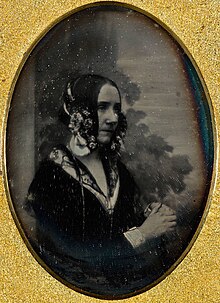

“A Touch of the Poet” left to right, Brendan Ferrell, Matt McKenzie, and Julia McIlvaine | Vitor Martins


![https://lists.rootsweb.com/hyperkitty/list/ireland@rootsweb.com/thread/4478356/ leon uris trinity the frontispiece quote [IRELAND] Historical Novel "Trinity" by Leon URIS (1976) Jean R. 7/30/2007, 7:35:22 AM BOOK REVIEW: "There is no present or future - only the past, happening over and over again - now." That is a line from Eugene O'Neill's "A Moon for the Misbegotten." In 1976 celebrated author Leon URIS published his powerful 751-page novel "Trinity," set in Ireland between the period of the famine of the 1840s and the Easter Rising of 1916. Per the author, much background research went into his work which gives voice to the generations of Catholic hill farmers in Donegal fighting for survival against the harshness of the land and the injustice in their lives. His novel also attempts to give us insight into the times and events from the perspective of families of the British aristocracy, who ventured to Ireland to conquer, colonize and exploit. Also portrayed are the lives of devout Belfast shipyard workers whose Scottish-Presbyterian ancestors were planted in Ulster to secure the Crown's interests. "This is his Trinity, the oil and water of the Irish epic that would never mix, their interrelations of love and hate in a terrible and beautiful drama spanning over half a century." You should be able to find a copy in your local library if the subject](https://i0.wp.com/stoppauseplayfastforwardrewindejectrecord.us/blog1/wp-content/uploads/2016/04/220px-TrinityUris.jpg)


 tv co dau 8 tuoi kananji pinches anandi’s cheek “so cute” as the latter told kananji not to lie like her such as about going to mumbai to obtain jadit’s divorce signature …


.jpg)


 for example the fire of “vicious circles” instead of good circles) … [incidentally, the choice pascal wagers on itself–namely “you’re ok/well; i’m ok/well”–is a type of “fire” itself, the “good” “fire” of hearth and home for example, because that choice tends to produce the result of “have eyes/ears/mouth but as though could only see/hear/say good/goodness/godness/godliness/god”: “darkness at noon” so to speak] …


![Ernst Mach’s suggestion that inertial motion is not governed by Newton’s absolute space and time but by the totality of masses in the universe [1, 2, 3, 4] was the primary stimulus to Einstein’s creation of general relativity ... The Definition of Mach's Principle Julian Barbour (Submitted on 20 Jul 2010) Two definitions of Mach's principle are proposed. Both are related to gauge theory, are universal in scope and amount to formulations of causality that take into account the relational nature of position, time, and size. One of them leads directly to general relativity and may have relevance to the problem of creating a quantum theory of gravity. Comments: To be published in Foundations of Physics as invited contribution to Peter Mittelstaedt's 80th Birthday Festschrift. 30 pages Subjects: General Relativity and Quantum Cosmology (gr-qc) Journal reference: Found.Phys.40:1263-1284,2010 DOI: 10.1007/s10701-010-9490-7 Cite as: arXiv:1007.3368 [gr-qc] (or arXiv:1007.3368v1 [gr-qc] for this version)](https://i0.wp.com/stoppauseplayfastforwardrewindejectrecord.us/blog1/wp-content/uploads/2019/03/0760F2EC-0534-4BE1-BE29-87EA866EFC0D.jpeg)


![8 Simple Rules (originally 8 Simple Rules for Dating My Teenage Daughter for the first season) is an American sitcom comedy television show, originally starring John Ritter and Katey Sagal as middle-class parents Paul and Cate Hennessy raising their three children. Kaley Cuoco, Amy Davidson, and Martin Spanjers co-starred as their teenage kids; Bridget, Kerry, and Rory Hennessy. The series ran on ABC from September 17, 2002 to April 15, 2005. The first season focused on Paul being left in charge of the kids after Cate takes a full-time job as a nurse, with comedic emphasis on his often strict rules concerning his daughters and dating. The series' name and premise were derived from the book 8 Simple Rules for Dating My Teenage Daughter by W. Bruce Cameron.[1] https://en.m.wikipedia.org/wiki/8_Simple_Rules and https://en.m.wikipedia.org/wiki/8_Simple_Rules_(season_1) Summary Edit Non-free media information and use rationale – non-free video cover for 8 Simple Rules (season 1) Description This is the cover art of 8 Simple Rules: The Complete First Season. The cover art copyright is believed to belong to the publisher of the video or the studio which produced the video. Source It is believed that the cover art can or could be obtained from the publisher or studio. Article 8 Simple Rules (season 1) Portion used The entire front cover. Because the image is cover art, a form of product packaging, the entire image is needed to identify the product, properly convey the meaning and branding intended, and avoid tarnishing or misrepresenting the image. Low resolution? The copy is of sufficient resolution for commentary and identification but lower resolution than the original video cover. Copies made from it will be of inferior quality, unsuitable as artwork on pirate versions or other uses that would compete with the commercial purpose of the original artwork. Purpose of use Main infobox. The image is used for identification in the context of critical commentary of the work for which it serves as cover art. It makes a significant contribution to the user's understanding of the article, which could not practically be conveyed by words alone. The image is placed in the infobox at the top of the article discussing the work, to show the primary visual image associated with the work, and to help the user quickly identify the work and know they have found what they are looking for. Use for this purpose does not compete with the purposes of the original work, namely the video cover creator's ability to provide video cover design services and in turn marketing video to the public. Replaceable? As a video cover, the image is not replaceable by free content; any other image that shows the packaging of the video would also be copyrighted, and any version that is not true to the original would be inadequate for identification or commentary. Other information Use of the video cover in the article complies with Wikipedia non-free content policy and fair use under United States copyright law as described above. Licensing Edit This image is the cover of a videotape, DVD, Blu-ray, etc. and the copyright for it is most likely owned by either the publisher of the video or the studio which produced the video in question. It is believed that the use of low-resolution images of video covers to illustrate the videotape or disc in question on the English-language Wikipedia, hosted on servers in the United States by the non-profit Wikimedia Foundation, qualifies as fair use under the Copyright law of the United States. Any other uses of this image, on Wikipedia or elsewhere, may be copyright infringement. See Wikipedia:Non-free content for more information.](https://i0.wp.com/stoppauseplayfastforwardrewindejectrecord.us/blog1/wp-content/uploads/2018/11/D0FC04FD-9DFD-4FCC-95A6-65A110E29F01.jpeg)


 stoppauseplayfastforwardrewindejectrecorddotnet