Ubuntu (Zulu pronunciation: [ùɓúntʼù])[1][2] is a NguniBantu term meaning “humanity”. It is often translated as “I am because we are,” or “humanity towards others”, but is often used in a more philosophical sense to mean “the belief in a universal bond of sharing that connects all humanity”.[3]
In Southern Africa, it has come to be used as a term for a kind of humanist philosophy, ethic, or ideology, also known as Ubuntuism propagated in the Africanisation (transition to majority rule) process of these countries during the 1980s and 1990s.
Since the transition to democracy in South Africa with the Nelson Mandela presidency in 1994, the term has become more widely known outside of Southern Africa, notably popularised to English-language readers through the ubuntu theology of Desmond Tutu.[4] Tutu was the chairman of the South African Truth and Reconciliation Commission (TRC), and many have argued that ubuntu was a formative influence on the TRC.
The term ubuntu appears in South African sources from as early as the mid-19th century. Reported translations covered the semantic field of “human nature, humanness, humanity; virtue, goodness, kindness”. Grammatically, the word combines the root -ntʊ̀ “person, human being” with the class 14ubu- prefix forming abstract nouns,[5] so that the term is exactly parallel in formation to the abstract noun humanity.[6]
The concept was popularised in terms of a “philosophy” or “world view” (as opposed to a quality attributed to an individual) beginning in the 1950s, notably in the writings of Jordan Kush Ngubane published in the African Drum magazine. From the 1970s, the ubuntu began to be described as a specific kind of “African humanism”. Based on the context of Africanisation propagated by the political thinkers in the 1960s period of decolonisation, ubuntu was used as a term for a specifically African (or Southern African) kind of humanism found in the context of the transition to majority rule in Zimbabwe and South Africa. The first publication dedicated to ubuntu as a philosophical concept appeared in 1980, Hunhuism or Ubuntuism: A Zimbabwe Indigenous Political Philosophy (hunhu being the Shona equivalent of Nguni ubuntu) by Stanlake J. W. T. Samkange. Hunhuism or Ubuntuism is presented as political ideology for the new Zimbabwe, as Southern Rhodesia was granted independence from the United Kingdom.
From Zimbabwe, the concept was taken over in South Africa in the 1990s as a guiding ideal for the transition from apartheid to majority rule. The term appears in the Epilogue of the Interim Constitution of South Africa (1993), “there is a need for understanding but not for vengeance, a need for reparation but not for retaliation, a need for ubuntu but not for victimisation”.[7]
There are many different, and not always compatible, definitions of what ubuntu is (for a survey of how ubuntu is defined among South Africans see Gade 2012: “What is Ubuntu? Different Interpretations among South Africans of African Descent”[9]). Ubuntu asserts that society, not a transcendent being, gives human beings their humanity. An example is a Zulu-speaking person who when commanding to speak in Zulu would say “khuluma isintu,” which means “speak the language of people”. When someone behaves according to custom, a Sotho-speaking person would say “ke motho,” which means “he/she is a human”. The exclusionary and abhorrent aspect of this would be exemplified by a tale told (often, in private quarters) in Nguni “kushone abantu ababili ne Shangaan”, in Sepedi “go tlhokofetje batho ba babedi le leShangane”, in English (two people died and one Shangaan). In each of these examples, humanity comes from conforming to or being part of the tribe.
According to Michael Onyebuchi Eze, the core of ubuntu can best be summarised as follows:
An “extroverted communities” aspect is the most visible part of this ideology. There is sincere warmth with which people treat both strangers and members of the community. This overt display of warmth is not merely aesthetic but enables formation of spontaneous communities. The resultant collaborative work within these spontaneous communities transcends the aesthetic and gives functional significance to the value of warmth. How else are you to ask for sugar from your neighbour? Warmth is not the sine qua non of community formation but guards against instrumentalist relationships. Unfortunately, sincere warmth may leave one vulnerable to those with ulterior motives.[11]
“Ubuntu” as political philosophy encourages community equality, propagating the distribution of wealth. This socialisation is a vestige of agrarian peoples as a hedge against the crop failures of individuals. Socialisation presupposes a community population with which individuals empathise and concomitantly, have a vested interest in its collective prosperity. Urbanisation and the aggregation of people into an abstract and bureaucratic state undermines this empathy. African Intellectual historians like Michael Onyebuchi Eze have argued however that this ideal of “collective responsibility” must not be understood as absolute in which the community’s good is prior to the individual’s good. On this view, ubuntu it is argued, is a communitarian philosophy that is widely differentiated from the Western notion of communitarian socialism. In fact, ubuntu induces an ideal of shared human subjectivity that promotes a community’s good through an unconditional recognition and appreciation of individual uniqueness and difference[12]Audrey Tang has suggested that Ubuntu “implies that everyone has different skills and strengths; people are not isolated, and through mutual support they can help each other to complete themselves.”[13]
“Redemption” relates to how people deal with errant, deviant and dissident members of the community. The belief is that man is born formless like a lump of clay. It is up to the community, as a whole, to use the fire of experience and the wheel of social control to mould him into a pot that may contribute to society. Any imperfections should be borne by the community and the community should always seek to redeem man. An example of this is the statement by the African National Congress (in South Africa) that it does not throw out its own but rather redeems. A possible limitation of this is that not all clay is the same, an as such not all people are confined to specific social constructs. Likewise, not all people are the same or similar, and not all people are fated to have the same or similar function.
In the Shona language, the majority spoken language in Zimbabwe, ubuntu is unhu. The concept of ubuntu is viewed the same in Zimbabwe as in other African cultures, and the Zulu saying is also common in Shona: munhu munhu nekuda kwevanhu.
Stanlake J. W. T. Samkange (1980) highlights the three maxims of Hunhuism or Ubuntuism that shape this philosophy: The first maxim asserts that ‘To be human is to affirm one’s humanity by recognizing the humanity of others and, on that basis, establish respectful human relations with them.’ And ‘the second maxim means that if and when one is faced with a decisive choice between wealth and the preservation of the life of another human being, then one should opt for the preservation of life’. The third ‘maxim’ as a ‘principle deeply embedded in traditional African political philosophy’ says ‘that the king owed his status, including all the powers associated with it, to the will of the people under him’.
While sharing is incorporated within “unhu”, it is only one of the multiplicity of virtues within “unhu”. In the “unhu” domain, visitors do not need to burden themselves with carrying provisions – all they need is to dress properly and be on the road. All visitors are provided for and protected in every home they pass through without payment being expected. In fact, every individual should try his or her best to make visitors comfortable – and this applies to everyone who is aware of the presence of a visitor within a locality.
Other manifestations of ubuntu are that it is taboo to call elderly people by their given names; instead they are called by their surnames. This is formed through mirroring the individualism of others, and then combining it with a representative role, in which the individual effectively stands for the people among whom he comes from at all times. The individual identity is replaced with the larger societal identity within the individual. Thus, families are portrayed or reflected in the individual and this phenomenon is extended to villages, districts, provinces and regions being portrayed in the individual. This places encouragement on the individual to behave in the highest standards, and to portray the highest possible virtues that society strives for. “Unhu” embodies all the invaluable virtues that society strives for towards maintaining harmony and the spirit of sharing among its members.
A key concept associated with “unhu” is how we as a society behave and interact in our various social roles, e.g., daughters-in-law traditionally kneel down when greeting their parents-in-law and serve them food as a sign of respect; to maintain the highest standards of behaviour that will be extended or reflected to her family and all the women raised in that family. The daughter-in-law does this as part of the ambassadorial function that she plays and assumes at all times. However, this does not apply only to daughters-in-law but to all women in general, even among friends and equals such as brother and sister.
Under “unhu” children are never orphans since the roles of mother and father are by definition not vested in a single individual with respect to a single child. Furthermore, a man or a woman with “unhu” will never allow any child around them to be an orphan.
The concept of “unhu” also constitutes the kernel of African Traditional Jurisprudence as well as leadership and governance. In the concept of unhu, a crime committed by one individual on another extends far beyond the two individuals, and has far-reaching implications to the people from among whom the perpetrator of the crime comes. Unhu jurisprudence tends to support remedies and punishments that tend to bring people together. For instance, a crime of murder would lead to the creation of a bond of marriage between the victim’s family and the accused’s family; in addition to the perpetrator being punished both inside and outside his social circles. The role of “tertiary perpetrator” to the murder crime is extended to the family and society where the individual perpetrator hails from. However, the punishment of the tertiary perpetrator is a huge fine and a social stigma, which they must shake off after many years of demonstrating unhu or ubuntu. A leader who has unhu is selfless, consults widely, and listens to subjects. Such a person does not adopt a lifestyle that is different from the subjects, but lives among them and shares property. A leader who has “unhu” does not lead, but allows the people to lead themselves and cannot impose his will on his people, which is incompatible with “unhu”.
Tim Jackson refers to Ubuntu as a philosophy that supports the changes he says are necessary to create a future that is economically and environmentally sustainable[17]. Judge Colin Lamont expanded on the definition during his ruling on the hate speech trial of Julius Malema:[18].
In Malawi, the same philosophy is called “uMunthu”.[20] According to the Catholic Diocese of Zomba bishop Rt. Rev. Fr. Thomas Msusa, “The African worldview is about living as one family, belonging to God”.[21] Msusa noted that in Africa “We say ‘I am because we are’, or in Chichewakali kokha nkanyama, tili awiri ntiwanthu(when you are on your own you are as good as an animal of the wild; when there are two of you, you form a community).”
The philosophy of uMunthu has been passed on through proverbs such as Mwana wa mnzako ngwako yemwe, ukachenjera manja udya naye (your neighbor’s child is your own, his/her success is your success too).[21] Some notable Malawian uMunthu philosophers and intellectuals who have written about this worldview are Augustine Musopole, Gerard Chigona, Chiwoza Bandawe, Richard Tambulasi, Harvey Kwiyani and Happy Kayuni. This includes Malawian philosopher and theologist Harvey Sindima’s treatment of uMunthu as an important African philosophy is highlighted in his 1995 book ‘Africa’s Agenda: The legacy of liberalism and colonialism in the crisis of African values’.[22] In film, the English translation of the proverb lent its hand to forming the title of Madonna‘s documentary, I Am Because We Are about Malawian orphans.
previous notes suggest that some translation of ubuntu made the word too passive–too “slave-ish”–for example “i am because we are” opens ubuntu to the choices blaise pascal suggest to avoid in his pascal’s wager: an active translation such as for example “i have humanity because we have humanity” would be more like blaise pascal’s choice in his wager
operazine
Published on Jan 4, 2018
SUBSCRIBE 980
In the film “Young Toscanini,” an opera diva (La Taylor) interrupts a performance of “Aida” to call for the abolition of slavery.
Category
Music
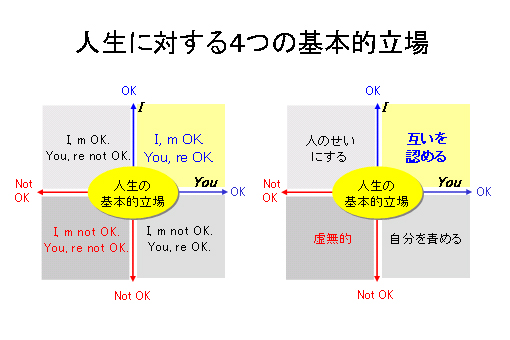
well, everyone are slaves to god’s will … everyone are slave to “you’re ok/well; i’m ok/well” “muôn loài được bình thường sống lâu; everyone live well and long” …
elizabeth taylor as abraham lincoln in film the young toscanini
Backstory: The Egyptians have captured and enslaved Aida, an Ethiopian princess. An Egyptian military commander, Radamès, struggles to choose between his love for her and his loyalty to the King of Egypt. To complicate the story further, the King’s daughter Amneris is in love with Radamès, although he does not return her feelings.
The Triumphal Scene of the second act of Verdi’s Aida was well underway, with all of the extras actively engaged in one of grand opera’s most elaborate ensemble displays. Wave after wave of dancers, laden with the spoils of war, completely filled the main stage.
They were followed almost immediately by the appearance of Signor Bertini (Metropolitan Opera tenor Carlo Bergonzi, in a ridiculous but no less authentic handlebar mustache) as Radamès, the victorious Egyptian general in charge. Trumpets proclaiming his arrival blare forth from every corner of the auditorium, to the spectators’ growing excitement and delight.
Just as the chorus of high priests announces the entrance of the defeated Ethiopian captives, now permanently enslaved to the haughty Egyptian empire, the prima donna portraying the slave princess Aida holds up her hand to quiet the proceedings.
Taking his cue from the singer, the wiry conductor Arturo Toscanini, played by the even wirier C. Thomas Howell, brings the massive spectacle to a halt, as the star soprano, Madame Nadia Bulichoff — interpreted by American actress Elizabeth Taylor, a notoriously flamboyant diva in her own right — makes an impassioned, impromptu speech against the evils of slavery.
Elizabeth Taylor (tumblr.com)
Her words and glances are directed upward, toward the private parterre box where the emperor of Brazil, Dom Pedro II (French actor Philippe Noiret, in a flowing gray-white beard), sits with his entourage, attempting to enjoy the show. His imperial glare strongly implies a certain lack of sympathy for the soprano’s liberal stance, as well as hints of a previous “encounter” he would rather not be reminded of at that point.
Nevertheless, Bulichoff’s show-stopping oratory hits her intended target, as the emperor dutifully rises and exits the opera, followed by his royal retinue; amid the cheers, boos, and bravos of the delirious audience members, and to the prima donna’s spontaneous shout of “Long live Brazil!”
Undeterred by the goings-on, the young maestro radiates admiration and respect for the older artist’s bold resolve, as unheralded in its way as his own appearance was earlier that same evening.
* * *
This thoroughly entertaining clip from the limited-release 1988 film Il giovane Toscanini (known by its American-English title as YoungToscanini), directed by famed auteur Franco Zeffirelli, superbly dramatizes the very real and unscheduled debut of the illustrious Italian conductor in a late nineteenth-century Rio de Janeiro opera house — with the fictitious episode above excepted and duly noted.
Playing fast and loose with the facts, the picture was lambasted in serious circles for the liberties that were taken in its depiction of this oft-repeated “rags-to-riches” story. Its centerpiece quite properly focused on the young Arturo’s surprise conducting appearance.
Beginning, comically enough, with the opera company’s impresario, one Claudio Rossi (an egregiously miscast John Rhys-Davies, of Indiana Jones and Lord of the Rings fame, whose looks were about as Italian as Miss Taylor’s), it details his pathetic attempts at placating an unruly theater audience so that a performance of Aida could take place there. It concludes, in all-too formulaic a fashion, with the serendipitous substitution of the unknown Arturo Toscanini, who succeeds in saving the day with his ovation-inducing podium assignment.
The tall and lanky Mr. Howell, impersonating a tall and lanky Toscanini* — while striving mightily to capture the maestro’s steely-eyed resolve and unrivaled intensity in the pit — is a far cry from the ferocious, hard-driving personality and widely-rumored scourge of symphony orchestras and opera houses that history has preserved for us.
It brings us little comfort, too, to learn that the movie never made it to Stateside. If it had, the picture would have been laughed off the screen for its absurd deviations from the norm. Surely the real Toscanini would never have tolerated any kind of disturbance, especially one coming from a boisterous Brazilian audience.
The truth would eventually win out and prove to be much more enticing than this fictionalized slice of cinema life. Or would it?
“Like a Prayer” is a song by American singer-songwriter Madonna from her fourth studio album of the same name (1989). Sire Records released it as the album’s lead single on March 21, 1989. Written and produced by Madonna and Patrick Leonard, “Like a Prayer” denoted a more artistic and personal approach to songwriting for Madonna, who believed that she needed to cater more to her adult audience. The song is about a passionate young girl in love with God, who becomes the only male figure in her life. “Like a Prayer” is a pop rock song that incorporates elements of gospel music. A choir provides background vocals that heighten the song’s spiritual nature, while rock guitar sounds keep the music dark and mysterious. Madonna introduced liturgical words in the lyrics—which were inspired by her Catholic upbringing—but changed the context in which they were used. Thus, they had dual meanings of sexual innuendo and religion. “Like a Prayer” was positively received by critics, and was a commercial success. It became Madonna’s seventh number-one single on the Billboard Hot 100 in the United States, and reached the top of the singles charts in Australia, Canada, Ireland, Italy, Japan, Sweden and the United Kingdom. The single is also memorable for its accompanying music video, which Mary Lambert directed. It features Madonna as a witness to a murder, as she hides in a church for safety. The clip also portrays Catholic symbols such as stigmata and burning crosses, and a dream about making love to a saint. After its release, the Vatican condemned the music video, while family and religious groups protested its broadcast. They boycotted products by soft drink manufacturer Pepsi, which used the song for a commercial. Madonna’s contract with Pepsi was subsequently canceled, although she was allowed to retain her initial fee. The song has been featured on three of Madonna’s concert tours, most recently the Sticky & Sweet Tour in 2008–09. “Like a Prayer” has been covered by many artists. The song is noted for the mayhem surrounding the music video, and the different interpretations of its content, leading to discussions among music and film scholars. Alongside its respective album, “Like a Prayer” has been marked as a turning point in Madonna’s career, as she began to be viewed as an efficient businesswoman—someone who knew how to sell a concept. Source:http://en.wikipedia.org/wiki/Like_a_P…) More information about Madonna: http://en.wikipedia.org/wiki/Madonna_…) Official Madonna’s site: http://mdna.madonna.com/
may you’re ok/well; i’m ok/well” “muôn loài được bình thường sống lâu; everyone live well and long” …





 stoppauseplayfastforwardrewindejectrecorddotnet