El amor brujo (Love, the Magician, literally, Spell-bound Love or The Bewitched Love, sometimes translated as Wedded by Witchcraft) is a ballet composed in 1914–15 by Manuel de Falla to a libretto by Gregorio Martínez Sierra. In 1916, Falla arranged a rendition of the work for sextet and small orchestra and the following year he made a concert version, also for small orchestra. Later, he fashioned a piano suite from it and finally, a second ballet version (1925) that features expanded orchestration, elimination of the narration, small cuts and plot changes, and a different order to the numbers.[1]
The work is distinctively Andalusian in character with the songs in the Andalusian Spanish dialect of the Gypsies. The music contains moments of remarkable beauty and originality; it includes the celebrated Danza ritual del fuego, “Canción del fuego fatuo” (Song of Wildfire, or Song Of The Will-o’-the-Wisp), and the “Danza del terror” (Dance of Terror).
Versions and performance history
Gitanería
El amor brujo was commissioned in 1914 as a gitanería (gypsy piece) by Pastora Imperio, a renowned flamenco gypsy dancer. It was scored for cantaora voice, actors and chamber orchestra and performed at the Teatro Lara, Madrid, on 15 April 1915, unsuccessfully.
Orchestral version
The following year, Falla revised the work by cutting its length, enlarging the orchestration, removing the dialogue and reducing the vocal part to three short songs for mezzo-soprano. This version was performed on 28 March 1916, by the Madrid Symphony Orchestra under Enrique Fernández Arbós.
Ballet
In 1924 Falla finished a transformation of El amor brujo into a one-act ‘ballet pantomímico’; it is in this version that the work is best known to this day. Published by Chester, the ballet was given in Paris the next year (1925) and by the Philadelphia Civic Opera Company at Philadelphia’s Metropolitan Opera House on 17 March 1927, with mezzo-soprano Kathryn Noll and conductor Alexander Smallens.
Piano suite
Later, the composer arranged a suite for piano solo (catalog G. 69) of four movements from the 1925 ballet: “Pantomima”, “Danza del terror”, “Romance del pescador”, and Danza ritual del fuego.
Synopsis
El amor brujo is the story of an Andalusian gypsy woman called Candela. Although her affection is for a man named Carmelo, as a girl she was promised to be married to another man (then a boy). After many years Candela’s husband has died (at the hands of the husband of a woman named Lucia), but he continues to haunt his wife.
The entire village knows about the haunting, but still brands Candela as crazy because she dances every night with her husband’s ghost (“Danza del terror”). Candela, now a widow, is free to establish a relationship with Carmelo, but continues to be haunted by her husband’s ghost.
After a conversation with other women of the village, Candela finally comes to realise that her husband was unfaithful to her, despite all her efforts to make their marriage work; her husband’s lover is revealed to have been Lucia.
Candela and Carmelo get advice that a ritual dance is necessary to cast the ghost off (“Danza ritual del fuego“), but it does not work. The ghost is still obsessed with Candela’s soul.
Candela manages to trick Lucía to come that night, with the excuse of hooking her up with Carmelo. As she turns up, the nightly ritual of Candela’s dance with her husband’s ghost begins, but at the last moment Candela moves away from her husband and Lucía is taken away by her now dead lover (“Danza del juego de amor”).
Dawn breaks, Candela and Carmelo are now truly free to enjoy their love.
Movements
Introducción y escena (‘Introduction and scene’)
En la cueva (‘In the cave’)
Canción del amor dolido (‘Song of suffering love’)
El aparecido (El espectro) (‘The apparition’)
Danza del terror (‘Dance of terror’)
El círculo mágico (Romance del pescador) (‘The magic circle’)
In 1986, Spanish director Carlos Saura directed El amor brujo based on the ballet, starring and choreographed by Antonio Gades. It was the third in his trilogy of dance films, following Bodas de sangre (Blood Wedding) and Carmen. The film filled out the story with spoken dialogue, but nevertheless used the entire score of the ballet, along with additional songs and dances performed by characters in the film. The Orquesta Nacional de España was conducted by Jesús López-Cobos, and the cante jondo singer heard on the soundtrack was Rocío Jurado. A soundtrack album, now out of print, was issued by EMI.
Music
The section “Cancion del Fuego Fatuo” was recorded in 1960 by jazz musician Miles Davis as “Will O’ the Wisp” in an arrangement by Gil Evans for their album Sketches of Spain.
In 1967 Francisco Rovira Beleta directed a film version of el amor brujoIn 1986, Spanish director Carlos Saura directed El amor brujo based on the ballet, starring and choreographed by Antonio Gades. It was the third in his trilogy of dance films, following Bodas de sangre (Blood Wedding) and Carmen. The film filled out the story with spoken dialogue, but nevertheless used the entire score of the ballet, along with additional songs and dances performed by characters in the film. The Orquesta Nacional de España was conducted by Jesús López-Cobos, and the cante jondo singer heard on the soundtrack was Rocío Jurado. A soundtrack album, now out of print, was issued by EMI.In 1986, Spanish director Carlos Saura directed El amor brujo based on the ballet, starring and choreographed by Antonio Gades. It was the third in his trilogy of dance films, following Bodas de sangre (Blood Wedding) and Carmen. The film filled out the story with spoken dialogue, but nevertheless used the entire score of the ballet, along with additional songs and dances performed by characters in the film. The Orquesta Nacional de España was conducted by Jesús López-Cobos, and the cante jondo singer heard on the soundtrack was Rocío Jurado. A soundtrack album, now out of print, was issued by EMI.
El amor brujo (Love, the Magician, or Wedded by Witchcraft) or Carlos Saura Dance Trilogy, Part 3: El Amor Brujo is a 1986 Spanish musical film written and directed by Carlos Saura. It was directed and choreographed in the flamenco style by Maria Pagès. It is the third part of the Saura’s flamenco trilogy he made in the 1980s, after Bodas de sangre in 1981 and Carmen in 1983. The film was screened out of competition at the 1986 Cannes Film Festival.[1]
Candela, who is loved by Carmelo, marries José in a pre-arranged marriage decided by their respective fathers. José is in love with the flirtatious Lucía and dies defending her honor. Carmelo is mistakenly arrested for the killing, and spends several years in prison. After being released, he declares his love for Candela.
Although Candela is now “free” to marry Carmelo she is haunted (and obsessed) by the ghost of José, who reappears every night to dance with her. Candela, while speaking with Lucía, learns that José pursued her even after he married Candela. She renounces him, but is unable to shake his hold on her. Tía Rosario provides the solution – Lucia must dance with José, an act which will exorcise his ghost forever. (It is never made clear if Lucía actually gives up her life to join him, but she never reappears in the film after their dance scene.)
Soundtrack
The film fleshed out the story with spoken dialogue and several songs, but used the entire score of the ballet. The Orquesta Nacional de España was conducted by Jesús López-Cobos. The singer heard on the soundtrack was the late Rocío Jurado. A soundtrack album, now out of print, was issued by EMI.
after cnn https://www.cnn.com/2018/03/01/asia/india-holi-explainer-intl/index.html Mythological roots The roots of the festival lie in the Hindu legend of Holika, a female demon, and the sister of the demon, King Hiranyakashayap. Hiranyakashayap believed he was the ruler of the universe and superior to all the gods. But his son, Prahlad, followed the god Vishnu, the preserver and protector of the universe. A trial by fire would decide: Holika had an enchanted shawl that protect,her from flames so she planned on jumping into the flames with Pralad on her lap. It turned out she was consumed by the fire because she was immune to fire only if she was alone.DescriptionThe arduous journey of a child bride, Anandi, from childhood to womanhood, as she strives to face every challenge and carve out her own identity. First episode date: July 21, 2008 Final episode date: July 31, 2016 Theme song: Choti Si Umar Number of episodes: 2,245 Networks: Colors, antv, Viacom 18, Nova television
holika or the lovers of el amor brujo did not seem to have made the right/correct choice initially … although in their defense, what seems wrong choices might have been actually only nearsightedness of the part for the whole (the great problem of evil of the west: if god is omniscience and omnipotent why did god permit what seem like evil choices … [well, supposedly a hint of the answer is that it only “seems” “evil” because you cannot stand in the shoes of others nor walk quite the exact same mile with others but you are only perceiving and imagining what other’s experience might be for all you know the other might have thought of their own experience not as evil but as good … at least according to assumption/affirmation/insistence of 1 corinthians 10:13
New Living Translation
The temptations in your life are no different from what others experience. And God is faithful. He will not allow the temptation to be more than you can stand. When you are tempted, he will show you a way out so that you can endure.
1Though I speak with the tongues of men and of angels, and have not charity, I am become as sounding brass, or a tinkling cymbal. 2And though I have the gift of prophecy, and understand all mysteries, and all knowledge; and though I have all faith, so that I could remove mountains, and have not charity, I am nothing. 3And though I bestow all my goods to feed the poor, and though I give my body to be burned, and have not charity, it profiteth me nothing.
4Charity suffereth long, and is kind; charity envieth not; charity vaunteth not itself, is not puffed up, 5Doth not behave itself unseemly, seeketh not her own, is not easily provoked, thinketh no evil; 6Rejoiceth not in iniquity, but rejoiceth in the truth; 7Beareth all things, believeth all things, hopeth all things, endureth all things.
8Charity never faileth: but whether there be prophecies, they shall fail; whether there be tongues, they shall cease; whether there be knowledge, it shall vanish away. 9For we know in part, and we prophesy in part. 10But when that which is perfect is come, then that which is in part shall be done away. 11When I was a child, I spake as a child, I understood qas a child, I thought as a child: but when I became a man, I put away childish things. 12For now we see through a glass, darkly; but then face to face: now I know in part; but then shall I know even as also I am known. 13And now abideth faith, hope, charity, these three; but the greatest of these is charity.
Que Sera Sera – Doris Day
Genco
Que Sera Sera – Doris Day
Genco22000
6 years ago|4.5K views
When I was just a little girl
I asked my mother what will I be
Will I be pretty will I be rich
Here’s what she said to me
Que Sera Sera
Whatever will be will be
The future’s not ours to see
Que Sera Sera
What will be will be
When I grew up and fell in love
I asked my sweetheart what lies ahead
Will we have rainbows day after day
Here’s what my sweetheart said
Que Sera Sera22000
6 years ago|4.5K views
When I was just a little girl
I asked my mother what will I be
Will I be pretty will I be rich
Here’s what she said to me
Que Sera Sera
Whatever will be will be
The future’s not ours to see
Que Sera Sera
What will be will be
When I grew up and fell in love
I asked my sweetheart what lies ahead
Will we have rainbows day after day
Here’s what my sweetheart said
Que Sera Sera
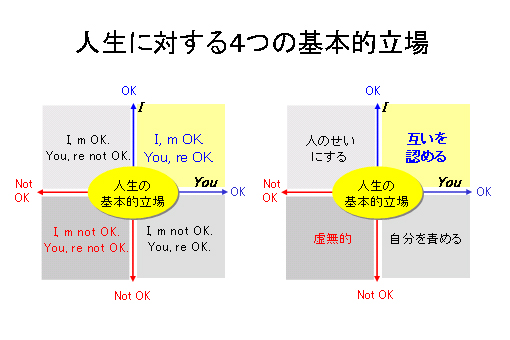
“what will be will be” will be abiding faith, hope, charity of which charity is the greatest … according to 1 corinthians 13
and “what will be will be” will be “you’re ok/well; i’m ok/well” “muôn loài được bình thường sống lâu; everyone live well and long” … according to blaise pascal’s wager …
all choices other than the choice blaise pascal wagers on–namely “you’re ok/well; i’m ok/well”–are like fire/flames (for example the fire of “vicious circles” instead of good circles) … [incidentally, the choice pascal wagers on itself–namely “you’re ok/well; i’m ok/well”–is a type of “fire” itself, the “good” “fire” of hearth and home for example, because that choice tends to produce the result of “have eyes/ears/mouth but as though could only see/hear/say good/goodness/godness/godliness/god”: “darkness at noon” so to speak] …
our heater seems to be having some kind of problem making loud noises as we head toward vernal equinox …
Safari – Mar 8, 2019 at 11:38 PM
historical yearly temperature for detroit, mihistorical yearly temperature for new haven, connecticut
may “you’re ok/well; i’m ok/well” “muôn loài được bình thường sống lâu; everyone live well and long” …
 Spanish film poster


.jpg)


 for example the fire of “vicious circles” instead of good circles) … [incidentally, the choice pascal wagers on itself–namely “you’re ok/well; i’m ok/well”–is a type of “fire” itself, the “good” “fire” of hearth and home for example, because that choice tends to produce the result of “have eyes/ears/mouth but as though could only see/hear/say good/goodness/godness/godliness/god”: “darkness at noon” so to speak] …


 stoppauseplayfastforwardrewindejectrecorddotnet