if only there were no weapons conveniently around to make heat of the moments so irreversible … if only heat of the moments were reversible … “sticks and stones might hurt my bones but words can never hurt me” …: because even the “bad guys” in the following movies of human bonding/kindness/love
The last, strange decade of Elizabeth’s life began with one of the most cataclysmic events in American history, the September 11, 2001, terrorist attacks. Michael Jackson was in New York, where he’d just given two concerts, on the 7th and 10th of September, at Madison Square Garden, to which he had brought two of his closest friends and idols: Marlon Brando and Elizabeth. His original idea had been for them to sit onstage like two great Easter Island figureheads flanking the show, but instead they sat in the audience. All three found themselves trapped in the city after the Twin Towers fell. Michael had gotten a call from friends in Saudi Arabia who warned that America was under attack. He hollered down the hallway of his hotel for everyone in his entourage, and for Brando, to leave immediately. Elizabeth was staying at another hotel, the St. Regis, a few blocks away. Now here’s where the story gets complicated. In one version, these three towering icons of American pop culture planned their escape, afraid that they would be the next target. Michael and Brando had trouble leaving their hotel garage because fans kept banging on the car windows, following them down the street, screaming. Unable to fly, they drove out of the city.
The actor Corey Feldman, whom Michael had befriended when Feldman was a child star, remembers that he and Michael had quarreled the previous night at Michael’s show, in Elizabeth’s dressing room backstage at Madison Square Garden. “Elizabeth hadn’t arrived yet, and then 9/11 happened. But I remember that [the next day] Michael was trying to get Elizabeth out! He was at first looking for a private jet,” Feldman recalls. “He wanted permission to fly out—but everything was surreal. I didn’t go with him.”
A former employee of Michael Jackson’s says that Michael, like General Washington, led his entourage to a temporary safe haven in New Jersey, before the three superstars took to the open road. “They actually got as far as Ohio—all three of them, in a car they drove themselves!” he recalls. Brando allegedly annoyed his traveling companions by insisting on stopping at nearly every KFC and Burger King they passed along the highway. One can only imagine the shock their appearance caused at gas stations and rest stops across America.
But one of Elizabeth’s close friends and assistants, who asks to remain anonymous, insists that Elizabeth did not flee New York with her two companions. “Elizabeth stayed behind,” he insists, “where she went to a church to pray, and she went to an armory where people were who couldn’t get home or who’d stayed behind to look for the missing. She also went down to Ground Zero, where she met with first responders. Eventually, the airports opened and she flew home.” She may well have done some of those things, though no reports surfaced in the media of sightings of Elizabeth Taylor ministering to the frightened and wounded or showing up at Ground Zero. But it was during and after the crisis that Elizabeth’s relationship with Michael—whom she already adored—deepened.
from https://nypost.com/2016/01/31/what-michael-jackson-elizabeth-taylor-and-marlon-brando-really-did-after-911/ What Michael Jackson, Elizabeth Taylor and Marlon Brando really did after 9/11 By Stacy Brown It’s an irresistible story: Three of the world’s most iconic superstars, Elizabeth Taylor, Michael Jackson and Marlon Brando, jumped in a car together to flee New York City after the Sept. 11, 2001, terror attacks. Liz, the ever-bejeweled dame of classic Hollywood; Brando, the greatest actor of his generation; and Jacko, the King of Pop, terrified, crammed into one car, grabbing KFC takeout and making pit stops at gas stations. And so Sky Arts Television’s “Elizabeth, Michael & Marlon” was born. The British TV production is expected to hit the airwaves this year, and it’s already stirring controversy with the casting of a white actor, Joseph Fiennes, to play Jackson. Unfortunately, it never really happened. I know, because I helped Jackson’s family return to California after the 9/11 terror attacks. The three legends — who never spoke publicly about their 9/11 experience before their deaths, fueling the urban legend that was first printed in Vanity Fair — were in New York to participate in Jacko’s two concerts at Madison Square Garden on Friday, Sept. 7, and Monday, Sept. 10. On Tuesday, Sept. 11, they awoke at their Plaza hotel suites to find chaos. Jackson had been up early, about 4:30 a.m., searching newspapers and scouring the television for the first reviews of his shows. As the catastrophe unfolded, Brando refused to leave his room. But Taylor took off to meet Debbie Reynolds, who had attended the concerts but needed to be back on the West Coast for an engagement. Taylor called her ex-husband, Virginia Sen. John Warner, to ask for help. Knowing that Taylor and Brando were OK, Jacko checked in on his mother, Katherine, and his brothers (they had performed with him for the first time in 17 years), who were staying across town at the W Hotel. I was friends with Jermaine, and since I was a longtime Queens resident, he asked for my help getting out of the city. Michael Jackson performs on Sept. 7, 2001, at Madison Square Garden.Getty Images I helped them book two RVs — each fit 18 passengers and were driven by their security guards. But Jacko was not with them. He had moved into the Trump International and sent his spokesman, Bob Jones, to check on Brando. “Brando doesn’t want to talk to anybody. He said he’s not going to come out of his room until the world ends,” Jones said. Jackson actually made his escape from New York in his tour bus two days after the attacks. Liz Taylor and Marlon Brando were not with him — but his young children Prince and Paris, friend Frank Cascio, Cascio’s brother Aldo and father, Dominick, and two security guards were. After learning that the Lincoln Tunnel had reopened, Jacko headed to the Meadowlands, stopping at a hotel near Giants Stadium before deciding to bunk at Cascio’s home in Franklin Lakes, NJ. Planes were still grounded. But something kept nagging at him — the fate of the dozens of fans who had camped outside The Plaza all week. He ordered the tour bus to return to Manhattan on Thursday and Friday to offer rides out of the city to anyone who needed them. “I’ve got to make sure they’re OK,” Jackson told me by telephone that Friday. “What would they think if I’m safe and they’re left hanging out there with nowhere to go? They came from England, they came from France and they came from Japan. How are they getting along?” Jackson wound up footing the bill for nearly three dozen fans to stay in New Jersey. He even treated them to fast food and movie outings. “We should get that in the newspapers,” Jones told Jacko. “No,” the singer protested. “The people in those buildings [the World Trade Center], the paramedics, firefighters, the police, the mayor. They should be in the newspapers.” Jackson stayed in the New York City area until late December, when he finally returned to Los Angeles. Stacy Brown is a freelance journalist and Michael Jackson biographer who for years had a close relationship with the Jackson family.
Elizabeth Taylor resists
703 views
3
0
SHARE
SAVE
operazine
Published on Jan 4, 2018
SUBSCRIBE 989
In the film “Young Toscanini,” an opera diva (La Taylor) interrupts a performance of “Aida” to call for the abolition of slavery.
elizabeth taylor as abraham lincoln in film the young toscanini
incidentally, kindness to fellow human beings become kindness to animals and other living things in
from https://en.m.wikipedia.org/wiki/The_Misfits_(1961_film) Plot In Reno, Nevada, Roslyn Tabor (Monroe) is a 30-year-old woman who has just filed for a quickie six-week divorce from her inattentive husband Raymond (McCarthy). After leaving the Washoe County Courthouse, Roslyn ignores Raymond’s attempts to talk to her, and meets with her best local friend and landlord, Isabelle Steers (Ritter), who is also a divorcee. Isabelle takes Roslyn to a bar at Harrah’s Reno for drinks to let the reality of her divorce sink in. While there, they meet an aging cowboy named Gaylord ‘Gay’ Langland (Gable) and his tow truck driver friend Guido (Wallach). They invite Roslyn and Isabelle to Guido’s old house in the Nevada country to help her forget about the divorce, after Gay tells Roslyn that he is also divorced. They arrive at the unfinished house Guido built for his late wife, who died several years earlier during childbirth. They drink and dance. Roslyn has too much to drink, so Gay drives her home to Reno. Eventually, Roslyn and Gay move into Guido’s half-finished house and start to work on it. One day after breakfast, Gay tells Roslyn how he wishes he were more of a father to his own children, whom he has not seen for some years. Later that afternoon, Roslyn and Gay argue when Gay states his intention to find and [get rid of] the rabbits which have been eating the vegetable garden they planted outside Guido’s house. When Guido and Isabelle later show up at the house, Gay suggests that they round up wild mustangs to sell. They plan to go to a local rodeo in Dayton to look for and hire a third man for the job. Along the way, they meet Perce Howland (Clift), a cowboy friend of Gay’s who is also on his way to the Dayton rodeo to compete. Gay offers to pay for the broke Perce’s $10 rodeo entry fee if he helps the group round up wild mustangs. Isabelle sees her ex-husband Charles and his new wife Clara, and decides to invite them to her home instead of going to the rodeo with Gay, Guido, Perce, and Roslyn. Before the rodeo, Guido, Perce, Roslyn and Gaylord all drink heavily at a Dayton bar, where wagers were made and won on Roslyn’s ability to play a game of paddle ball. The group is nearly involved in a fist fight when another patron at the bar spanks Roslyn’s bottom. At the rodeo, Roslyn becomes somewhat upset when Guido tells her how the horses are made to buck with an irritating flank strap. She declares that all rodeos should be banned. Later, Perce is thrown by a bucking horse and Roslyn begs him to go to a hospital, but he insists on riding a bull he had already signed up and paid to ride. He gets thrown again, resulting in a head injury. Later, after Roslyn dances with Perce, he passes out in a back alley. When he regains consciousness, he sees her crying over him. He says that he never had anyone cry for him before and that he wished he had a friend to talk to. He tells her how his mother changed after his father died, giving his stepfather the ranch Perce’s father wanted to leave to Perce. A drunken Gay then fetches Roslyn, telling her that he wants her to meet his kids, whom he claims he unexpectedly ran into. When Gay discovers his children have already left, he causes a public scene. Later on, during the drive home to Reno, a drunken Guido asks if Roslyn has left Gay and offers to take his place. Back at Guido’s house, Guido, intoxicated and sleepless, attempts to finish the patio he started. Perce awakens and nearly tears his bandages off, forgetting about his recent injury. Roslyn puts him to bed and sits down with Gay. He asks her if a woman like her would ever want to have a child with him. She avoids the issue, and Gay goes to bed. The next day, Gay, Guido and Perce prepare to go after the mustangs, and Roslyn reluctantly tags along. After they catch a stallion and four mares, Rosalyn becomes upset when she learns that the mustangs will be sold for dog food. She then tells Gay she did not know she was falling in love with a killer. He tells her that he did things for her that he never did for any other woman, such as making the house a home and planting the garden. After the horses are captured, Roslyn begs Gay to release the horses. He considers doing it, but when she offers to pay $200, it angers him. Guido tells Roslyn that he would let them go if she would leave Gay for him. She rebuffs him, rightly telling him he only cares about himself. Perce also asks her if she wants him to set the horses free, but she declines because she thinks it would only start a fight. He frees the stallion anyway. After Gay chases down and subdues the horse all by himself, he lets it go and says he just did not want anybody making up his mind for him. They get into Gay’s truck. As they are driving, Roslyn tells Gay that she will leave the next day. Gay stops the truck to pick up his dog, and watches Roslyn joyfully untethering it. Gay and Roslyn realize that they still love each other, and drive off into the night..
Arthur Miller
At the University of Michigan, Miller first majored in journalism and worked for the student paper, The Michigan Daily. It was during this time that he wrote his first play, No Villain.[19] Miller switched his major to English, and subsequently won the Avery Hopwolod Award for No Villain. The award brought him his first recognition and led him to begin to consider that he could have a career as a playwright. Miller enrolled in a playwriting seminar taught by the influential Professor Kenneth Rowe, who instructed him in his early forays into playwriting;[20] Rowe emphasized how a play is built in order to achieve its intended effect, or what Miller called “the dynamics of play construction”.[21] Rowe provided realistic feedback along with much-needed encouragement, and became a lifelong friend.[22] Miller retained strong ties to his alma mater throughout the rest of his life, establishing the university’s Arthur Miller Award in 1985 and Arthur Miller Award for Dramatic Writing in 1999, and lending his name to the Arthur Miller Theatre in 2000.[23] In 1937, Miller wrote Honors at Dawn, which also received the Avery Hopwood Award.[19] After his graduation in 1938, he joined the Federal Theatre Project, a New Deal agency established to provide jobs in the theater. He chose the theater project despite the more lucrative offer to work as a scriptwriter for 20th Century Fox.[19] However, Congress, worried about possible Communist infiltration, closed the project in 1939.[15] Miller began working in the Brooklyn Navy Yard while continuing to write radio plays, some of which were broadcast on CBS.[15][19]
In June 1956, Miller left his first wife, Mary Slattery, whom he married in 1940, and married film star Marilyn Monroe.[24] They had met in 1951, had a brief affair, and remained in contact since.[15][24] Monroe had just turned 30 when they married; she never had a real family of her own and was eager to join the family of her new husband.[32]:156
Monroe began to reconsider her career and the fact that trying to manage it made her feel helpless. She admitted to Miller, “I hate Hollywood. I don’t want it anymore. I want to live quietly in the country and just be there when you need me. I can’t fight for myself anymore.”[32]:154
She converted to Judaism to “express her loyalty and get close to both Miller and his parents”, writes biographer Jeffrey Meyers.[32]:156 Monroe told her close friend, Susan Strasberg: “I can identify with the Jews. Everybody’s always out to get them, no matter what they do, like me.”[32]:156 Soon after she converted, Egypt banned all of her movies.[32]:157
Away from Hollywood and the culture of celebrity, Monroe’s life became more normal; she began cooking, keeping house and giving Miller more attention and affection than he had been used to.[32]:157 His children, aged twelve and nine, adored her and were reluctant to return to their mother when the weekend was over.[32]:157 As she was also fond of older people, she got along well with his parents, and the feeling was mutual.[32]:157
Later that year, Miller was subpoenaed by the HUAC, and Monroe accompanied him.[33] In her personal notes, she wrote about her worries during this period:
I am so concerned about protecting Arthur. I love him—and he is the only person—human being I have ever known that I could love not only as a man to which I am attracted to practically out of my senses—but he is the only person—as another human being that I trust as much as myself…[34]
Miller began work on writing the screenplay for The Misfits in 1960, directed by John Huston and starring Monroe. But it was during the filming that Miller and Monroe’s relationship hit difficulties, and he later said that the filming was one of the lowest points in his life.[35]
EXCLUSIVE: Never-before-seen pictures of secretly pregnant Marilyn Monroe, who confided to her close friend that her Let’s Make Love co-star Yves Montand was the baby’s father – not husband Arthur Miller
Marilyn Monroe’s friend Frieda Hull kept the color pictures she took of Marilyn’s baby bump private but were sold as part of Frieda’s estate last year
The pictures were taken in July, 1960 in New York City; Marilyn was 34 years old
Marilyn and married French actor Yves Montand began working together on Let’s Make Love in February of that year and their affair began soon after
The images were the prized possession of Hull, who worked for Pan Am and became close to the star while part of a group of fans known as the Monroe Six
Frieda dubbed the pictures ‘the pregnant slides’ – a reference to a shocking secret the screen siren kept right up until her death
Tony Michaels, a friend and neighbor of Frieda’s, bought the images at the ‘once-in-a-lifetime’ Marilyn Memorabilia Auction held by Julien’s Auctions in LA
Michaels was told by Frieda that Marilyn lost the baby. ‘ It was never made clear whether that was by way of a miscarriage or even an abortion’
Tony says he has meticulously researched the time period when Frieda claimed Monroe was pregnant and claims photographs taken at the time show the development of the child between two of her movies.
‘Let’s Make Love, you can see towards the end that she could be pregnant and she went right in to the The Misfits, Arthur Miller’s play that he wrote for her,’ he says.
‘Then right at the end of The Misfits there’s no sign of a pregnancy.’
Tony says that Frieda believed that when Marilyn went to hospital for ten days during the filming of The Misfits, it wasn’t for acute exhaustion as was claimed at the time, it was for a nervous breakdown and possibly a miscarriage.
‘She just told me Marilyn was pregnant in those photos and I believed her. I don’t think she’d tell me that on a hunch, she knew.
Marilyn Monroe Rare Footage – Riding That Horse On Set 1960. Silent.
2,988 views
43
1
SHARE
SAVE
Marilyn Monroe Video Archives
Published on Apr 1, 2013
SUBSCRIBE 71K
Rare behind the scenes footage of Marilyn mounting and riding the horse on The Misfits set
Madonna Like a prayer(subtitulado)
850,310 views
4.2K
189
SHARE
SAVE
milena cordoba
Published on Aug 13, 2012
SUBSCRIBE 660
Madonna Like a prayer 1989
Category
People & Blogs
Music in this video
Learn more
Song
Like a Prayer
Artist
Madonna
Album
Celebration (double disc version)
Writers
Patrick Leonard, Madonna
Licensed to YouTube by
WMG (on behalf of Warner Bros. Label); PEDL, LatinAutor – UMPG, Warner Chappell, EMI Music Publishing, ASCAP, LatinAutor – PeerMusic, SOLAR Music Rights Management, UMPI, UMPG Publishing, UBEM, LatinAutor – SonyATV, Sony ATV Publishing, AMRA, LatinAutor, CMRRA, LatinAutor – Warner Chappell, and 14 Music Rights Societies
]
and life in the cities were decently good giving good guardian advice and good protection to their adopted or substituted families …
many of america’s cities are associated on television with images of crimes beverly hills cop, miami vice, the streets of san francisco, chicago pd, chips, dragnet, etc. though one should not forget images from the other side such as …
most come from imagination of california e.g.
Most scenes take place in the Heffernans’ home, but other common locations include Doug and Carrie’s workplaces, the restaurant “Cooper’s” and the residences of friends and family. While locations seen during the theme-song were filmed in areas surrounding New York, the series was filmed in California.
Cleaned a lot of plates in Memphis
Pumped a lot of pane down in New Orleans
But I never saw the good side of the city
‘Til I hitched a ride on a river boat queen
Big wheel keep on turnin’
Proud Mary keep on burnin’
Rollin’, rollin’, rollin’ on the river
Rollin’, rollin’, rollin’ on the river
If you come down to the river
Bet you gonna find some people who live
You don’t have to worry ’cause you have [if you got] no money
People on the river are happy to give
incidentally in a twist transform of genesis in the old testament, the new testament would have “god so loved the world that god gives god’s only begotten son …” suggesting thus if the world would lend –not to say give –the son of god a donkey then that wouldn’t be too much to ask of the world in return …
One of These Nights (Live at the Los Angeles Forum, 10/20-22/76)
151,764 views
1.6K
104
SHARE
SAVE
Eagles – Topic
Published on Nov 23, 2017
SUBSCRIBE 105K
Provided to YouTube by Warner Music Group
One of These Nights (Live at the Los Angeles Forum, 10/20-22/76) · Eagles
Hotel California (40th Anniversary Expanded Edition)
℗ 2017 Elektra Records
Banjo: Bernie Leadon
Additional Guitar: Bernie Leadon
Producer: Bill Szymczyk
Guitar: Don Felder
Drums: Don Henley
Guitar, Vocals: Glenn Frey
Bass Guitar: Randy Meisner
Writer: Don Henley
Writer: Glenn Frey
Auto-generated by YouTube.
Oo, loneliness will blind you
In between the wrong and the right
Oo, coming right behind you
Swear I’m gonna find you
One of these nights
…
Oo, someone to be kind to in
Between the dark and the light
Oo, coming right behind you
Swear I’m gonna find you
One of these nights
The City of God (11-22) (Vol. I/7) (The Works of Saint Augustine: A Translation for the 21st Century) Paperback – August 1, 2013 by Saint Augustine (Author), William Babcock (Translator) (Author), Boniface Ramsey (Editor) On the city of God against the pagans (Latin: De civitate Dei contra paganos), often called The City of God, is a book of Christian philosophy written in Latin by Augustine of Hippo in the early 5th century AD. The book was in response to allegations that Christianity brought about the decline of Rome and is considered one of Augustine’s most important works, standing alongside The Confessions, The Enchiridion, On Christian Doctrine, and On the Trinity. As a work of one of the most influential Church Fathers, The City of God is a cornerstone of Western thought, expounding on many profound questions of theology, such as the suffering of the righteous, the existence of evil, the conflict between free will and divine omniscience, and the doctrine of original sin. Background The sack of Rome by the Visigoths in 410 left Romans in a deep state of shock, and many Romans saw it as punishment for abandoning traditional Roman religion for Christianity. In response to these accusations, and in order to console Christians, Augustine wrote The City of God, arguing for the truth of Christianity over competing religions and philosophies and that Christianity was not responsible for the Sack of Rome, but instead was responsible for its success. He attempted to console Christians, writing that even if the earthly rule of the Empire was imperiled, it was the City of God that would ultimately triumph. Augustine’s eyes were fixed on Heaven, a theme of many Christian works of Late Antiquity, and despite Christianity’s designation as the official religion of the Empire, Augustine declared its message to be spiritual rather than political. Christianity, he argued, should be concerned with the mystical, heavenly city, the New Jerusalem, rather than with earthly politics. The book presents human history as a conflict between what Augustine calls the Earthly City (often colloquially referred to as the City of Man, but never by Augustine) and the City of God, a conflict that is destined to end in victory for the latter. The City of God is marked by people who forego earthly pleasure to dedicate themselves to the eternal truths of God, now revealed fully in the Christian faith. The Earthly City, on the other hand, consists of people who have immersed themselves in the cares and pleasures of the present, passing world. father picked up and read st augustine confessions from a yale university bookshop one spring break of audrey thien huong …
Eagles – In the City
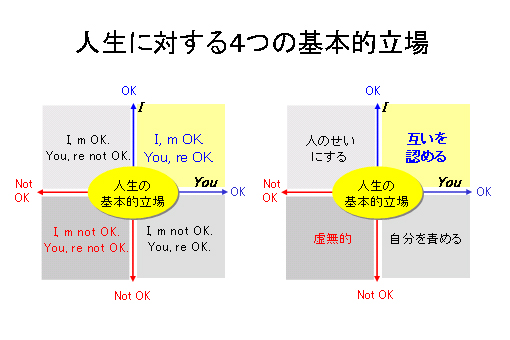
may “you’re ok/well; i’m ok/well” “muôn loài được bình thường sống lâu; everyone live well and long” …
ecclesiastes there’s a time for every season concludes with (timelessness or timeless god) what’s not time:
9And when Ecclesiastes was most wise (And for Ecclesiastes was most wise), he taught the people, and he told out the things which he did, and he sought out wisdom, and made many parables; 10he sought (out) profitable words, and he wrote most rightful words, and full of truth.
11The words of wise men be as pricks, and as nails fastened deep, which be given of one shepherd by the counsels of masters. (For the words of the wise be like pricks, and like nails driven deep, for they be given from the one Shepherd for the counsel of us all.) 12My son, seek thou no more than these; none end there is to make many books, and oft thinking is (a) torment of [the] flesh. (My son, seek thou no more than this; for there is no end to the making of many books, and thinking too much will only torment thy flesh.)
13All we hear together the end of (the) speaking. Dread thou God, and keep his behests; that is (for) to know, every man. (Hear now the end, or the conclusion, of all this speaking. Fear God/Revere God, and obey his commands; that is for everyone to know.) 14God shall bring all things into doom, that be done; for each thing covered, either privy, whether it be good, or evil. (For God shall bring all that is done to the judgement; even each thing that is covered, or is done in secret, or privately, whether it be good, or evil.)
WYCLIFFE’S BIBLE
Comprising of
Wycliffe’s Old Testament
and
Wycliffe’s New Testament
(Revised Edition)
Translated by
JOHN WYCLIFFE
and JOHN PURVEY
A modern-spelling edition of their
14TH century Middle English translation,
the first complete English vernacular version,
with an Introduction by
TERENCE P. NOBLE
Used by Permission
Bible Hub
may “you’re ok/well; i’m ok/well” “muôn loài được bình thường sống lâu; everyone live well and long” …
Plot summary Edit The story concerns mainly Ethan Allen Hawley, a former member of Long Island’s aristocratic class. Ethan’s late father lost the family fortune, and thus Ethan works as a grocery store clerk. His wife Mary and their children resent their mediocre social and economic status, and do not value the honesty and integrity that Ethan struggles to maintain amidst a corrupt society. These external factors and his own psychological turmoil lead Ethan to try to overcome his inherent integrity in order to reclaim his former status and wealth. Ethan’s decision to gain wealth and power is influenced by criticisms and advice from people he knows. His acquaintance Margie urges him to accept bribes; the bank manager (whose ancestors Ethan blames for his family’s misfortunes) urges him to be more ruthless. Ethan’s friend Joey, a bank teller, even gives Ethan a lesson on how to rob a bank and get away with it. On discovering that the current store owner, Italian immigrant Alfio Marullo, may be an illegal immigrant, Ethan makes an anonymous tip to the Immigration and Naturalization Service. After Marullo is taken into custody, he transfers ownership of the store to Ethan through the actions of the very government agent that caught him. Marullo gives Ethan the store because he believes Ethan is honest and deserving. Ethan also considers, plans, and mentally rehearses a bank robbery, failing to perform it only because of external circumstances. Eventually, he manages to become powerful in the town by taking possession of a strip of land needed by local businessmen to build an airport; he gets the land from Danny Taylor, the town drunkard and Ethan’s childhood best friend, by a will made by Danny and slipped under the door of the store. The will was drawn without any spoken agreement some time after Ethan gave Danny money for the purpose of sending Danny to receive treatment for alcoholism. Danny assures him that drunks are liars and that he will just drink the money away, and this is indeed confirmed when Danny is found dead with empty bottles of whiskey and sleeping pills. In this manner, Ethan becomes able to control the covert dealings of the corrupt town businessmen and politicians, but he is confident that he will not be corrupted. Ethan learns that his son won honorable mention in a nationwide essay contest by plagiarizing classic American authors and orators, but when Ethan confronts him, the son denies having any guilty feelings, maintaining that everyone cheats and lies. Perhaps after seeing his own moral decay in his son’s actions, and experiencing the guilt of Marullo’s deportation and the death of Danny, Ethan resolves to commit suicide. His daughter, intuitively understanding his intent, slips a family talisman into his pocket during a long embrace. When Ethan decides to commit the act, he reaches into his pocket to find razorblades and instead finds the talisman. As the tide comes into the alcove in which he has sequestered himself, he struggles to get out in order to return the talisman to his daughter. https://en.m.wikipedia.org/wiki/File:Winter_discontent.JPG#mw-jump-to-license
Ethan means strong and optimistic, solid and enduring; permanent. The name Ethan appears eight times in the Hebrew Bible (1 Kings 4:31, Ps. 89 title, 1 Chr.2:6 and 2:8, 1 Chr. 6:42 and 6:44, and 1 Chr. 15:17 and 15:19).
He was a standard of wisdom to whom King Solomon is compared favorably.Called there “Ethan the Ezrahite,” to whom the title of Psalm 89 ascribes the authorship of that poem.[3]
A “son of Kishi,” or “Kishaiah,” of the Merari branch of Levites, and, also with Heman and Asaph, placed by David over the service of song (1 Chronicles 6:44; 1 Chronicles 15:17, 19).
An ancestor of Asaph of the Gershomite branch of the Levites (1 Chronicles 6:42).
See also
References
Psalms 89: the Psalm is entitled “a maschil or contemplation of Ethan the Ezrahite
Ethan is a male given name of Hebrew origin (איתן) that means firm, strong and long-lived. The name Ethan appears eight times in the Hebrew Bible (1 Kings. 4:31, Ps. 89 title, 1 Chr. 2:6 and 2:8, 1 Chr. 6:42 and 6:44, and 1 Chr. 15:17 and 15:19). See Ethan (biblical figure).
The Creation of Adam is a fresco painting by Michelangelo, which forms part of the Sistine Chapel’s ceiling, painted c. 1508–1512. It illustrates the Biblical creation narrative from the Book of Genesis in which God breathes life into Adam, the first man. The fresco is part of a complex iconographic scheme and is chronologically the fourth in the series of panels depicting episodes from Genesis.
tv co dau 8 tuoi anandi on a horse and carriage …
may “you’re ok/well; i’m ok/well” “muôn loài được bình thường sống lâu; everyone live well and long” …
valley of blood
the northern highlands of guatemala are achingly beautiful, verdant tropical valleys and majestic mountains wreathed in clouds, where Mayan Indian peoples have planted maize and cultivated their milpas for centuries. But between 1978 and 1985 these green valleys ran red with blood. ….
the roots of these modern massacres stretch back to the spanish conquest, …
ostensibly white, many ladinos are in fact mestizos, …
the modern roots of la violencia of the 1980 can be found in the aborted ‘revolution” of 1944-54, which challenged ladino control on Indian lands and labor, and in the brutal repression that followed.
as a result of these atrocities, as many as one million guatemalans—out of a population of only nine million–may have fled their homes.
Americas: The Changing Face of Latin America and the Caribbean Winn, Peter Published by: Pantheon Books 1993
pp 263-270 … in retrospect it might seem that latin america as well as other third world newly formed countries after world war ii including india and vietnam and korea etc. were creating new millenium ‘babies’ with each ‘new’ country formed … all for the judeo-christiab year 2000 new millennium celebration …
still others fled guatemala altogether, seeking safe havens abroad….”when we crossed the border we looked like ghosts, hoping to start a new life i a different world.” …another two hundred thousand guatemalans did not stop until they have arrived in the very different world of europe and the united states. …. and most refugees have remained in exile to this day.
im the wake of la violencia, guatemala’s indians confronted an altered soccial and cultural landscape. ….with the support of the military and foreign funding, evangelical protestants who opposed mayan culture were making inroads among traumatized indians. at the same time, the younger generqtion of maya were being educated in schools that inculcated the national ladino culture and drawn to the international youth culture available on televison screens and cassette players. the elders who had been the keepers of mayan beliefs and vales were dying without passing on their knowledge or skills. the survival of mayan culture itself seemed at stake.
but the ethnic violence that weakened local communities also created an increased awareness of their common identity as mayas.in Guatemala this had led to the emergence of a new ethnic nationalism. until recently, ‘the maya’ as an ethnic group existed only for archaeologists, tourists, and historians. the descendants of the ancient maya, speakers of twenty-three separate languages, identified instead with their community, or at most with their linguistic group–quiche or cakchiquel–while ladino society dammned them all as “indians”. for centuries, quiches and cakchiquels have been enemies, but in the face of the violence both have suffered at the hands of the ladino-led army, these ancient rivalries have lost their strength. “in the resistance communities,” said francisco cali, himself a cakchiquel leader, ‘it makes no difference whether you are quiche or cakchiquel. you are all mayas trying to survive together.’
the emergence of a broader pan-Mayan identity that would unite both quiches and cakchiquels is a striking development of the past decade in Guatemala–one that is not confined to refugees or isolated mountains and jungles. since the return to civilian rule, guatemala has witnessed a new mayan studies movement created by mayan social scientists, linguists, and teachers at universities and research centers. some focus on the study of mayan languages, othres on the creation af a mayan development strategy, still others on taping the aging bearers of mayan traditions before they pass on.
today, the maya cutural resurgence in Guatemala is palpable….
Richard 4.0 out of 5 starsKindle edition of “The Tragic Sense of Life” September 24, 2012 Format: Kindle EditionVerified Purchase For me, this book has many fascinations. I particularly liked the passion and sense of urgency with which Unamuno infused his text. His strong feelings have an impact even a hundred years after he wrote the work. It’s in two parts. In the first he discusses the gap between the promise and potential of life and the limitations and restraints that confront us, chief among which are the fences that rational thinking puts around us. He says that everyone’s greatest wish is for immortality, yet our everyday minds tell us that this is impossible to achieve, hence the “tragic sense of life”. The second part, offers his solution — a version of the Christian faith that affirms basic teachings of the Bible and the church. In some instances, though, he goes his own way, particularly in his discussion of consciousness and, if I’m not mistaken, in hints that people achieve their own salvations. While it is a joy for me to read a strong defence of a spiritual approach to life, which I would read it again for the sake of the passion and intelligence of discussion,I consider this work a door-opener for pilgrims rather than a final resting point.
Bùi Trang
Published on Jul 20, 2015
SUBSCRIBE 1
Category
People & Blogs
the band (under the stripes decorations
Description English: Barber shop in Torquay, Devon. Deutsch: Friseurladen in Torquay, Devon, mit “Barbers pole”. Date Summer 07 Source Own work Author Alex1011 Licensing Edit I, the copyright holder of this work, hereby publish it under the following licenses: w:en:Creative Commons attribution share alike This file is licensed under the Creative Commons Attribution-Share Alike 3.0 Unported license. You are free: to share – to copy, distribute and transmit the work to remix – to adapt the work Under the following conditions: attribution – You must give appropriate credit, provide a link to the license, and indicate if changes were made. You may do so in any reasonable manner, but not in any way that suggests the licensor endorses you or your use. share alike – If you alter, transform, or build upon this work, you may distribute the resulting work only under the same or similar license to this one. GNU head Permission is granted to copy, distribute and/or modify this document under the terms of the GNU Free Documentation License, Version 1.2 or any later version published by the Free Software Foundation; with no Invariant Sections, no Front-Cover Texts, and no Back-Cover Texts. A copy of the license is included in the section entitled GNU Free Documentation License. You may select the license of your choice. A barber’s pole is a type of sign used by barbers to signify the place or shop where they perform their craft. The trade sign is, by a tradition dating back to the Middle Ages, a staff or pole with a helix of colored stripes (often red and white in many countries, but usually red, white and blue in the United States). The pole may be stationary or may revolve, often with the aid of an electric motor.[1][2] A “barber’s pole” with a helical stripe is a familiar sight, and is used as a secondary metaphor to describe objects in many other contexts. For example, if the shaft or tower of a lighthouse has been painted with a helical stripe as a daymark, the lighthouse could be described as having been painted in “barber’s pole” colors. Likewise, borders may be marked and warnings highlighted. Origin in barbering and surgery During medieval times, barbers performed surgery on customers, as well as tooth extractions. The original pole had a brass wash basin at the top (representing the vessel in which leeches were kept) and bottom (representing the basin that received the blood). The pole itself represents the staff that the patient gripped during the procedure to encourage blood flow.[3] Use in prostitution In South Korea, barber’s poles are used both for actual barbershops and for brothels.[13] Brothels disguised as barbershops, referred to as 이발소 (ibalso) or 미용실 (miyongsil), are more likely to use two poles next to each other, often spinning in opposite directions, though the use of a single pole for the same reason is also quite common.[14] Actual barbershops, or 미용실 (miyongsil), are more likely to be hair salons; to avoid confusion, they will usually use a pole that shows a picture of a woman with flowing hair on it with the words hair salon written on the pole.co^ lan said when first learned about die^~m or die^n ho^`ng “oh co^ na`y la` co^ ca(‘t to’c ma`”) supports her but they sort of just unexcitedly (bar humbug) ignore (so does the hard-working catering staff) her except for one man who eventually gives in and comes out to wave a hand fan (eisntein equivalence principle and bible “in the image”: “túp lều lý tưởng” is equivalent to thằng bờm’s quạt mo fan) feverishly …
Luu Thuy, the contributor of the following folk song, wrote me: “Phu ong is a special imaginary character in folktales. He is a little fellow who is very dull. People often give the name Bom to someone who is stupid and naive. Phu ong is an old word that means rich man. This humorous story wants to tell also about the stupidity of the rich man.
This folk-song is quite famous all over the country. And mothers or grandmothers sing it to lull their little babies to sleep.”
Thằng Bờm có cái quạt mo
Little Fellow Bom
Folk Song
Folk Song
(Vietnamese)
(English)
Thằng Bờm có cái quạt mo,
Phú ông xin đổi ba bò chín trâu.
Bờm rằng: Bờm chẳng lấy trâu.
Phú ông xin đổi một xâu cá mè.
Bờm rằng: Bờm chẳng lấy mè.
Phú ông xin đổi một bè gỗ lim.
Bờm rằng: Bờm chẳng lấy lim.
Phú ông xin đổi con chim đồi mồi.
Bờm rằng: Bờm chẳng lấy mồi.
Phú ông xin đổi nắm xôi, Bờm cười.
Little fellow Bom has an areca spathe fan*,
Phu ong begs him to exchange it for three oxen and nine buffalos,
Bom says that Bom does not want to take them.
Phu ong begs him to exchange it for a dozen fish**,
Bom says that Bom does not want to take them.
Phu ong begs him to exchange it for a raft of ironwood,
Bom says that Bom does not want to take it
Phu ong begs him to exchange it for a couple of birds,
Bom says that Bom does not want to take them.
Phu ong begs him to exchange it for a handful of sticky rice,
Bom accepts at once with a happy smile.
Notes
* “This fan was very common in the past. In fact, it is a part of a leaf from a tree called areca tree. In this case, the story is funny because he is only a poor guy and he has a fan (which is very common and very easy to get), but Phu Ong, the rich but stupid man, absolutely wants to get it by exchanging for it anything he can afford.”
** “In the past, even now, some fishers go fishing and then when they get some fish, they take a string, put their spoils (fish) together with the string and go to the market or go home proudly.”
ummary Edit Zhuge Liang(諸葛亮)was one of the greatest strategists of post-Han China, as well as a statesman, engineer, scholar. This image was carried on the book which is called “Wan hsiao tang-Chu chuang -Hua chuan(晩笑堂竹荘畫傳) ” which was published in 1921(民国十年). Licensing Edit Public domain This work is in the public domain in its country of origin and other countries and areas where the copyright term is the author’s life plus 70 years or less. Dialog-warning.svg You must also include a United States public domain tag to indicate why this work is in the public domain in the United States. Note that a few countries have copyright terms longer than 70 years: Mexico has 100 years, Jamaica has 95 years, Colombia has 80 years, and Guatemala and Samoa have 75 years. This image may not be in the public domain in these countries, which moreover do not implement the rule of the shorter term. Côte d’Ivoire has a general copyright term of 99 years and Honduras has 75 years, but they do implement the rule of the shorter term. Copyright may extend on works created by French who died for France in World War II (more information), Russians who served in the Eastern Front of World War II (known as the Great Patriotic War in Russia) and posthumously rehabilitated victims of Soviet repressions (more information). This file has been identified as being free of known restrictions under copyright law, including all related and neighboring rights One famous line of poem, “Who is the first, awakened from the Great Dream? As always, I’m the one who knows.” (Chinese: 大梦谁先觉?平生我自知.; pinyin: dà mèng shuí xiān jué ? píng shēng wǒ zì zhī), was also attributed to Zhuge Liang. “Without modest simplicity, one cannot brighten volition; Without tranquility and serenity, one cannot reach far” (Chinese: 非淡泊无以明志,非宁静无以致远), a well-known maxim authored by Zhuge Liang, has been popular in educational institutions in China for thousands of years. The wisdom of Zhuge Liang was popularised by the historical novel Romance of the Three Kingdoms, written by Luo Guanzhong during the Ming dynasty. In it, Zhuge Liang is described to be able to perform fantastical achievements such as summoning advantageous winds and devising magical stone mazes. There is great confusion on whether the stories are historical or fictional. At least, the Empty Fort Strategy is based on historical records, albeit not attributed to Zhuge Liang historically.[3] For Chinese people, the question is largely irrelevant, as the Zhuge Liang of lore is regardless seen as a mastermind, whose examples continue to influence many layers of Chinese society. Zhuge Liang (pronunciation in Standard Mandarin: [ʈʂú.kɤ̀ ljâŋ] (About this soundlisten); 181–234),[2] courtesy name Kongming, was a Chinese politician, military strategist, writer, engineer and inventor. He served as the chancellor and regent of the state of Shu Han during the Three Kingdoms period.The Japanese word kamikaze is usually translated as “divine wind” (kami is the word for “god”, “spirit”, or “divinity”, and kaze for “wind”). The word originated from Makurakotoba of waka poetry modifying “Ise“[8] and has been used since August 1281 to refer to the major typhoons that dispersed Mongol-Koryo fleets who invaded Japanunder Kublai Khan in 1274.[9][10]
A Japanese monoplane that made a record-breaking flight from Tokyo to London in 1937 for the Asahi newspaper group was named Kamikaze. She was a prototype for the Mitsubishi Ki-15 (“Babs”).[11]
In Japanese, the formal term used for units carrying out suicide attacks during 1944–1945 is tokushu kōgekitai (特別攻撃隊), which literally means “special attack unit”.
If you can empty your mind of all thoughts
your heart will embrace the tranquility of peace.
Watch the workings of all of creation,
but contemplate their return to the source.
All creatures in the universe
return to the point where they began.
Returning to the source is tranquility
because we submit to Heaven’s mandate.
Returning to Heaven’s mandate is called being constant.
Knowing the constant is called ‘enlightenment’.
Not knowing the constant is the source of evil deeds
because we have no roots.
By knowing the constant we can accept things as they are.
By accepting things as they are, we become impartial.
By being impartial, we become one with Heaven.
By being one with Heaven, we become one with Tao.
Being one with Tao, we are no longer concerned about
losing our life because we know the Tao is constant
and we are one with Tao.
lao-tzu’s tao te ching translated by j h mcdonald … see average weather curve and standing wave (in contrast to traveling waves) illustrations below for how “the TAO is constant”
orientals do make communion (confucius tu tề trị bình đạt are equivalent to communion … communion with thân gia quốc thiên hạ cái TAO …
Karma-Yoga & Bhakti-Yoga Want to Read Rate this book 1 of 5 stars2 of 5 stars3 of 5 stars4 of 5 stars5 of 5 stars Open Preview Karma-Yoga & Bhakti-Yoga by Swami Vivekananda 4.33 · Rating details · 289 ratings · 10 reviews By Swami Vivekananda, Karma-Yoga and Bhakti-Yoga describes the way to reach perfection through the performance of daily work in a non-attached spirit (i.e. Karma-Yoga – the path of selfless action) and by sublimating human affection into divine love (i.e. Bhakti-Yoga – the path of divine love). Karma-Yoga and Bhakti-Yoga, along with Jnna-Yoga and Rja-Yoga, are considered classics and outstanding treatises on Hindu philosophy. Swami Vivekananda’s deep spiritual insight, fervid eloquence, and broad human sympathy shine forth in these works and offer inspiration to all spiritual seekers.
) with what western science and religion want to make communion () with but often usually only as a last resort ( compare book of job god speaking out of the clouds tv co dau 8 tuoi anandi asked her rewcuer what did he tell the horse to calm it down suggesting somemother people prefer communion with animals
Doctor Dolittle loves animals. In fact, he loves animals so much that his cozy cottage in Puddleby-on-the-Marsh is bursting with pets: goldfish in the pond, rabbits in the pantry, white mice in the piano, a squirrel in the linen closet, a hedgehog in the cellar, not to mention a horse, chickens and pigeons, two lambs, and many others. But his favorite pets by far are Dab-Dab the duck, Jip the dog, Gub-Gub the baby pig, Polynesia the parrot, and Too-Too the owl. It’s no wonder no human patients will visit the good doctor–it’s too crowded! But soon Doctor Dolittle’s fame as an animal doctor spreads far and wide–all the way to Africa, where a village of sick monkeys needs Doctor Dolittle’s help!
dahlia was reading an electronic book about a child who is a vet … when audrey was here she talked about steve irwin and we watched coyote peterson in south america communion with spiders … elsewhere treehoppers
Mini Monsters of Amazonia | 1 x 60 Factual Produced in association with CBC’s The Nature of Things, Mini Monsters of Amazonia is a groundbreaking scientific / adventure documentary special that follows a group of international scientists to Ecuador, the most complex bio-diverse region on the planet. Our team of experts will, for the first time, reveal the unexplained mysteries of the treehoppers – also referred to as “mini-monsters.” Now under the threat of extinction, treehoppers are one of the most incredibly complex, long living survivors that nature has ever produced. While they may appear to be bizarre mini-monsters to some, they are absolute masterpieces of biodiversity to others, poorly understood by the world’s scientific community. Being both rare and difficult to find, they have been inadequately studied, rarely photographed, and never been filmed for television. The search and discovery of these mysterious insects will be recorded with sophisticated macro-photographic techniques to create a premier event, in both film and scientific domains. Breakthrough Entertainment/Mona Lisa Production co-production in association with CBC’s Nature of Things (Canada) and Arte (France) Distributed by Breakthrough Entertainment.
Mini Monsters of Amazonia (2009 TV Movie)
Plot
Showing all 1 items
Jump to: Summaries (1)
Summaries
This documentary looks into the mini world of membracidae insects, also known as Treehoppers, living in Amazonia. A team of bug scientists take a look at these little creatures, many smaller than 6 mm, to reveal the complex relationships between these species and their environments. These tiny evolutionary marvels have existed for approximately 40 million years and continue to survive by mimicking the ecosystem around them. Taking on forms well beyond our imagination, and looking like something from a science fiction world, the treehoppers are captured through the camera’s lens and through special audio recording, revealing a few unexplained mysteries of nature.
—Janal
) and usually a one-time supposedly non-repeating event that as can be seen in above two examples to be repeating event whose repetitiveness has been “hidden” by human (walls, divisions etc) and humane forgetfulness …
historical yearly temperature for dublin, ca
western science like to observe it manually controllable repeatability (ecclesiates ‘the sun sets and the sun also rises and there’s nothing new under the sun’ repeatability would correspond to the average weather curve in above illustration whereas the kamikaze khong minh zhuge liang butterfly effect would correspond to variations around the average/norm in same illustration above ‘everyday is a different day even if there’s nothing new something some arrangement of old things is different for example’ …. dahlia suggests “there’s always tomorrow” …) ..:
see previous note about how humanity might decide to “keep” the four conditions (correspond to space and time and form and the average curve in above weather illustration while what would correspond to the variations around the norm/average would be the ‘constant’ [TAO] or ‘eternal’ being beyond untouched by the ‘average’ [yet would eventually be “kept” by the variations if only as a sort of guide or else to fulfil ‘in the image’ entropy original sin of creating a world of souls/uniquenesses/differences instead of a point-like singularity) four conditions siddhartha witnessed at the gates timeless formless outside of time and form eternal forever …
tv hoa`i linh or someone to girl actress ‘sao la.i chu+?a hoang’ … related in rhyme chu+a hoang suggest not yet wild/variations …
black standing wave blue and red traveling wavesblue standing wave red and green traveling waves
) Siddhartha observe at the gates of his palace even if one day (biblical “in the image: says “one day” is actually “now” …) humanity was able to overcome (sleep is an ordinary example) siddhartha’s four conditions at his palace gate (which –like the flaming sword at the gate of eden paradise in bible genesis –sort of form the boundary between the hormonal and non-hormonal world
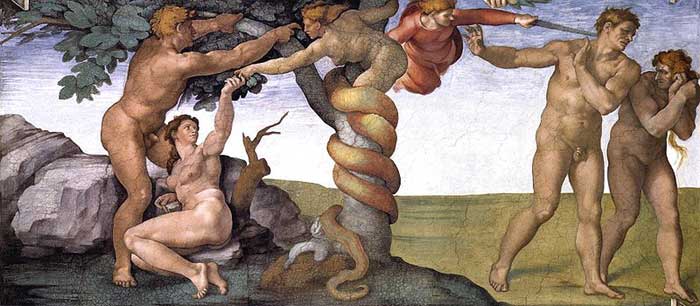
The Creation of Adam is a fresco painting by Michelangelo, which forms part of the Sistine Chapel’s ceiling, painted c. 1508–1512. It illustrates the Biblical creation narrative from the Book of Genesis in which God breathes life into Adam, the first man. The fresco is part of a complex iconographic scheme and is chronologically the fourth in the series of panels depicting episodes from Genesis.Michelangelo-Forbidden_fruit the fall from http://www.italian-renaissance-art.com/images/Michelangelo-Forbidden_frui.jpg
) because humanity might very well figure that well the world as is is the best of all possible world (considering the original sin of creating a world with souls/uniquenesses/differences instead of a point-like singularity) …
Peter Green’s Fleetwood Mac – Oh Well
227,984 views
663
11
SHARE
SAVE
HoneyboyWalter
Published on Apr 12, 2010
SUBSCRIBE 14K
Peter Green’s Fleetwood Mac play ‘Oh Well’ live in 1969.Early Fleetwood Mac. HD
Category
Music
Suggested by HAAWK for a 3rd Party
Monetize Your Music Today!
Music in this video
Learn more
Song
Check Mate
Artist
Theo Maximo
Album
Lattitude
Licensed to YouTube by
HAAWK for a 3rd Party; HAAWK Publishing
you can see on the one hand the generation that had gotten over their hormone period (of course they must have been under the same hormonal influence in their time to have given birth to the current younger singer star but have yielded the stage to younger folks: of course regardless of their ages and generation everyone needs hormone of the right type/kind at the right place/time spacetime point for proper functioning of the human machine or human temple) and the generation yet under the influence of hormone …
A nerd is a person seen as overly intellectual, obsessive, introverted or lacking social skills. Such a person may spend inordinate amounts of time on unpopular, little known, or non-mainstream activities, which are generally either highly technical, abstract, or relating to topics of science fiction or fantasy, to the exclusion of more mainstream activities.[1][2][3] Additionally, many so-called nerds are described as being shy, quirky, pedantic, and unattractive.[4]
Originally derogatory, the term “nerd” was a stereotype, but as with other pejoratives, it has been reclaimed and redefined by some as a term of pride and group identity.
Etymology
The first documented appearance of the word nerd is as the name of a creature in Dr. Seuss‘s book If I Ran the Zoo (1950), in which the narrator Gerald McGrew claims that he would collect “a Nerkle, a Nerd, and a Seersucker too” for his imaginary zoo.[3][5][6] The slang meaning of the term dates to 1951.[7]That year, Newsweek magazine reported on its popular use as a synonym for drip or square in Detroit, Michigan.[8] By the early 1960s, usage of the term had spread throughout the United States, and even as far as Scotland.[9][10][non-primary source needed] At some point, the word took on connotations of bookishness and social ineptitude.[5]
An alternate spelling,[11] as nurd or gnurd, also began to appear in the mid-1960s or early 1970s.[12] Author Philip K. Dick claimed to have coined the “nurd” spelling in 1973, but its first recorded use appeared in a 1965 student publication at Rensselaer Polytechnic Institute (RPI).[13][14]Oral tradition there holds that the word is derived from knurd (drunk spelled backward), which was used to describe people who studied rather than partied. The term gnurd (spelled with the “g”) was in use at the Massachusetts Institute of Technology(MIT) by 1965.[15] The term “nurd” was also in use at the Massachusetts Institute of Technology as early as 1971.[16][non-primary source needed]
According to Online Etymology Dictionary, the word is an alteration of the 1940s term “nert” (meaning “stupid or crazy person”), which is itself an alteration of “nut” (nutcase).[7]
The term was popularized in the 1970s by its heavy use in the sitcomHappy Days.[17]
dahlia went to birthday party of her friend grace and receive this dr seuss book and dahlia could read it after hearing another person read it … happy birthday to tôn định also …
), which is itself an alteration of “nut” (nutcase).[7]
The term was popularized in the 1970s by its heavy use in the sitcom Happy Days.[17]
you can move in and out between the two worlds–hormone and non-hormone–at will by affirming “it’s all good” and by realizing that không lao cách này thì lao cách kia if not diligence for this then diligence for that … hopefully you will choose diligence for the best of both worlds hopefully you will choose diligence for “you’re ok/well; i’m ok/well” “muôn loài được bình thường sống lâu; everyone live well and long” …)
Bob Dylan’s “Forever Young”
815,913 views
1.9K
76
SHARE
SAVE
Simon & Schuster Books
Published on Jun 3, 2009
SUBSCRIBE 51K
Learn more about Forever Young at http://books.simonandschuster.com/For… Look inside the pages of Bob Dylan’s “Forever Young” and listen to the singer perform.
Category
Music
anyway (“an ‘your way'”), …
thằng bờm is a type of nerd … an eastern (here vietnamese-style influenced by lao-tzu-confucius and buddhist traditions) nerd …
the west has its own version of thằng bờm nerd but instead of hand fan quat mo they have science … they have a yearning to commune (communion) with things like god or tha^`n linh or the future or the “spirit” (“man does not live by bread alone”) or a goal such as “you’re ok/well; i’m ok/well” etc … that can solve/nullify siddhartha’s problems at the four gates … that can implement “man must outlast/endure the going hence even as the coming hither; ripeness is all” … they have a yearning for eternity and somehow (perhaps keeping them on the straight and narrow track (why do you complain of the smote in your brother’s eyes and not see the -lank in your own eye) just like thằng bờm’s specific/unique choice keeps bờm on the straight and narrow
Steve Goodman – City Of New Orleans
254,519 views
1.6K
32
SHARE
SAVE
Jan Hammer
Published on Mar 16, 2012
SUBSCRIBE 35K
“City of New Orleans” is a folk song written by Steve Goodman (and first recorded for Goodman’s self-titled 1971 album), describing a train ride from Chicago to New Orleans via the Illinois Central Railroad in bittersweet and nostalgic terms. Goodman got the idea while traveling on the eponymous train for a visit to his wife’s family. He performed the song for Arlo Guthrie in the Quiet Knight, a bar in Chicago, and Guthrie agreed to add it to his repertoire. The song was a hit for Guthrie on his 1972 album Hobo’s Lullaby, and is now more closely associated with him, although Goodman performed it until his death in 1984. The song has also been covered by Willie Nelson, John Denver, Johnny Cash, The Country Gentlemen, Judy Collins, Jerry Reed, Chet Atkins, Sammi Smith, Hank Snow, Gerard Cox, Rudi Carell, Joe Dassin, Richard Clayderman and others.
Steve Goodman won a posthumous Grammy Award for Best Country Song at the 27th Grammy Awards in 1985 for Willie Nelson’s version, which was included on his 1984 album of the same name. It reached #1 on both the Billboard Hot Country Singles chart in the United States and the RPM Country Tracks chart in Canada
The Old Grey Whistle Test (usually abbreviated to Whistle Test or OGWT) was an influential BBC2 television music show that ran from 1971 to 1987. It took over the BBC2 late night slot from “Disco Two”, which had been running since January 1970, while continuing to feature non-chart music. It was devised by BBC producer Rowan Ayers. According to presenter Bob Harris, the programme derived its name from a Tin Pan Alley phrase from years before. When they got the first pressing of a record they would play it to people they called the old greys—doormen in grey suits. The songs they could remember and whistle, having heard it just once or twice, had passed the old grey whistle test. I believe this video to be from Steve’s appearance on the show which aired on July 31, 1973.
Category
Music
) this yearning instead of making them discontented (“now is the winter of our discontent made glorious by this sun of york”) this yearning make them contented even as contented as thằng bờm …
Gian Lorenzo Bernini , Ecstasy of Saint Teresa, 1647–1652 Cornaro Chapel, Santa Maria della Vittoria, Rome
Cornaro chapel in Santa Maria della Vittoria in Rome HDR Wider view, including the Cornaro portraits, but omitting the lower parts of the chapel The Ecstasy of Saint Teresa (alternatively Saint Teresa in Ecstasy or Transverberation of Saint Teresa; in Italian: L’Estasi di Santa Teresa or Santa Teresa in estasi) is the central sculptural group in white marble set in an elevated aedicule in the Cornaro Chapel, Santa Maria della Vittoria, Rome. It was designed and completed by Gian Lorenzo Bernini, the leading sculptor of his day, who also designed the setting of the Chapel in marble, stucco and paint. It is generally considered to be one of the sculptural masterpieces of the High Roman Baroque. It pictures Teresa of Ávila. The two central sculptural figures of the swooning nun and the angel with the spear derive from an episode described by Teresa of Avila, a mystical cloistered Discalced Carmelite reformer and nun, in her autobiography, ‘The Life of Teresa of Jesus’ (1515–1582). Her experience of religious ecstasy in her encounter with the angel is described as follows: I saw in his hand a long spear of gold, and at the iron’s point there seemed to be a little fire. He appeared to me to be thrusting it at times into my heart, and to pierce my very entrails; when he drew it out, he seemed to draw them out also, and to leave me all on fire with a great love of God. The pain was so great, that it made me moan; and yet so surpassing was the sweetness of this excessive pain, that I could not wish to be rid of it. The soul is satisfied now with nothing less than God. The pain is not bodily, but spiritual; though the body has its share in it. It is a caressing of love so sweet which now takes place between the soul and God, that I pray God of His goodness to make him experience it who may think that I am lying.[4] The group is illuminated by natural light which filters through a hidden window in the dome of the surrounding aedicule, and underscored by gilded stucco rays. Teresa is shown lying on a cloud indicating that this is intended to be a divine apparition we are witnessing. Other witnesses appear on the side walls; life-size high-relief donor portraits of male members of the Cornaro family, e.g. Cardinal Federico Cornaro and Doge Giovanni I Cornaro, are present and shown discussing the event in boxes as if at the theatre. Although the figures are executed in white marble, the aedicule, wall panels and theatre boxes are made from coloured marbles. Above, the vault of the Chapel is frescoed with an illusionistic cherub-filled sky with the descending light of the Holy Ghost allegorized as a dove. The art historian Rudolf Wittkower has written: In spite of the pictorial character of the design as a whole, Bernini differentiated between various degrees of reality, the members of the Cornaro Chapel seem to be alive like ourselves. They belong to our space and our world. The supernatural event of Teresa’s vision is raised to a sphere of its own, removed from that of the beholder mainly by virtue of the isolating canopy and the heavenly light.[5]
following examples (recent example being president washington and the weather business in previous note and the united states government active struggle to provide the “general welfare”
(Preamble) We the People of the United States, in Order to form a more perfect Union, establish Justice, insure domestic Tranquility, provide for the common defence, promote the general Welfare, and secure the Blessings of Liberty to ourselves and our Posterity, do ordain and establish this Constitution for the United States of America.
The Great Learning
By Confucius
Written ca. 500 B.C.E
What the great learning teaches, is to illustrate illustrious virtue; to renovate the people; and to rest in the highest excellence.
The point where to rest being known, the object of pursuit is then determined; and, that being determined, a calm unperturbedness may be attained to. To that calmness there will succeed a tranquil repose. In that repose there may be careful deliberation, and that deliberation will be followed by the attainment of the desired end.
Things have their root and their branches. Affairs have their end and their beginning. To know what is first and what is last will lead near to what is taught in the Great Learning.
The ancients who wished to illustrate illustrious virtue throughout the kingdom, first ordered well their own states. Wishing to order well their states, they first regulated their families. Wishing to regulate their families, they first cultivated their persons. Wishing to cultivate their persons, they first rectified their hearts. Wishing to rectify their hearts, they first sought to be sincere in their thoughts. Wishing to be sincere in their thoughts, they first extended to the utmost their knowledge. Such extension of knowledge lay in the investigation of things.
Things being investigated, knowledge became complete. Their knowledge being complete, their thoughts were sincere. Their thoughts being sincere, their hearts were then rectified. Their hearts being rectified, their persons were cultivated. Their persons being cultivated, their families were regulated. Their families being regulated, their states were rightly governed. Their states being rightly governed, the whole kingdom was made tranquil and happy.
From the Son of Heaven down to the mass of the people, all must consider the cultivation of the person the root of everything besides.
It cannot be, when the root is neglected, that what should spring from it will be well ordered. It never has been the case that what was of great importance has been slightly cared for, and, at the same time, that what was of slight importance has been greatly cared for.
for its citizenry by learning about nature’s weather to provide a bulwark thereof … compare recent tsunamis in indonesia and malaysia that went undetected when currently prediction might very well be within reach of such governments if they would only play a more active role) of western thằng bờm might very well be viewed as crazy hâm hâm dở dở ương ương (the same ương in “quê hương”) but it’s rooted in the universal … being an expression (another name) of the same “non-nerd” sinusoids and serpentine and curves of (entropy or original sin of creating a world with souls/uniquenesses/differences instead of a pint-like singularity that requires diligence at making a difference
Thương quá Việt Nam – Quang Linh
Thương Quá Việt Nam
Tác giả: Phạm Thế Mỹ
LỜI NHẠC
NGHE NHẠC
KARAOKE
COMMENT
Em nghe gì không hỡi em
Con chim nó hót vang đầu hè
Em thấy gì không hỡi em
Con chim nó múa trên cành tre
Hót đi chim, hót đi chim
Hót cho hồng mặt trời quê ta
Hót đi chim, hót đi chim
Hót cho đời nhọc nhằn trôi xa
Chim trên đồng chim trên non
Chim tung cánh xóa tan sương mù
Chim trong hồn chim trong tim
Ôi thương quá tiếng chim việt Nam
Hoa cúc vàng trên sân anh
Xinh như áo mới em ngày nào
Hoa nắng hồng trên quê anh
Xinh như má thắm em ngày xanh
Nắng lên đi, nắng lên đi
Nắng lên hồng nụ cười quê em
Nắng lên đi, nắng lên đi
Nắng lên hồng ruộng mạ xanh thêm
Hoa tim người hoa yêu thương
Hoa thơm ngát thế gian đêm buổn
Hoa trên đồi hoa trên môi
Ôi thương quá cánh hoa việt Nam
Trăng sáng ngời trên môi hoa
Trăng lên tiếng hát vui đêm già
Trăng sáng ngời trên non xa
Trăng xua bóng tối trong hồn ta
Sáng lên trăng, sáng lên trăng
Sáng cho ngưởi tìm về bên nhau
Sáng lên trăng, sáng lên trăng
Sáng cho tình ngưởi nở đêm sâu
Trăng muôn đời trăng muôn nơi
Trăng đem bóng mát cho muôn người
Trăng thanh bình trăng yên vui
Ôi thương quá ánh trăng Việt Nam
Bao nhiêu đèn bao nhiêu hoa
Bao nhiêu nến thắp lên trong hồn
Yêu quê Mẹ yêu quê Cha
Yêu luôn những mái tranh làng xa
Thắp tim lên thắp tim lên
Thắp cho tình người dậy trong ta
Thắp tim lên thắp tim lên
Thắp cho mặt trời dậy trong ta
Yêu thương người yêu thương ta
Yêu luôn những thú hoang rừng già
Yêu bạn bè như yêu ta
Ôi thương quá trái tim Việt Nam
Steve Goodman – City Of New Orleans 254,519 views 1.6K 32 SHARE SAVE Jan Hammer Published on Mar 16, 2012 SUBSCRIBE 35K “City of New Orleans” is a folk song written by Steve Goodman (and first recorded for Goodman’s self-titled 1971 album), describing a train ride from Chicago to New Orleans via the Illinois Central Railroad in bittersweet and nostalgic terms. Goodman got the idea while traveling on the eponymous train for a visit to his wife’s family. He performed the song for Arlo Guthrie in the Quiet Knight, a bar in Chicago, and Guthrie agreed to add it to his repertoire. The song was a hit for Guthrie on his 1972 album Hobo’s Lullaby, and is now more closely associated with him, although Goodman performed it until his death in 1984. The song has also been covered by Willie Nelson, John Denver, Johnny Cash, The Country Gentlemen, Judy Collins, Jerry Reed, Chet Atkins, Sammi Smith, Hank Snow, Gerard Cox, Rudi Carell, Joe Dassin, Richard Clayderman and others. Steve Goodman won a posthumous Grammy Award for Best Country Song at the 27th Grammy Awards in 1985 for Willie Nelson’s version, which was included on his 1984 album of the same name. It reached #1 on both the Billboard Hot Country Singles chart in the United States and the RPM Country Tracks chart in Canada The Old Grey Whistle Test (usually abbreviated to Whistle Test or OGWT) was an influential BBC2 television music show that ran from 1971 to 1987. It took over the BBC2 late night slot from “Disco Two”, which had been running since January 1970, while continuing to feature non-chart music. It was devised by BBC producer Rowan Ayers. According to presenter Bob Harris, the programme derived its name from a Tin Pan Alley phrase from years before. When they got the first pressing of a record they would play it to people they called the old greys—doormen in grey suits. The songs they could remember and whistle, having heard it just once or twice, had passed the old grey whistle test. I believe this video to be from Steve’s appearance on the show which aired on July 31, 1973. Category Music
) all too human human sexuality …
john a day book of clouds See the sky as you never have before. Using a series of his awe-inspiring images, photographer and scientist John Day–who has a Ph.D. in cloud physics and is known round the world as “The Cloudman”–introduces us to earth’s great skyscape. His spectacular portfolio of pictures captures a variety of cloud forms and shapes, ranging from cottony-soft cumulus clouds to frightening, whirling funnels, as well as a number of optical effects seen in the heavens above. from http://blog.oregonlive.com/lifestories/2008/07/life_story_john_day.html: at age 95, he was both physicist and metaphysicist. He could speak of the science of clouds and of their beauty almost in the same breath. John Day was no science whiz as a child; his happiest childhood memories were of fishing near Pikes Peak. His mother made him take piano, and he worked his way through Colorado College as a pianist in a dance band. A major in physics and math, he called himself a mediocre student. The band played in Pueblo, Colo., one night, and there he and Mary Hyatt danced, talked for a long time, and exchanged addresses. They married in 1937. John got a job as an airport guide in the Bay Area and enjoyed standing at the dock watching the flying boats from the Philippines carrying passengers or airmail. He was Amelia Earhart’s driver for a day in Oakland. He signed on as a member of the first class at the Boeing School of Aeronautics in Oakland and went to work as a forecaster for Pan Am World Airways, helping provide weather forecasting for the flying boats, the Clippers. He had assignments in Hawaii, New Zealand, Australia, New Caledonia and Japan. War broke out. The U.S. Navy took over the company for transport and John became an instant lieutenant j.g. After the war, John decided on an academic career. He taught physics and meteorology at Oregon State and 10 years later got a Ph.D. in cloud physics. For two years, he worked at the University of Redlands in California, where he lived in the home of Joan Baez’s father and got to know the future star. John returned to Oregon in the late 1950s to a position at Linfield College and put down roots. He wrote a number of books, including textbooks, and co-authored several Peterson’s Field Guides. John and Mary had five children whom he regularly quizzed with questions such as “Now, why does fog form?” He helped start a continuing education program at Linfield, and considered that his greatest achievement. Upon official retirement in 1978, he began to write a weekly column for the McMinnville News Register, “Words on the Weather.” He wrote that column until last year. He also started projects: audiovisual cloud slide shows with music for hospitals. He started Day Photo, enlarging his pictures and framing them. He started Quiet Time Art Cards. He began hounding the Postal Service for a cloudscape series. He submitted several slides, and sure enough, one of his photographs was chosen as one of the 2004 “Cloudscape” stamp series. He helped create a Sky Watcher’s Cloud Chart which hangs all over the country, and in 2002, he wrote “The Book of Clouds,” a coffee-table book with plenty of his photos. John was a lifelong United Methodist and taught an adult Sunday school class for more than 40 years. But his own eclectic spiritual tastes included mystic Joel Goldsmith and philosopher Teilhard de Chardin. He was a longtime member and fundraiser for Care Resources Inc., an agency that helped provide medical aid to the poor. He was also such an idealist about human nature some called him “John Quixote.” He had an ongoing pen pal relationship with a prisoner, who could see up at the clouds, but not out. In the 1990s, he decided he didn’t need to learn how to use a computer. But his children pushed him, and in 1997, a daughter created a Web site for his cloud photos, newspaper column and a list of the top 10 reasons to watch clouds. “I’d like to be known as the Cloud Man,” he decided. So http://www.cloudman.com it became. To his delight, the Web site’s guest book was almost immediately filled with messages from kindred spirits around the world. John couldn’t get over the fact that the Web site gave him a worldwide audience to share his enthusiasm. The planet had become his classroom, and people everywhere were learning just how much they were missing when they did not “Look up and see!” You could even say he was on cloud nine.
Agape (Ancient Greekἀγάπη, agapē) is a Greco–Christian term referring to love, “the highest form of love, charity” and “the love of God for man and of man for God”.[1] The word is not to be confused with philia, brotherly love, as it embraces a universal, unconditional love that transcends and persists regardless of circumstance. The noun form first occurs in the Septuagint, but the verb form goes as far back as Homer, translated literally as affection, as in “greet with affection” and “show affection for the dead”.[2] Other ancient authors have used forms of the word to denote love of a spouse or family, or affection for a particular activity, in contrast to eros(an affection of a sexual nature).
Within Christianity, agape is considered to be the love originating from God or Christ for humankind.[3] In the New Testament, it refers to the covenant love of God for humans, as well as the human reciprocal love for God; the term necessarily extends to the love of one’s fellow man.[4] Some contemporary writers have sought to extend the use of agape into non-religious contexts.[5][6]
The concept of agape has been widely examined within its Christian context.[7]It has also been considered in the contexts of other religions,[8]religious ethics,[9] and science.[10]
Early uses
There are few instances of the word agape in polytheistic Greek literature. Bauer’s Lexicon mentions a sepulchral inscription, most likely to honor a polytheistic army officer held in “high esteem” by his country.[11]
A journalist in Time magazine describes John 3:16 as “one of the most famous and well-known Bible verses. It has been called the ‘Gospel in a nutshell’ because it is considered a summary of the central doctrines of Christianity.”
For God so loved the world, that he gave his only begotten Son, that whosoever believeth in him should not perish, but have everlasting life.
The word agape received a broader usage under later Christian writers as the word that specifically denoted Christian love or charity (1 Corinthians 13:1–8), or even God himself. The expression “God is love” (ὁ θεὸς ἀγάπη ἐστίν) occurs twice in the New Testament: 1 John4:8,16. Agape was also used by the early Christians to refer to the self-sacrificing love of God for humanity, which they were committed to reciprocating and practicing towards God and among one another (see kenosis).
Agape has been expounded on by many Christian writers in a specifically Christian context. C. S. Lewis uses agape in The Four Loves to describe what he believes is the highest level of love known to humanity: a selfless love that is passionately committed to the well-being of others.[12]
The Christian use of the term comes directly from the canonical Gospels‘ accounts of the teachings of Jesus. When asked what was the great commandment, “Jesus said unto him, Thou shalt love the Lord thy God with all thy heart, and with all thy soul, and with all thy mind. This is the first and great commandment. And the second is like unto it, Thou shalt love thy neighbour as thyself. On these two commandments hang all the law and the prophets.” (Matthew 22:37-40) In Judaism, the first “love the LORD thy God” is part of the Shema.
You have heard that it was said, ‘You shall love (agapēseis) your neighbor and hate your enemy.’ But I say to you, Love (agapāte) your enemies and pray for those who persecute you, so that you may be sons of your Father who is in heaven; for he makes his sun rise on the evil and on the good, and sends rain on the just and on the unjust. For if you love those who love you, what reward have you?
Tertullian remarks in his 2nd century defense of Christians that Christian love attracted pagan notice: “What marks us in the eyes of our enemies is our loving kindness. ‘Only look,’ they say, ‘look how they love one another’ ” (Apology 39).
Anglican theologian O.C. Quick writes that this agape within human experience is “a very partial and rudimentary realization,” and that “in its pure form it is essentially divine.”
If we could imagine the love of one who loves men purely for their own sake, and not because of any need or desire of his own, purely desires their good, and yet loves them wholly, not for what at this moment they are, but for what he knows he can make of them because he made them, then we should have in our minds some true image of the love of the Father and Creator of mankind.[13]
In the New Testament, the word agape is often used to describe God’s love. However, other forms of the word are used in a negative context, such as the various forms of the verb agapaō. Examples include:
2 Timothy 4:10— “for Demas hath forsaken me, having loved [agapēsas] this present world…”.
John 12:43— “For they loved [ēgapēsan] the praise of men more than the praise of God.”
John 3:19— “And this is the condemnation, that light is come into the world, and men loved [ēgapēsan] darkness rather than light, because their deeds were evil.”
Karl Barth distinguishes agape from eros on the basis of its origin and unconditional character. In agape, humanity does not merely express its nature, but transcends it. Agape identifies with the interests of the neighbor “in utter independence of the question of his attractiveness” and with no expectation of reciprocity.[14]
The word agape is used in its plural form (agapai) in the New Testament to describe a meal or feast eaten by early Christians, as in Jude1:12 and 2nd Peter2:13.
H. G. Liddell; Robert Scott (October 2010). An Intermediate Greek-English Lexicon: Founded Upon the Seventh Edition of Liddell and Scott’s Greek-English Lexicon. Benediction Classics. p. 4. ISBN978-1-84902-626-0.
Henry George Liddell; Robert Scott (1901). A Lexicon Abridged from Liddell and Scott’s Greek-English Lexicon. Oxford : Clarendon Press. p. 6.
Oord, Thomas Jay (2010). Defining Love: A Philosophical, Scientific, and Theological Engagement. Grand Rapids, Mich.: Brazos Press. ISBN1-58743-257-9.
Nygren, Anders ([1938–39] 1953). Eros and Agape, Part I: A Study of the Christian Idea of Love; Part II The History of the Christian Idea of Love, trans. P.S. Watson. Harper & Row.
Grant, Colin (1996). “For the Love of God: Agape”. Journal of Religious Ethics. 4 (10): 3–21. JSTOR40016679.
From Post, Stephen G.et al.(2002). Altruism and Altruistic Love: Science, Philosophy, and Religion in Dialogue, Oxford: Contents.:
• Post, Stephen G. “The Tradition of Agape,” ch.4, pp. 51–68.
• Browning, Don S. “Science and Religion on the Nature of Love,” pp. 335–45.
Danker, Frederick William (2001). A Greek-English Lexicon of the New Testament and Other Early Christian Literature. University of Chicago Press.
peace out: all of this is to say that women and sex and serpents/dragons and babies and birthing and procreation and continuing the species should have no fear of being ignored by nerds or men or whatnot … all in due time … the sunsets and the sun also rises and there’s nothing new under the sun …
may “you’re ok/well; i’m ok/well” “muôn loài được bình thường sống lâu; everyone live well and long” …
Tom Jones – What’s New Pussycat? (1965) HQ the phrasing of this song sounds lố bịch stuck up but perhaps it means well and sometimes under circumstances of youth and comraderie and equal friendship and biological necessities etc. it might stri=uck a mote that’s just right …
124,805 views
785
55
SHARE
SAVE
MUNROWS RETRO
Published on Apr 7, 2015
SUBSCRIBE 90K
This was the second major American hit of 1965 for the charismatic pop singer from Wales, reaching #3 on Billboard, #2 on Cash Box, and #1 in Canada in August. Tom Jones, a virtual unknown at the time, took the UK and North America by storm early in the year with “It’s Not Unusual,” quickly becoming one of the most iconic singers of the 1960s.
Not since Elvis, Bobby Darin, or the Beatles a year earlier had a male star captured more attention and adoration. “What’s New Pussycat?” took many by surprise as a follow-up hit single, and is among my favorite Tom Jones songs.
This music video is from a live TV broadcast which I synchronized to the original hit single track, using a small part of that for the intro. Actions speak louder than words, watch words and action here … from one of the truly greatest pop singers, Tom Jones!
Category
Music
Music in this video
Learn more
Song
What’s New Pussycat?
Artist
Tom Jones
Writers
Hal David, Burt Bacharach
Licensed to YouTube by
SME (on behalf of Sony Classical); LatinAutor, LatinAutor – SonyATV, UBEM, EMI Music Publishing, CMRRA, and 5 Music Rights
sbtn anh đỗ dũng và mai thiên long discussing nose down nose up of beefed up boing 737 …
Lyrics
Listen as your day unfolds,
Challenge what the future holds
Try and keep your head up to the sky
Lovers, they may cause you tears
Go ahead release your fears,
Stand up and be counted
Don’t be ashamed to cry
You gotta be
You gotta be bad, you gotta be bold, you gotta be wiser
You gotta be hard, you gotta be tough, you gotta be stronger
You gotta be cool, you gotta be calm, you gotta stay together
All I know, all I know, love will save the day
Herald what your mother said
Read the books your father read
Try to solve the puzzles in your own sweet time
Some may have more cash than you
Others take a different view,
My oh my, heh, hey
You gotta be bad, you gotta be bold, you gotta be wiser
You gotta be hard, you gotta be tough, you gotta be stronger
You gotta be cool, you gotta be calm, you gotta stay together
All I know, all I know, love will save the day
Time asks no questions,
It goes on without you
Leaving you behind if you can’t stand the pace
The world keeps on spinning
Can’t stop it, if you try to
The best part is danger staring you in the face
Remember, listen as your day unfolds
Challenge what the future holds
Try and keep your head up to the sky
Lovers, they may cause you tears
Go ahead release your fears,
My oh my heh, hey, hey
You gotta be bad, you gotta be bold, you gotta be wiser
You gotta be hard, you gotta be tough, you gotta be stronger
You gotta be cool, you gotta be calm, you gotta stay together
All I know, all I know, love will save the day
You gotta be bad, you gotta be bold, you gotta be wiser
You gotta be hard, you gotta be tough, you gotta be stronger
You gotta be cool, you gotta be calm, you gotta stay together
All I know, all I know, love will save the day
Category
Music
Music in this video
Learn more
Song
You Gotta Be
Artist
Des’ree
Album
Whatever – The ’90s Pop & Culture (US Release)
Writers
Ashley Ingram, Des’ree
Licensed to YouTube by
SME (on behalf of Rhino (Pure)); LatinAutor, UMPG Publishing, LatinAutor – UMPG, UMPI, AMRA, Kobalt Music Publishing, LatinAutor – SonyATV, SOLAR Music Rights Management, CMRRA, UBEM, and 9 Music Rights Societies
that is to say for safety reasons: perhaps those bridges to nerds or to dâm bụt are not for you after all or else you have better bridges of your own: perhaps your life points in an entirely different direction and those bridges won’t take you where you want to go: by all means blaze your own path … which was the advice tôn an received upon graduation …
Artista: Sarah McLachlan Titolo: I Will Remember You Titolo Tradotto: Io Ti Ricorderò Testo di I Will Remember You Io ti ricorderò! Tu mi ricorderai? Non lasciare che la tua vita ti scorra addosso Non piangere per i ricordi Ricordi i bei momenti passati assieme? Li ho lasciati tranquilli lontano da noi quando le cose non andavano bene Come splendidamente ti ho visto per la prima volta mentre sorridevi nella luce del sole Voglio sentire il tuo calore su di me Io voglio essere la sola Io ti ricorderò! Tu mi ricorderai? Non lasciare che la tua vita passi senza che accorgertene Non piangere per i ricordi Sono così stanca ma non posso dormire In piedi sul baratro di qualcosa di troppo profondo È sorprendente il modo in cui ci siamo profondamente presi, ma non possiamo dire niente Noi stiamo gridando dentro Ma non possiamo essere sentiti Io ti ricorderò! Tu mi ricorderai? Non lasciare che la tua vita passi senza accorgertene Non piangere per i ricordi Sono talmente dispiaciuta di amarti Ma molto di più mi dispiace perderti Aggrappata ad un passato che non mi lascia possibilità di scelta Un tempo cera il buio La Notte più scura e profonda Mi hai dato tutto quello che avevi Oh tu mi hai dato la luce Ed Io ti ricorderò! Tu mi ricorderai? Non lasciare che la tua vita ti scorra addosso Non piangere per i ricordi Non rammaricarti dei ricordi
AdRev for a 3rd Party, SME, WMG (on behalf of Nettwerk Records); SOLAR Music Rights Management, CMRRA, LatinAutor – SonyATV, ASCAP, LatinAutor, AdRev Publishing, UBEM, Sony ATV Publishing, EMI Music Publishing, and 20 Music Rights Societies
may “you’re ok/well; i’lm ok/well” “muôn loài được bình thường sống lâu; everyone live well and long” …
Acidosis is when blood pH drops below 7.35 and becomes too acidic. Alkalosis is when blood pH is higher than 7.45 and becomes too alkaline. The two main organs that help balance the pH of blood are the:
Lungs. These organs remove carbon dioxide through breathing (respiration).
Kidneys. These organs remove acids through urine (excretion).
The different types of blood acidosis and alkalosis depend on the cause. The two main types are:
Respiratory. This type occurs when the change in blood pH is caused by a lung or breathing condition.
Metabolic. This type occurs when blood pH changes because of a kidney condition or issue.
.
Pranayama
Prāṇāyāma is a Sanskrit word alternatively translated as “extension of the prāṇa(breath or life force)” or “breath control.” The word is composed from two Sanskrit words: prana meaning life force (noted particularly as the breath), and either ayama (to restrain or control the prana, implying a set of breathing techniques where the breath is intentionally altered in order to produce specific results) or the negative form ayāma, meaning to extend or draw out (as in extension of the life force). It is a yogic discipline with origins in ancient India.[citation needed]
Etymology
Prāṇāyāma (Devanagari: प्राणायामprāṇāyāma) is a Sanskrit compound.
V. S. Apte provides fourteen different meanings for the word prāṇa(Devanagari: प्राण, prāṇa) including these:[1]
The breath of life, vital air, principle of life (usually plural in this sense, there being five such vital airs generally assumed, but three, six, seven, nine, and even ten are also spoken of)[2]
Energy, vigor
The spirit or soul
Of these meanings, the concept of “vital air” is used by Bhattacharyya to describe the concept as used in Sanskrit texts dealing with prāṇāyāma.[3]Thomas McEvilley translates prāṇa as “spirit-energy”.[4] The breath is understood to be its most subtle material form, but is also believed to be present in the blood, and most concentrated in men’s semen and women’s vaginal fluid.[5]
Monier-Williams defines the compound prāṇāyāma as “(m., also pl.) N. of the three ‘breath-exercises’ performed during Saṃdhyā (Seepūrak, rechak (English: retch or throw out), kumbhak“.[6] This technical definition refers to a particular system of breath control with three processes as explained by Bhattacharyya: pūrak (to take the breath inside), kumbhak (to retain it), and rechak (to discharge it).[7] There are also other processes of prāṇāyāma in addition to this three-step model.[7]
Macdonell gives the etymology as prāṇa + āyāma and defines it as “m.suspension of breath (sts. pl.)”.[8]
Apte’s definition of āyāmaḥ derives it from ā + yām and provides several variant meanings for it when used in compounds. The first three meanings have to do with “length”, “expansion, extension”, and “stretching, extending”, but in the specific case of use in the compound prāṇāyāma he defines āyāmaḥ as meaning “restrain, control, stopping”.[9]
An alternative etymology for the compound is cited by Ramamurti Mishra, who says that:
Expansion of individual energy into cosmic energy is called prāṇāyāma(prāṇa, energy + ayām, expansion).[10]
Medical
Several researchers have reported that pranayama techniques are beneficial in treating a range of stress-related disorders.[29] A Cochrane systematic review on the symptomatic relief of asthma by breathing exercises did not find a statistically significant improvement but did find that there was a statistically significant increase in the dose of histamine needed to provoke a 20% reduction in FEV1 (PD20) during pranayama breathing but not with the placebo device.[30]
Safety
Authoritative texts on Yoga state that, in order to avoid injuries and unwanted side effects, pranayama should only be undertaken when one has a firmly established yoga practice and then only under the guidance of an experienced Guru.[18] Although relatively safe, Hatha Yoga is not risk free. Sensible precautions can usefully be taken such as beginners should avoid advanced moves if they have any physical health related issue. It can get dangerous if someone is trying to pose tough exercise which requires extreme flexibility and good shapes of bones. Hatha Yoga should not be combined with psychoactive drug use, and competitive Hatha Yoga should be avoided. Person should inform the teacher or trainer of their physical limitations and concerns before getting involved themselves for extreme pose positions. Functional limitations should be taken into consideration. Modifications can then be made using props, altering the duration or poses.[31]
According to at least one study, pranayama was the yoga practice leading to most injuries, with four injuries in a study of 76 practitioners. There have been limited reports of adverse effects including haematoma and pneumothorax, though the connections are not always well established.[32]
References
Apte, p. 679.
For the vital airs as generally assumed to be five, with other numbers given, see: Macdonell, p. 185.
Bhattacharyya, p. 311.
McEvilley, Thomas. “The Spinal Serpent”, in: Harper and Brown, p. 94.
Richard King, Indian philosophy: an introduction to Hindu and Buddhist thought. Edinburgh University Press, 1999, p. 70.
^ ab G. C. Pande, Foundations of Indian Culture: Spiritual Vision and Symbolic Forms in Ancient India. Second edition published by Motilal Banarsidass Publ., 1990, p. 97.
^ ab Bellur Krishnamachar Sundararaja Iyengar (2011). Light on prāṇāyāma : the yogic art of breathing. New York: Crossroad. OCLC809217248.
James Mallinson (2011). Knut A. Jacobsen; et al., eds. Haṭha Yoga in the Brill Encyclopedia of Hinduism, Vol. 3. Brill Academic. pp. 772-773. ISBN978-90-04-27128-9.
Budilovsky, Joan; Adamson, Eve (2000). The complete idiot’s guide to yoga (2 ed.). Penguin. Chapter 7. ISBN978-0-02-863970-3.
Johannes Bronkhorst, The Two Traditions of Mediation in Ancient India.Franz Steiner Verlag Weisbaden GmbH, pp. 1–5.
Johannes Bronkhorst, The Two Traditions of Mediation in Ancient India.Franz Steiner Verlag Weisbaden GmbH, p. 84.
Edward Conze, Buddhist Meditation. Harper & Row, 1956, p. 66. Regarding the Buddha’s incorporation of pranayama see also Buddhadasa, Mindfulness with Breathing. Revised edition published by Wisdom Publications, 1997, p. 53.
Mallinson, James; 2016. SOAS, University of London. The Amṛtasiddhi: Haṭhayoga’s Tantric Buddhist Source Text, pages 1-3 with footnotes
Chogyal Namkhai Norbu, Trans. by Adriano Clemente. Yantra Yoga Snow Lion Publications, p. 1.
Holland, Anne E.; Hill, Catherine J.; Jones, Alice Y.; McDonald, Christine F. (2012). “Breathing exercises for chronic obstructive pulmonary disease”. The Cochrane Database of Systematic Reviews. 10: CD008250. doi:10.1002/14651858.CD008250.pub2. ISSN1469-493X. PMID23076942.
Freitas DA, Holloway EA, Bruno SS, Chaves GS, Fregonezi GA, Mendonça KP (1 October 2013). “Breathing exercises for adults with asthma”. Cochrane Database Syst Rev. 10 (CD001277.pub3): CD001277. doi:10.1002/14651858.CD001277.pub3. PMID24085551.
Prāṇāyāma is mentioned in verse 4.29 of the Bhagavad Gītā.[11]
According to Bhagavad-Gītā As It Is, prāṇāyāma is translated to “trance induced by stopping all breathing”, also being made from the two separate Sanskrit words, prāṇa and āyām.[12]
Yoga Sutras of Patanjali
Pranayama is the fourth “limb” of the eight limbs of Ashtanga Yoga mentioned in verse 2.29 in the Yoga Sutras of Patanjali.[14][15] Patanjali, a Hindu Rishi, discusses his specific approach to pranayama in verses 2.49 through 2.51, and devotes verses 2.52 and 2.53 to explaining the benefits of the practice.[16]Patanjali does not fully elucidate the nature of prana, and the theory and practice of pranayama seem to have undergone significant development after him.[17] He presents pranayama as essentially an exercise that is preliminary to concentration, as do the earlier Buddhist texts.[17]
Many yoga teachers advise that pranayama should be part of an overall practice that includes the other limbs of Patanjali’s Raja Yoga teachings, especially Yama, Niyama, and Asana.[18]
Hatha yoga
The Indian tradition of Hatha Yoga makes use of various pranayama techniques.
), dehydration, etc. … flow interrupted …
gout cartilage teeth etc.: flow dependencies …
Lucy and Ethel wrap chocolates!
344,206 views
905
48
SHARE
SAVE
Glenn Miller
Published on Jun 11, 2012
SUBSCRIBE 1.2K
The funniest Lucy skit ever!
Category
Comedy
Suggested by CBS CID
CBS All Access
to^nan was about to read up on plant physiology (how spring sap is produced and brought up from root to branches [foundmit in On food and Cooking by Harold mcgee] how plants harnessed energy calvin cycle etc.) and was trying to hatch an intact egg dropped by a bird early one spring in midwest michigan when cô quyên was also doing gardening and could not get up the steps …
may “you’re ok/well; i’m ok/well” “muôn loài được bình thường sống lâu; everyone live ưell and long” …
happy holiHi! Welcome to FamousTubeKIDS. This channel is all about us (Cali & Kameiro) having fun… From dress-up to playing with our favourite toys, you’re bound to have a great time here! Subscribe for weekly videos. SEE YOU SOON 🙂 This channel is managed by a parent.
I TRIED TO KISS CARTER ON THE LIPS AND IT WORKED!! 👚Like Lizzy Merch!!👕 https://www.likelizzy.com/ 🎮MY EPIC GAMING CHANNEL 🎮 https://www.youtube.com/channel/UCI2v… In today’s super awesome and epic vlog, Lizzy Sharer decides to try to kiss Carter Sharer. Liz tricked Carter and convinced him that Carter and Liz had a kissing scene in the movie coming soon. Liz and her crush were completely stuck together on set for the movie!! Then they went back to the mansion and played around the pool. Carter decided to push lizzy into the pool for fun but then she pretended she couldnt swim and carter had to jump in and save her! Then lizzy tricked him into giving her cpr to save her and they kissed. It was a super fun day where Liz got to hang out with her crush Carter! Comment #CARZY if you ship them! 💕💕💕 OTHER FUN VLOGS 💕💕💕 💔 I’M HEARTBROKEN 💔 https://www.youtube.com/watch?v=M5EMQ… I TOLD HIM I LIKE HIM… (PART 2 – DELETED VIDEO) https://www.youtube.com/watch?v=-mDXX… ❤️REVEALING WHO MY CRUSH IS ❤️(DON’T TELL HIM) https://www.youtube.com/watch?v=nhyRQ… ❤️HIDDEN CAMERA ON MY CRUSH!! (GONE WRONG) https://youtu.be/FzMrUDwBYso ❤️CARTER TOLD ME HIS CRUSH… https://youtu.be/CRpEqQDCtK0 ❤️ THE TRUTH ABOUT CARTER SHARER!! (EXPOSED) https://youtu.be/4rPWtWgFcFs ❤️ MY SECRET CRUSH GOT ME FLOWERS!! https://youtu.be/Ehwhh1zEKdA Follow ME! 📷INSTAGRAM → @LizzySharer https://goo.gl/jALBqj Become a Sharer and Subscribe to my channel! https://goo.gl/XjjCA8 ———————————————————————————————————– Business Inquiries: Lizzysharerbiz@gmail.com WARNING: This video is only for entertainment purposes. Do not attempt to recreate any of the acts in this video, as they may be dangerous if not done correctly, and could result in serious injury. If you rely on the information portrayed in this video, you assume the responsibility for the results. Have fun, but always think ahead, and remember that every project you try is at YOUR OWN RISK. This footage is property of Dream Team Studios LLC and is not allowed to be repurposed without written consent from Dream Team Studios LLC. For any requests from media contact us at Cartersharerbiz@gmail.com
from http://wikinetworth.com/celebrities/stephen-sharer-wiki-age-girlfriend-dating-gay-family-height.html
The American YouTuber, Stephen Sharer, has become an Internet sensation after his channel hit the subscribers counting in millions. Sharer is popular for sharing his wild stunts and vacation videos as well as DIY and entertainment related videos on his self- entitled YouTube channel.
Family Life: YouTuber Siblings
Stephen has three siblings as his family members. He has a brother named Carter Sharer and two sisters named Lizzy Sharer and Grace Sharer. His brother, Carter is also a YouTube star and has worked with Stephen providing updates to the vlogs. Carter is four years older than his younger brother, Stephen.
His sister Lizzy Sharer is also a YouTube star and has also appeared in Carter’s and Shearer’s YouTube channel. Lizzy is also four years older to Stephen, but Carter is her elder brother. Carter was born four months earlier than her YouTube star sister.
from https://youtube.fandom.com/wiki/Chad_Wild_Clay: Chad Wild Clay is a American YouTuber known for his YouTube impressions and parodies, as well as parody songs, or more recently his kid-aimed “Project Zorgo” mystery story series. His parody video called “Pen Pineapple Apple Pen” established over 50 million views on his YouTube channel, and is what many believe to be what caused his rise to fame. Chad is also known for his gadget reviews, kids toys, unboxing, Nerf, slime, weird Amazon products, and other items. Subscriber Milestones 1 million subscribers: April 11, 2017. 2 million subscribers: November 3, 2017. 3 million subscribers: May 29, 2018. 4 million subscribers: August 22, 2018. 5 million subscribers: October 23, 2018. 6 million subscribers: December 31, 2018. Video View Milestones 1 billion views: November 20, 2018. Trivia He moved to Los Angeles, California in July of 2015 after living in Oakdale, Minnesota. He married fellow YouTuber Vy Qwaint in 2012.
“souls” are “married” forever …
Father Mother and Child
the blue “soul” is “married” to the red “soul” for eternity: the gap between the two “souls” represents humanly observable “separations” between the two “souls” including those siddhartha the future buddha supposedly saw at the four gates of the palace …
[incidentally, red and blue circle could very well represent the north and south poles of a magnet that seemingly are inseparable: the singular point where they meet is very suggestive of a “magnetic monopole” of some sort though its magnetic charge might be neither north nor south … that is, the regular magnet is your magnetic monopole of sort … previous notes record passing of mrs marguerite tribuzio –she is italian just as to^nan’s adviser prof. michael longomon the monopole experiment is also italian–being coincident with the idea that the singular point is the point of “insensibility”–e.g. “have eyes/ears/mouth but as though could only see/hear/say good/goodness/godness/godliness/god” c.f. prajanaparamita–which “insensibility” means that even though “differences” –measured by the gap between circles–or “entropy” keeps increasing going clockwise for instance according the thermodynamic law but at the point of “insensibility” (ecclesiastes point of forgive and forget “there’s no remembrance of things past and no remembrance of things to come”) entropy suddenly no longer increase becoming zero but the “insensibility” means it is “undetectable” and so is moot and as far as “sensibility”/”detectability” is concerned entropy keeps increasing …]
ummary Edit Description English: You cannot get magnetic monopoles from a bar magnet. If you cut a bar magnet in half, you cannot get just a north pole in one piece and just a south pole in the other. Instead, each piece has its own north and south poles. Date 28 May 2011 Source Own work Author Sbyrnes321 Made in Inkscape Licensing Edit I, the copyright holder of this work, hereby publish it under the following license: Creative Commons CC-Zero This file is made available under the Creative Commons CC0 1.0 Universal Public Domain Dedication. The person who associated a work with this deed has dedicated the work to the public domain by waiving all of his or her rights to the work worldwide under copyright law, including all related and neighboring rights, to the extent allowed by law. You can copy, modify, distribute and perform the work, even for commercial purposes, all without asking permission.
Pendulum Waves
10,599,526 views
41K
441
SHARE
SAVE
Harvard Natural Sciences Lecture Demonstrations
Published on Jun 9, 2010
SUBSCRIBE 24K
Fifteen uncoupled simple pendulums of monotonically increasing lengths dance together to produce visual traveling waves, standing waves, beating, and (seemingly) random motion.
The period of one complete cycle of the dance is 60 seconds. The length of the longest pendulum has been adjusted so that it executes 51 oscillations in this 60 second period. The length of each successive shorter pendulum is carefully adjusted so that it executes one additional oscillation in this period. Thus, the 15th pendulum (shortest) undergoes 65 oscillations.
Our apparatus was built from a design published by Richard Berg [Am J Phys 59(2), 186-187 (1991)] at the University of Maryland. The particular apparatus shown here was built by our own Nils Sorensen.
the independent uncoupled (“un-married”) pendula are forever “married” via connect-the-dot moiré pattern of the pendulum wave …
mapping relation function “you believe what you want to believe …” Tom Petty and the Heartbreaker world K consisting ofgoogle doodle for st patrick day 2019 from https://en.m.wikipedia.org/wiki/Saint_Patrick’s_Day According to tradition, Patrick returned to Ireland to convert the pagan Irish to Christianity. The Declaration says that he spent many years evangelising in the northern half of Ireland and converted “thousands”. Patrick’s efforts against the druids were eventually turned into an allegory in which he drove “snakes” out of Ireland, despite the fact that snakes were not known to inhabit the region.https://www.nationalgeographic.com/magazine/2019/03/
artificial clouds and “beam me up scotty” star trek transporter …
Millikan Oil Drop Experiment
24,449 views
25
3
SHARE
SAVE
SMUPhysics
Published on Nov 9, 2009
SUBSCRIBE 4.3K
As seen through a microscope, atomized latex spheres are made to move up and down in a changing electric field. The Millikan Oil Drop experiment is a canonical experiment that originally measured the charge of an electron.
For more information on this and many other demonstrations of physics and astronomy, please visit us at http://demos.smu.ca
5.23.2019 father did the milikan oil drop experiment at oakland community college in michigan soon after we came to america as refugees from the vietnam war in 1975: this experiment is precursor to the ideas of the cloud/bubble chamber experiment (to^nan showed father the cloud chamber experiment on youtube right after he came back from the hospital having fell asleep in notes following this note) that follows with magnetic field (causing curlycued tracks) replacing electric field and cloud droplets replacing oil droplets …
In this video I show you how to make the world’s easiest homemade cloud chamber to detect radiation particles. This is so simple to do but the results are so amazing! You can actually see the path that the radiation particles take through the cloud chamber! It is made by using a supersaturated vapor of rubbing alcohol. When a radiation particle strikes the vapor it ionizes and forms a nucleation point for the vapor and you see a small cloud where the particle went. WARNING: This video is for entertainment purposes only. If you use the information from this video for your own projects then you assume complete responsibility for the results. My Other Channel: https://www.youtube.com/channel/UCA19… For more awesome videos checkout: Can Flies Actually Fly in a Vacuum Chamber? https://www.youtube.com/watch?v=C4h-A… I Let a Venus Flytrap Digest My Finger For a Day–Little Shop of Horrors Challenge! https://www.youtube.com/watch?v=tPLuW… They’re Alive! Awesome Effect Turns Coins Into Butterflies on Dry Ice https://youtu.be/DQstGr00aHA Drawing On Water-It is So Surreal! https://youtu.be/3NZ-cAf8Bbw Are Ants Too Small to be Hurt in a Microwave? Microwaving Ants Experiment in Top Secret Microwave https://youtu.be/B8nnPYBc4hc Can Magic Sand Get Wet in a Vacuum Chamber? So Satisfying! https://youtu.be/9yaMexyXucA Perfect Oreo Separation Using a Vacuum Chamber https://youtu.be/OSzx7G0v4Xk How To Survive Being Vacuum Bagged! I Vacuum Bagged Myself https://youtu.be/FmcOuCB2Lmk How Long Can a Fidget Spinner Spin In a Vacuum Chamber? Will It Spin Forever? https://youtu.be/3v3OOHsB-6g A Liquid That Pours Itself! The Self-Siphoning Fluid: Polyethylene Glycol https://youtu.be/t3neqUhoDRA What Happens When You Drop a Mentos in Coke in a Vacuum Chamber? https://www.youtube.com/watch?v=DA2OF… What Happens When I Put My Arm In A Vacuum Chamber? Will It Explode? https://youtu.be/iWGGMchu6mQ Shooting Fruit With Supersonic Ping Pong Balls | First Vacuum Cannon Test https://youtu.be/ts7v07lXmTQ What Happens When You Put A Spider And A Fly In A Vacuum Chamber? Will They Survive? https://youtu.be/tA9jcIwvge0 If You Drop A Feather And A Metal Cube In A Vacuum Chamber Will They Hit At The Same Time? https://youtu.be/s9Zb3xAgIoY What Happens When You Put Aerogel In A Vacuum Chamber And Hydraulic Press? https://youtu.be/TDgBYO0piOY What Happens When You Put 16 Twinkies In A Huge Vacuum Chamber? https://youtu.be/VAq2kr5wniY Snow Turned Into Clear Sheet Of Ice By A Hydraulic Press https://youtu.be/FiMNRNGgNuQ What Happens When You Put A Speaker In A Huge Vacuum Chamber? Can You Hear It? https://youtu.be/657caNs8nRY What Happens When You Put 6 Eggs In A Huge Vacuum Chamber? https://youtu.be/mzjCSDpmIuc What Happens When You Put A Drone In a Vacuum? Can It Still Fly? https://youtu.be/g8-pxkaipcg What Happens When You Put A Can Of Soda In A Huge Vacuum https://youtu.be/bSZMNu4PWf8 What Happens When You Put Shaving Cream Balloons In A Huge Vacuum Chamber? https://youtu.be/Cs7tdHT9NmU I Made A Square Balloon By Putting It In A Huge Vacuum Chamber https://youtu.be/zYLJGXthzpE What Happens When You Put 30 Marshmallows In A Huge Vacuum Chamber? https://youtu.be/OuHBzK-LK24 Don’t Spray Sodium Metal With Water After Flattening It In A Hydraulic Press! https://youtu.be/xwyVd8MexAg Extracting Cyanide From Apple Seeds With Hydraulic Press https://youtu.be/-0lIPWuuTW8 How Strong Is Human Hair Composite When Crushed In A Hydraulic Press? https://youtu.be/JVSyKRYDTsA
Description English: Simplified scheme of Millikan’s oil-drop experiment. Date 13 August 2004 Source taken from English Wikipedia Author Theresa Knott Other versions Derivative works of this file: Simplified scheme of Millikan’s oil-drop experiment ar.PNG Simplified scheme of Millikan’s oil-drop experiment.svg Licensing Edit GNU head Permission is granted to copy, distribute and/or modify this document under the terms of the GNU Free Documentation License, Version 1.2 or any later version published by the Free Software Foundation; with no Invariant Sections, no Front-Cover Texts, and no Back-Cover Texts. A copy of the license is included in the section entitled GNU Free Documentation License. Subject to disclaimers. w:en:Creative Commons attribution share alike This file is licensed under the Creative Commons Attribution-Share Alike 3.0 Unported license. Subject to disclaimers. You are free: to share – to copy, distribute and transmit the work to remix – to adapt the work Under the following conditions: attribution – You must give appropriate cre
“you believe what you want to believe” tom petty and the heartbreakers Fig. 2 Part of a bubble-chamber picture from a neutrino experiment performed at the Fermilab (found at the University of Birmingham). A positron in flight annihilate with an electron. The photon that is produced materializes at a certain distance, along the line of flight, resulting a new electron-positron pair (marked with green)
“beam me up scotty …”
the positron that was supposedly “annihilated” reappeared later as another positron supposedly identical (“indistinguishable”: “cloned”)–except for things like energy, direction of flight, etc. –to the original positron … very sugggestive of reincarnation or resurrection … but, … “you believe what you want to believe” (it’s a choice blaise pascal gives in his wager and it’s a choice given by some –not all–translations of “ubuntu” such as “i am because we are” which leaves open the objects of “am” and “are” …:
Let us now speak according to natural lights.
If there is a God, He is infinitely incomprehensible, since, having neither parts nor limits, He has no affinity to us. We are then incapable of knowing either what He is or if He is. This being so, who will dare to undertake the decision of the question? Not we, who have no affinity to Him.
Who then will blame Christians for not being able to give a reason for their belief, since they profess a religion for which they cannot give a reason? They declare, in expounding it to the world, that it is a foolishness, stul- titiam; and then you complain that they do not prove it! If they proved it, they would not keep their word; it is in lacking proofs, that they are not lacking in sense. ”Yes, but although this excuses those who offer it as such, and takes away from them the blame of putting it forward without reason, it does not excuse those who receive it.” Let us then examine this point, and say, ”God is, or He is not.” But to which side shall we incline? Reason can decide nothing here. There is an infinite chaos which separated us. A game is being played at the extremity of this infinite distance where heads or tails will turn up. What will you wager? According to reason, you can do neither the one thing nor the other; according to reason, you can defend neither of the propositions.
Do not then reprove for error those who have made a choice; for you know nothing about it. ”No, but I blame them for having made, not this choice, but a choice; for again both he who chooses heads and he who chooses tails are equally at fault, they are both in the wrong. The true course is not to wager at all.”
Yes; but you must wager. It is not optional. You are embarked. Which will you choose then? Let us see. …
Pascal’s Wager excerpted from Pensées …
Annie Lennox & Al Green – Put A Little Love In Your Heart [HQ]
1,749,617 views
8.9K
272
SHARE
SAVE
professorenol
Published on Feb 23, 2012
SUBSCRIBE 7.7K
Video for Annie Lennox & Al Green’s cover of Jackie DeShannon’s Put A Little Love In Your Heart taken from the Scrooged soundtrack.
http://www.annielennox.com/
Category
Music
Music in this video
Learn more
Song
Put A Little Love In Your Heart (From “Scrooged” Soundtrack)
Artist
Al Green
Licensed to YouTube by
UMG (on behalf of A&M); UBEM, LatinAutor – SonyATV, CMRRA, SOLAR Music Rights Management, LatinAutor, EMI Music Publishing, and 5 Music Rights Societies
Chương 65: Không “có” cũng không “không” – Ananda, có luôn luôn nghĩa là có cái gì, không luôn luôn nghĩa là không cái gì. Tiếng có và tiếng không tự chúng không có nghĩa gì cả.
Flashmob Messiah’s Hallelujah – Magna Plaza Amsterdam
51,891 views
239
7
SHARE
SAVE
Evangelische Omroep
Published on Nov 19, 2015
SUBSCRIBE 11K
Ben je gezellig aan het shoppen, hoor je opeens een loepzuivere Hallelujah van de balustrade. Het overkwam nietsvermoedende winkelaars afgelopen vrijdag in Amsterdam. Het koor van de Nederlandse Händelvereniging verraste hen met een flashmob en zong het ‘Hallelujah’ uit de Messiah van Händel. Een kippenvelmomentje!
Het koor is in de week voor Kerst te zien in Messiah Masterclass: hierin gaan vier bekende Nederlanders de uitdaging aan om een deel van Händels Messiah onder de knie te krijgen. http://www.eo.nl/geloven/programma/me…
Category
Nonprofits & Activism
“man must endure the going hence even as the coming hither. ripeness is all” shakespeare
434,820 views
1.9K
55
SHARE
SAVE
tonycdrive
Published on Dec 24, 2008
SUBSCRIBE 4.4K
Created By Tonycdrive
Marys Boy Child by Harry Belafonte
set to clip’s of The Nativity Story
Category
Entertainment
Music in this video
Learn more
Song
Mary’s Boy Child
Artist
Harry Belafonte
Album
Backline – Special Christmas Edition 2
Licensed to YouTube by
WMG, SME (on behalf of Zebralution); LatinAutor – Warner Chappell, Sony ATV Publishing, Adorando Brazil, União Brasileira de Compositores, EMI Music Publishing, LatinAutor – SonyATV, SOLAR Music Rights Management, UMPI, UBEM, ASCAP, LatinAutor, and 10 Music Rights Societies
Linda Ronstadt – Different Drum (lyrics)
Escape (The Pina Colada Song) – Rupert Holmes … tv co dau 8 tuoi jadit got drunk after signing divorce paper …
7 Marvin Gaye & Tammi Terrell – Ain’t no Mountain High Enough’
Mark 10:9: “Therefore what God has joined together, let no one separate.”
Ephesians 5:25-33: “Husbands, love your wives, as Christ loved the church and gave himself up for her, that he might sanctify her, having cleansed her by the washing of water with the word, so that he might present the church to himself in splendor, without spot or wrinkle or any such thing, that she might be holy and without blemish. In the same way husbands should love their wives as their own fleshes. He who loves his wife loves himself. For no one ever hated his own flesh, but nourishes and cherishes it, just as Christ does the church, …”
may you’re ok/well; i’m ok/well” “muôn loài được bình thường sống lâu; everyone live well and long” …
” … for dust thou art, and unto dust shalt thou return. …” genesis chapter in bible
in the picture below we have a positron [stuff that dust is made of] de-materializes [the positron’s version of “unto dust shalt thou return”] only to materializes later into a positron [” … for positron thou art, and unto positron shalt thou return …”]
“you believe what you want to believe” tom petty and the heartbreakers Fig. 2 Part of a bubble-chamber picture from a neutrino experiment performed at the Fermilab (found at the University of Birmingham). A positron in flight annihilate with an electron. The photon that is produced materializes at a certain distance, along the line of flight, resulting a new electron-positron pair (marked with green)
we see “non-living” things [dust and positron for example] re-incarnate/re-surrect all the time …
it shouldn’t be too hard to reason by biblical “in the image” to deduce “living to living” …
may “you’re ok/well; i’m ok/well” “muôn loài được bình thường sống lâu; everyone live well and long” …
Ubuntu (Zulu pronunciation: [ùɓúntʼù])[1][2] is a NguniBantu term meaning “humanity”. It is often translated as “I am because we are,” or “humanity towards others”, but is often used in a more philosophical sense to mean “the belief in a universal bond of sharing that connects all humanity”.[3]
In Southern Africa, it has come to be used as a term for a kind of humanist philosophy, ethic, or ideology, also known as Ubuntuism propagated in the Africanisation (transition to majority rule) process of these countries during the 1980s and 1990s.
Since the transition to democracy in South Africa with the Nelson Mandela presidency in 1994, the term has become more widely known outside of Southern Africa, notably popularised to English-language readers through the ubuntu theology of Desmond Tutu.[4] Tutu was the chairman of the South African Truth and Reconciliation Commission (TRC), and many have argued that ubuntu was a formative influence on the TRC.
The term ubuntu appears in South African sources from as early as the mid-19th century. Reported translations covered the semantic field of “human nature, humanness, humanity; virtue, goodness, kindness”. Grammatically, the word combines the root -ntʊ̀ “person, human being” with the class 14ubu- prefix forming abstract nouns,[5] so that the term is exactly parallel in formation to the abstract noun humanity.[6]
The concept was popularised in terms of a “philosophy” or “world view” (as opposed to a quality attributed to an individual) beginning in the 1950s, notably in the writings of Jordan Kush Ngubane published in the African Drum magazine. From the 1970s, the ubuntu began to be described as a specific kind of “African humanism”. Based on the context of Africanisation propagated by the political thinkers in the 1960s period of decolonisation, ubuntu was used as a term for a specifically African (or Southern African) kind of humanism found in the context of the transition to majority rule in Zimbabwe and South Africa. The first publication dedicated to ubuntu as a philosophical concept appeared in 1980, Hunhuism or Ubuntuism: A Zimbabwe Indigenous Political Philosophy (hunhu being the Shona equivalent of Nguni ubuntu) by Stanlake J. W. T. Samkange. Hunhuism or Ubuntuism is presented as political ideology for the new Zimbabwe, as Southern Rhodesia was granted independence from the United Kingdom.
From Zimbabwe, the concept was taken over in South Africa in the 1990s as a guiding ideal for the transition from apartheid to majority rule. The term appears in the Epilogue of the Interim Constitution of South Africa (1993), “there is a need for understanding but not for vengeance, a need for reparation but not for retaliation, a need for ubuntu but not for victimisation”.[7]
There are many different, and not always compatible, definitions of what ubuntu is (for a survey of how ubuntu is defined among South Africans see Gade 2012: “What is Ubuntu? Different Interpretations among South Africans of African Descent”[9]). Ubuntu asserts that society, not a transcendent being, gives human beings their humanity. An example is a Zulu-speaking person who when commanding to speak in Zulu would say “khuluma isintu,” which means “speak the language of people”. When someone behaves according to custom, a Sotho-speaking person would say “ke motho,” which means “he/she is a human”. The exclusionary and abhorrent aspect of this would be exemplified by a tale told (often, in private quarters) in Nguni “kushone abantu ababili ne Shangaan”, in Sepedi “go tlhokofetje batho ba babedi le leShangane”, in English (two people died and one Shangaan). In each of these examples, humanity comes from conforming to or being part of the tribe.
According to Michael Onyebuchi Eze, the core of ubuntu can best be summarised as follows:
An “extroverted communities” aspect is the most visible part of this ideology. There is sincere warmth with which people treat both strangers and members of the community. This overt display of warmth is not merely aesthetic but enables formation of spontaneous communities. The resultant collaborative work within these spontaneous communities transcends the aesthetic and gives functional significance to the value of warmth. How else are you to ask for sugar from your neighbour? Warmth is not the sine qua non of community formation but guards against instrumentalist relationships. Unfortunately, sincere warmth may leave one vulnerable to those with ulterior motives.[11]
“Ubuntu” as political philosophy encourages community equality, propagating the distribution of wealth. This socialisation is a vestige of agrarian peoples as a hedge against the crop failures of individuals. Socialisation presupposes a community population with which individuals empathise and concomitantly, have a vested interest in its collective prosperity. Urbanisation and the aggregation of people into an abstract and bureaucratic state undermines this empathy. African Intellectual historians like Michael Onyebuchi Eze have argued however that this ideal of “collective responsibility” must not be understood as absolute in which the community’s good is prior to the individual’s good. On this view, ubuntu it is argued, is a communitarian philosophy that is widely differentiated from the Western notion of communitarian socialism. In fact, ubuntu induces an ideal of shared human subjectivity that promotes a community’s good through an unconditional recognition and appreciation of individual uniqueness and difference[12]Audrey Tang has suggested that Ubuntu “implies that everyone has different skills and strengths; people are not isolated, and through mutual support they can help each other to complete themselves.”[13]
“Redemption” relates to how people deal with errant, deviant and dissident members of the community. The belief is that man is born formless like a lump of clay. It is up to the community, as a whole, to use the fire of experience and the wheel of social control to mould him into a pot that may contribute to society. Any imperfections should be borne by the community and the community should always seek to redeem man. An example of this is the statement by the African National Congress (in South Africa) that it does not throw out its own but rather redeems. A possible limitation of this is that not all clay is the same, an as such not all people are confined to specific social constructs. Likewise, not all people are the same or similar, and not all people are fated to have the same or similar function.
In the Shona language, the majority spoken language in Zimbabwe, ubuntu is unhu. The concept of ubuntu is viewed the same in Zimbabwe as in other African cultures, and the Zulu saying is also common in Shona: munhu munhu nekuda kwevanhu.
Stanlake J. W. T. Samkange (1980) highlights the three maxims of Hunhuism or Ubuntuism that shape this philosophy: The first maxim asserts that ‘To be human is to affirm one’s humanity by recognizing the humanity of others and, on that basis, establish respectful human relations with them.’ And ‘the second maxim means that if and when one is faced with a decisive choice between wealth and the preservation of the life of another human being, then one should opt for the preservation of life’. The third ‘maxim’ as a ‘principle deeply embedded in traditional African political philosophy’ says ‘that the king owed his status, including all the powers associated with it, to the will of the people under him’.
While sharing is incorporated within “unhu”, it is only one of the multiplicity of virtues within “unhu”. In the “unhu” domain, visitors do not need to burden themselves with carrying provisions – all they need is to dress properly and be on the road. All visitors are provided for and protected in every home they pass through without payment being expected. In fact, every individual should try his or her best to make visitors comfortable – and this applies to everyone who is aware of the presence of a visitor within a locality.
Other manifestations of ubuntu are that it is taboo to call elderly people by their given names; instead they are called by their surnames. This is formed through mirroring the individualism of others, and then combining it with a representative role, in which the individual effectively stands for the people among whom he comes from at all times. The individual identity is replaced with the larger societal identity within the individual. Thus, families are portrayed or reflected in the individual and this phenomenon is extended to villages, districts, provinces and regions being portrayed in the individual. This places encouragement on the individual to behave in the highest standards, and to portray the highest possible virtues that society strives for. “Unhu” embodies all the invaluable virtues that society strives for towards maintaining harmony and the spirit of sharing among its members.
A key concept associated with “unhu” is how we as a society behave and interact in our various social roles, e.g., daughters-in-law traditionally kneel down when greeting their parents-in-law and serve them food as a sign of respect; to maintain the highest standards of behaviour that will be extended or reflected to her family and all the women raised in that family. The daughter-in-law does this as part of the ambassadorial function that she plays and assumes at all times. However, this does not apply only to daughters-in-law but to all women in general, even among friends and equals such as brother and sister.
Under “unhu” children are never orphans since the roles of mother and father are by definition not vested in a single individual with respect to a single child. Furthermore, a man or a woman with “unhu” will never allow any child around them to be an orphan.
The concept of “unhu” also constitutes the kernel of African Traditional Jurisprudence as well as leadership and governance. In the concept of unhu, a crime committed by one individual on another extends far beyond the two individuals, and has far-reaching implications to the people from among whom the perpetrator of the crime comes. Unhu jurisprudence tends to support remedies and punishments that tend to bring people together. For instance, a crime of murder would lead to the creation of a bond of marriage between the victim’s family and the accused’s family; in addition to the perpetrator being punished both inside and outside his social circles. The role of “tertiary perpetrator” to the murder crime is extended to the family and society where the individual perpetrator hails from. However, the punishment of the tertiary perpetrator is a huge fine and a social stigma, which they must shake off after many years of demonstrating unhu or ubuntu. A leader who has unhu is selfless, consults widely, and listens to subjects. Such a person does not adopt a lifestyle that is different from the subjects, but lives among them and shares property. A leader who has “unhu” does not lead, but allows the people to lead themselves and cannot impose his will on his people, which is incompatible with “unhu”.
Tim Jackson refers to Ubuntu as a philosophy that supports the changes he says are necessary to create a future that is economically and environmentally sustainable[17]. Judge Colin Lamont expanded on the definition during his ruling on the hate speech trial of Julius Malema:[18].
In Malawi, the same philosophy is called “uMunthu”.[20] According to the Catholic Diocese of Zomba bishop Rt. Rev. Fr. Thomas Msusa, “The African worldview is about living as one family, belonging to God”.[21] Msusa noted that in Africa “We say ‘I am because we are’, or in Chichewakali kokha nkanyama, tili awiri ntiwanthu(when you are on your own you are as good as an animal of the wild; when there are two of you, you form a community).”
The philosophy of uMunthu has been passed on through proverbs such as Mwana wa mnzako ngwako yemwe, ukachenjera manja udya naye (your neighbor’s child is your own, his/her success is your success too).[21] Some notable Malawian uMunthu philosophers and intellectuals who have written about this worldview are Augustine Musopole, Gerard Chigona, Chiwoza Bandawe, Richard Tambulasi, Harvey Kwiyani and Happy Kayuni. This includes Malawian philosopher and theologist Harvey Sindima’s treatment of uMunthu as an important African philosophy is highlighted in his 1995 book ‘Africa’s Agenda: The legacy of liberalism and colonialism in the crisis of African values’.[22] In film, the English translation of the proverb lent its hand to forming the title of Madonna‘s documentary, I Am Because We Are about Malawian orphans.
previous notes suggest that some translation of ubuntu made the word too passive–too “slave-ish”–for example “i am because we are” opens ubuntu to the choices blaise pascal suggest to avoid in his pascal’s wager: an active translation such as for example “i have humanity because we have humanity” would be more like blaise pascal’s choice in his wager
operazine
Published on Jan 4, 2018
SUBSCRIBE 980
In the film “Young Toscanini,” an opera diva (La Taylor) interrupts a performance of “Aida” to call for the abolition of slavery.
Category
Music
well, everyone are slaves to god’s will … everyone are slave to “you’re ok/well; i’m ok/well” “muôn loài được bình thường sống lâu; everyone live well and long” …
elizabeth taylor as abraham lincoln in film the young toscanini
Backstory: The Egyptians have captured and enslaved Aida, an Ethiopian princess. An Egyptian military commander, Radamès, struggles to choose between his love for her and his loyalty to the King of Egypt. To complicate the story further, the King’s daughter Amneris is in love with Radamès, although he does not return her feelings.
The Triumphal Scene of the second act of Verdi’s Aida was well underway, with all of the extras actively engaged in one of grand opera’s most elaborate ensemble displays. Wave after wave of dancers, laden with the spoils of war, completely filled the main stage.
They were followed almost immediately by the appearance of Signor Bertini (Metropolitan Opera tenor Carlo Bergonzi, in a ridiculous but no less authentic handlebar mustache) as Radamès, the victorious Egyptian general in charge. Trumpets proclaiming his arrival blare forth from every corner of the auditorium, to the spectators’ growing excitement and delight.
Just as the chorus of high priests announces the entrance of the defeated Ethiopian captives, now permanently enslaved to the haughty Egyptian empire, the prima donna portraying the slave princess Aida holds up her hand to quiet the proceedings.
Taking his cue from the singer, the wiry conductor Arturo Toscanini, played by the even wirier C. Thomas Howell, brings the massive spectacle to a halt, as the star soprano, Madame Nadia Bulichoff — interpreted by American actress Elizabeth Taylor, a notoriously flamboyant diva in her own right — makes an impassioned, impromptu speech against the evils of slavery.
Elizabeth Taylor (tumblr.com)
Her words and glances are directed upward, toward the private parterre box where the emperor of Brazil, Dom Pedro II (French actor Philippe Noiret, in a flowing gray-white beard), sits with his entourage, attempting to enjoy the show. His imperial glare strongly implies a certain lack of sympathy for the soprano’s liberal stance, as well as hints of a previous “encounter” he would rather not be reminded of at that point.
Nevertheless, Bulichoff’s show-stopping oratory hits her intended target, as the emperor dutifully rises and exits the opera, followed by his royal retinue; amid the cheers, boos, and bravos of the delirious audience members, and to the prima donna’s spontaneous shout of “Long live Brazil!”
Undeterred by the goings-on, the young maestro radiates admiration and respect for the older artist’s bold resolve, as unheralded in its way as his own appearance was earlier that same evening.
* * *
This thoroughly entertaining clip from the limited-release 1988 film Il giovane Toscanini (known by its American-English title as YoungToscanini), directed by famed auteur Franco Zeffirelli, superbly dramatizes the very real and unscheduled debut of the illustrious Italian conductor in a late nineteenth-century Rio de Janeiro opera house — with the fictitious episode above excepted and duly noted.
Playing fast and loose with the facts, the picture was lambasted in serious circles for the liberties that were taken in its depiction of this oft-repeated “rags-to-riches” story. Its centerpiece quite properly focused on the young Arturo’s surprise conducting appearance.
Beginning, comically enough, with the opera company’s impresario, one Claudio Rossi (an egregiously miscast John Rhys-Davies, of Indiana Jones and Lord of the Rings fame, whose looks were about as Italian as Miss Taylor’s), it details his pathetic attempts at placating an unruly theater audience so that a performance of Aida could take place there. It concludes, in all-too formulaic a fashion, with the serendipitous substitution of the unknown Arturo Toscanini, who succeeds in saving the day with his ovation-inducing podium assignment.
The tall and lanky Mr. Howell, impersonating a tall and lanky Toscanini* — while striving mightily to capture the maestro’s steely-eyed resolve and unrivaled intensity in the pit — is a far cry from the ferocious, hard-driving personality and widely-rumored scourge of symphony orchestras and opera houses that history has preserved for us.
It brings us little comfort, too, to learn that the movie never made it to Stateside. If it had, the picture would have been laughed off the screen for its absurd deviations from the norm. Surely the real Toscanini would never have tolerated any kind of disturbance, especially one coming from a boisterous Brazilian audience.
The truth would eventually win out and prove to be much more enticing than this fictionalized slice of cinema life. Or would it?
“Like a Prayer” is a song by American singer-songwriter Madonna from her fourth studio album of the same name (1989). Sire Records released it as the album’s lead single on March 21, 1989. Written and produced by Madonna and Patrick Leonard, “Like a Prayer” denoted a more artistic and personal approach to songwriting for Madonna, who believed that she needed to cater more to her adult audience. The song is about a passionate young girl in love with God, who becomes the only male figure in her life. “Like a Prayer” is a pop rock song that incorporates elements of gospel music. A choir provides background vocals that heighten the song’s spiritual nature, while rock guitar sounds keep the music dark and mysterious. Madonna introduced liturgical words in the lyrics—which were inspired by her Catholic upbringing—but changed the context in which they were used. Thus, they had dual meanings of sexual innuendo and religion. “Like a Prayer” was positively received by critics, and was a commercial success. It became Madonna’s seventh number-one single on the Billboard Hot 100 in the United States, and reached the top of the singles charts in Australia, Canada, Ireland, Italy, Japan, Sweden and the United Kingdom. The single is also memorable for its accompanying music video, which Mary Lambert directed. It features Madonna as a witness to a murder, as she hides in a church for safety. The clip also portrays Catholic symbols such as stigmata and burning crosses, and a dream about making love to a saint. After its release, the Vatican condemned the music video, while family and religious groups protested its broadcast. They boycotted products by soft drink manufacturer Pepsi, which used the song for a commercial. Madonna’s contract with Pepsi was subsequently canceled, although she was allowed to retain her initial fee. The song has been featured on three of Madonna’s concert tours, most recently the Sticky & Sweet Tour in 2008–09. “Like a Prayer” has been covered by many artists. The song is noted for the mayhem surrounding the music video, and the different interpretations of its content, leading to discussions among music and film scholars. Alongside its respective album, “Like a Prayer” has been marked as a turning point in Madonna’s career, as she began to be viewed as an efficient businesswoman—someone who knew how to sell a concept. Source:http://en.wikipedia.org/wiki/Like_a_P…) More information about Madonna: http://en.wikipedia.org/wiki/Madonna_…) Official Madonna’s site: http://mdna.madonna.com/
may you’re ok/well; i’m ok/well” “muôn loài được bình thường sống lâu; everyone live well and long” …
It’s not easy raising a family. Much less so when your teenage daughter is dating. For Paul Hennessy’s offspring, you’d better remember these simple rules: 1. Use your hands on my daughter and you’ll lose them after. 2. You make her cry, I make you cry. 3. Safe sex is a myth. Anything you try will be hazardous to your health. 4. Bring her home late, there’s no next date. 5. If you pull into my driveway and honk, you better be dropping off a package because you’re sure not picking anything up (Alternative rule #5: Only delivery men honk. Dates ring the doorbell. Once.) 6. No complaining while you’re waiting for her. If you’re bored, change my oil. 7. If your pants hang off your hips, I’ll gladly secure them with my staple gun. 8. Dates must be in crowded public places. You want romance? Read a book. Any questions? An American TV sitcom which was previously known as 8 Simple Rules for Dating My Teenage Daughter, the title was subsequently shortened to 8 Simple Rules.
tv co dau 8 tuoi asa and anandi life changing opportunity with new husbands …
Maroon 5 – She will be loved LYRICS
as mother of mankind, she has always been loved … by the children …
and as sibling and friend and mate …
Today’s Doodle celebrates Olga Ladyzhenskaya, a Russian mathematician who triumphed over personal tragedy and obstacles to become one of the most influential thinkers of her generation. Born in the rural town of Kologriv on this day in 1922, Ladyzhenskaya was inspired to love algebra by her father, a mathematician descended from Russian nobility. She was just 15 years old when her father was jailed and executed by Soviet authorities who accused him of being an “enemy of the state.” Subsequently, her mother and sisters sold dresses, shoes, and soap to make ends meet. Despite graduating from secondary school with excellent grades, she was later denied admission to Leningrad State University because of her family name. After years of teaching math to secondary school students, Ladyzhenskaya finally got the chance to attend Moscow State University, studying under the renowned mathematician Ivan Petrovsky. There, she earned her PhD and went on to head the Laboratory of Mathematical Physics at the Steklov Mathematical Institute. Later, she elected to stay in Russia despite the collapse of the Soviet Union and the economic pressures that followed. The author of more than 250 papers, Ladyzhenskaya’s methods for solving partial differential equations remain profoundly influential. A member of the St. Petersburg Mathematical Society since 1959, she became its president in 1990. Beyond mathematics, she was also a lover of nature and the arts. Recognized by numerous international institutions, she was awarded the Lomonosov Gold Medal by the Russian Academy of Sciences in 2002 for her impressive contributions to the world of mathematics. Happy 97th birthday, Olga!
Happy International Women’s Day 2019! Today’s interactive, slideshow Doodle is told by and made by women. In it, we showcase inspirational quotes across various languages by thirteen international female trailblazers—both past and present. Connecting to the larger theme of “women empowering women,” the quotes were also designed by a talented group of female guest artists from around the globe. The process of choosing the thirteen quotes was extremely difficult, but we aimed to include a diverse representation of voices on a day which celebrates the past, present, and future community of diverse women around the world. Learn more about the women who made today’s Doodle possible below!
Peggy Lee – I´m a woman
may “you’re ok/well; i’m ok/well “muon loai duoc binh thuong song lau; everyone live well and long” …

![from https://nypost.com/2016/01/31/what-michael-jackson-elizabeth-taylor-and-marlon-brando-really-did-after-911/ What Michael Jackson, Elizabeth Taylor and Marlon Brando really did after 9/11 By Stacy Brown It’s an irresistible story: Three of the world’s most iconic superstars, Elizabeth Taylor, Michael Jackson and Marlon Brando, jumped in a car together to flee New York City after the Sept. 11, 2001, terror attacks. Liz, the ever-bejeweled dame of classic Hollywood; Brando, the greatest actor of his generation; and Jacko, the King of Pop, terrified, crammed into one car, grabbing KFC takeout and making pit stops at gas stations. And so Sky Arts Television’s “Elizabeth, Michael & Marlon” was born. The British TV production is expected to hit the airwaves this year, and it’s already stirring controversy with the casting of a white actor, Joseph Fiennes, to play Jackson. Unfortunately, it never really happened. I know, because I helped Jackson’s family return to California after the 9/11 terror attacks. The three legends — who never spoke publicly about their 9/11 experience before their deaths, fueling the urban legend that was first printed in Vanity Fair — were in New York to participate in Jacko’s two concerts at Madison Square Garden on Friday, Sept. 7, and Monday, Sept. 10. On Tuesday, Sept. 11, they awoke at their Plaza hotel suites to find chaos. Jackson had been up early, about 4:30 a.m., searching newspapers and scouring the television for the first reviews of his shows. As the catastrophe unfolded, Brando refused to leave his room. But Taylor took off to meet Debbie Reynolds, who had attended the concerts but needed to be back on the West Coast for an engagement. Taylor called her ex-husband, Virginia Sen. John Warner, to ask for help. Knowing that Taylor and Brando were OK, Jacko checked in on his mother, Katherine, and his brothers (they had performed with him for the first time in 17 years), who were staying across town at the W Hotel. I was friends with Jermaine, and since I was a longtime Queens resident, he asked for my help getting out of the city. Michael Jackson performs on Sept. 7, 2001, at Madison Square Garden.Getty Images I helped them book two RVs — each fit 18 passengers and were driven by their security guards. But Jacko was not with them. He had moved into the Trump International and sent his spokesman, Bob Jones, to check on Brando. “Brando doesn’t want to talk to anybody. He said he’s not going to come out of his room until the world ends,” Jones said. Jackson actually made his escape from New York in his tour bus two days after the attacks. Liz Taylor and Marlon Brando were not with him — but his young children Prince and Paris, friend Frank Cascio, Cascio’s brother Aldo and father, Dominick, and two security guards were. After learning that the Lincoln Tunnel had reopened, Jacko headed to the Meadowlands, stopping at a hotel near Giants Stadium before deciding to bunk at Cascio’s home in Franklin Lakes, NJ. Planes were still grounded. But something kept nagging at him — the fate of the dozens of fans who had camped outside The Plaza all week. He ordered the tour bus to return to Manhattan on Thursday and Friday to offer rides out of the city to anyone who needed them. “I’ve got to make sure they’re OK,” Jackson told me by telephone that Friday. “What would they think if I’m safe and they’re left hanging out there with nowhere to go? They came from England, they came from France and they came from Japan. How are they getting along?” Jackson wound up footing the bill for nearly three dozen fans to stay in New Jersey. He even treated them to fast food and movie outings. “We should get that in the newspapers,” Jones told Jacko. “No,” the singer protested. “The people in those buildings [the World Trade Center], the paramedics, firefighters, the police, the mayor. They should be in the newspapers.” Jackson stayed in the New York City area until late December, when he finally returned to Los Angeles. Stacy Brown is a freelance journalist and Michael Jackson biographer who for years had a close relationship with the Jackson family.](https://i0.wp.com/stoppauseplayfastforwardrewindejectrecord.us/blog1/wp-content/uploads/2019/03/B3971C97-1F30-4425-8365-629F85C84858.jpeg)


![from https://en.m.wikipedia.org/wiki/The_Misfits_(1961_film) Plot In Reno, Nevada, Roslyn Tabor (Monroe) is a 30-year-old woman who has just filed for a quickie six-week divorce from her inattentive husband Raymond (McCarthy). After leaving the Washoe County Courthouse, Roslyn ignores Raymond's attempts to talk to her, and meets with her best local friend and landlord, Isabelle Steers (Ritter), who is also a divorcee. Isabelle takes Roslyn to a bar at Harrah's Reno for drinks to let the reality of her divorce sink in. While there, they meet an aging cowboy named Gaylord 'Gay' Langland (Gable) and his tow truck driver friend Guido (Wallach). They invite Roslyn and Isabelle to Guido's old house in the Nevada country to help her forget about the divorce, after Gay tells Roslyn that he is also divorced. They arrive at the unfinished house Guido built for his late wife, who died several years earlier during childbirth. They drink and dance. Roslyn has too much to drink, so Gay drives her home to Reno. Eventually, Roslyn and Gay move into Guido's half-finished house and start to work on it. One day after breakfast, Gay tells Roslyn how he wishes he were more of a father to his own children, whom he has not seen for some years. Later that afternoon, Roslyn and Gay argue when Gay states his intention to find and [get rid of] the rabbits which have been eating the vegetable garden they planted outside Guido's house. When Guido and Isabelle later show up at the house, Gay suggests that they round up wild mustangs to sell. They plan to go to a local rodeo in Dayton to look for and hire a third man for the job. Along the way, they meet Perce Howland (Clift), a cowboy friend of Gay's who is also on his way to the Dayton rodeo to compete. Gay offers to pay for the broke Perce's $10 rodeo entry fee if he helps the group round up wild mustangs. Isabelle sees her ex-husband Charles and his new wife Clara, and decides to invite them to her home instead of going to the rodeo with Gay, Guido, Perce, and Roslyn. Before the rodeo, Guido, Perce, Roslyn and Gaylord all drink heavily at a Dayton bar, where wagers were made and won on Roslyn's ability to play a game of paddle ball. The group is nearly involved in a fist fight when another patron at the bar spanks Roslyn's bottom. At the rodeo, Roslyn becomes somewhat upset when Guido tells her how the horses are made to buck with an irritating flank strap. She declares that all rodeos should be banned. Later, Perce is thrown by a bucking horse and Roslyn begs him to go to a hospital, but he insists on riding a bull he had already signed up and paid to ride. He gets thrown again, resulting in a head injury. Later, after Roslyn dances with Perce, he passes out in a back alley. When he regains consciousness, he sees her crying over him. He says that he never had anyone cry for him before and that he wished he had a friend to talk to. He tells her how his mother changed after his father died, giving his stepfather the ranch Perce's father wanted to leave to Perce. A drunken Gay then fetches Roslyn, telling her that he wants her to meet his kids, whom he claims he unexpectedly ran into. When Gay discovers his children have already left, he causes a public scene. Later on, during the drive home to Reno, a drunken Guido asks if Roslyn has left Gay and offers to take his place. Back at Guido's house, Guido, intoxicated and sleepless, attempts to finish the patio he started. Perce awakens and nearly tears his bandages off, forgetting about his recent injury. Roslyn puts him to bed and sits down with Gay. He asks her if a woman like her would ever want to have a child with him. She avoids the issue, and Gay goes to bed. The next day, Gay, Guido and Perce prepare to go after the mustangs, and Roslyn reluctantly tags along. After they catch a stallion and four mares, Rosalyn becomes upset when she learns that the mustangs will be sold for dog food. She then tells Gay she did not know she was falling in love with a killer. He tells her that he did things for her that he never did for any other woman, such as making the house a home and planting the garden. After the horses are captured, Roslyn begs Gay to release the horses. He considers doing it, but when she offers to pay $200, it angers him. Guido tells Roslyn that he would let them go if she would leave Gay for him. She rebuffs him, rightly telling him he only cares about himself. Perce also asks her if she wants him to set the horses free, but she declines because she thinks it would only start a fight. He frees the stallion anyway. After Gay chases down and subdues the horse all by himself, he lets it go and says he just did not want anybody making up his mind for him. They get into Gay's truck. As they are driving, Roslyn tells Gay that she will leave the next day. Gay stops the truck to pick up his dog, and watches Roslyn joyfully untethering it. Gay and Roslyn realize that they still love each other, and drive off into the night.](https://i0.wp.com/stoppauseplayfastforwardrewindejectrecord.us/blog1/wp-content/uploads/2019/03/8779180A-8E39-49C6-A53F-A2687AED6A6E.jpeg)


 many of america’s cities are associated on television with images of crimes beverly hills cop, miami vice, the streets of san francisco, chicago pd, chips, dragnet, etc. though one should not forget images from the other side such as …


![Description English: Barber shop in Torquay, Devon. Deutsch: Friseurladen in Torquay, Devon, mit "Barbers pole". Date Summer 07 Source Own work Author Alex1011 Licensing Edit I, the copyright holder of this work, hereby publish it under the following licenses: w:en:Creative Commons attribution share alike This file is licensed under the Creative Commons Attribution-Share Alike 3.0 Unported license. You are free: to share – to copy, distribute and transmit the work to remix – to adapt the work Under the following conditions: attribution – You must give appropriate credit, provide a link to the license, and indicate if changes were made. You may do so in any reasonable manner, but not in any way that suggests the licensor endorses you or your use. share alike – If you alter, transform, or build upon this work, you may distribute the resulting work only under the same or similar license to this one. GNU head Permission is granted to copy, distribute and/or modify this document under the terms of the GNU Free Documentation License, Version 1.2 or any later version published by the Free Software Foundation; with no Invariant Sections, no Front-Cover Texts, and no Back-Cover Texts. A copy of the license is included in the section entitled GNU Free Documentation License. You may select the license of your choice. A barber's pole is a type of sign used by barbers to signify the place or shop where they perform their craft. The trade sign is, by a tradition dating back to the Middle Ages, a staff or pole with a helix of colored stripes (often red and white in many countries, but usually red, white and blue in the United States). The pole may be stationary or may revolve, often with the aid of an electric motor.[1][2] A "barber's pole" with a helical stripe is a familiar sight, and is used as a secondary metaphor to describe objects in many other contexts. For example, if the shaft or tower of a lighthouse has been painted with a helical stripe as a daymark, the lighthouse could be described as having been painted in "barber's pole" colors. Likewise, borders may be marked and warnings highlighted. Origin in barbering and surgery During medieval times, barbers performed surgery on customers, as well as tooth extractions. The original pole had a brass wash basin at the top (representing the vessel in which leeches were kept) and bottom (representing the basin that received the blood). The pole itself represents the staff that the patient gripped during the procedure to encourage blood flow.[3] Use in prostitution In South Korea, barber's poles are used both for actual barbershops and for brothels.[13] Brothels disguised as barbershops, referred to as 이발소 (ibalso) or 미용실 (miyongsil), are more likely to use two poles next to each other, often spinning in opposite directions, though the use of a single pole for the same reason is also quite common.[14] Actual barbershops, or 미용실 (miyongsil), are more likely to be hair salons; to avoid confusion, they will usually use a pole that shows a picture of a woman with flowing hair on it with the words hair salon written on the pole.](https://commons.m.wikimedia.org/wiki/File:Sweeney_Todds.jpg#mw-jump-to-license)
![ummary Edit Zhuge Liang(諸葛亮)was one of the greatest strategists of post-Han China, as well as a statesman, engineer, scholar. This image was carried on the book which is called "Wan hsiao tang-Chu chuang -Hua chuan(晩笑堂竹荘畫傳) " which was published in 1921(民国十年). Licensing Edit Public domain This work is in the public domain in its country of origin and other countries and areas where the copyright term is the author's life plus 70 years or less. Dialog-warning.svg You must also include a United States public domain tag to indicate why this work is in the public domain in the United States. Note that a few countries have copyright terms longer than 70 years: Mexico has 100 years, Jamaica has 95 years, Colombia has 80 years, and Guatemala and Samoa have 75 years. This image may not be in the public domain in these countries, which moreover do not implement the rule of the shorter term. Côte d'Ivoire has a general copyright term of 99 years and Honduras has 75 years, but they do implement the rule of the shorter term. Copyright may extend on works created by French who died for France in World War II (more information), Russians who served in the Eastern Front of World War II (known as the Great Patriotic War in Russia) and posthumously rehabilitated victims of Soviet repressions (more information). This file has been identified as being free of known restrictions under copyright law, including all related and neighboring rights One famous line of poem, "Who is the first, awakened from the Great Dream? As always, I'm the one who knows." (Chinese: 大梦谁先觉?平生我自知.; pinyin: dà mèng shuí xiān jué ? píng shēng wǒ zì zhī), was also attributed to Zhuge Liang. "Without modest simplicity, one cannot brighten volition; Without tranquility and serenity, one cannot reach far" (Chinese: 非淡泊无以明志,非宁静无以致远), a well-known maxim authored by Zhuge Liang, has been popular in educational institutions in China for thousands of years. The wisdom of Zhuge Liang was popularised by the historical novel Romance of the Three Kingdoms, written by Luo Guanzhong during the Ming dynasty. In it, Zhuge Liang is described to be able to perform fantastical achievements such as summoning advantageous winds and devising magical stone mazes. There is great confusion on whether the stories are historical or fictional. At least, the Empty Fort Strategy is based on historical records, albeit not attributed to Zhuge Liang historically.[3] For Chinese people, the question is largely irrelevant, as the Zhuge Liang of lore is regardless seen as a mastermind, whose examples continue to influence many layers of Chinese society. Zhuge Liang (pronunciation in Standard Mandarin: [ʈʂú.kɤ̀ ljâŋ] (About this soundlisten); 181–234),[2] courtesy name Kongming, was a Chinese politician, military strategist, writer, engineer and inventor. He served as the chancellor and regent of the state of Shu Han during the Three Kingdoms period.](https://commons.m.wikimedia.org/wiki/File:Zhuge_Liang.jpg#mw-jump-to-license)


 ) with but often usually only as a last resort (
 compare book of job god speaking out of the clouds
 tv co dau 8 tuoi anandi asked her rewcuer what did he tell the horse to calm it down suggesting somemother people prefer communion with animals


![Cornaro chapel in Santa Maria della Vittoria in Rome HDR Wider view, including the Cornaro portraits, but omitting the lower parts of the chapel The Ecstasy of Saint Teresa (alternatively Saint Teresa in Ecstasy or Transverberation of Saint Teresa; in Italian: L'Estasi di Santa Teresa or Santa Teresa in estasi) is the central sculptural group in white marble set in an elevated aedicule in the Cornaro Chapel, Santa Maria della Vittoria, Rome. It was designed and completed by Gian Lorenzo Bernini, the leading sculptor of his day, who also designed the setting of the Chapel in marble, stucco and paint. It is generally considered to be one of the sculptural masterpieces of the High Roman Baroque. It pictures Teresa of Ávila. The two central sculptural figures of the swooning nun and the angel with the spear derive from an episode described by Teresa of Avila, a mystical cloistered Discalced Carmelite reformer and nun, in her autobiography, ‘The Life of Teresa of Jesus’ (1515–1582). Her experience of religious ecstasy in her encounter with the angel is described as follows: I saw in his hand a long spear of gold, and at the iron's point there seemed to be a little fire. He appeared to me to be thrusting it at times into my heart, and to pierce my very entrails; when he drew it out, he seemed to draw them out also, and to leave me all on fire with a great love of God. The pain was so great, that it made me moan; and yet so surpassing was the sweetness of this excessive pain, that I could not wish to be rid of it. The soul is satisfied now with nothing less than God. The pain is not bodily, but spiritual; though the body has its share in it. It is a caressing of love so sweet which now takes place between the soul and God, that I pray God of His goodness to make him experience it who may think that I am lying.[4] The group is illuminated by natural light which filters through a hidden window in the dome of the surrounding aedicule, and underscored by gilded stucco rays. Teresa is shown lying on a cloud indicating that this is intended to be a divine apparition we are witnessing. Other witnesses appear on the side walls; life-size high-relief donor portraits of male members of the Cornaro family, e.g. Cardinal Federico Cornaro and Doge Giovanni I Cornaro, are present and shown discussing the event in boxes as if at the theatre. Although the figures are executed in white marble, the aedicule, wall panels and theatre boxes are made from coloured marbles. Above, the vault of the Chapel is frescoed with an illusionistic cherub-filled sky with the descending light of the Holy Ghost allegorized as a dove. The art historian Rudolf Wittkower has written: In spite of the pictorial character of the design as a whole, Bernini differentiated between various degrees of reality, the members of the Cornaro Chapel seem to be alive like ourselves. They belong to our space and our world. The supernatural event of Teresa’s vision is raised to a sphere of its own, removed from that of the beholder mainly by virtue of the isolating canopy and the heavenly light.[5]](https://i0.wp.com/stoppauseplayfastforwardrewindejectrecord.us/blog1/wp-content/uploads/2016/08/Cornaro_chapel_in_Santa_Maria_della_Vittoria_in_Rome_HDR.jpg)


![Snowflake Bentley is a children's picture book written by Jacqueline Briggs Martin and illustrated by Mary Azarian. Published in 1998, the book is about Wilson Bentley, the first known photographer of snowflakes. Azarian won the 1999 Caldecott Medal for her illustrations.[1]](https://i0.wp.com/stoppauseplayfastforwardrewindejectrecord.us/blog1/wp-content/uploads/2016/11/CM_SnowflakeBentleyA.jpg)













 stoppauseplayfastforwardrewindejectrecorddotnet