2/7/2019
tv co dau 8 tuoi gauri offered a statue of ganesha …

by Emily Haynes (Author), Sanjay Patel (Author)
amazon.com
The bold, bright colors of India leap right off the page in this fresh and funny picture book retelling (with a twist) of how Ganesha came to help write the epic poem of Hindu literature, the Mahabharata. Ganesha is just like any other kid, except that he has the head of an elephant and rides around on a magical mouse. And he loves sweets, especially the traditional dessert laddoo. But when Ganesha insists on biting into a super jumbo jawbreaker laddoo, his tusk breaks off! Ganesha is terribly upset, but with the help of the wise poet Vyasa, and his friend Mr. Mouse, he learns that what seems broken can actually be quite useful after all. With vibrant, graphic illustrations, expressive characters, and offbeat humor, this is a wonderfully inventive rendition of a classic tale.
found precedences for dentinal flow …
THE
METABOLISM RAT BONES THE
OF INORGANIC PHOSPHORUS AND TEETH AS INDICATED BY RADIOACTIVE ISOTOPE
OF
BY MARIAN LEFEVRE MANLY (From the Departments of Biochemistry Medicine and Dentistry, The University
(Received
for
publication,
WILLIAM F. BALE and Medicine (Radiology), School of of Rochester, Rochester, New York)
AND
March
21, 1939)
Acta Radiologica
ISSN: 0001-6926 (Print) (Online) Journal homepage: https://www.tandfonline.com/loi/iaro20
The Mineral Metabolism in the Dental Hard Tissues: Tracer experiments in vivo with 32P and 24Na Preliminary report
Helge Berggren
To cite this article: Helge Berggren (1946) The Mineral Metabolism in the Dental Hard Tissues: Tracer experiments in vivo with 32P and 24Na Preliminary report, Acta Radiologica, 27:3-4, 248-256, DOI: 10.3109/00016924609135181
To link to this article: https://doi.org/10.3109/00016924609135181
Published online: 14 Dec 2010.
Submit your article to this journal
Article views: 67
Citing articles: 11 View citing articles
FROM THE RESEARCH INSTITUTE FOR PHYSICS, ACADEMY OF SCIENCES, STOCKHOLM (DIRFCTOR: PROFESSOR M. SIEGBAEN), WENNER-GREN’S INSTITUTE FOR EXPERIMENTAL BIOLOGY, UNIVERGITY OF STOCKHOLM (DIRECTOR: PROFESSOR J. RUNXSTROM), THE DEPARTMENT OF OPERATIVE DEETIS~F, STATE DENTAL COLLEQE, STOCKHOLM (DIRECTOR : PROFESSOR G. WESTIN)
‘I’HE MINERAL METABOLISM IN THE DENTAL HARD TISSUES’
Tracer experiments in vivo with “P and 24Na
(Preliminary report)
by
H e Z g e B e r g g r e n, BorBs
Introduction
In recent papers I have given preliminary reports of certain investigations on the permeability of the dental hard tissues. As a medium of investigation methylene blue was used in the majority of the cases, and with this dye I obtained a distinct staining of limited enamel areas via the dentin. No penetration of the dye from the enamel surface was
established.
The possibilities of studying the pathways of the dental hard tissues have increased considerably, since through the access of the radioactive isotopes of calcium and phosphorus we have got the opportunity to use these substances, normal constituents of enamel and dentin.
The use of labelled isotopes with which the metabolism of a single dose of ingested substance may be traced, offers a suitable method for studying the inorganic metabolism of the teeth. Since the radioactive isotope of calcium, the largest single mineral constituent of the teeth, has certain properties that make it difficult to work with, the more suitable radioactive isotopes and 24Na were selected for this study.
Historg
The first to extend his experiments with the radioactive isotopes to comprise also the metabolism of the dental tissues was HEVESY.
…
BIBLIOGRAPHY
ARXISTRONC,W. D.: Proc. Xoc. Exptl. Biol. Med. 44: 28, 1940.
-, Am. Rev. Bioch. 11: 441, 1942.
ATTERLING,H.: Cyklotronen. Kosmos. 21: 41, 1943.
BARNUM,C. D. and ARMSTRONG,W. D.: Am. J. Physiol. 135: 478, 1942. BERGGREN,H.: Odont. Tidskr. 50: 1, 1942.
-, J. Dent. Res. 22: 1, 1943.
CAMPBELL,W. W. and GREENBERG,D. N.:Proc. Natl. Acad. Sc. 28: 181, 1910. ERRBAGHER,0.: Zschr. Physik. Chem. 42: 173, 1939.
-, Zschr. ang. Photogr. 1: 142, 1939.
-, uiid WANXENXACHER,E.:Deutsch. Zahn-, Mund- und Kieferhlk. 8: 201, 1941. HEVESY,G. et al: Kgl. Danske Vidensk. Selsk. Biol. Medd. 13: n:o 9, 13, 1937 and 14:
n:o 3, 1939.
-, Am. Rev. Biochem. 9: 641, 1940.
-, J. Dent. Res. 19: 318, 1940.
-, J. Biol. Chem. 133: 44, 1940.
-, Ingenimen 59: 85, 1943.
MANLY,M. et al.: J. Biol. Chem. 129: 125, 1939 and 134: 293, 1940.
-, J. Am. Chem. Xoc. 61: 2588, 1939.
-, Proc. SOC.Exptl. Biol. Med. 45: 70, 1940.
PEDERSEN,P. 0. and SCHMIDT-NIELSEK,B.: Tandlsgebladet 45: 396, 1911.
-, Schw. Monatsschr. Zahnhlk. 51: 647, 1921.
-, Odont. Tidskr. 50: 115, 1942.
PICKERILL,H. P.: Dent. Cosm. 55: 969, 1913.
VASSERI\IAN,F. et al.: J. Dent. Res. 20: 389, 1941.
VOLKER,J. F, et al.: J. Dent. Res. 19: 292, 1940 and 20: 471, 1941.
-, Am. J. Physiol. 132: 707, 1941.
1 Submitted for publication, Jan. 12, 1946

Non-free media information and use rationale – non-free logo for Loma Linda University
Description
This is a logo owned by Loma Linda University for Loma Linda University. Further details: Loma Linda University logo
Source
The logo is from the http://www.llu.edu website. Loma Linda University
Article
Loma Linda University
Portion used
The entire logo is used to convey the meaning intended and avoid tarnishing or misrepresenting the intended image.
Low resolution?
The logo is of a size and resolution sufficient to maintain the quality intended by the company or organization, without being unnecessarily high resolution.
Purpose of use
The image is used to identify the organization Loma Linda University, a subject of public interest. The significance of the logo is to help the reader identify the organization, assure the readers that they have reached the right article containing critical commentary about the organization, and illustrate the organization’s intended branding message in a way that words alone could not convey. There is commentary in the article about the logo itself as follows: “Contact Loma Linda University’s Office of University Relations for usage request.”
Replaceable?
Because it is a non-free logo, there is almost certainly no free representation. Any substitute that is not a derivative work would fail to convey the meaning intended, would tarnish or misrepresent its image, or would fail its purpose of identification or commentary.
Other information
Use of the logo in the article complies with Wikipedia non-free content policy, logo guidelines, and fair use under United States copyright law as described above.
Licensing: Edit
This is a logo of an organization, item, or event, and is protected by copyright. It is believed that the use of low-resolution images on the English-language Wikipedia, hosted on servers in the United States by the non-profit Wikimedia Foundation, of logos for certain uses involving identification and critical commentary may qualify as fair use under the Copyright law of the United States. Any other uses of this image, on Wikipedia or elsewhere, may be copyright infringement. Certain commercial use of this image may also be trademark infringement. See Wikipedia:Non-free content and Wikipedia:Logos.
Use of the logo here does not imply endorsement of the organization by Wikipedia or the Wikimedia Foundation, nor vice versa
https://researchaffairs.llu.edu/about-us/history#21
5. A Fluid Transport System and the Prevention of Tooth Decay: Ralph R. Steinman, DDS, MS, & John Leonora, PhD
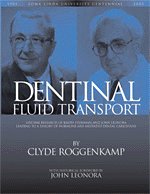
Ralph R. Steinman, Professor of Oral Medicine, School of Dentistry, and John Leonora, Professor of Physiology and Biophysics, School of Medicine, made important discoveries in 1971. They demonstrated a change in fluid dynamics within teeth: a transport system flowing from the pulp through the dentinal tubules that is impacted by the presence of sugar.
Dr. Steinman had studied the dental literature back to the 1880’s and had discovered an interesting minority view based on research indicating that teeth might possess a defensive mechanism against cavities. This information motivated Dr. Steinman to explore the theory. He developed a rapid technique to visualize dentinal fluid flow using fluorescent dye as a marker. By tracking the dye, Dr. Steinman was able to document an astounding observation: that teeth are internally active. In the absence of sugar, the dentinal fluid flowed within the tooth from the dentin-pulp interface through the dentin. In contrast, no significant flow occurred in the presence of a high sugar intake. The fact that sugar in the diet could affect an internal process in teeth had not been documented before.
The discovery had important implications regarding the eventual prevention of dental decay. The significance of the outward dentinal fluid flow is that: (1) It prevents the penetration of bacterial acids into the tooth structure, and (2) it neutralizes the bacterial acids on the surface of the teeth.
To answer the question of how this mechanism was controlled, Dr. Steinman consulted with Dr. Leonora who suggested that a hormonal mechanism would be most appropriate for controlling dentinal fluid flow. Their collaborative studies led to the discovery of a new endocrine system: the hypothalamic-parotid gland endocrine axis. They isolated the parotid hormone in a pure form, and showed that it stimulates dentinal fluid flow. They demonstrated that a high sugar diet suppresses the function of this endocrine axis and consequently dentinal fluid flow. They continued their research to demonstrate in rats that they could physiologically prevent the suppressive effect of the high sugar diet on dentinal fluid flow and prevent dental decay 80% to 100% of the time.
Subsequent research by others has concluded that dentinal fluid flow also exists in human teeth. Therefore, dentinal fluid flow may be an important defensive mechanism for preventing dental decay in humans.21
 stoppauseplayfastforwardrewindejectrecorddotnet