Matthew 27:46 Around the ninth hour, Jesus shouted in a loud voice, saying “Eli Eli lama sabachthani?” which is, “My God, my God, why have you forsaken me?” Mark 15:34 And at the ninth hour, Jesus shouted in a loud voice, “Eloi Eloi lama sabachthani?” which is translated, “My God, my God, why have you forsaken me?” In Aramaic, the phrase was/is rendered, “אלי אלי למה שבקתני”. ………………………………………. Psalm 22 ► King James Bible Par ▾ Psalm of the Cross (Matthew 27:45-56; Mark 15:33-41; Luke 23:44-49; John 19:28-30) 1{To the chief Musician upon Aijeleth Shahar, A Psalm of David.} My God, my God, why hast thou forsaken me? why art thou so far from helping me, and from the words of my roaring?
“Did I request thee, Maker, from my clay To mold me man? Did I solicit thee from darkness to promote me?” (Paradise Lost). This ‘is a question posed by Adam to his creator, God, in Paradise Lost ‘Origins: Current Events in Historical Perspective Published on Origins: Current Events in Historical Perspective (http://origins.osu.edu) March 2018: Mary Shelley’s Frankenstein By Stephen Kern [1] Two hundred years ago Mary Shelley, at age nineteen, published the gothic novel Frankenstein. It has become a classic of English literature. She was in a privileged position to craft this rich cultural-historical document because her father William Godwin was a leading enlightenment philosopher, her mother Mary Wollstonecraft was a pioneer English feminist who defended the rights of women, and her husband Percy Shelley was a leading romantic poet. Thus was this precocious and gifted writer poised to dramatize the clash of two cultures—the Enlightenment that celebrated reason and science and the Romantic age that celebrated passion and art. ‘http://origins.osu.edu/print’/5327 https://www.usask.ca/english/frank/mainindex.htm
True Image of the Father, whether thron’d
In the bosom of bliss, and light of light
Conceiving, or remote from Heaven, enshrin’d
In fleshly Tabernacle, and human form, Wandring the Wilderness, whatever place, [ 600 ]
Habit, or state, or motion, still expressing
The Son of God, with Godlike force indu’d
Against th’ Attempter of thy Fathers Throne,
And Thief of Paradise; him long of old
Thou didstdebel, and down from Heav’n cast [ 605 ]
With all his Army, now thou hast aveng’d Supplanted Adam, and by vanquishing
Temptation, hast regain’d lost Paradise,
And frustrated the conquest fraudulent:
He never more henceforth will dare set foot [ 610 ]
In Paradise to tempt; his snares are broke:
For though that seat of earthly bliss be fail’d,
A fairer Paradise is founded now
For Adam and his chosen Sons, whom thou
A Saviour art come down to re-install. [ 615 ]
Where they shall dwell secure, when time shall be
Of Tempter and Temptation without fear.
…
Hail Son of the most High, heir of both worlds,
Queller of Satan, on thy glorious work
Now enter, and begin to save mankind. [ 635 ]
Thus they the Son of God our Saviourmeek
Sung Victor, and, from Heavenly Feast refresht
Brought on his way with joy; heeunobserv’d
Home to his Mothers house private return’d.
in tv co dâu 8 tuổi we note there is the world of mumbai where aunt kunda/cunda and jadit and gauri and siva are and then there is the chaisa village world of anandi and kanandin… and in note “it’s a different world”, mention was made of the hormone-driven world and the non-hormone-driven world … with no exception, we all cover both at sometime … bầu ơi thương lấy bí cùng, tuy rằng khác giống nhưng chung một dàn …
What if we could test drugs without animal models?
Wyss Institute researchers and a multidisciplinary team of collaborators have engineered microchips that recapitulate the microarchitecture and functions of living human organs, including the lung, intestine, kidney, skin, bone marrow and blood-brain barrier. These microchips, called ‘organs-on-chips’, offer a potential alternative to traditional animal testing. Each individual organ-on-chip is composed of a clear flexible polymer about the size of a computer memory stick that contains hollow microfluidic channels lined by living human cells interfaced with a human endothelial cell-lined artificial vasculature, and mechanical forces can be applied to mimic the physical microenvironment of living organs, including breathing motions in lung and peristalsis-like deformations in the intestine. Because the microdevices are translucent, they provide a window into the inner workings of human organs.
Perched on the end of the scientist’s green glove, the tiny oblong-shaped object looks like a small jewel. It is in fact artificially-grown human cartilage, developed from human stem cells in the laboratory for the first time.
Cartilage, which protects the bone ends in joints, does not have blood vessels or nerves and does not heal over time if damaged.
Scientists at Columbia University in New York took cells from adult bone marrow and developed them into cartilage as robust as the natural hum…
READ MORE : http://www.euronews.com/2014/06/02/co…
tv co dau 8 tuoi basan and family returned to his father’s house and the father asked if a driver drove him there …
https://www.accesstoinsight.org/lib/authors/nyanatiloka/wheel394.html
In the ultimate sense, there do not even exist such things as mental states, i.e. stationary things. Feeling, perception, consciousness, etc., are in reality mere passing processes of feeling, perceiving, becoming conscious, etc., within which and outside of which no separate or permanent entity lies hidden.
Thus a real understanding of the Buddha’s doctrine of kamma and rebirth is possible only to one who has caught a glimpse of the egoless nature, or anattata, and of the conditionality, or idappaccayata, of all phenomena of existence. Therefore it is said in the Visuddhimagga(Chap. XIX):
Everywhere, in all the realms of existence, the noble disciple sees only mental and corporeal phenomena kept going through the concatenation of causes and effects. No producer of the volitional act or kamma does he see apart from the kamma, no recipient of the kamma-result apart from the result. And he is well aware that wise men are using merely conventional language, when, with regard to a kammical act, they speak of a doer, or with regard to a kamma-result, they speak of the recipient of the result.
No doer of the deeds is found, No one who ever reaps their fruits; Empty phenomena roll on: This only is the correct view. And while the deeds and their results Roll on and on, conditioned all, There is no first beginning found, Just as it is with seed and tree… No god, no Brahma, can be called The maker of this wheel of life: Empty phenomena roll on, Dependent on conditions all.
.
Creedence Clearwater Revival “proud mary -Rollin’ on a river”
In the Madhyamaka philosophy, to say that an object is “empty” is synonymous with saying that it is dependently originated. Nāgārjuna equates emptinesswith dependent origination in Mūlamadhyamakakārikā 24.18-19;[125]
.
Whatever arises dependently
Is explained as empty.
Thus dependent attribution
Is the middle way.
Since there is nothing whatever
That is not dependently existent,
For that reason there is nothing
Whatsoever that is not empty.[126]
.
.
Thich Nhat Hanh
Thich Nhat Hanh states, “Pratitya samutpada is sometimes called the teaching of cause and effect, but that can be misleading, because we usually think of cause and effect as separate entities, with cause always preceding effect, and one cause leading to one effect. According to the teaching of Interdependent Co-Arising, cause and effect co-arise (samutpada) and everything is a result of multiple causes and conditions… In the sutras, this image is given: “Three cut reeds can stand only by leaning on one another. If you take one away, the other two will fall.” In Buddhist texts, one cause is never enough to bring about an effect. A cause must, at the same time, be an effect, and every effect must also be the cause of something else. This is the basis, states Hanh, for the idea that there is no first and only cause, something that does not itself need a cause.[34]
Madhyamaka (“Middle way” or “Centrism”; Sanskrit: Madhyamaka, Chinese: 中觀見; pinyin: Zhōngguān Jìan, Tibetan: dbu ma pa) also known as Śūnyavāda(the emptiness doctrine) and Niḥsvabhāvavāda (the no svabhāva doctrine) refers to a tradition of Buddhist philosophy and practice founded by the Indian philosopher Nāgārjuna (c. 150-250 CE).[1][2] The foundational text of the Mādhyamaka tradition is Nāgārjuna‘s Mūlamadhyamakakārikā (Root Verses on the Middle Way). More broadly, Madhyamaka also refers to the ultimate nature of phenomena and the realization of this in meditative equipoise.[3]
Madhyamaka thought had a major influence on the subsequent development of the Mahayana Buddhist tradition. It is the dominant interpretation of Buddhist philosophy in Tibetan Buddhism and has also been influential in East Asian Buddhist thought.[4]
According to the classical Madhyamaka thinkers, all phenomena (dharmas) are empty (śūnya) of “nature,”[5] a “substance” or “essence” (svabhāva) which gives them “solid and independent existence,” because they are dependently co-arisen.[6] But this “emptiness” itself is also “empty”: it does not have an existence on its own, nor does it refer to a transcendental reality beyond or above phenomenal reality.[7][8][9]
In the Milindapañha the King asks Nagasena:
“What is it, Venerable Sir, that will be reborn?”
“A psycho-physical combination (nama-rupa), O King.”
“But how, Venerable Sir? Is it the same psycho-physical combination as this present one?”
“No, O King. But the present psycho-physical combination produces kammically wholesome and unwholesome volitional activities, and through such kamma a new psycho-physical combination will be born.”
the father said he used to be like one possessed and did not pray to “tha^`n linh” but when he hits rock bottom he found that praying to tha^`nh linh helped him …
anyway, one might pray for “you’re ok/well; i’m ok/well” “muôn loài được bình thường sống lâu; everyone live well and long” … [book of job: job and his friends] that way one might be certain that any problems that arise is not due to one not loving everyone and everything for one did love everyone and everything …perhaps it is due the to time to how the past so loves the present that at its own expense it becomes the present and in turn the present so loves the future that at its own expense it becomes the future … viet tv ca?i lu+o+ng show suggests “que^ ro^`i ha?” for it would remind one that one can escape too blames due the passage of time by realizing that biblically the present is “in the image” of the past (that is, the present is the past under disguise if only to fulfill responsibility to maintain differences by not accumulating sameness responsibility incur by original sin of creating a world of souls/differences/uniquenesses instead of ampoint-like singularity) and in turn the future is “in the image” of the present” …
gauri is very happy … happy birthday anh nandu … na.n ddu? …
may “you’re ok/well; i’m ok/well” “muôn loài được bình thường sống lâu; everyone live well and long” …
tv co dau 8 tuoi in tripping (intentionally or intentionally: in competitive games such gestures could easily and very well be confused with legal competion moves of the game and hence be practically “unintentional” “in the heat of the [competitive] moment” because such gesture and the competitive moves are alike in that with both one player tries to outdo the other players; at any rate/way nandu and the other children soon play with one another again as though nothing has happened [previous note “lotfi” mentions new mexican children in a b f skinner “walden ii” community help one another win together in a game of monopoly … here is b f skinner “operant conditioning” “positive reinforcement” [“negative reinforcement” is “blame”; “positive reinforcement” is “praise”] from the buddha:
Dhammapada Verses 227, 228, 229 and 230
Atula Upasaka Vatthu
Na cahu na ca bhavissati na cetarahi vijjati
ekantam nindito poso
ekantam va pasamsito.
Yam ce vinnu pasamsanti
anuvicca suve suve
acchiddavuttim medhavim
pannasilasamahitam.
Nikkham jambonadasseva1
ko tam ninditumarahati
devapi nam pasamsanti
brahmunapi pasamsito.
Verse 227: It is not new, O Atula! It has always been done from ancient times. They blame one who is silent, they blame one who speaks much, they blame one who speaks little. There is no one in this world who is not blamed.
Verse 228: There never has been, there never will be, nor is there now, anyone who is always blamed or always praised.
Verses 229 – 230: If the wise praise him day after day, knowing him to be truly faultless, wise and endowed with knowledge and virtue, who would blame him, who is like a nikkha of pure gold? The devas praise him; he is praised even by the great Brahmas.
1. nikkham jambonadasseva: like a nikkha of jambonada gold. Jambonada gold which comes from Jambu river is the finest gold. A nikkha can be a weight-unit of gold, an ornament or a coin.
] as witnessed by anandi but not by basan or gena …) his fellow school mate players in a game, nandu is “united nations/states” playing both devaddata in “competitively”/”unintentionally”/”unconsciously” tripping fellow players and playing siddhartha’s swan in getting his arm broken and playing siddhartha along with his fellow players in making up and healing social community of fellow school mates and continuing to be friends playing together as though nothing has happened …
http://www.bigbrothermouse.com/books/siddharthaswan-book.html Siddhartha and the Swan Many stories are told of the childhood of the Lord Buddha, who was then known as Siddhartha. In this story, the young prince befriends a swan, which is then shot by his cousin. In the end, Siddhartha helps his cousin learn about kindness to animals. The story has been retold by authors who are familiar with both Buddhist tradition and also with Western culture. retold by Adiccabandhu and Padmasri First published in 2009 :: Lao language :: 32 pages :: Paperback :: A6 This book was made possible with support from the Australian Embassy in Vientiane, Manoj and Bory Paul and A Sing (USA, Cambodia, India), and Peggy Horn (Australia). Thank you!
Dove Verified account @Dove Follow Follow @Dove More Dove does not test on animals. For the last 30 years, we’ve used alternative non-animal methods to test the safety of our products 👩🏻🔬. Dove is certified cruelty-free by @peta: http://bit.ly/Dovenat Real beauty is cruelty-free.
After running Cruelty-Free Kitty for over 4 years and researching mainstream brands masquerading as cruelty-free and PETA certifying brands with lax criteria, I had my suspicions about Dove.
A huge international brand, owned by no other than Unilever… is now claiming to be cruelty-free?
Could they have pulled out of China? Could this be the beginning of the cruelty-free movement going maintream?
Nope. Unfortunately not.
The Pre-Market vs. Post-Market Dilemma
After looking into their policy, Dove still sells certain products in stores, in mainland China:
“We have changed which products we offer to Chinese consumers. The Chinese Authorities changed regulations in 2014 and now allow for certain cosmetics products that are manufactured in China to not require animal testing, and those are the products that we will be offering.”
While it’s true that the Chinese animal testing laws changed in 2014, I’ve posted time and time again about what these changes truly entail.
In a nutshell: yes, companies can sell certain products in China with no pre-market animal testing as long as these products are “simple use cosmetics” and manufactured in China — lucky for Dove!
But China also has post-market animal testing laws, and any company that chooses to sell cosmetics in mainland China must comply with these animal tests if the Chinese Authorities deem them necessary.
This is what Dove had to say about post-market animal testing:
“Post-market testing would only be required in the rare occurrence of a serious consumer safety concern. We have requested to the Chinese Authorities that they notify us if there were such a concern, so we can withdraw the product rather than it be subject to animal testing.”
So let’s suppose there was a “serious consumer safety concern” with one of Dove’s products.
Do you really think that the Chinese government, a government so concerned with product safety that they mandate animal testing for all foreign cosmetics sold in China, would give Dove a friendly notice instead of testing the potentially hazardous products as per protocol?
Of course not.
Post-market testing is the law.
Also note how Dove doesn’t state that they’re exempt from the post-market laws. They only state that they’ve “requested” to be notified if there’s a concern. If I request to be notified by my teacher if there’s a surprise pop quiz so I can leave, I’m pretty sure I won’t be off the hook that easily.
Is Dove really cruelty-free? No. They might be making an effort in that direction, but claiming they’re cruelty-free is a misleading statement.
Nothing More Than a Marketing Claim
Unilever, Dove’s parent company, has a world-class marketing department. They’ve recently come out with a pseudo-ethical brand called Love Beauty and Planet which is a brilliant example of greenwashing and appealing to the growing “ethical” segment of the market. They’re also running massively successful campaigns for Dove that market to “all women” (or worse, “real women”).
My theory is that Dove’s “cruelty-free” act is nothing more than a marketing tactic used to appeal to ethical consumers, which is a growing segment of the market. By positioning themselves as “cruelty-free”, Dove would have a huge advantage in the drugstore as the ONLY cruelty-free brand of affordable mainsteam shower gel or soap available.
Of course, they’re not willing to let go of their Chinese market profits to truly achieve the cruelty-free status they’re looking for. Like other brands, they want the best of both worlds: the Chinese market, and the ethical market.
And Dove has the funds for these massive PR stunts. They’re partnering with reputable organizations such as Humane Society International and PETA.
Why Did PETA Approve Dove?
Truth be told, PETA’s cruelty-free list has never been the most reliable. Their criteria is lax, making it easy for brands to quickly apply and get on the cruelty-free list without much (or any) verification — even when their actual policy is ambiguous within the company.
There’s also the unknown aspects which may or may not be going on behind the scenes. Does Unilever have any financial ties with PETA? Do they donate to PETA, just like they’ve partnered with Humane Society International? There’s only speculation at this point.
Welcome To The Grey Area, Dove
If a brand pulls out of China, its status changes to cruelty-free on my website as long as they (as well as suppliers and third-parties) don’t test on animals at any point.
Since Dove still sells in China and admits to potentially subject to post-market animal testing, I’ve moved the brand to the “grey area”. This means that it’s unclear whether or not Dove tests on animals, as they’ve avoided some animal tests in China but might still be subject to others.
For a list of all the cruelty-free brands, please go here.
Cruelty-free made simple!
Download the full list of cruelty-free brands in my 10-page guide, Cruelty-Free Made Simple. Enter your name and email below to get it in your inbox.
Which Cruelty Free Bunny Logos Can We Trust? Posted on November 5, 2015 This post may contain affiliate links. meet Vicky Ly creator of ethical elephant Welcome to ethical elephant, a cruelty-free and vegan lifestyle blog created in 2015 by Vicky Ly. What is this? ethical elephant is more than just a blog. This is a place inspiring you to live your BEST cruelty-free and vegan life. We hope to inspire and empower you to make kinder choices in what you buy, say, and do. https://ethicalelephant.com/cruelty-free-bunny-logos/comment-page-2/
Chitrangada Singh in PETA and Joker AD against testing cosmetics on animalS in PVR on 28th Aug 2012 shown to userThe cruelty-free cosmetics con: The top make-up brands testing on animals abroad (and the ones you CAN trust) Since 2013, animal-tested cosmetics have been banned in the EU But a loophole means some ingredients can still be tested Companies who sell in China are required to animal test by law Brands involved include L’Oreal, Benefit, Estee Lauder and Bobbi Brown By ANNABEL FENWICK ELLIOTT FOR MAILONLINE PUBLISHED: 04:06 EST, 30 June 2015 | UPDATED: 03:17 EST, 20 August 2015ANIMALS ARE NOT OURS TO EXPERIMENT ON, EAT, WEAR, USE FOR ENTERTAINMENT, OR ABUSE IN ANY OTHER WAY.
What are little boys made of?
What are little boys made of?
Snips and snails
And puppy-dogs’ tails
That’s what little boys are made of
What are little girls made of?
What are little girls made of?
Sugar and spice
And everything nice [or “all things nice”]
That’s what little girls are made of[1]
The rhyme appears in many variant forms. For example, other versions may describe boys as being made of “snaps”, “frogs”,[2][3] “snakes”,[4] or “slugs”,[5] rather than “snips” as above.
Origins
In the earliest known versions, the first ingredient for boys is either “snips” or “snigs”,[6] the latter being a Cumbrian dialect word for a small eel.
The rhyme sometimes appears as part of a larger work called What Folks Are Made Of or What All the World Is Made Of. Other stanzas describe what babies, young men, young women, sailors, soldiers, nurses, fathers, mothers, old men, old women, and all folks are made of. According to Iona and Peter Opie, this first appears in a manuscript by the English poet Robert Southey (1774–1843), who added the stanzas other than the two below.[1] Though it is not mentioned elsewhere in his works or papers, it is generally agreed to be by him.[7]
supposedly when mother was pregnant with to^nan she had a lot of pigeon noodle soup … [die^~m is eating eel for her pregnancy … perhaps related to gia ba?o question about a fish dish …he came visit with ye^’n and wilson today 1/27/2019 …chim tro+`i ca’ bie^?n …or …. chim sa ca’ la(.n …]
Câu … “Mài dao dạy vợ” cũng có sự tích:
Xưa có một gia đình, mẹ chồng ở với nàng dâu thường hay xô xát, lục đục. Người con trai ở giữa khổ tâm vô hạn. Một hôm hắn mua một con dao bầu về mài. Vợ hỏi làm gì, hắn đáp rằng bởi mẹ chồng nàng dâu, không ở được với nhau, mà mẹ thì đã gần đất xa trời, chi bằng giết quách đi cho rảnh, khỏi phải nghe tiếng mắng chửi suốt ngày. Vợ nghe nói cảm động, từ đó có bớt nóng nảy. Một bữa khác, thấy chồng lại mài dao làm bộ giết mẹ thật, vợ hoảng hốt can chồng và xin ăn ở tốt với mẹ chồng. Ngược lại, mẹ chồng thấy con dâu đổi tính nết, cũng bỏ hẳn thói cũ[4]. https://www.sachhayonline.com/tua-sach/kho-tang-truyen-co-tich-viet-nam/giet-cho-khuyen-chong/1621 what to^nan was reading about time of following incidence at about the peak of the vietnwm war …
ba’c quy`nh (her attention seems to be not on supper but perhaps on a teaching lesson of some kind intended perhaps for to^nan seemingly since perhaps he was the only other person who noted the proceedings from some distance away from the dark kitchen–darkness simulates the guilt-free automatic conscientious state [book “flow” the fig leaves or entropy requirement around the bends in the way of the flow of past present and future feeds and is fed] of ‘have eyes/ears/mouth but as though could only see/hear/say good/goodness/godness/god” because ‘you’re ok/well; i’m ok/well” “muôn loài được bình thường sống lâu; everyone live well and long”) was with a maid/cook/butler in the kitchen when to^nan was aware of perhaps a chicken throat being cut for blood … it might have turned to^nan on to the [
leon uris exodus
Con Anh, Con Em, Con Người Ta câu chuyện về trang trại gà và gia đình ông Bản, một gia đình “liên hiệp quốc” với những đứa con không chung huyết thống lại quần tụ một nhà. Để bảo vệ gia đình và những đứa trẻ thơ, ông đã phải cúi đầu nhẫn nhục chịu đựng cảnh vợ ngoại tình, dùng trí thông minh để xoay chiều tình thế khi gia đình đang có nguy cơ tan vỡ. Phim do Nguyễn Quang Minh làm đạo diễn, dựa theo tác phẩm “Đường Đời Vất Vả” của nhà văn Trần Văn Tuấn kể về những ông bố bà mẹ “rổ rá cạp lại” để tìm hạnh phúc và một mái ấm trọn vẹn cho các đứa con và bản thân mình. Con Anh Con Em Con Người Talà bi kịch của một gia đình “chắp vá” với nhiều mâu thuẫn trong môi trường kinh doanh gia cầm. Phim nêu lên bài học “Trong gia đình con nào cũng là con, hãy đối xử công bằng và thương yêu, đoàn kết lẫn nhau để tạo nên một gia đình lớn hạnh phúc, vững vàng trước sóng gió. Và trong kinh doanh, đồng tiền không phải là tất cả, người kinh doanh cần có cái tâm mới có thể phát triển thương hiệu bền vững lâu dài”. Câu chuyện Con Anh Con Em Con Người Ta cònđề cao lòng nhân hậu của người cha, cổ vũ tình yêu chân chính và phê phán tính thực dụng, lòng ganh tỵ và thói đố kỵ. Nhân vật chính trong phim là ông Bản (do NSƯT Công Ninh thủ vai) là một kỹ sư nông lâm, chủ trại gà An Hòa, chủ gia đình với 5 đứa con, trong đó có 3 đứa không có quan hệ máu thịt với ông (con riêng của 2 người vợ). Ngoài ra, ông còn là người đàn ông nhân hậu, sẵn sàng từ bỏ quyền lợi cá nhân để hy sinh cho vợ con, nhằm bảo vệ hạnh phúc toàn vẹn cho gia đình. Có thể thấy, ngoại hình của NSƯT Công Ninh đã hỗ trợ rất nhiều cho nhân vật ông Bản bởi vẻ hiền lành, khắc khổ của anh. Công Ninh cũng chính là nhân vật chính của bộ phim, bởi nhân vật này là người khởi điểm cho câu chuyện “con anh, con em, con người ta” mở nhiều mâu thuẫn chồng chéo trong gia đình. Bên cạnh đó, Huy Khánh thể hiện vai diễn Long Nguyên là chàng trai hiền lành, tốt bụng, luôn chấp nhận phần thiệt về mình trước bốn người em. Từ trước đến nay, Huy Khánh luôn được “đo ni” trong các vai ác, thâm hiểm, tính cách hai mặt. Với Long Nguyên, đây là một thử thách khá lớn cho anh, bởi gương mặt “trai đểu” đã được khắc nét khá sâu trong lòng khán giả xem phim truyền hình nhiều năm nay. Nhưng Huy Khánh đã thể hiện thành công hình tượng hiền lành, chân thật, đôi lúc khù khờ của một người anh thương yêu, hy sinh vì các em. Con Anh Con Em Con Người Ta, khán giả ấn tượng với nhiều cảnh quay của nhân vật Phong (Trọng Nhân thể hiện) đấu đá với anh trai Long Nguyên. Phong là vai phản diện – một chàng trai ngỗ ngược, xấc xược hay ăn hiếp mọi người, nhất là anh của mình. Cậu luôn ỷ mình là con ruột của ông Bản và Long Nguyên là con riêng của người vợ trước nên nhiều lần ăn hiếp, dằn vặt anh trai. Những phân cảnh hai anh em nghi kị, hiểu lầm song song với tình yêu mà cả hai người dành cho cô em gái tên Hương (Hồng Kim Hạnh) đã tạo nên nhiều thú vị, cuốn hút nơi người xem. Con Anh Con Em Con Người Ta không chỉ chứa những bi kịch, phim còn đan xen nhiều tình huống éo le, hài hước giữa nghệ sĩ hài Phương Dung (trong vai bà Hạnh) cùng Vũ Ngọc Ánh (vai cô con gái Kim Ngọc), giúp khán giả có những tràng cười sảng khoái. Diễn viên Phương Dung trong vai người vợ sau của ông Bản đã thể hiện khá thành công hình ảnh người mẹ độc tài, ích kỷ, luôn muốn có những quyền lợi cho những đứa con riêng của mình. Bộ phim Con Anh Con Em Con Người Ta lên sóng HTV7 ngày 21/4/2016 với nhiều yếu tố “hỉ nộ ái ố”, hứa hẹn sẽ tác động đến trái tim người xem và khán giả sẽ thú vị với từng số phận nhân vật mà họ đang theo dõi. NSƯT Công Ninh chia sẻ về vai diễn trong Con Anh Con Em Con Người Ta: “Có thể nói, những vai diễn người cha tôi đóng như nhân vật cha Đậu Đũa (phim Mẹ Con Đậu Đũa), ông Bản (phim Con Anh Con Em Con Người Ta), hay mới đây là trong Vòng Eo 56 đều có một tình thương quá lớn đối với những đứa con và sẵn sàng hy sinh bản thân mình cho hạnh phúc của con. Đó là điểm chung trong các bộ phim. Riêng với Con Anh Con Em Con Người Ta, ông Bản hy sinh gần như cả cuộc đời ông ấy cho những đứa con ruột và ngay cả con nuôi, dù không chung ruột rà huyết thống. Ông không màng đến cuộc sống cá nhân mà sống vì con cái, vì gia đình. Đây là điểm chính yếu trong cá tính của nhân vật này”. NSƯT Công Ninh còn chia sẻ thêm: “Ngoài đời sống cũng có những người đàn ông như vậy, vì khi mình thương một người phụ nữ mà cuộc sống người phụ nữ đó gắn liền với đứa con của họ, mình có yêu thương con họ thì họ mới có thể yêu thương con mình và cả hai mới hạnh phúc lâu dài được”. Bên cạnh đó, NSƯT Công Ninh còn chia sẻ thêm về Long Nguyên (nhân vật do Huy Khánh thể hiện) trong phim: “Long Nguyên trong phim đã chịu quá nhiều bất hạnh, thực ra ông Bản ưu ái hơn và yêu thương, chăm sóc kĩ lưỡng hơn để cho đứa con này bớt sự tự ti. Trong tâm lý người cha, họ thường thể hiện điều đó để khỏa lấp sự thiệt thòi khi có nhiều đứa con trong gia đình”. Điều đạo diễn Nguyễn Quang Minh tâm đắc nhất trong Con Anh Con Em Con Người Ta là đã có nhiều bộ phim miêu tả người phụ nữ “chịu thương chịu khó” nhưng với phim này nhân vật ông Bản được ca ngợi là người đàn ông, người cha luôn tìm cách yêu thương và dung hòa những đứa con không cùng huyết thống để con ruột, con của vợ khi lỡ lầm ngoại tình đều yêu thương nhau. Mối quan hệ đan chéo cùng nhiều lớp quá khứ, hiện tại của phim sẽ giúp khán giả bị “hút” vào bộ phim này. Nguyễn Quang Minh cũng chia sẻ: “Con của người vợ trước đã chết và con của người vợ sau, con chung, con riêng do ngoại tình, tôi phải tả làm sao cho khán giả hiểu hết mối quan hệ phức tạp này, thì họ mới bị cuốn theo các tình huống phát sinh kịch tính tiếp sau đó.” Khi quay Con Anh Con Em Con Người Ta, anh cũng vấp phải nhiều khó khăn như lúc quay phim trong trại gà khi người vào quá đông, gà nghe hơi người sẽ “lăn” ra chết hàng loạt, hoặc gà “nín” đẻ, nên nhiều chủ trại gà hạn chế và không cho đoàn phim quay. Cuối cùng, đoàn phim phải mua gà để góp vào thêm và chủ trại gà sau nhiều lần thuyết phục, họ cũng hỗ trợ nhưng còn e dè. Đoàn phim của anh quay nhiều nơi ở Định Quán (Đồng Nai), Củ Chi, Bình Chánh, Hóc Môn, Long An… Anh cùng đoàn đi nhiều nơi để chọn bối cảnh phù hợp cho bộ phim. Bộ phim Con Anh Con Em Con Người Ta với đề tài lạ, khán giả khi theo dõi sẽ bị cuốn vào mảng gia đình chứ không phải về tình yêu đôi lứa hay hận thù đấu đá trong công ty. Phim không kể về những câu chuyện “nhà lầu xe hơi” mà đi sâu vào “hang cùng ngõ hẻm” nơi vùng quê với những mối quan hệ gia đình khiến khán giả dễ có cảm xúc và đón nhận bộ phim nhiều hơn. Diễn viên nữ Hồng Kim Hạnh chia sẻ về vai diễn trong phim: “Vai diễn Hương trong phim khiến Hạnh nhiều hôm nằm mơ thấy mình là nhân vật. Có những ngày về nhà, Hạnh mang nỗi buồn của nhân vật vào trong cuộc sống của mình. Lúc đóng xong phim này, Hạnh tự hứa với lòng sẽ không bao giờ nhận vai bi nữa vì nó áp lực với riêng bản thân Hạnh quá nhiều”. “Trong Con Anh Con Em Con Người Ta, tính trung bình cả bộ phim, nếu 200 phân đoạn thì 85% là cảnh khóc. Có ngày Hồng Kim Hạnh phảiquay 10 cảnh khóc, cảm giác như năng lượng đầu tư cho những cảnh khóc không thể hoàn thành 100%. Một ngày mà Hồng Kim Hạnh không giải quyết được 6 tới 10 cảnh khóc thì không phải là nhân vật của Hạnh bởi nhân vật Hương trong phim quá u uất và không có những cảnh vui tươi đan xen cho mình dễ thở được. Trước khi nhận vai, Hạnh đã mổ mắt cận nên mắt thường khô, lúc nhận phim Hạnh cũng rất lo. Vai diễn này căng thẳng từ đầu cho đến gần cuối phim nên có lúc Hạnh muốn chọc cười mọi người cũng không được. Các anh chị em diễn viên hay chọc Hạnh là người u uất nhất đoàn và là một cô gái lạnh lùng”. Sau khi hoàn thành xong bộ phim, Hạnh mới hiểu được rằng mình phải đạt được đến cảm xúc của nhân vật thì mình mới diễn tốt được những vai bi. Qua Con Anh Con Em Con Người Ta, Hồng Kim Hạnh cảm thấy kỹ năng, độ hiểu của mình về các nhân vật đã có độ chín. Sau này nếu nhận vai bi Hạnh sẽ có thêm kinh nghiệm giữ nguyên mạch cảm xúc trong lúc diễn. Đây chính là kinh nghiệm lớn nhất Hạnh học được. Phim có sự tham gia của các diễn viên: Huy Khánh, Hồng Kim Hạnh, NSUT Công Ninh, NSƯT Việt Anh, Phương Dung, Trọng Nhân, Vũ Ngọc Ánh, Quang Thái, Quang Hòa, Bảo Trí, Ngọc Lan,… Sản xuất : M&T PICTURES Thời lượng : 32 tập/ 45 phút Thể loại : Tâm lý tình cảm gia đình, hài Đạo diễn : Nguyễn Quang Minh Biên kịch : Cầm Linh (Chuyển thể từ tác phẩm “Đường Đời Vất Vả“ của nhà văn Trần Văn Tuấn) Âm nhạc : Phạm Hải ĐăngPage(s): 1 Title: Vietnamese refugees in the South China Sea Date: 1979 Keywords: refugees, immigration, boat, sea Record creator: Department of Immigration and Ethnic Affairs Reference: A12111, 2/1979/46A/46
] 10 commandments [
20Then Job arose, and rent his mantle, and shaved his head, and fell down upon the ground, and worshipped,
21And said, Naked came I out of my mother’s womb, and naked shall I return thither: the LORD gave, and the LORD hath taken away; blessed be the name of the LORD.
22In all this Job sinned not, nor charged God foolishly.
twilight zone “to serve man”
v tv series “we are of peace always”
The Complicated Practices of Egg Farmers: Chicken Selection, X-Ray Vision, and a Game of Whack-a-Mole
by Jenna Griffin, Industry Development Officer, EFA |
Farmers today face ever-present challenges: technical, environmental, and reputational. The need to produce more food with fewer resources is one of the defining challenges of our time. It will take folks from all walks of life steering the boat in the same direction to get to where we need to be. From global warming to animal care to the never ending quarrels over GMOs, farmers are often, for some reason, imagined as the villains in a drama where high moral standards are reserved for a select few. Innovations that will make agriculture even more productive and ‘industrial’ are attracting investment into agriculture, but are also calling into question why it is that farmers do the things they do, and if they should be doing so in the first place.
Blog-22Aug16-01Here is a ’did you know?’ that might make you stop and think: a chicken is not just a chicken. Depending on what they are bred for, modern chickens are either “layers” or “broilers.” Bred, of course, to lay eggs, layers can lay more than 250 eggs per year, while their ancestors laid about two dozen eggs annually. The current population in Alberta is over 4 million people. Can you imagine trying to provide enough eggs for 4 million people without that genetic improvement? You would probably need somewhere in the neighbourhood of 30 million birds! There are currently about 2 million layers in Alberta that are meeting the demand for fresh, high quality, local eggs.
In June, Egg Farmers of Canada (EFC) released an independent study conducted by Global Ecologic Environmental Consulting and Management Services, which found that the environmental footprint of Canada’s egg production supply chain declined by almost 50% during the period from 1962 to 2012. We should be celebrating! Among its findings, the study concluded that the egg production supply chain’s life cycle energy, land and water use decreased by 41%, 81% and 69%, respectively. According to the report’s findings, increased environmental sustainability within the egg industry can be attributed to several factors, including changing the feed composition, which is an important contributor to reducing the supple chain’s carbon footprint, fertilizers, improved animal health, and higher productivity in pullet and egg production (ie: the aforementioned genetic improvement from breeding).
There is a caveat to this genetic shift though, which is that layers do not grow big enough or fast enough to be used for meat. The same selective breeding process that produced laying hens capable of such efficiency has resulted in broiler growth increasing by over 400% from 1957 to 2005, with a 50% reduction in the feed required per kg of meat. Simply put, meat birds aren’t good layers, layer birds aren’t good meat, and dual-purpose birds aren’t too great at either.
As an aside, that isn’t to say there isn’t inherent value in some of the dual-purpose breeds of the past, typically dubbed Heritage Hens. In fact, Egg Farmers of Alberta (EFA) is a proud supporter of the Heritage Hen program of the Poultry Research Centre at the University of Alberta. Through that program, eggs from Heritage Hens are sold to help support genetic conservation of the rare breeds housed at the university. Genetic diversity to select for hardiness, heat tolerance, and resistance to disease may all be critical in the future, as climate change, feed availability and failing food security could all lead to shortages of current optimal dietary ingredients for feeding livestock. Poultry with more genetic diversity could prove more competitive and adaptable to lesser quality feed ingredients, water shortages or climate issues in the future.
Brace yourself, here comes another ’did you know?’. For the above genetic reasons, all of the non-egg-producing males of the layer breeds are euthanized soon after hatching. Although it’s obvious why, the question remains; ethically, do we find it acceptable?
I think it is absolutely critical that when contemplating these matters, we look at the alternatives. My husband is always keen to point out when I, as a perfectionist, have fallen into the trap of something called the Nirvana Fallacy. The Nirvana Fallacy is the tendency to assume that there is a perfect solution to a problem and compare actual situations with idealized alternatives. Under this fallacy, the choice is not between real world solutions; it is a choice between one realistically achievable possibility and another unrealistic solution that could in some way be ‘better’.
Blog-22Aug16-02I always like to ask people who criticize, in any situation, how they want to do it so that it is better? Then we walk through the proposed alternatives and determine if they are realistic. It is easy to say that farmers should simply rear the male birds, but at what environmental cost? Are we willing to give back those environmental gains that are so critical to being able to feed our growing population? Should the egg industry strive to do better? Absolutely, but ‘better’ rarely means perfect, and rarely looks like the idealized version we imagined.
Sometimes, knowing we need to do better is more important than answering why we do what we do. The ‘why’, however, should serve to illustrate the fact that farmers aren’t villains putting aside the needs of animals and the ethics of society for personal profit; they are simply people trying to do the best they can, with the tools they have available, factoring in the myriad of trade-offs and decisions they need to make along the way. So here it is: the egg industry is not perfect, but we know where we need to improve, and we’re working on it.
Blog-22Aug16-03So what are the alternatives to euthanizing day-old chicks? I love it when science plays along and helps us out. Here is the next ‘did you know?’. The sex of the egg is actually determined in the hen before it is even laid! So, wouldn’t it be great if we could separate the ‘male’ and ‘female’ eggs before incubation, when eggs are still just eggs? No differentiated embryo. Eggs that would develop to be male can be used for egg products, while the female eggs can be incubated to give female chicks.
Research funded by Egg Farmers of Ontario (EFO) and conducted at the University of McGill, has created a non-invasive technology that can determine whether an egg is fertile and whether the developing chick inside is a male or female. This determination is undertaken on the day the egg is laid, using the magic of hyperspectral imaging. Hyperspectral imaging helps us see wavelengths we wouldn’t otherwise be able to see, to identify small bits of the egg that differ between eggs that will develop to be male, and those that will develop to be female. So, in a way, it’s like superhero egg-sorting x-ray vision, which is very industrial and high-tech, but that’s ok! I’m confident that one day soon, this technology will be taken up by hatcheries around the world, but it is still very much exploratory. As an example of just one of the challenges, current feather gender identification post-hatch is 99% accurate. If that accuracy drops to 95%, thousands of male chicks will be sent to pullet growers, who will ultimately have to euthanize them, or rear and misallocate feed toward birds that will ultimately not be productive or consumed. So really, without that accuracy, the hatchery would be passing off the problem to someone else to deal with. I know of one hatchery that has put their expansion plans on hold, waiting for the availability of this technology.
Blog-22Aug16-04Sometimes the technical, environmental, and reputational challenges in agriculture can feel like a game of whack-a-mole. Farmers want to know more about best practices and want access to workable strategies to improve, but for every challenge knocked down, a new one pops up. It can be easy to feel frustrated and wish for the idealized scenario, but we have to remember that the effort to improve certainly isn’t futile; as an industry, we have, and continue to make progress! http://eggs.ab.ca/about/efa-blog/the-complicated-practices-of-egg-farmers-chicken-selection-x-ray-vision-and-a-game-of-whack-a-mole/
The Geneva Accords of 1954 declared a cease-fire and divided Vietnam officially into North Vietnam (under Minh and communist forces) and South Vietnam (under Ngo Diem, an anti-communist South Vietnamese leader) Dividing line was at the 17th parallel. The Geneva Accords stipulated that Vietnam was to be reunified under free elections to be held in
because god cares and provides for even the lilies of the valley and the sparrow how much more would god care and provide for you trời sinh trời dưỡng bác quỳnh provided an alternative with her right hand taking tônan to various buddhist temples such as đại giác vĩnh nghiêm etc for free lunch such as minced potato carrot celery tofu succotash that she later made at home for tônan and it became one of his favorite dishes … for the occasion of this note die^~m–even though she is pregnant–made a similar dish that mother likes and on chinese new year too when we have ba’nh chu+ng from san jose … when he was visiting with ye^’n (
Apple concedes defeat to Taylor Swift in fight over Apple Music artist payments Michelle Jaworski— 2015-06-22 09:06 am | Last updated 2015-12-11 02:11 pm
From inception to launch, here’s an inside look at Swift — courtesy of its creator, Apple developer tools director Chris Lattner.
According to Lattner, who’s worked at Apple since 2005, the development of Swift began in July of 2010. Lattner explains in a blog post that he alone “implemented much of the basic language structure, with only a few people knowing of its existence.”
The language did not become a major focus for the Apple Developer Tools group until 2013, but “a few other (amazing) people started contributing in earnest late in 2011,” Lattner says.
And as with all programming languages, Swift benefits “from the experiences hard-won by many other languages.”
Xcode Playgrounds
The Xcode Playgrounds feature was “a personal passion of mine,” says Lattner. A key counterpart to Swift, Apple touts that Playgrounds “make writing Swift code incredibly interactive by instantly displaying the output of Swift code.”
Lattner shares that the Playgrounds feature was “heavily influenced by Bret Victor‘s ideas, by Light Table and by many other interactive systems.”
Above: A look at Swift’s “Playground” development environment.Image Credit: Apple
Ultimately, Lattner hopes that “by making programming more approachable and fun, [Apple will] appeal to the next generation of programmers and to help redefine how Computer Science is taught.”
That goal was hardly touched upon by software engineering VP Craig Federighi during Apple’s WWDC keynote, but it represents an interesting ambition for Apple: to bring its famous usability expertise into its own software creation tools.
“Sighs and collective shock erupted” when Swift was first announced, as VentureBeat’s Richard Reilly wrote today; but since then, developer interest appears incredibly strong. In just one day, the Swift reference book was downloaded 370,000 times via iBooks.
Description English: This image shows a red Poinsettia (Euphorbia pulcherrima). Deutsch: Dieses Bild zeigt einen Weihnachtsstern (Euphorbia pulcherrima) in rot. Camera data Camera Nikon D70 Lens Nikon 18-70 AF-S DX / 3.5-4.5 G IF-ED Focal length 29 mm Aperture f/8 Exposure time 1/500 s Sensivity ISO 200 Please help translating the description into more languages. Thanks a lot! If you want a license with the conditions of your choice, please email me to negotiate terms. best new image image Date 4 November 2004 Source Own work Author André Karwath aka Aka Permission (Reusing this file) w:en:Creative Commons attribution share alike This file is licensed under the Creative Commons Attribution-Share Alike 2.5 Generic license. You are free: to share – to copy, distribute and transmit the work to remix – to adapt the work Under the following conditions: attribution – You must give appropriate credit, provide https://en.m.wikipedia.org/wiki/Poinsettia
“Christmas Star” redirects here. For the Christian tradition, see Star of Bethlehem.
The poinsettia (/pɔɪnˈsɛtiə/ or /pɔɪnˈsɛtə/)[1][2] (Euphorbia pulcherrima) (also known as Christmas Star) is a commercially important plant species of the diverse spurge family (Euphorbiaceae). The species is indigenous to Mexico. It is particularly well known for its red and green foliage and is widely used in Christmas floral displays. It derives its common English name from Joel Roberts Poinsett,[3] the first United States Minister to Mexico,[4] who introduced the plant to the US in 1825.
Description
Euphorbia pulcherrima is a shrub or small tree, typically reaching a height of 0.6–4 metres (2–13 ft). The plant bears dark green dentate leaves that measure 7–16 centimetres (2.8–6.3 in) in length. The colored bracts—which are most often flaming red but can be orange, pale green, cream, pink, white, or marbled—are often mistaken for flower petals because of their groupings and colors, but are actually leaves.[5][6] The colors of the bracts are created through photoperiodism, meaning that they require darkness (12 hours at a time for at least five days in a row) to change color. At the same time, the plants require abundant light during the day for the brightest color.[7]
The flowers of the poinsettia are unassuming and do not attract pollinators. They are grouped within small yellow structures found in the center of each leaf bunch, and are called cyathia.[8]
The poinsettia is native to Mexico.[9] It is found in the wild in deciduous tropical forests at moderate elevations from southern Sinaloa down the entire Pacific coast of Mexico to Chiapas and Guatemala. It is also found in the interior in the hot, seasonally dry forests of Guerrero, Oaxaca, and Chiapas.[10] Reports of E. pulcherrima growing in the wild in Nicaragua and Costa Rica have yet to be confirmed by botanists.[11]
Religious and other traditional associations
The Aztecs used the plant to produce red dye and as an antipyretic medication.[8] In Nahuatl, the language of the Aztecs, the plant is called Cuetlaxochitl, meaning “flower that grows in residues or soil”[8] Today it is known in Mexico and Guatemala as Flor de Nochebuena, meaning Christmas Eve Flower.[8] In Spain it is known as Flor de Pascua or Pascua, meaning Easter flower.[8] In Chile and Peru, the plant became known as Crown of the Andes.[8]
The plant’s association with Christmas began in 16th-century Mexico, where legend tells of a girl, commonly called Pepita or Maria, who was too poor to provide a gift for the celebration of Jesus‘ birthday and was inspired by an angel to gather weeds from the roadside and place them in front of the church altar.[12] Crimson blossoms sprouted from the weeds and became poinsettias.[13] From the 17th century, Franciscan friars in Mexico included the plants in their Christmas celebrations.[14] The star-shaped leaf pattern is said to symbolize the Star of Bethlehem, and the red color represents the bloodsacrifice through the crucifixion of Jesus.[15]
Poinsettias are popular Christmas decorations[3] in homes, churches, offices, and elsewhere across North America. They are available in large numbers from grocery, drug, and hardware stores. In the United States, December 12 is National Poinsettia Day.[16]
Creation of the American poinsettia industry
Albert Ecke emigrated from Germany to Los Angeles in 1900, opening a dairy and orchard in the Eagle Rock area. He became intrigued by the plant and sold them from street stands. His son, Paul Ecke, developed the grafting technique, but it was the third generation of Eckes, Paul Ecke Jr., who was responsible for advancing the association between the plant and Christmas.[17]
Besides changing the market from mature plants shipped by rail to cuttingssent by air, he sent free plants to television stations for them to display on air from Thanksgiving to Christmas. He also appeared on television programs like The Tonight Show and Bob Hope‘s Christmas specials to promote the plants.[17]
Until the 1990s, the Ecke family, who had moved their operation to Encinitas, California, in 1923, had a virtual monopoly on poinsettias owing to a technique that made their plants much more attractive.[18] They produced a fuller, more compact plant by grafting two varieties of poinsettia together. A poinsettia left to grow on its own will naturally take an open, somewhat weedy look. The Eckes’ technique made it possible to get every seedling to branch, resulting in a bushier plant.[18]
In the late 1980s, university researcher John Dole[19] discovered the method previously known only to the Eckes and published it,[20] allowing competitors to flourish, particularly those using low-cost labor in Latin America. The Ecke family’s business, now led by Paul Ecke III, decided to stop producing plants in the U.S., but as of 2008, they still serve about 70 percent of the domestic market and 50 percent of the worldwide market.[17]
Cultivation
The poinsettia has been cultivated in Egypt since the 1860s, when it was brought from Mexico during the Egyptian campaign. It is called bent el consul, “the consul’s daughter”, referring to the U.S. ambassador Joel Poinsett.[11]
There are over 100 cultivated varieties of poinsettia.[8][21]
In areas outside its natural environment, it is commonly grown as an indoor plant where it prefers good morning sun, then shade in the hotter part of the day. Contrary to popular belief, flowering poinsettias can be kept outside, even during winter, as long as they are kept frost-free. It is widely grown and very popular in subtropical climates such as Australia, Rwanda and Malta.[22]
The plant requires a daily period of uninterrupted long, dark nights followed by bright sunny days for around two months in autumn in order to encourage it to develop colored bracts.[citation needed] Any incidental light during these nights (from a nearby television set, from under a door frame, even from passing cars or street lights) hampers bract production. Commercial production of poinsettia has been done by placing them inside a greenhouse and covering the latter completely to imitate the natural biological situation.[citation needed]
To produce extra axillary buds that are necessary for plants containing multiple flowers, a phytoplasma infection—whose symptoms include the proliferation of axillary buds—is used.[23] The discovery of the role phytoplasmas play in the growth of axillary buds is credited to Ing-Ming Lee of the USDAAgricultural Research Service.[24]
Poinsettias are susceptible to several diseases, mostly fungal, but also bacterial and parasitic.
Toxicity claims
In the United States and perhaps elsewhere, there is a common misconception that the poinsettia is highly toxic. This misconception was spread by a 1919 urban legend of a two-year-old child dying after consuming a poinsettia leaf.[25]
While the sap and latex of many plants of the spurge genus are indeed toxic,[26] the poinsettia’s toxicity is relatively mild. Its latex can cause an allergic reaction in sensitive individuals.[27] It is also mildly irritating to the skin or stomach[9] and may sometimes cause diarrhea and vomiting if eaten.[28]Sapintroduced into the human eye may cause temporary blindness.[29]
An American Journal of Emergency Medicine study of 22,793 cases reported to the American Association of Poison Control Centers showed no fatalities, and furthermore that a strong majority of poinsettia exposures are accidental, involve children, and usually do not result in any type of medical treatment.[30]POISINDEX, a major source for poison control centers, says a 50 lb (23 kg) child would have to eat 500 bracts (poinsettia leaves) to accumulate levels of toxins found to be harmful in experiments.[25] An Ohio State University study showed no problems even with extremely large doses.[31]
References
Wells, John C. (1990). Longman Pronunciation Dictionary. Harlow, England: Longman. ISBN978-0-582-05383-0. entry “poinsettia”
“poinsettia”. Dictionary.com. Retrieved December 15, 2012.
^ ab Bussell, Gene (December 2009). “Get Ready for Holiday Flowers”. Southern Living. 44 (12): 88.
Trejo, L., M. E. Olson, P. Feria, K. M. Olsen, L. E. Eguiarte, B. Arroyo y J. A. Gruhn. 2012. “Poinsettia’s wild ancestor in the Mexican dry tropics: historical, genetic, and environmental evidence.” American Journal of Botany 99: 1146–1157.
^ ab Joel Roberts Poinsett. Columbia Electronic Encyclopedia, 6th Edition [serial online]. November 2011;:1. Available from: Academic Search Complete, Ipswich, MA. Accessed November 8, 2012
Bánh chưng is a traditional Vietnamese rice cake which is made from glutinous rice, mung beans, pork and other ingredients.[1] Its origin is told by the legend of Lang Liêu, a prince of the last king of the Sixth Hùng Dynasty, who became the successor thanks to his creation of bánh chưng and bánh giầy, which symbolized, respectively, the Earth and the Sky (bánh chưng is the Earth and bánh giầy is the Sky). Considered an essential element of the family altar on the occasion of tết, the making and eating of bánh chưng during this time is a well-preserved tradition of Vietnamese people. Beside the tết holiday, bánh chưngis also eaten all year round as Vietnamese cuisine.
Origin and symbol
According to the book Lĩnh Nam chích quái (Extraordinary stories of Lĩnh Nam) published in 1695, the creation of bánh chưng was credited to Lang Liêu, a prince of the last sixth hùng king of the hùng dynasty (c. 1712 – 1632 BC). It was said that in choosing a successor among his sons, the monarch decided to carry out a competition in which each prince brought a delicacy representing the sincerity for the ancestors on the occasion of the tết, whoever could introduce the most delicious dish for the altar would become the next ruler of the country. While other princes tried to find the rare and delicious foods from forest and sea, the eighteenth prince, Lang Liêu, who was the poorest son of the Hùng king, could not afford such luxurious dishes and had to be content with everyday ingredients, such as rice and pork. Finally, he created one cake in the square form of earth called bánh chưng and one in the round form of sky called bánh giầy from these simple ingredients. In tasting the dishes offered by his son, the Hùng king found bánh chưng and bánh giầy not only delicious but also a fine representation of the respect for ancestors. Therefore, he decided to cede the throne to Lang Liêu and bánh chưng, bánh giầy became traditional foods during the tết.[2][3][4]Lang Liêu founded the Seventh Hùng dynasty (c. 1631 – 1432 BC).
Considered an indispensable dish of the Tết, bánh chưng is placed in the family altars in order to honor the ancestors and pray them to support the family in the new year.[5] Wrapped in a green square package, bánh chưng symbolizes the Earth,[6] the variant ingredients of bánh chưng which comes from all the products of nature also emphasize the meaning of bánh chưng with Vietnamese people.
History and tradition
Bánh chưng is always considered an essential element of a traditional Tết, which is described by a popular couplet:[6]
Vietnamese: Thịt mỡ, dưa hành, câu đối đỏ Cây nêu, tràng pháo, bánh chưng xanh
Translate: Rich meats, Pickled onions, red couplets
Nêu tree, firecracker, green bánh chưng
Bánh chưng (“chưng” trong “chưng cất”, nghĩa là hấp nước, nhưng thực tế bánh được nấu bằng cách luộc) là một loại bánh truyền thống của dân tộc Việtnhằm thể hiện lòng biết ơn của con cháu đối với cha ông và đất trời xứ sở. Nguyên liệu làm bánh chưng gồm gạo nếp, đậu xanh, thịt lợn, lá dong và bánh thường được làm vào các dịp Tết cổ truyền của dân tộc Việt, cũng như ngày giổ tổ Hùng Vương) (mùng 10 tháng 3 âm lịch).
Sự tích
Là loại bánh duy nhất có lịch sử lâu đời trong ẩm thực truyền thống Việt Nam còn được sử sách nhắc lại, bánh chưng có vị trí đặc biệt trong tâm thức của cộng đồng người Việt và nguồn gốc của nó về truyền thuyết liên quan đến hoàng tử Lang Liêu vào đời vua Hùng thứ 6. Sự tích trên muốn nhắc nhở con cháu về truyền thống của dân tộc; là lời giải thích ý nghĩa cũng như nguồn cội của Bánh Chưng, Bánh Giầy trong văn hóa, đồng thời nhấn mạnh tầm quan trọng của cây lúa và thiên nhiên trong nền văn hoá lúa nước.
Theo cuốn Lĩnh Nam Chích Quái, mục “Truyện bánh chưng” (Chưng bính truyện-蒸餅傳):
Vua Hùng sau khi phá xong giặc Ân rồi, trong nước thái bình, nên lo việc truyền ngôi cho con, mới hội họp hai mươi hai vị quan lang công tử lại mà bảo rằng: “Đứa nào làm vừa lòng ta, cuối năm đem trân cam mỹ vị đến dâng cúng Tiên Vương cho tròn đạo hiếu thì ta sẽ truyền ngôi cho”.
Các công tử đua nhau đi tìm các vị trân kỳ, hoặc săn bắn, chài lưới, hoặc đổi chác, đều là của ngon vật lạ, nhiều không biết bao nhiêu mà kể. Duy có công tử thứ mười tám tên là Lang Liêu, mẹ hàn vi, đã bị bệnh qua đời rồi, trong nhà lại ít người nên khó bề toan tính, ngày đêm lo lắng, ăn ngủ không yên. Chợt nằm mơ thấy thần nhân bảo rằng: “Trong trời đất không có vật gì quý bằng gạo, vì gạo là vật để nuôi dân khỏe mạnh, ăn mãi không chán, không có vật gì hơn được. Nếu giã gạo nếp gói thành hình tròn để tượng trưng cho Trời, hoặc lấy lá gói thành hình vuông để tượng trưng cho Đất, ở trong làm nhân ngon, bắt chước hình trạng trời đất bao hàm vạn vật, ngụ ý công ơn dưỡng dục của cha mẹ, như thế thì lòng cha sẽ vui, nhà ngươi chắc được ngôi quý”. Lang Liêu giật mình tỉnh dậy, vui mừng nghĩ rằng “Thần minh giúp ta, ta nên bắt chước theo mà làm”. Lang Liêu bèn lựa nếp hạt trắng tinh, không sứt mẻ, đem vo cho sạch, rồi lấy lá xanh gói thành hình vuông, bỏ nhân ngon vào giữa, đem nấu chín tượng trưng cho Đất, gọi là bánh chưng. Lại lấy nếp nấu xôi đem quết cho nhuyễn, nhào thành hình tròn để tượng trưng cho Trời, gọi là bánh dày. Đúng kỳ hẹn, Vua hội họp các con lại trưng bày phẩm vật. Các con đem dâng không thiếu thứ gì, duy chỉ có Lang Liêu đem bánh hình tròn, bánh hình vuông đến dâng. Hùng Vương lấy làm lạ hỏi Lang Liêu, Lang Liêu trình bày như lời thần nhân đã bảo. Vua nếm thử thì thấy vị ngon vừa miệng ăn không chán, phẩm vật của các công tử khác không làm sao hơn được. Vua khen ngợi hồi lâu, rồi cho Lang Liêu được giải nhất. Vua dùng thứ bánh ấy để cung phụng cha mẹ trong các dịp lễ tết cuối năm. Thiên hạ mọi người đều bắt chước theo. Tục này còn truyền cho đến bây giờ, lấy tên của Lang Liêu, gọi là Tết Liệu. Hùng Vương truyền ngôi cho Lang Liêu; hai mươi mốt anh em kia đều chia nhau giữ các phiên trấn, lập làm bộ đảng, trấn thủ những nơi núi non hiểm trở. Về sau, anh em tranh giành lẫn nhau, mỗi người dựng “mộc sách” (hàng rào cây bằng gỗ) để che kín, phòng vệ. Vì thế, mới gọi là Sách, hay là Trại, là Trang, là Phường. Sách, hay Trại, Trang, Phường bắt đầu có từ đây vậy
Quan niệm truyền thống
Theo quan niệm phổ biến hiện nay, cùng với bánh giầy, bánh chưng tượng trưng cho quan niệm về vũ trụ của người Việt xưa. Bánh có màu xanh lá cây, hình vuông, được coi là đặc trưng cho đất trong tín ngưỡng của người Việt cổ và các dân tộc khác trong khu vực châu Á. Tuy nhiên, theo Giáo sư Trần Quốc Vượng, bánh chưng nguyên thủy có hình tròn và dài, giống như bánh tét, đồng thời bánh chưng và bánh giầy tượng trưng cho nam và nữ trong tín ngưỡng phồn thực Việt Nam[1]. Bánh tét, thay thế vị trí của bánh chưng vào các dịp Tếttrong cộng đồng người Việt ở miền nam Việt Nam, theo Trần Quốc Vượng đây là dạng nguyên thủy của bánh chưng.
Gói và nấu bánh chưng, ngồi canh nồi bánh chưng trên bếp lửa đã trở thành một tập quán, văn hóa sống trong các gia đình người Việt mỗi dịp tết đến xuân về.
Khi sêu tết nhau tặng bánh chưng thì người Việt có lệ tặng một cặp bánh chứ không tặng một cái lẻ.
Bánh chưng dài
Một số vùng, trong đó có Phú Thọ – vùng trung du đất Tổ của các vua Hùng, không thịnh hành gói bánh chưng hình vuông mà gói dạng tròn dài, gọi là “bánh chưng dài”, hay “bánh tày”.[cần dẫn nguồn] Bánh tày còn là loại bánh Tết ở Kinh Bắc và tại nhiều vùng dân tộc thiểu số miền Bắc Việt Nam. (Xem bài bánh tét)
Bánh chưng dài thường được gói với rất ít đỗ (đậu xanh), và rất ít hoặc không có thịt, mục đích để dành ăn lâu dài vào những ngày sau tết, xắt thành từng lát bánh rán vàng giòn hơn và ăn ngon hơn. Bánh chưng dài có thể dùng lá chuối, lá chít thay cho lá dong, với 2 đến 4 lá xếp theo chiều dọc, rải gạo, đỗ theo chiều của lá và quấn bằng lạt giang đã được nối bằng phương thức đặc biệt để bó chặt chiếc bánh.
Cũng thường thấy một kiểu bánh chưng khác, bánh chưng ngọt, không sử dụng thịt trong nhân bánh, đường trắng được trộn đều vào gạo và đỗ. Một số vùng khi thực hiện bánh chưng ngọt còn trộn gạo với gấc, cho màu đỏ đẹp. Khi gói bánh chưng ngọt thường người ta không quay mặt xanh của lá dong vào trong.
Bánh chưng trong thơ văn
Trong câu đối phổ biến về sản vật ngày Tết, người ta thấy sự có mặt của bánh chưng như một giá trị vật chất và tinh thần không thể thiếu trong dân tộc Việt Nam:
Succotash (from Narragansettsohquttahhash, “broken corn kernels”[1]) is a culinary dish consisting primarily of sweet corn with lima beans or other shell beans. Other ingredients may be added including tomatoes, green or sweet red peppers,[2] and okra. Combining a grain with a legume provides a dish that is high in all essentialamino acids.[3][4] Because of the relatively inexpensive and more readily available ingredients, the dish was popular during the Great Depression in the United States[citation needed]. It was sometimes cooked in a casserole form, often with a light pie crust on top as in a traditional pot pie. Succotash is a traditional dish of many Thanksgiving celebrations in New England[5] as well as in Pennsylvania and other states. In some parts of the American South, any mixture of vegetables prepared with lima beans and topped with lard or butter is called succotash. Corn (maize), American beans, tomatoes, and peppers are New World foods.
Succotash
Succotash with corn, lima beans, carrots, and other vegetables.
“Make a wish, make a succotash wish” is a line from the 2001 rock album Anthology by Alien Ant Farm. This song was the band’s first song ever written and performed, and it is also featured on their $100 EP.
“Succotash” is the title of the first track from Herbie Hancock’s 1963 album Inventions and Dimensions[7][8]
In an episode of the Saturday morning cartoon show Casper and the Angels titled “The Impossible Scream”, two recurring characters named Nerdley and Fungo sit down at a restaurant and attempt to order succotash with toast, a kaiser roll, and a cinnamon bun, being successively told every time by an increasingly frustrated waiter that they are out of succotash. Ultimately, they try to order succotash by itself, much to the waiter’s exasperation.
See also
References
Trumbull, James Hammond (1903). Natick Dictionary. US Gov Printing Office. Entry for sohquttahham.
by Chef Michel Nischan of pbs victory garden … tv nét ẩm thực việt showcases a succotash-like dish at the international turtle park …
A healthy “Three Sisters” succotash featuring beans, corn, and pumpkin
Makes 4 servings
Ingredients
1 large onion, diced
2 tablespoons olive oil
2 cups raw pumpkin, cubed (reserve pumpkin shell for serving)
2 cups Italian black coco beans (or any other fresh shell bean)
4 cups trimmed snap beans, any color
1 cup fresh Native American grinding corn (regular corn can be substituted)
2 cups vegetable stock
5 sage leaves, julienned
4 tablespoons sweet butter
Sea salt and freshly ground pepper to taste
Directions
Sauté onion in olive oil until translucent. Add Italian black coco beans, native corn, and raw pumpkin.
Cover with vegetable stock and simmer until all ingredients are tender and the stock has reduced, about 35 to 40 minutes.
Add trimmed snap beans and gently stir in sage leaves, sweet butter, and sea salt and pepper to taste.
Serve in hollowed-out pumpkin shell.
Chef Michel Nischan notes: If freshly picked shell beans are not available, pre-cook dried beans until just tender and add to the succotash the same time as the snap beans. If native corn is not available, use fresh sweet corn and add the same time as the snap beans.
(even though the passage of time means the present feeds on and is fed by the past and likewise the future feeds on and is fed by the present) especially since in the usa to^nan developed an allergic reaction to sea food when vietnamese boat people were in the news (and new age friend scott [the “plaids” in recent notes”] lectured him on the evil of veal which supposedly involved confining baby lambs in small cages to make their meat tender) … guess that was in lieu of –or was good as/for–a ‘god speed’ to boat people (and “price/cost” or “thanksgiving” paid) for their safe and sound passage over the pacific ocean to land and freedom …
Blake Morgan, Evelin Stone, Seth Gamble Moms Bang Teens Evelin Stone brings her new boyfriend, Seth Gamble, to her dad’s place for Thanksgiving. When they arrive, they meet Blake Morgan, Evelin’s dad’s new girlfriend. While Evelin catches up with her dad, Blake asks for Seth’s help in the kitchen. Turns out there’s more than the turkey that needs stuffing! But first, Blake sucks Seth’s big hard cock and gives him a taste of her dripping wet pussy! They are interrupted when the kitchen timer goes off and dinner begins. But, the fun continues during dinner with Evelin and Blake taking turns playing with Seth’s cock under the table! Then, Evelin sneaks off for a quickie with her boyfriend while her dad and Blake stay in the dining room! When Blake does the same, Evelin walks in on Seth pounding her new stepmom’s dripping wet pussy! She’s shocked, but Blake reminds her it’s a time for sharing and that there’s plenty of Seth to satisfy them bothBlake Morgan, Evelin Stone, Seth Gamble Moms Bang Teens Evelin Stone brings her new boyfriend, Seth Gamble, to her dad’s place for Thanksgiving. When they arrive, they meet Blake Morgan, Evelin’s dad’s new girlfriend. While Evelin catches up with her dad, Blake asks for Seth’s help in the kitchen. Turns out there’s more than the turkey that needs stuffing! But first, Blake sucks Seth’s big hard cock and gives him a taste of her dripping wet pussy! They are interrupted when the kitchen timer goes off and dinner begins. But, the fun continues during dinner with Evelin and Blake taking turns playing with Seth’s cock under the table! Then, Evelin sneaks off for a quickie with her boyfriend while her dad and Blake stay in the dining room! When Blake does the same, Evelin walks in on Seth pounding her new stepmom’s dripping wet pussy! She’s shocked, but Blake reminds her it’s a time for sharing and that there’s plenty of Seth to satisfy them bothBlake Morgan, Evelin Stone, Seth Gamble Moms Bang Teens Evelin Stone brings her new boyfriend, Seth Gamble, to her dad’s place for Thanksgiving. When they arrive, they meet Blake Morgan, Evelin’s dad’s new girlfriend. While Evelin catches up with her dad, Blake asks for Seth’s help in the kitchen. Turns out there’s more than the turkey that needs stuffing! But first, Blake sucks Seth’s big hard cock and gives him a taste of her dripping wet pussy! They are interrupted when the kitchen timer goes off and dinner begins. But, the fun continues during dinner with Evelin and Blake taking turns playing with Seth’s cock under the table! Then, Evelin sneaks off for a quickie with her boyfriend while her dad and Blake stay in the dining room! When Blake does the same, Evelin walks in on Seth pounding her new stepmom’s dripping wet pussy! She’s shocked, but Blake reminds her it’s a time for sharing and that there’s plenty of Seth to satisfy them both
.
supposedly chu’ ha^n is returning home from hospital and rehabilitation today with to^n va(n … and thie^n hu+o+ng …
the biography of discoverer of citric acid cycle reads like mary shelley’s frankenstein … wonder from which organism his liver came from … or if it was human liver … at any rate he used breast muscle of pigeons for experiments establishing the citric acid cycle … [and at any rate, this past summer when dahlia just got out of the car home from quarry lane kindergarten school we encountered a gecko whose tail was chopped off a bit and he chopped off part was writhing and wiggling some way away from the gecko as though the part was very much alive and when ba’c ty’ took it and reattached it perhaps it calmed down but continued to move with the rest of the tail when the tail moved and ba’c ty’ was holding it in hope that the blood would coagulate or he could use tape or crazy glue of some kind but he had to release the gecko and the tail remained attached only for a second: hans krebs experiments with chopped liver seemd to be of a like nature in that the chopped liver continued to “work”–to writhe and wiggle and respire and metabolize–in the test tube as though it was still alive ….; this recalls to^nnguyen finger that was cut and then reattached by the doctor; this also recalls the news of john and loreanna bobbit jealous episode that resulted in his penis being cut off and reattached …
The incident occurred on June 23, 1993, in Manassas, Virginia, and the legal case surrounding the incident subsequently took place during 1993 and 1996. Lorena stated in a court hearing that, after coming home at night on June 23, 1993, her husband raped her. After her husband had gone to sleep, Lorena grabbed a knife from the kitchen, entered their bedroom, and removed her husband’s penis at its base.[1]
After this, Lorena left the apartment with the severed appendage and drove away in her car. After a while, she threw it into a field. She eventually stopped and called 9-1-1. John’s penis was found after an exhaustive search, and it was reattached in the hospital where he was treated. The operation took nine and a half hours.[2] John went on to star in a series of pornographic films in the 1990s,[3] and now claims his penis is “back to normal.”[4]
What if we could test drugs without animal models?
Wyss Institute researchers and a multidisciplinary team of collaborators have engineered microchips that recapitulate the microarchitecture and functions of living human organs, including the lung, intestine, kidney, skin, bone marrow and blood-brain barrier. These microchips, called ‘organs-on-chips’, offer a potential alternative to traditional animal testing. Each individual organ-on-chip is composed of a clear flexible polymer about the size of a computer memory stick that contains hollow microfluidic channels lined by living human cells interfaced with a human endothelial cell-lined artificial vasculature, and mechanical forces can be applied to mimic the physical microenvironment of living organs, including breathing motions in lung and peristalsis-like deformations in the intestine. Because the microdevices are translucent, they provide a window into the inner workings of human organs.
and the lesson might be that things (even a “word” [viet tv quotes pham duy song “vietnam vietnam”
King James Bible John 1
The Beginning
(Genesis 1:1-2)
1In the beginning was the Word, and the Word was with God, and the Word was God. 2The same was in the beginning with God. 3All things were made by him; and without him was not any thing made that was made. 4In him was life; and the life was the light of men. 5And the light shineth in darkness; and the darkness comprehended it not.
The Witness of John
(Malachi 3:1-5)
6There was a man sent from God, whose name was John. 7The same came for a witness, to bear witness of the Light, that all men through him might believe. 8He was not that Light, but was sent to bear witness of that Light.
9That was the true Light, which lighteth every man that cometh into the world. 10He was in the world, and the world was made by him, and the world knew him not. 11He came unto his own, and his own received him not. 12But as many as received him, to them gave he power to become the sons of God, even to them that believe on his name: 13Which were born, not of blood, nor of the will of the flesh, nor of the will of man, but of God.
The Word Made His Dwelling among Us
(Psalm 84:1-12)
14And the Word was made flesh, and dwelt among us, (and we beheld his glory, the glory as of the only begotten of the Father,) full of grace and truth. 15John bare witness of him, and cried, saying, This was he of whom I spake, He that cometh after me is preferred before me: for he was before me. 16And of his fulness have all we received, and grace for grace. 17For the law was given by Moses, but grace and truth came by Jesus Christ. 18No man hath seen God at any time; the only begotten Son, which is in the bosom of the Father, he hath declared him.
] or dust or a rock; or e.g. say electrons/positrons) that might seem not alive is in fact alive with the “proper” “attachment/re-attachment” [e.g. in the bible ‘breath of god’]… on the occasion of tv con dau 8 tuoi seeming “colony collapse disorder” [
My Magic Police Car – My Magic Pet Morphle Compilation with Police Vehicle Videos for Kids! tv co dau 8 tuoi truong lang be anandi fines her own uncle giving them an excuse to leave for uncle’s father’s house …
mother bought two transformers from an young india indian guy at the stoneridge mall, dublin ca one for di` tu+ co^ die^.p’s child bo bo and one for bi bi … on two separate occasions … last time he has a new neighbor, a young india indian girl put up her own stall by the guy …
Vlad and Nikita is a Russian-American YouTubechannelrevolving around two siblings named Vladislav and Nikita, and their parents. The family previously maintained another highly successful channel, Vlad CrazyShow; however, it was terminated in November 2017.
The channel was terminated on November 27, 2018, but was reversed on December 5, 2018.
Bumblebee (2018) – New Official Trailer – Paramount Pictures … audrey thie^n hu+o+ng could have had a beetle … it was a disney movie perhaps di` khanh took to^nan to see in sa`igo`n vietnam …
co^ be^ telephoned 1/29/2019 …
Take the Bees to School! Around the world bees, birds and amphibians are being wiped out by pesticides. Hundreds of scientific papers tell the story of ecological carnage, but powerful chemical companies are using wealth and influence to keep the poison flowing. Sierra Club Canada Foundation, working with beekeepers and other organizations, is building a movement of informed Canadians committed to banning poisonous pesticides and replacing them with sustainable ecological farming. The movement is already tens of thousands strong and growing rapidly as more and more Canadians learn the facts and demand action. Every backpack and lunch bag will be a conversation starter helping us reach out to even more Canadians. They will take the story of bee killing pesticides into classrooms, lunchrooms, and college campuses across the country. All the proceeds will be used to cover the costs of Sierra Club Canada Foundation’s #SavetheBees program. To learn more visit http://www.sierraclub.ca/en/Bees Included with each backpack and lunch bag will a fact sheet, a flyer and a petition. Let’s Bee Friends lunch bag 10 ounce Cotton with Velcro® closure 100% Natural cotton processed AZO-Free, with no hazardous chemicals Let’s Bee Friends backpack Full-length outside zippered pocket with inside key clip Business organizer inside pocket Section for mp3/iPod/cell phone complete with grommet hole for headphone wires Let’s Bee Friends lunch bag and backpack combo Twice as much fun – Get both pieces and really bee ready for school!
] happening (“seeming” because in the big picture of things, the colony just becomes enlarged to include more and more from chaisa village to include mumbai, from only jadit’s family to include gauri’s family and chaibu village, from only kananji family to include basan’s father’s family and kananji’s sister family …”no^’i vo`ng tay lo+’n” and “con thuye^` n vie^~n xu+'” … “yoga” means “yoke” or “join” … “om” … and customers in disney blouse at target today 1/27/2019 song “it’s a small world after all” … note “it’s a different world” noted the “high-rise” world and the “tu’p le^`u ly’ tu+o+?ng” world and mentioned “o+? nha` ta^y; a(n co+m ta^`u; la^’y vo+. nha^.t” [gia ba?o and ye^’n and wilson here today 1/27/2019 remembering chu’ dao and thanh so+n …] suggesting thus these seeming different worlds are actually parts of one single great big world –s “continuum”–like parts of a caterpillar–the head the middle the tail–which parts must be added/attached/bao/covered together and coordinated together as a whole –just like how the walden ii new mexico children help one another win the game of monopoly together–so the caterpillar can be and can move …
Trịnh Công Sơn ca bài NỐI VÒNG TAY LỚN trên Đài phát thanh Sài Gòn 30/4/1975
United Auto Worker logo
“It’s a Small World” Disneyland … see “tree of life” synagogue in recent notes …
Creedence Clearwater Revival – Up Around The Bend
mapping relation function “you believe what you want to believe …” Tom Petty and the Heartbreaker world K consisting of
the “continuum” …in the “continuum” everything is forever attached to everything else supposedly and detachment is only a “lie” and an “illusion” [song hidey hidey ho; “curvature” of “space-time” … song “up around the bend/corner”; suddenly dahlia is interested in and watching magic on youtube; in the “continuum”, even if one tries to violate the 10 commandments one cannot …;
Mariah Carey – Anytime You Need A Friend … nandu telephones anandi because no one seems to remember his birthday except for the computer of gauri’s cell phone …
Ain’t No Mountain High Enough (extra HQ) – Marvin Gaye & Tammi Terrell … we will be sending out care packages of ba’nh chu+ng sweet rice cakes made in san jose brought by ye^’n for chinese new year te^’t 2019 again to people stuck in the winter cold and snow … though ground hog day is coming and spring is in the air in california …
Description English: Flower of Nelumbo nucifera, bean of India. Date 3 July 2008 Source Own work Author T.Voekler Licensing Edit w:en:Creative Commons attribution share alike This file is licensed under the Creative Commons Attribution-Share Alike 3.0 Unported license. You are free: to share – to copy, distribute and transmit the work to remix – to adapt the work
john 1:10He was in the world, and the world was made by him, and the world knew him not. 11He came unto his own, and his own received him not.
17:15I pray not that thou shouldest take them out of the world, but that thou shouldest keep them from the evil. 16They are not of the world, even as I am not of the world. 17Sanctify them through thy truth: thy word is truth. 18As thou hast sent me into the world, even so have I also sent them into the world. 19And for their sakes I sanctify myself, that they also might be sanctified through the truth.
One who performs his duty without attachment, surrendering the results unto the Supreme Lord, is unaffected by sinful action, as the lotus is untouched by water.
because sensibility is made possible by attachment, what the christians, buddha and the taoist etc. meant by non-attachment perhaps is the insensible [or beyond senses] state of “have eyes/ears/mouths but as though could only see/hear/say good/goodness/godness/godliness/god” because “you’re ok/well; i’m ok/well” “muôn loài được bình thường sống lâu; everyone live well and long”] pulled [with smoke and mirrors and corners in the road etc.] to fulfill responsibility to not accumulate sameness but to maintain differences because of the original sin of creating a world of souls/differences/uniquenesses instead of a point-like singularity …
10 Fascinating Facts About The Birds BY MARK MANCINI JANUARY 4, 2018 There’s an old saying in Hollywood: You’re only as good as your last movie. In 1960, Alfred Hitchcock unleashed Psycho, his most financially successful film and a trendsetting horror classic. Just when it seemed as though there was nothing left for him to prove, he climbed right back into the director’s chair. Hitchcock’s next picture was The Birds, a technical marvel against which all creature features—from Jaws to Cujo—are now measured. … 2. AN AVIAN HOSPITAL WAS BUILT ON THE SET. Through a meticulous positive reinforcement process, animal handler Ray Berwick trained hundreds of live birds for use in Hitchcock’s movie. Most of these were wild-caught crows, ravens, seagulls, and sparrows. Berwick oversaw an entire bird-wrangling team whose members spent a huge amount of time corralling their feathered co-workers between takes. To ensure that none of the animals was harmed, the American Society For the Prevention of Cruelty to Animals (ASPCA) assumed an active role in the production. Under their watchful eye, the crew set up a makeshift avian hospital. “We actually built an aviary onto the set for birds that had been hurt or injured,” Veronica Cartwright, who played Cathy in the film, said. Another measure taken in the name of animal welfare was the construction of a large net, which the special effects team draped over the living room set; this kept the birds from flying haphazardly through the rest of the studio. The wrangling team had plenty of other tricks up their sleeves as well. Sometimes, to get their feathered friends to fly toward a camera, the crew would suspend a hunk of meat beneath the lens. In one interview, Hitchcock noted that a lot of prep work went into the shot in which a seagull latches onto a girl at a birthday party, harassing her as she tries to run off. “[We] built a little platform on her shoulder and a gull was put there,” Hitchcock explained. For safety reasons, its beak was bound shut with wire. 3. ONE RAVEN STRONGLY DISLIKED ROD TAYLOR. Like everyone else in the film, Rod Taylor’s character—Mitch Brenner—had to withstand a barrage of avian attacks. One particular bird really had it in for Taylor. There was a captive raven named Archie who seemingly went out of his way to attack the actor, even when the cameras weren’t rolling. “Every morning, if we were on the set together, he’d come over and … bite me,” Taylor revealed in Universal’s DVD documentary All About the Birds. “I hated him and he hated me.” It got to the point where Taylor started making inquiries about Archie’s whereabouts as part of his daily, on-set ritual. “I’d walk in and say, ‘Is Archie working today?’ And they’d say, ‘Uh, I don’t think so Rod. I think we’re working with seagulls.’ And out of the rafters would come Archie. [He] hated me and would lie in wait for me.” 6. A RESTAURATEUR IN NORTHERN CALIFORNIA LET THE CREW USE HIS BUILDING—ON TWO SMALL CONDITIONS. While much of the movie was filmed on studio lots, Hitchcock also filmed a large percentage on location in scenic Bodega Bay, California. Located 65 miles north of San Francisco, the small village offered some big advantages. “In order to get the photography of the birds in the air, we needed an area with low land, not high mountains or a lot of trees,” Hitchcock told Cinefantastique. “In a pictorial sense, it was vital to have nothing on the ground but sand, so that we had the entire sky to play with.” Bodega Bay and the neighboring communities of Bodega and Bodega Head had everything the director was looking for, so Hitchcock employed all three places as locations. Several of the diner scenes were filmed at a Bodega Bay eatery called the Tides Restaurant. Then-owner Mitch Zankich struck a bargain with the filmmakers. “[He] told the locations manager that he would let them film his place for free if they would call the community in the movie Bodega Bay and if the hero was called Mitch,” Hazel Mitchell, who’d worked at the Tides as a waitress in those days, claimed. Zankich’s wishes were granted … 7. AN ALTERNATE ENDING WOULD’VE INVOLVED THE GOLDEN GATE BRIDGE. … 8. THE ATTIC SCENE TOOK AN ENTIRE WEEK TO SHOOT, AND PROVED TO BE TOO MUCH FOR TIPPI HEDREN. Hedren’s character in The Birds is Melanie Daniels, a confident blonde who courts Mitch Brenner. One of the movie’s most shocking moments comes when Melanie takes a peek inside the Brenner family’s attic and finds a small army of birds hiding out. The second they see her, they charge Melanie, who’s rendered unconscious by their violent onslaught. It’s a brutal scene that’s hard to watch and was a nightmare to film. Since this was a complex and emotionally taxing scene, Hedren spent a full week working on it. Hitchcock spent much of it ordering his crewmen to hurl live gulls at her from behind the camera because he thought this would intensify Hedren’s performance. Also, at regular intervals, there’d be a pause in the shooting so the makeup team could apply some new faux injuries. But she also received some real ones; Hedren’s willpower finally collapsed when a bird ripped a hole into her lower eyelid. The injury provoked a full-blown nervous breakdown and, at her doctor’s insistence, production was forced to shut down for a week to allow her to recover. In the years since the film’s release, Hedren has also spoken openly about being subjected to yet another harrowing experience while The Birds was being filmed: According to the actress, she was sexually harassed by Hitchcock. “I think he was an extremely sad character,” Hedren said in 2012. “We are dealing with a brain here that was an unusual genius, and evil, and deviant, almost to the point of dangerous, because of the effect that he could have on people that were totally unsuspecting.” Hedren’s allegations were later dramatized in The Girl, a controversial biopic that premiered in 2012. Hedren’s character in The Birds is Melanie Daniels, a confident blonde who courts Mitch Brenner. One of the movie’s most shocking moments comes when Melanie takes a peek inside the Brenner family’s attic and finds a small army of birds hiding out. The second they see her, they charge Melanie, who’s rendered unconscious by their violent onslaught. It’s a brutal scene that’s hard to watch and was a nightmare to film. Since this was a complex and emotionally taxing scene, Hedren spent a full week working on it. Hitchcock spent much of it ordering his crewmen to hurl live gulls at her from behind the camera because he thought this would intensify Hedren’s performance. Also, at regular intervals, there’d be a pause in the shooting so the makeup team could apply some new faux injuries. But she also received some real ones; Hedren’s willpower finally collapsed when a bird ripped a hole into her lower eyelid. The injury provoked a full-blown nervous breakdown and, at her doctor’s insistence, production was forced to shut down for a week to allow her to recover. In the years since the film’s release, Hedren has also spoken openly about being subjected to yet another harrowing experience while The Birds was being filmed: According to the actress, she was sexually harassed by Hitchcock. “I think he was an extremely sad character,” Hedren said in 2012. “We are dealing with a brain here that was an unusual genius, and evil, and deviant, almost to the point of dangerous, because of the effect that he could have on people that were totally unsuspecting.” Hedren’s allegations were later dramatized in The Girl, a controversial biopic that premiered in 2012.http://mentalfloss.com/article/518114/10-fascinating-facts-about-birds
Meet Scoot, the hands-free auto drone! Just toss Scoot in the air and watch him hover around the room. Wanna steer him? Put your hand up – Scoot will sense the obstacle and change directions. Get yours today and see why new pilots everywhere are giggling with glee for Scoot! drones for beginners, drones for adults, flying toys, mini drones, small drones, mini quadcopter A KID-FRIENDLY FLYER? Yup! Kids and kids at heart will marvel as Scoot explores the great indoors! drone drones kids micro quadcopter beginners adult flying toys mini small beginner hover The People Have Spoken! Don’t take our word for it. Here’s what Scoot fans have to say: “My children love these drones.” – Choo, 11/8 “Incredible is an understatement, must buy!!” – R., 11/7 “Awesome Mini Drones for Adults or Kids !!” – MySunshine, 11/1 Scoot Makes a Great First Flyer! A Fun, Hands-Free Flyer for Kids + Adults Scoot zooms and zips without a remote. Launch him in the air and see for yourself. Scoot is magical, delightful and downright fun for kids aged 4 and up! ANYONE CAN FLY SCOOT: He’s super easy to fly ‘cause he flies on his own – but you can use your hands to help “steer” him 3 MAGICAL SENSORS: This little robot mini drone uses high-tech sensors to detect obstacles for hands-free flight TAKE SCOOT ANYWHERE: Scoot puts other pocket drones to shame. Take him anywhere and watch him delight any room FULL CHARGE UNDER 1 HOUR: Charge him up fast with the USB charging cable – you’re gonna wanna keep playing FLEXIBLE SHELL DESIGN: Scoot has a bendy shell to withstand countless crashes as he finds his way around
chu’ kha wanted to get one of these remote-control-free hand gesture operated drone that to^nddu+’c gifted bu and bi saying that “i know of a bird [namely a love bird owned by his japanese girlfriend suggestive of chi. trang named ] that this will terrorize …” …
The Wild Parrots of Telegraph Hill (2005) *** G 83 min. Shadow Distribution. Director: Judy Irving. Cast: Mark Bittner, Connor, Olive, Mingus, Picasso. The gentle, G-rated documentary The Wild Parrots of Telegraph Hill records the sort of story that used to simply pass into urban legend. In the Telegraph Hill neighborhood of San Francisco, one-time street musician Mark Bittner house-sat a perched apartment and pondered his next move. Without a steady income, Bittner was borderline homeless and convinced music would no longer sustain him. Taking inspiration from Gary Snyder, aspiring writer Bittner decided to find the nature around him. Quickly, he discovered the flock of wild parrots living in the city: cherry-headed, mitred, and blue-crown conures. Originally from South America, the birds have evolved into a unique San Francisco hybridization as distinct as the famous sights of the City-By-The-Bay (the Golden Gate Bridge and Park, Alcatraz, Caffe Trieste, and Coit Tower all make cameo appearances). Though no one knows exactly how San Francisco became home to this flock—which has grown in size from 26 to 160 despite predatory hawks—Bittner has done the service of recording their behavior, feeding them, and caring for them when they are hurt. In a humorous prologue, passersby size up Bittner and try to wrap their heads around his lifestyle; one ironically dubs him “the St. Francis of Telegraph Hill.” Producer-director-photographer-editor Judy Irving notes a transitional period in Bittner’s life and work, as Bittner faces eviction, but the film is surprisingly upbeat. Irving’s observation of both the man and the parrots coalesces in Bittner’s psychoanalysis of his beloved birds. “I’d like to see Sophie and Connor get together. I think they’d be ideal for each other,” he chuckles. “I think Connor’s interested. I think Sophie is dubious, but, y’know, she just lost Picasso, so maybe she needs more time to mourn…” Any anthropomorphizing pet owner will be able to relate; besides, Bittner’s thorough observation makes him a credible interpreter. Irving’s cheeky construction feints at story points than delays their resolution, creating a sort of expository suspense and allowing for a hinted-at surprise ending. The question of how Bittner has maintained his existence with no visible means of income is a big one, which Irving eventually answers, if not thoroughly. Bittner, author of a memoir of the same title as the film, makes a soothing storyteller, and his open-book emotion speaks volumes about himself and the parrots (he describes one late bird in terms usually reserved for dearly departed family). Though Bittner’s story has a bittersweet ending, his optimism is ultimately rewarded. http://grouchoreviews.com/reviews/2147
https://en.m.wikipedia.org/wiki/Hans_Adolf_KrebsIn 1926 Krebs joined Otto Heinrich Warburg as a research assistant at the Kaiser Wilhelm Institute for Biology in Dahlem, Berlin. He was paid a modest 4800 marks per year. After four years in 1930, with 16 publications to his credit, his mentor Warburg urged him to move on and he took up the position of Assistant in the Department of Medicine at the Municipal Hospital in Altona (now part of Hamburg). The next year he moved to the Medical Clinic of the University of Freiburg. At Freiburg he was in charge of about 40 patients, and was at liberty to do his own research. Before a year was over at Freiburg, he, with research student Kurt Henseleit, published their discovery of the ornithine cycle of urea synthesis, which is the metabolic pathway for urea formation. It is now known as the urea cycle, and is sometimes also referred to as the Krebs–Henseleit cycle. Together they also developed a complex aqueous solution (a buffer), or perfusionex vivo, for studying blood flow in arteries, which is now called the Krebs–Henseleit buffer.)[12][13]In 1932 he published the basic chemical reactions of urea cycle, which established his scientific reputation.
Krebs’s life as a respected German scientist came to an abrupt halt in 1933 because of his Jewish ancestry. With the rise of Hitler‘s Nazi Party to power, Germany decreed the Law for the Restoration of the Professional Civil Service, which decreed the removal of all non-Germans, and anti-Nazis, from professional occupations. Krebs received his official dismissal from his job in April 1933, and his service was terminated on 1 July 1933. An admirer, Sir Frederick Gowland Hopkins at the University of Cambridge, immediately came to his rescue, and persuaded the university to recruit Krebs to work with him in the Department of Biochemistry.[14] By July 1933 he was settled in Cambridge with financial support from the Rockefeller Foundation.
While working at the Medical Clinic of the University of Freiburg, Krebs met Kurt Henseleit, with whom he investigated the chemical process of urea formation. In 1904, two Germans A. Kossel and H. D. Dakin had shown that arginine could be hydrolysed by the enzyme arginase to form ornithine and urea in inorganic reaction.[22] Based on this reaction, Krebs and Henseleit postulated that in living cells, similar reaction could occur, and that ornithine and citrulline could be the intermediate reactions.[23][24] Krebs started working on the possible method for the synthesis of arginine. Using his Warburg manometer, he mixed a slice of liver with purified ornithine and citrulline. He found that citrulline acted as a catalyst in the metabolic reactions of urea from ammonia and carbon dioxide. He and Henseleit published their discovery in 1932. Thus the urea cycle (or “ornithine cycle”) was established, and it was the first metabolic cycle to be discovered.[15][25]
At the University of Sheffield, Krebs and William Johnson investigated cellular respiration by which oxygen was consumed to produce energy from the breakdown of glucose. Krebs had earlier suggested to Warburg while they worked together in Germany that by using a manometer it could be possible to detect the oxygen consumption and identify the chemical reaction in glucose metabolism. Warburg had flatly rejected the idea. In Sheffield Krebs vigorously worked to identify a possible chemical reaction and came up with numerous hypothetical pathways. Using the manometer he tested those hypotheses one by one. One hypothesis involving succinate, fumarate, and malate proved to be useful because all these molecules increased oxygen consumption in the pigeon breast muscle. In 1937 German biochemists Franz Koop and Carl Martinus had demonstrated a series of reactions using citrate that produced oxaloacetate. Krebs realised that these molecules could be the missing intermediates for such reaction. After four months of experimental works to fill in the gaps, Krebs and Johnson succeeded in establishing the sequence of the chemical cycle, which they called the “citric acid cycle“.[26][27] It is also known as the “Krebs cycle” or “tricarboxylic acid (TCA) cycle”.
Krebs sent a short manuscript account of the discovery to Nature on 10 June 1937. On 14 June he received a rejection letter from the editor, saying that the journal had “already sufficient letters to fill correspondence columns for seven or eight weeks”, and encouraging Krebs to “submit it for early publication to another periodical.”[28] Krebs immediately prepared a longer version titled “The Role of Citric Acid in Intermediate Metabolism in Animal Tissues”, which he sent to the Dutch journal Enzymologia after two weeks and was published in two months.[3][29] It was followed by a series of papers in different journals.[30][31][32]
Krebs continued to add more details to his citric acid cycle. The discovery of acetyl-CoA in 1947 by Fritz Albert Lipmann was another major contribution.[4][33] However, this new discovery posed a problem in his classic reaction. In 1957 he, with Hans Kornberg, found that there were additional crucial enzymes. One was malate synthase, which condenses acetate with glyoxylate to form malate, and the other was isocitrate lyase, which provides glyoxylate for the reaction by cleaving it from isocitrate.[34] These two reactions did not follow the normal citric acid cycle, and hence the pathway was named the glyoxylate bypass of the citric acid cycle, but is now known as the glyoxylate cycle.[15][35]
Pendulum Waves
10,576,720 views
41K
437
SHARE
SAVE
Harvard Natural Sciences Lecture Demonstrations
Published on Jun 9, 2010
SUBSCRIBE 24K
Fifteen uncoupled simple pendulums of monotonically increasing lengths dance together to produce visual traveling waves, standing waves, beating, and (seemingly) random motion.
The period of one complete cycle of the dance is 60 seconds. The length of the longest pendulum has been adjusted so that it executes 51 oscillations in this 60 second period. The length of each successive shorter pendulum is carefully adjusted so that it executes one additional oscillation in this period. Thus, the 15th pendulum (shortest) undergoes 65 oscillations.
Our apparatus was built from a design published by Richard Berg [Am J Phys 59(2), 186-187 (1991)] at the University of Maryland. The particular apparatus shown here was built by our own Nils Sorensen.
previous notes suggest that the equilibrium A <=> B is a miniature “cycle” and the citric acid cycle is just another equilibrium: the individual equilibria that made up the citric acid cycle are like the independent uncoupled pendula that make up the pendulum wave …which pendulumwave is like the matrix or “bath” or “soup” or “primordial stew” etc. that “baths” the cycle; also, in previous note it is said that the prototypical eigenvalue equation AB = 0 or A = 0 is made to fit reality (e.g. reality of the spectrum of hydrogen) by allowing A to be “bulky” or have “size” or “volume” (e.g. A can be a matrix like those in quantum mechanics, or A can be a tensor such as the metric tensor of general relativity or A can be the variation of the action S in the principle of least action A = δS = 0 in which case it is obvious that the δ part of A gives A “bulk”/”volume”/”size” instead of reducing A to a singularity) instead of a point-like singularity (original sin of having created a world with souls/differences/uniquenesses instead of a point-like singularity means having to maintain those souls/differences/uniquenesses) like a number (e.g. 1, 2, 3, … 4.5, 3.1415…, etc.) even though–as pam dirac suggested with the idea of “c number”–even singularity-or-point-like ordinary numbers can be made “bulky”, given “size”, “volume”, etc. simply by expanding in circular manner such as 0 = 1+2+3+4-10 or 1 = [(10/5)*6]-11, etc.
forthcoming in New Dictionary of Scientific Biography
Lehninger, Albert Lester (b. Bridgeport, Connecticut, 17 February 1917; d. Baltimore, Maryland, 4 March 1986), biochemistry; energy metabolism [OR bioenergetics].
Albert Lehninger is perhaps most widely known for his synoptic and lucid textbook, Biochemistry, which inspired many students in the field. Through his research, as well as through substantive contributions in leadership roles and education (including two other books, The Mitochondrion and Bioenergetics), he helped pioneer a new interdisciplinary field, bioenergetics, in the mid-twentieth century. His most significant research achievements were to identify the organelle, the mitochondrion, as the site of the most important energy reactions in the cell and to characterize and quantify many features of that system (including the burning of fats, calcium transport and proton stoichiometries). His focus on the mitochondrion also laid a foundation for studies on the movement, storing and regulation of calcium in the cell.
From Writing to Science
Albert grew up in relative economic security in Bridgeport and Hartford, Connecticut. He attended nearby Wesleyan University, a small liberal arts college for men, from 1935 to 1939. Originally he intended to write stories and poetry. He was a member of the Scrawlers’ Club. However, one of his teachers, Ross Fortner, Jr., introduced him to the emerging field of biochemistry and to the recent discoveries of Otto Warburg and Hans Kreb on cellular metabolism. Inspired, Albert’s interests and major soon shifted to chemistry and he targeted a new career in medicine and biochemistry.
Lehninger earned his Ph.D. from the University of Wisconsin in 1942. His dissertation research focused on the metabolism of fats. When World War II started, he joined the Plasma Fractionation Program. His task was to develop methods to extend blood plasma by modifying its globulin proteins (a project later abandoned as ill conceived). After the war, Lehninger settled into a position at the University of Chicago, where he enjoyed the mentorship of Charles Huggins (who later won a Nobel Prize for work on cancer treatment).
…
Interpreting the role of mitochondrial calcium became another major theme in his research.
In 1963 Lehninger’s lab showed further that phosphate is taken up along with the calcium. Over the next several years they found that inside the mitchondria the two substances formed amorphous granules of tricalcium phosphate, a precursor to hydroxyapatite (the stuff of bones and teeth). That led to speculation about the role of the mitochondrion in regulation of cell calcium and perhaps in biological calcification.
For further clues, Lehninger turned to other species. One colleague suggested land crabs, as they salvage calcium from their exoskeletons before molting. Lehninger ultimately found the common blue crab more practical, since it was readily obtainable from a fish market on the Baltimore waterfront. In 1974 he, Chung-ho Chen and Gerald Becker found that the crab’s liver mitochondria indeed concentrated a great deal of calcium.
…
Another thread of investigation considered the fate of the mitochondrion’s calcium phosphate granules: why did they not spontaneously crystallize, forming bone? A clue came unexpectedly from a colleague at the Johns Hopkins Medical School. His research indicated that patients with urinary stones seemed deficient in a calcification inhibitor normally present in urine. Lehninger saw the analogy with mitochondria: was a similar inhibitor at work? Several colleagues were indeed able to extract such a substance from both urine and the mitochondrion— and the blue crab as well — and show their similarities. In 1981, after the urine inhibitor was identified as phosphocitrate, Lehninger helped show that it could inhibit calcification in mitochondria in vivo.
may “you”re ok/well; i’m ok/well” “muôn loài được bình thường sống lâu; everyone live well and long” …
Local News Documentary irons out a life By Zach Spicer – 7/17/15 6:00 AM photo Submitted photo by Ed Krauter/ Giap Thi Byers, left, of Seymour stands with her son, Tony Nguyen, who now lives in Oakland, California. Nguyen directed the documentary “Giap’s Last Day at the Ironing Board Factory” that is a part of this year’s Indy Film Fest. Part of it was filmed in Seymour, where Byers worked at Home Products International Inc. SUBMITTED by Ed Krauter A few years ago, while visiting a farmers market in Oakland, California, Giap Thi Byers and her son, Tony Nguyen, went to a food stand that used ironing boards as dining tables. Byers went up to one of the ironing boards and looked at the underside, which piqued her son’s curiosity. “I walked over, and she looked at me and said, ‘I make these at work,’” said Nguyen, who was shocked by the news. “When I saw her inspecting the ironing board, it just dawned on me that I didn’t really know too much about my mother. I knew she worked in a factory, but I didn’t know exactly what kind of work she did.” That spurred Nguyen, a 39-year-old filmmaker, to document his mother’s story. It initially was going to be a video for him to share with family and friends and be a memento for his mother. But after he showed some of the footage to one of his mentors and award-winning filmmaker, Steven Okazaki, Nguyen was encouraged to make it a documentary. After gaining approval from his mother’s bosses, Nguyen flew from Oakland to Seymour a couple of years ago to film his mother’s last day of working on the assembly line at Home Products International Inc., which is the only ironing board factory remaining in America. “Giap’s Last Day at the Ironing Board Factory,” a half-hour documentary directed by Nguyen with producing and editing by Okazaki, will have its Midwest premiere at Indy Film Fest in Indianapolis as part of the Long Goodbye Short Films program. It will be shown at 11 a.m. Sunday and 6:30 p.m. Wednesday in the Deboest Lecture Hall at the Indianapolis Museum of Art. Byers, who still lives in Seymour, and Nguyen, who is flying in from Oakland, will attend the showing and answer questions at the end. The film also tells the story of how Byers, who was a Vietnamese refugee in 1975 when she fled the country after the fall of Saigon, ended up in Seymour. She was pregnant with her son at the time, and the film follows his childhood in Seymour.
It’s not easy raising a family. Much less so when your teenage daughter is dating. For Paul Hennessy’s offspring, you’d better remember these simple rules: 1. Use your hands on my daughter and you’ll lose them after. 2. You make her cry, I make you cry. 3. Safe sex is a myth. Anything you try will be hazardous to your health. 4. Bring her home late, there’s no next date. 5. If you pull into my driveway and honk, you better be dropping off a package because you’re sure not picking anything up (Alternative rule #5: Only delivery men honk. Dates ring the doorbell. Once.) 6. No complaining while you’re waiting for her. If you’re bored, change my oil. 7. If your pants hang off your hips, I’ll gladly secure them with my staple gun. 8. Dates must be in crowded public places. You want romance? Read a book. Any questions? An American TV sitcom which was previously known as 8 Simple Rules for Dating My Teenage Daughter, the title was subsequently shortened to 8 Simple Rules.
image Charley Gallay/Getty Images for Playboy For the last 40 years, the entertainment icon made his home in the infamous Playboy Mansion, the site of many a crazy party. Hefner never technically owned the Los Angeles estate. He leased it from Playboy Enterprises and paid $100 a year in rent. In August 2016, the nearly 20,000-square-foot house sold for $100 million to Daren Metropoulos, a principal of the private-equity firm Metropoulos & Co. and a former co-CEO of Pabst Brewing Company. As part of the terms of the sale, Hefner was allowed to continue living there for $1 million per year. Now that he has died, the mansion and its five-acre grounds will officially have no further ties to Playboy Enterprises. https://www.businessinsider.com/playboy-mansion-photos-of-hugh-hefner-home-2017-9 Billionaire’s Son Is Buying Playboy Mansion For A Reported $105 Million, About Half Its Listed Price Derek Xiao 25,009 viewsJun 10, 2016, 07:11pm The swimming pool at the Playboy Mansion in Holmby Hills, Los Angeles, California. (Photo credit) Frederic J. Brown The swimming pool at the Playboy Mansion in Holmby Hills, Los Angeles, California. (Photo credit Frederic J. Brown/AFP/Getty Images) Daren Metropoulos, the son of billionaire C. Dean Metropoulos, looks to have gotten a relative “deal” in his agreement to buy the Playboy Mansion. The mansion was put on the market six months ago for $200 million—one of the highest asking prices for a private residence in the United States. But it’s being sold for about half of its listed price, or $105 million, according to The Los Angeles Times. An unnamed source told the L.A. Times the sale price. The newspaper also says that the initial $200 million asking price may have been nothing more than a publicity stunt. A representative for Daren Metropoulos did not respond to a request for comment about the price. Even at the lower-than-asked-for price, the transaction will be the most expensive home sale ever recorded in Los Angeles County . The newspaper said the current record was set in 2014, when the 50,000-square-foot Westside mansion Fleur de Lys went for $102 million, a price that included artwork and furnishings. The 29-room Playboy Mansion, which gained notoriety over the years for the extravagant parties that have been hosted on its grounds, features a wine cellar, home theater, separate game house, gym, tennis court, separate four-bedroom guesthouse, official zoo license, and a freeform swimming pool with the famous cave-like grotto, according to the listing. As of late, however, the mansion—like the magazine with which it shares its name—has fallen on tougher times. Former playmates told Realtor.com that the once pristine estate is decrepit and marked by a strong smell of urine. The Playboy Mansion, though famously known as the home of Hefner, is technically not owned by the man, but rather Playboy Enterprises. As reported earlier this week, buyer Daren Metropoulos is the son of billionaire private equity mogul C. Dean Metropoulos, whose net worth FORBES pegs at $2.4 billion. The billionaire co-owns Hostess, the maker of Twinkies, with private equity firm Apollo Global Management. Over the years, he has bought, turned around and sold brands from Chef Boyardee to Pam cooking spray. The younger Metropoulos also happens to own the adjacent Holmby Hills property—a 7,300-square-foot English Manor-style house that he bought from longtime Playboy Mansion resident Hugh Hefner and his former wife Kimberly Conrad in 2009 for $18 million. The estate, which has five bedrooms and seven bathrooms, served as the personal residence to Hefner and his since-divorced wife before being sold to Metropoulos. Since buying the 1927 Gothic Tudor home adjacent to the Playboy Mansion, Daren Metropoulos has made significant restorations to the property. In particular, he renovated the formal gardens and expansive grounds that sit adjacent to the Los Angeles Country Club and include the original gate that connects to the Playboy Mansion. A representative for Metropoulos told Forbes earlier this week that once Hefner’s tenancy ends and the sale closes—which is a condition of the deal—the new owner plans on joining his current estate with the Playboy Mansion to create the 7.3-acre compound that the architect of both properties, Arthur R. Kelly, originally envisioned.
Star Trek: The Motion Picture (7/9) Movie CLIP – VGER is Voyager 6 (1979) HD
NASA’s Voyager 2 becomes 2nd Earth craft in interstellar space
The space probe is now beyond the influence of our sun
Default
Mono Sans
Mono Serif
Sans
Serif
Comic
Fancy
Small Caps
Default
Small
Medium
Large
X-Large
XX-Large
Default
Outline Dark
Outline Light
Outline Dark Bold
Outline Light Bold
Shadow Dark
Shadow Light
Shadow Dark Bold
Shadow Light Bold
Default
Black
Silver
Gray
White
Maroon
Red
Purple
Fuchsia
Green
Lime
Olive
Yellow
Navy
Blue
Teal
Aqua
Orange
Default
100%
75%
50%
25%
0%
Default
Black
Silver
Gray
White
Maroon
Red
Purple
Fuchsia
Green
Lime
Olive
Yellow
Navy
Blue
Teal
Aqua
Orange
Default
100%
75%
50%
25%
0%
Voyager 2 becomes 2nd craft in interstellar space
By Ed Payne|December 10, 2018 at 1:57 PM EST – Updated December 10 at 5:05 PM
(RNN) – For just the second time in history, a human-made object has reached interstellar space. That’s the area of the cosmos between the stars.
NASA’s Voyager 2 spacecraft accomplished that feat in early November, some 41 years after it was launched from Earth.
Its twin, Voyager 1, reached interstellar space in 2012. Both were launched from Cape Canaveral, FL, in 1977, but Voyager 2 followed a longer path away from Earth.
Description English: The “family portrait” of the Solar System taken by Voyager 1. This picture consists of 60 frames taken through the Wide Angle and Narrow Angle cameras using the Methane, Violet, Blue, Green, and Clear Filters. Suggested for English Wikipedia:alternative text for images: a set of grey squares trace roughly left to right. A few are labeled with single letters associated with a nearby coloured square. J is near to a square labeled Jupiter; E to Earth; V to Venus; S to Saturn; U to Uranus; N to Neptune. A small spot appears at the centre of each coloured square English: Original Caption Released with Image: The cameras of Voyager 1 on Feb. 14, 1990, pointed back toward the sun and took a series of pictures of the sun and the planets, making the first ever “portrait” of our solar system as seen from the outside. In the course of taking this mosaic consisting of a total of 60 frames, Voyager 1 made several images of the inner solar system from a distance of approximately 4 billion miles (6.4 billion kilometers) and about 32 degrees above the ecliptic plane. Thirty-nine wide angle frames link together six of the planets of our solar system in this mosaic. Outermost Neptune is 30 times further from the sun than Earth. Our sun is seen as the bright object in the center of the circle of frames. The wide-angle image of the sun was taken with the camera’s darkest filter (a methane absorption band) and the shortest possible exposure (1/125 second) to avoid saturating the camera’s vidicon tube with scattered sunlight. The sun is not large as seen from Voyager, only about one-fortieth of the diameter as seen from Earth, but is still almost 8 million times brighter than the brightest star in Earth’s sky, Sirius. The result of this great brightness is an image with multiple reflections from the optics in the camera. Wide-angle images surrounding the sun also show many artifacts attributable to scattered light in the optics. These were taken through the clear filter with one second exposures. The insets show the planets magnified many times. Narrow-angle images of Earth, Venus, Jupiter, Saturn, Uranus and Neptune were acquired as the spacecraft built the wide-angle mosaic. Jupiter is larger than a narrow-angle pixel and is clearly resolved, as is Saturn with its rings. Uranus and Neptune appear larger than they really are because of image smear due to spacecraft motion during the long (15 second) exposures. From Voyager’s great distance Earth and Venus are mere points of light, less than the size of a picture element even in the narrow-angle camera. Earth was a crescent only 0.12 pixel in size. Coincidentally, Earth lies right in the center of one of the scattered light rays resulting from taking the image so close to the sun. Date 14 February 1990 Source Visible Earth source: http://photojournal.jpl.nasa.gov/catalog/PIA00451 TIFF version: http://photojournal.jpl.nasa.gov/tiff/PIA00451.tif Author NASA, Voyager 1 Licensing Edit Public domain This file is in the public domain in the United States because it was solely created by NASA. NASA copyright policy states that “NASA material is not protected by copyright unless noted”. (See Template:PD-USGov, NASA copyright policy page or JPL Image Use Policy.) NASA logo.svg Dialog-warning.svg Warnings: Use of NASA logos, insignia and emblems is restricted per U.S. law 14 CFR 1221. The NASA website hosts a large number of images from the Soviet/Russian space agency, and other non-American space agencies. These are not necessarily in the public domain. Materials based on Hubble Space Telescope data may be copyrighted if they are not explicitly produced by the STScI.[1] See also {{PD-Hubble}} and {{Cc-Hubble}}. The SOHO (ESA & NASA) joint project implies that all materials created by its probe are copyrighted and require permission for commercial non-educational use. [2] Images featured on the Astronomy Picture of the Day (APOD) web site may be copyrighted. [3] The National Space Science Data Center (NSSDC) site has been known to host copyrighted content. Its photo gallery FAQ states that all of the images in the photo gallery are in the public domain “Unless otherwise noted.”
Description English: Position and trajectory of Voyager 1 and the positions of the planets on 14 February 1990, the day when Pale Blue Dot and Family Portrait were taken. Date 20 February 2018 Source Own work Author Joe Haythornthwaite and Tom Ruen Other versions This file was derived from: Pale blue dot feb14 1990 voyager-path.png: Pale blue dot feb14 1990 voyager-path.png Pale blue dot feb14 1990 voyager-path2.png: Pale blue dot feb14 1990 voyager-path2.png Licensing Edit w:en:Creative Commons attribution share alike This file is licensed under the Creative Commons Attribution-Share Alike 4.0 International license. You are free: to share – to copy, distribute and transmit the work to remix – to adapt the work Under the following conditions:
The Voyager spacecraft are on a long journey out of our solar system into interstellar space. Despite their great distance from Earth, we are still able to communicate with the spacecraft on a regular basis. This article looks at the basic communication infrastructure that allows us to communicate with the spacecraft.
Welcome to AAC’s series of articles celebrating the Voyager missions! Check out the other articles in the series to catch up:
This week, series coordinator Mark Hughes looks at the long-distance communications the Voyager craft are equipped with.
The Deep Space Network
After the Voyager spacecraft left Earth and completed their grand tour of the solar system, they began their journey into the regions of space that are beyond the influence of our sun—answering questions about what lies in the great cosmic void between stars.
Thirty-eight hours ago, a 20 kW signal was transmitted from Earth towards the Voyager 1 spacecraft. Nineteen hours ago, the signal was received by Voyager 1 and returned by a 20 Watt transponder. And, as I write this article, a station in Madrid, Spain is receiving that return signal at a power level of
9×10⁻²³kW=9×10⁻⁸pW
(-160.48 dBm.) For reference, a very good FM radio receiver can pick up signals at
9×10⁻⁵pW
, the signal received from Voyager is 1000 times weaker.
Accelerating Image showing the path of the Voyager spacecraft and the planets during its mission. Credit: Mark Hughes
The Deep Space Network consists of three antenna complexes that are stationed around the globe approximately 120-longitudinal degrees apart. The global separation of stations allows most spacecraft to have an uninterrupted line-of-sight with at least one station regardless of the time of day. A listening station will rise before the last visible one sets. Voyager 1 is still visible from all three stations, but Voyager 2 is only visible from the Canberra, Australia site.
This spinning globe has red dots that represent Deep Space Network stations in: Canberra, Australia; Goldstone, California, United States; and Madrid, Spain. Credit: Mark Hughes
Watch which spacecraft the Deep Space Network antennas are communicating with below.
below.
Visit the full website: https://eyes.nasa.gov/dsn/dsn.html
As the spacecraft travel further from Earth, the signal strength decreases due to free space path loss. Data rates typically fall as a consequence. Improvements in the Deep Space Network receiver sensitivity over the past 40 years have mitigated reductions in data rate.
Deep space network capabilities. Image credit: NASA.gov
Due to the incredible weakness of the spacecraft’s downlink by the time it reaches Earth, large parabolic reflectors, and hyperbolic sub-reflectors collect the microwave radiation and focus it on a cryogenically cooled receiver at the base of the antenna.
Image of a microwave antenna from NASA.gov. Click here for a larger detailed image of the antenna.
Each Deep Space Network location has multiple 34-meter antennas and a single 70-meter antenna. While any one of the antennas is more than powerful enough to transmit to Voyager, a single 34-meter antenna does not collect enough electromagnetic radiation to detect Voyagers downlink. Antennas at each site can be linked to simultaneously receive the signal from the spacecraft, providing increased gain through radio interferometry.
Voyager 2 antenna tracking schedule for Canberra, Australia (click for larger) shows the large 70-meter antenna on the top row and the 34-meter antennas in the bottom three rows. Multiple antennas can be linked to increase gain. Credit: Mark Hughes
Accurately locating the spacecraft on its journey was accomplished with Doppler rangefinding, and later with Very Long Baseline Interferometry (VLBI) along two baselines that extend from Goldstone, California to Madrid, Spain, and from Goldstone, California to Canberra, Australia.
The Goldstone-Madrid baseline is used to determine right-ascension of a spacecraft and the Goldstone-Canberra baseline provides a mix between right-ascension and declination. When combined, the data can locate the spacecraft extremely accurately in the celestial sphere with angular measurement error measured in nano-radians (one nano-radian of error at 1 million kilometers is 100 cm).
Interferometer baselines from Goldstone to Madrid (Blue), and baseline from Goldstone to Canberra (Red). Credit: Mark Hughes
Each Deep Space Network site has a highly accurate frequency source that can be tuned to compensate for the Doppler frequency shift caused by relative movement between the transmitting and receiving antennas. Compensation takes into account the movement of the spacecraft, the rotation of the Earth around the sun, and the revolution of the Earth around its axis. Receivers are able to detect frequency shifts that are a fraction of a hertz.
The uplink carrier frequency of Voyager 1 is 2114.676697 MHz and 2113.312500 MHz for Voyager 2. The uplink carrier can be modulated with command and/or ranging data. Commands are 16-bps, Manchester-encoded, biphase-modulated onto a 512 HZ square wave subcarrier.
Manchester encoding (X0R) illustrated with a blue clock signal, orange data signal, and green result. Credit: Mark Hughes
Voyager’s receivers phase lock to the uplink carrier to provide a two-way coherent downlink carrier signal or can use an internal frequency source to produce a non-coherent downlink carrier. The spacecraft can return information to Earth with X-band or S-band transmitters
The Voyager spacecraft will continue their journey for unknown millennia, but we will only be able to communicate with them for another eight years—by that time, the Radionucleotide Thermoelectric Generators will have depleted to the point that they can no longer power Voyager’s remaining scientific instruments and transmitters. The spacecraft will fall silent.
Scientists at the Deep Space Network will track the downlink signal from the spacecraft as it sputters into silence and becomes part of the background noise of the solar system—never to be heard from by humans again.
Additional resources and references used to write this article can be found at:
though their details/paths might seem to differ, everything–including Thuyền viễn xứ–move toward the universal destination/goal of “you’re ok/well; i’m ok/well” “muôn loài được bình thường sống lâu; everyone live well and long” …
Greatest Thing You’ll Ever Learn Nat King Cole Nature Boy … dahlia or dominique was reading st antoine exupery world war ii regret story the little prince that father gifted them … woman in blue walking and reading at the same time today om way to 99 ranch to^nddi.nh also got them a book of stickers and they used a parrot sticker …
eden ahbez — who insisted that his name be spelled without capital letters, claiming that only “God” and “Infinity” and “Love” were worthy of capitalization — might have been one of the first hippies in California, but he is probably even better known, even if you didn’t know his name, for writing “Nature Boy,”one most enduring pop ballads of the last sixty-plus years. Big thanks to Brian Chidester for photos. Visit his website here.
vien thao show flipping fork trick and the plaids and giap’s retirement (beyond the calls of hormones) and dahlia watching ben and holly’s little kingdom (analogous to smurfs that chi. chinh phuong trang etc might have introduced tonan in saigon vietnam …. always they’ve got their hands on the latest fads …) and 007 movies and mentions of arthur somewhere from media …. etc. and reading about chemical bonding …. and recent note about a generation breaking out of their homes (“cells”; merlin’s cave; plaids; school and work place/cubicles) reminds tonan of last piece of communication he got from his alma mater university of michigan before going home …
note mention of nisan, matching, non-relativize , etc. … and spies or secret agents , etc… in document quoted below
L´aszl´o Babai ∗ E¨otv¨os University, Budapest and The University of Chicago
Abstract
This is a true fable about Merlin, the infinitely intelligent but never trusted magician; and Arthur, the reasonable but impatient sovereign with an occasional unorthodox request; about the concept of an efficient proof; about polynomials and interpolation, electronic mail, coin flip-ping, and the incredible power of interaction.
About MIP, IP, #P, PSPACE, NEXPTIME, and new techniques that do not relativize. About fast progress, fierce competition, and e-mail ethics.
1
How did Merlin end up in the cave?
In the court of King Arthur 1 there lived 150 knights and 150 ladies. “Why not 150 married couples,” the King contemplated one rainy afternoon, and action followed the thought. He asked the Royal Secret Agent (RSA) to draw up a diagram with all the 300 names, indicating bonds of mutual interest between lady and knight by a red line; and the lack thereof, by a blue line. The diagram, with its 150 2 = 22, 500 colored lines, looked somewhat confusing, yet it should not confuse Merlin, the court magician, to whom it was subsequently presented by Arthur with the express order to find a perfect matching consisting exclusively of red lines.
Merlin walked away, looked at the diagram, and, with his unlimited intellectual ability, immediately recognized that none of the 150! possibilities gave an all-red perfect matching. He quickly completed the 150! diagrams, highlighting the wrong blue line in each, and ordered the servants to carry them into the throne room as evidence that Arthur had asked the impossible.
Of course not even a tiny fraction could fit in the throne room, but Arthur wouldn’t even wait till the room filled up. He dismissed Merlin’s procedure (“obviously, you overlooked a case”) and ordered him to come back with a solution the next day. Arthur’s diaries reveal another thought that was on his mind: “The lifetime of the universe wouldn’t suffice to check all that crud. That’s how the old fox wants to fool me.”
Merlin knew that he was right, and he knew also that Arthur was reasonable. All Merlin had to do was to convince him, in five minutes, that there was no solution.
Fortuitously, in the cafeteria he bumped into an unassuming character dressed in brand new blue jeans. An East Bloc visitor, the man humbly introduced himself as D´enes K¨onig, number one expert on perfect matchings. “Frobenius also claims this title,” he added without bitterness. “Are you perhaps interested in my mini-max theory?” Having, at last, found a willing listener, the visiting scholar forgot his French fries and the free ketchup, and began a passionate lecture about bipartite graphs, maximum matchings, and minimum covers. His new acquaintance was not the least bothered by his heavy accent and large gestures. Before long, Merlin found out that all he had to look for was a K¨onig obstacle: a set of k knights all whose hearts burn for only (k − 1) ladies. Merlin immediately saw that indeed there was such an obstacle (k = 79). With some assistance from the hardly brilliant but quite reliable court astronomer, Arthur managed rapidly to check that the set of 79 knights indeed formed a K¨onig obstacle. Being thereby convinced of Merlin’s truth, Arthur resigned to the impossibility of a perfect matching and began exploring other avenues to improve society.
The chronicles report that Merlin did not have to wait long for his next call.
One of Arthur’s recent innovations had been the introduction of forks at meals. When the Round Table was set for dinner, the noble knights were invited to leave their swords and take their assigned seats. Some of them savored the juicy legs of mutton that they could reach with the sturdy forks. Others, however, discovered more knightly uses of the new utensils, and wasted no time settling scores with their neighbors.
It seemed to Arthur that table manners could improve considerably with the right seating of the knights. As before, he proceeded to call the RSA, who produced a graph indicating who will sit in peace next to whom. Subsequently, the task of finding an appropriate seating arrangement (a Hamilton cycle in this graph, as it came to be called later) was assigned to Merlin.
When Merlin saw that there was no solution, he no longer tried the 150! diagrams trick, he just wrote to K¨onig, but either the mail was too slow or there was some other obstacle, K¨onig’s reply to this letter never arrived. Being unable to produce a solution by the deadline, Merlin was sentenced to the gallows. That sentence was immediately commuted to “eternity in the cave; up for parole when 1/3 served”.
2
December 13, 1989
The centuries passed in gray monotony. Merlin’s only delights were the birds chirping at his window, and an occasional message through e-mail. Meanwhile, he conducted some theoretical studies and became proficient with MACSYMA. He heard about the CookLevin theorem through questions posted on a bulletin board, and came to be resigned to the recognition that the conjecture NP =6 coNP, if true, would allow the possibility that there was no way for him to ever convince Arthur.
At least so it seemed until December 13, 1989.
By the time the LaserWriter was done with printing the short document, Merlin had completed some calculations and was ready to send a message to Arthur.
Date: Wed, 13 Dec 89 19:42:14 BST From: merlin@cave To: arthur
Sire, in a separate message I am sending you a matrix M of order 103,680,300, with entries from {-1,0,1,2,3}. With reference to L.G. Valiant, TCS 8 (1979), pp.189-201, you will easily verify that the permanent of M is 2^{43,200,000}-times the number of Hamilton cycles of the ‘‘seating graph’’. Let me know when you have polynomial time. I will convince you with confidence 1-2^{-1000} that this permanent is zero. Please review your precalc, especially Horner’s rule, and have your dice ready.
Yours, Merlin P.S. Thanks for the network hookup.
P.P.S. As to reparations, I’ll settle for a scholarship to Chicago.
4
Interactive proofs
Merlin is at large again, perhaps sailing toward the New World. He will visit Yale first (he had known someone from that area 2 ) before proceeding to the Great Lakes.
Wishing him fair winds and ample random interaction, we leave his tale and turn to a real story.
*
*
*
mapping relation function “you believe what you want to believe …” Tom Petty and the Heartbreaker world K consisting of
Description English: A4-sized poster filled with the first 10,000 digits of π. 10,001 digits are actually listed on the poster – this is because of the 3 preceding the decimal mark. They were checked against the following sources: [1], [2], [3] Date 2 May 2011 Source Own work Author User:LoStrangolatore Inkscape-un.svg This W3C-unspecified vector image was created with Inkscape. Licensing Edit w:en:Creative Commons attribution share alike This file is licensed under the Creative Commons Attribution-Share Alike 3.0 Unported license. You are free: to share – to copy, distribute and transmit the work to remix – to adapt the work Under the following conditions:
in chemical bonding theories valence bond vsepr molecular orbital etc. to various extent the assumption of localization is made … atom a wavefunction is local and unique to atom a atom b wavefuction is local and unique to atom b etc even with molecular orbital molecular orbital of molecule a is local and unique to molecule a etc. and a != b (“N != NP”) … but in illustration below a and b wavefuctions represented by peaks etc. are connected (merlyn matching pairs) …
The P versus NP problem is a major unsolved problem in computer science. It asks whether every problem whose solution can be quickly verified(technically, verified in polynomial time) can also be solved quickly (again, in polynomial time).
The informal term quickly, used above, means the existence of an algorithm solving the task that runs in polynomial time, such that the time to complete the task varies as a polynomial function on the size of the input to the algorithm (as opposed to, say, exponential time). The general class of questions for which some algorithm can provide an answer in polynomial time is called “class P” or just “P“. For some questions, there is no known way to find an answer quickly, but if one is provided with information showing what the answer is, it is possible to verify the answer quickly. The class of questions for which an answer can be verified in polynomial time is called NP, which stands for “nondeterministic polynomial time”.[Note 1]
Consider Sudoku, a game where the player is given a partially filled-in grid of numbers and attempts to complete the grid following certain rules. Given an incomplete Sudoku grid, of any size, is there at least one legal solution? Any proposed solution is easily verified, and the time to check a solution grows slowly (polynomially) as the grid gets bigger. However, all known algorithms for finding solutions take, for difficult examples, time that grows exponentially as the grid gets bigger. So, Sudoku is in NP (quickly checkable) but does not seem to be in P (quickly solvable). Thousands of other problems seem similar, in that they are fast to check but slow to solve. Researchers have shown that many of the problems in NP have the extra property that a fast solution to any one of them could be used to build a quick solution to any other problem in NP, a property called NP-completeness. Decades of searching have not yielded a fast solution to any of these problems, so most scientists suspect that none of these problems can be solved quickly. This, however, has never been proven.
An answer to the P = NP question would determine whether problems that can be verified in polynomial time, like Sudoku, can also be solved in polynomial time. If it turned out that P ≠ NP, it would mean that there are problems in NPthat are harder to compute than to verify: they could not be solved in polynomial time, but the answer could be verified in polynomial time.
Aside from being an important problem in computational theory, a proof either way would have profound implications for mathematics, cryptography, algorithm research, artificial intelligence, game theory, multimedia processing, philosophy, economics and many other fields.[5]
History
Although the P versus NP problem was formally defined in 1971, there were previous inklings of the problems involved, the difficulty of proof, and the potential consequences. In 1955, mathematician John Nash wrote a letter to the NSA, where he speculated that cracking a sufficiently complex code would require time exponential in the length of the key.[6] If proved (and Nash was suitably skeptical) this would imply what is now called P ≠ NP, since a proposed key can easily be verified in polynomial time. Another mention of the underlying problem occurred in a 1956 letter written by Kurt Gödel to John von Neumann. Gödel asked whether theorem-proving (now known to be co-NP-complete) could be solved in quadratic or linear time,[7] and pointed out one of the most important consequences—that if so, then the discovery of mathematical proofs could be automated.
tônan’s “merlyn’s problem” is to produce “you’re ok/well; i’m ok/well” “muôn loài được bình thường sống lâu; everyone live well and long” …
if you can, please help (“giải phóng”) with the achievement of “you’re ok/well; i’m ok/well” “muôn loài được bình thường sống lâu; everyone live ưell and long” … (effectively or equivalently everyone is a superman/superwoman live well and long siêu nhân bình thường sống lâu)
may “you’re ok/well; i’m ok/well” “muôn loài được bình thường sống lâu; everyone live ưell and long” …
tv co dau 8 tuoi: a te^’ nhi. problem for anandi for family …, namely how the family will discipline itself (when one of its children, namely nandu, fights with another child) instead hiding from responsibility acting as though it’s a face-saving problem …
Dhammapada Verses 102 and 103
Kundalakesitheri Vatthu
Yo ca gatha satam bhase
anatthapadasamhita
ekam dhammapadam seyyo
yam sutva upasammati.
Yo sahassam sahassena sangame manuse jine
ekanca jeyyamattanam
sa ve sangamajuttamo.
Verse 102: Better than the recitation of a hundred verses that are senseless and unconnected with the realization of Nibbana, is the recitation of a single verse of the Teaching (Dhamma), if on hearing it one is calmed.
Verse 103: A man may conquer a million men in battle, but one who conquers himself is, indeed, the greatest of conquerors.
Dhammapada Verses 104 and 105
Anatthapucchakabrahmana Vatthu
Atta have jitam seyyo
ya cayam itara paja
attadantassa posassa
niccam sannatacarino.
Neva devo na gandhabbo na Maro saha Brahmuna
jitam apajitam kayira
tatharupassa jantuno.
Verses 104 & 105: It is better indeed, to conquer oneself than to conquer others. Neither a deva, nor a gandhabba, nor Mara together with Brahma can turn into defeat the victory of the man who controls himself.
may “you’re ok/well; i’m ok/well” “muôn loài được bình thường sống lâu; everyone live well and long” …
Năm Hàm Thông thứ 5 (863), quân Nam Chiếu (lúc này có quốc hiệu Đại Lễ) chiếm được An Nam[chú 4] từ tay quân Đường; các chiến dịch sau đó của quân Đường nhằm đẩy lui quân Đại Lễ đều thất bại. Năm 864, Đồng bình chương sự Hạ Hầu Tư tiến cử Kiêu vệ tướng quân Cao Biền tiếp quản quân lính dưới quyền Lĩnh Nam Tây đạo[chú 5] tiết độ sứ Trương Nhân (張茵) để tiến công An Nam. Cao Biền được giữ chức An Nam đô hộ, kinh lược chiêu thảo sứ.[6]
Mùa thu năm 865, Cao Biền vẫn đang trị 25.000 binh tại Hải Môn[chú 6] và chưa tiến công thủ phủ Giao Chỉ[chú 7] của An Nam. Giám quân Lý Duy Chu (李維周) vốn không ưa Cao Biền và muốn ông bị trừ khử, vì thế đã nhiều lần thúc giục Cao Biền tiến quân. Cao Biền do đó chấp thuận đem 5.000 binh tiến trước về phía tây và hẹn Lý Duy Chu phát binh ứng viện, song sau khi Cao Biền dời đi, Lý Duy Chu kiểm soát các binh lính còn lại và không phát bất cứ viện trợ nào. Khi hay tin Cao Biền tiến quân đến, hoàng đế Đại Lễ là Thế Long khiển tướng Dương Tập Tư (楊緝思) đến cứu viện tướng trấn thủ An Nam là Đoàn Tù Thiên (段酋遷). Trong khi đó, Vi Trọng Tể (韋仲宰) đem 7.000 quân đến Phong châu hợp binh với Cao Biền đánh bại quân Đại Lễ. Tuy nhiên, khi sớ tấu chiến thắng đến Hải Môn, Lý Duy Chu đều ngăn lại và từ chối chuyển tiếp chúng đến Trường An. Đường Ý Tông thấy lạ vì không nhận được tin tức gì, khi hỏi Lý Duy Chu thì Duy Chu tấu rằng Cao Biền trú quân ở Phong châu, không tiến. Đường Ý Tông tức giận, và đến mùa hè năm 866, Hoàng đế cho hữu vũ vệ tướng quân Vương Yến Quyền (王晏權) thay thế Cao Biền trấn An Nam, triệu Cao Biền về Trường An để trách tội.[6]
Khi nhận được lệnh phải giao quyền lại cho Vương Yến Quyền, Cao Biền đang bao vây thành Giao Chỉ, ông giao lại binh sĩ cho Vi Trọng Tể và trở về Hải Môn để gặp Vương Yến Quyền chuyển giao quyền hành. Tuy nhiên, Cao Biền đã phái tiểu hiệu Tăng Cổn (曾袞) còn Vi Trọng Tể phái tiểu sứ Vương Huệ Tán (王惠贊) đi trước để báo tin chiến thắng tại Giao Chỉ, họ cho rằng Lý Duy Chu sẽ lại ngăn cản nên đi đường vòng để tránh doanh trại của Lý Duy Chu và Vương Yến Quyền, sau đó tiến về Trường An. Khi Tăng Cổn và Vương Huệ Tán đến Trường An và dâng tấu, Đường Ý Tông hài lòng và ban chỉ thăng chức cho Cao Biền là Kiểm hiệu Công bộ thượng thư, phục quyền trấn thủ An Nam. Sau khi giao lại binh quyền, Cao Biền cùng 100 thủ túc lên đường, đến Hải Môn thì nhận được chiếu chỉ và trở lại chiến trường thành Giao Chỉ – nơi Lý Duy Chu và Vương Yến Quyền tiếp quản song đã chấm dứt bao vây. Cao Biền tiếp tục bao vây thành, đến tháng thứ 4 năm Hàm Thông thứ 7 (866) thì hạ được thành, giết chết Đoàn Tù Thiên và tù trưởng bản địa Chu Đạo Cổ (朱道古)- người liên minh với quân Đại Lễ. Khi hay tin Cao Biền chiếm được thành Giao Chỉ, Đường Ý Tông đổi An Nam đô hộ phủ thành Tĩnh Hải quân, bổ nhiệm Cao Biền là Tiết độ sứ. Cao Biền cho xây thành chu vi 3000 bộ, hơn 40 vạn gian phòng ốc, từ đó quân Đại Lễ không còn xâm phạm.[6] Sau đó, ông cũng tiến hành một dự án lớn để loại bỏ những trở ngại tự nhiên trên thủy lộ giữa Tĩnh Hải quân và Lĩnh Nam Đông đạo[chú 8], khó khăn về giao thông của Giao Chỉ được loại bỏ.[3]
Theo sử cũ thì La Thành do Cao Biền cho đắp có chu vi 1.982,5 trượng (≈6,6 km); thành cao 2,6 trượng (≈8,67 m), chân thành rộng 2,5 trượng (≈8,33 m), nữ tường[13] bốn mặt cao 5,5 thước (≈1,83 m), với 55 lầu vọng địch, 6 nơi úng môn[14], 3 hào nước, 34 đường đi. Ông còn cho đắp đê vòng quanh ngoài thành dài 2.125,8 trượng (≈7,09 km), đê cao 1,5 trượng (≈5,00 m), chân đê rộng 2 trượng (≈6,66 m) và làm hơn 400.000 gian nhà. Theo truyền thuyết, do thành xây đi xây lại vẫn bị sụt ở vùng sông Tô Lịch, Cao Biền đã cho trấn yểm tại đây để làm cho đất vững và chặn dòng long mạch của vùng đất này.
Các di chỉ tìm được trong lòng sông tháng 9 năm 2001 được một số nhà nghiên cứu cho là di tích của bùa yểm này (xem Thánh vật ở sông Tô Lịch).
Người vợ
Theo thần phả ở Hà Đông, Cao Biền có một người vợ là Lã Thị Nga (Lã Đê nương), theo ông từ phương bắc sang Việt Nam. Bà không ở cùng Cao Biền trong thành mà ra ở bên ngoài, khu vực ngày nay là quận Hà Đông. Bà đã truyền nghề dệt lụa cho dân ở đây và trở thành bà tổ nghề dệt lụa Hà Đông.
Sau khi Cao Biền về bắc, bà ở lại Tĩnh Hải quân. Sau nghe tin Cao Biền mất ở Trung Quốc, bà gieo mình xuống sông tự vẫn. Dân lập đền thờ bà ở bờ sông.
automatically/automagically, a tree differentiates the space (or space-time) that it occupies by having one part of the space occupied by roots, another part of the space by trunk, yet another by branch, and other parts of the space by leaves, flowers, or fruits, …: automatically/automagically, in the same way/manner as the tree, and like a chameleon (bu dahlia shows ba’c ty’ how her plastic chameleon can change color upon immersion in either cold or hot water), humanity would differentiates the space (or space-time) that it occupies (namely the earth for now) by taking on different appearances in skin, hair, language, custom, culture , etc. depending on where on earth a part of humanity occupies: that is, the original sin of creating a world of souls/differences/uniquenesses instead of a point-like singularity is such that a person would change/adopt his/her appearances to fit with where he/she is on earth automatically: in other words don’t waste time with racism since everyone has to make a difference has to create and give features (“vi.” of “quy’ vi.”) to the featureless …
Description Cây mai ngày Tết Date Taken on 14 February 2010 Source https://www.panoramio.com/photo/32420746 Author huytap18051992 Permission (Reusing this file) w:en:Creative Commons attribution This file is licensed under the Creative Commons Attribution 3.0 Unported license. Attribution: huytap18051992 You are free: to share – to copy, distribute and transmit the work to remix – to adapt the work Under the following conditions: attribution – You must give appropriate credit, provide a link to the license, and indicate if changes were made. You may do so in any reasonable manner, but not in any way that suggests the licensor endorses you or your use. Checked copyright icon.svg This image, which was originally posted to Panoramio, was automatically reviewed on 4 November 2016 by Panoramio upload bot, who confirmed that it was available on Panoramio under the above license on that date. Camera location 10° 53′ 41.48″ N, 106° 23′ 38.8″ E Kartographer map based on OpenStreetMap. View this and other nearby images on: OpenStreetMap – Google Earth info
may “you’re ok/well; i’m ok/well” “muôn loài được bình thường sống lâu; everyone live well and long” …
from cultural atlas of china are maps of historical temperature by zhu kezhen and map of meiyu or “plum rain” …
non-han occupation of china during the jin northern and southern,
jin (ruzhen) conquest of northern china 1127
mongol conquest,
manchu conquest 1644,
…
cold cold cold , …
from https://wattsupwiththat.com/2018/02/11/a-never-before-western-published-paleoclimate-study-from-china-suggests-warmer-temperatures-in-the-past/
A never before western published paleoclimate study from China suggests warmer temperatures in the past
People send me stuff. Today in my inbox, WUWT regular Michael Palmer sends this note:
My wife Shenhui Lang found and translated an interesting article from 1973 that attempts the reconstruction of a climate record for China through several millennia (see attached). The author is long dead (he died in 1974), and “China Daily” is now the name of an English language newspaper established only in 1981. I think it would be very difficult to even locate anyone holding the rights to the original, and very unlikely for anyone to take [copyright] issue with the publication of the English translation.
The paper is interesting in that it shows a correlation between height of the Norwegian snow line and temperature in China for the last 5000 years.
A Preliminary Study on the Climatic Fluctuation during the last 5000 years in China
Zhu Kezhen
Published in China Daily, June 19th, 1973 / translated by Shenhui Lang, PhD
Chairman Mao taught us that “In the fields of the struggle for production and scientific experiment, mankind makes constant progress and nature undergoes constant change, they never remain at the same level. Therefore, man has constantly to sum up experience and go on discovering, inventing, creating and advancing. Ideas of stagnation, pessimism, inertia and complacency are all wrong. They are wrong because they agree neither with the historical facts of social development over the past million years, nor with the historical facts of nature so far known to us (i.e., nature as revealed in the history of celestial bodies, the earth, life, and other natural phenomena).” Some believe that there was no climate change in the human history. This idealistic type of argument has been proven wrong based on the Chinese historical records.
There are abundant records of meteorology and phenology in the Chinese historical documents, which unfortunately are scattered. This article is a preliminary analysis of the climate change based on the available historical records, hoping to draw an outline of the major trend of climate change in the past 5000 years in china.
In the monsoon area of East Asia, the annual rainfall often varies greatly. However, the temperature during winter and spring can have a direct effect on the growth of the crops. The winter temperature in China is mainly controlled by the Siberia cold front, therefore, the rise and fall in winter temperature are usually consistent across China. In this article, the winter temperature is used as an indicator to analyze the climatic change. The 5000-year span has been divided into four periods according to the nature of the available sources.
1. Archaeological Period (3000 to 1100 B.C) without written records except scripts on oracle bones.
The remains of subtropical and tropical animals such as Asian water buffalo (Bubalus bubalis) and Chinese bamboo rats (Rhizomys sinensis) were found at Banpo Village of Yangshao Culture (carbon-14 dating 6080 to 5600 BC) near Xi’an, Shaanxi and Yinxu (Ruins of Yin, 1400 to 1100 BC), Anyang, Henan. There are no such animals living in these areas anymore now. According to the oracle bone records from the Yin Dynasty (1600 to 1046 BC), the sowing time of rice was about one month earlier than the current sowing time. A piece of charred bamboo stem was found at an archaeological site of the late Neolithic Longshan Culture (3000 to 1900 BC), Licheng, Shandong. The outer appearances of some pieces of pottery seem to have a pattern of bamboo stem. These two findings indicate that bamboo was distributed from the Yellow River valley area to the east coast of China in the late Neolithic Age. Based on this evidence, we can speculate that the northern limit of bamboo distribution has moved by 1° to 3° latitude towards the south during the last 5000 years. By comparing the temperatures of the lower reaches of Yellow River and Yangtze River, it is safe to believe that the period from the Yangshao Culture to the Yin Dynasty (3000 to 1100 BC) was a warm period. The annual average temperature was about 2°C above the current temperature. The average temperature in January was about 3 – 5°C higher than now.
2. Phenological Period (1100 BC -1400 AD) without detailed regional records
As summer goes and winter comes, people can study the seasonal and inter-annual variations of the climate by observing the timing of appearance of frost and snow, freezing and thawing of rivers, and emergence of leaves, flowers and fruits, and the dates of migratory birds’ first and last appearance. This is phenology. Phenology can also be called climatology and meteorology without instrumental records. Chinese people have started observing phenological events since 11th century BC, accumulating a wealth of data spanning 3000 years.
Pictograms and simple ideograms are the basic components of Chinese characters. Characters in pictograms directly evolve from the pictures of objects they represent. Characters in ideograms have direct iconic illustrations. By combining two or more pictographic or ideographic characters, a new character with a third meaning can be created. Chinese characters in the documents from early Zhou Dynasty (1066 BC, with its capital Haojing near Modern Xi’an) that depict clothing, household utensils, books, furniture, and musical instruments all contained the character of bamboo (竹), suggesting that they were originally made of or from bamboo. These characters in the documents from early the Zhou Dynasty indicate that bamboo was grown extensively in the Yellow River Valley.
It is impossible to grow bamboo in these areas now. During the Shang and Zhou dynasties (1766-256 BC), most people worked in agriculture and animal husbandry. Seasonality was very important to them. Various methods were used to determine the spring equinox, which was usually the start of spring plowing. At that time, farmers in the Tan kingdom (today’s Tancheng Shandong) observed that barn swallows (Hirundo rustica gutturalis) in spring would first show up around the Spring Equinox time. At present barn swallows return to Shanghai, the lower reaches of Yangtze River around March 22nd, approximately the Spring Equinox time. The barn swallows will reach Tancheng a few days later. The annual average temperature difference between Tancheng and Shanghai during the 5-year period between 1932-1937 was 1.5 °C (see Table 1), while the temperature difference in January was 4.6°C. This result is consistent with the conclusion based on bamboo distribution during the archaeological period.
The warm climate in the early Zhou dynasty deteriorated very soon. The Han river became frozen in 903 BC and 897 BC. However, the weather got warmer during the Spring and Autumn Period (770-481 BC). It was mentioned in the book “Zuo Zhuan” (Commentary of Zuo) that ice could not be produced and stored in the cold sheds in winter in the Lu kingdom, Shandong. In the middle of the Zhou dynasty, plum trees were grown extensively in the lower reaches of the Yellow river. Plums were mentioned five times in “Shi Jing” (The Book of Songs). There are such verses as “What grows on Zhongnan mountain? White firs and plum trees” in the poem “Zhongnan”, “Qin Feng”, “Shi Jing”(Ballads of Qin, The Book of Songs). Zhongnan mountain is located to the south of Xi’an, where no plum tree grows at present, whether wild or cultivated. Plum was also a popuplar seasoning in cooking during the Shang and Zhou dynasties (1766-256 BC), since vinegar was not known yet, indicating the wide distribution of plum trees.
During the Warring States period (475-221 BC) and the Qin (221-207 BC) and Han (207 BC-AD 220) dynasties, the climate remained warm. Zhang Biao in the early Qing dynasty (AD 1644-1912) studied the phenological events recorded in “Lu Shi Chun Qiu” (The Annals of Lu Buwei), which was completed in 241 BC. He concluded that the phenological events in the early spring during the Warring States period was three weeks earlier than the early Qing dynasty. Sima Qian (135 or 145 -86 BC) during the Han dynasty described the distribution of subtropical crops in “Shi Ji” (Records of the Grand Historian). Examples were orange trees grown in Jiangling, Sichuan, mulberry in Qilu, Shandong, bamboo in Weichuan, Shaanxi, and laquer tree in Chenxia in the south of Henan. The northern limits of these subtropical plants have moved towards the south since then. The Yellow River breached at Huzi in 110 BC. Baskets carrying stones made of bamboos grown in Qi Garden of Henan were used to stop the flood, suggesting the abundance of bamboo then in Henan.
During the East Han dynasty (AD 5-220), there was a distinct trend of climate cooling. There were several severe winters. Frost and snow were recorded in the late spring. But this cooling period didn’t last long. At that time, oranges and mandarins were still common in the south of Henan. During Three Kingdoms period (AD 220-280), Cao Cao (AD 155-220) managed to grow orange trees in the garden of his Bronze Bird Palace (today’s Southwest Linzhang, Henan). However, these orange trees were unable to bear fruit. The weather was much colder than the period in which Sima Qian (135 or 145-86 BC) had lived.
Cao Pi, son of Cao Cao, inspected a military exercise of 100,000 soldiers at Guangling, Huai’an (today’s Huaiyin) in AD 225. Because of the sudden severe cold, the Huai river became frozen and the drill had to be aborted. This is the first written record of Huai river freezing over. At that time, the weather was much colder than now. The cold period went on until the second half of the 3rdcentury, reaching the peak between AD 280 and 289. At that time, frost would still appear in the 4th month of Chinese lunar calendar (approximately May in the western calendar). One can estimate that the annual average temperature in the 3rd century was 1-2 °C lower than today.
During Southern and Northern Dynasties (AD 420-579), cold sheds were built to preserve food on the hill of Fuzhou, Nanjing. The winter temperature in Nanjing in those days must have been 2°C lower than now to provide the ice for food preservation. The book “Qi Min Yao Shu” (Essential Techniques for the Welfare of Common People) published in AD 533-544 was a comprehensive agricultural manual, summarizing the Chinese agricultural techniques used in this period. In the areas to the north of Yellow River, apricot trees blossomed in April, and leaves of mulberry trees emerged in early May according to this book, which is about 2 to 4 weeks later compared to today. In addition, it was also mentioned in this book that people in the Yellow River walley winterized pomegranate trees by covering and wrapping the trees with cattails, indicating that the weather in the first half of the 6th century was colder than now.
China became a united country during the Sui and Tang dynasties (AD 581-907). The climate had become warmer starting from the middle of the 7thcentury. There was no ice forming and snow falling in capital of the Tang dynasty, Xi’an in AD 650, 669, and 678. From the early 8th century to the middle 9th century, plum and orange trees were grown in the garden of the Royal Palace in Xi’an and Lake Qu in its southern suburb. The orange trees in the Royal Palace produced fruits in AD 751. There were also records of orange fruit harvesting between AD 841 and 847. The orange tree can withstand a minimal temperature as low as -8 °C. Today, the lowest winter temperature in Xi’an every year is invariably below -8 °C.
In the early 11th century, there would have been no plum trees in northern China. The poem “Apricot” by Su Shi (AD 1036 – 1101), a famous poet in Song Dynasty, contains the following line: “Fortunately, there is no plum tree in the central Shaanxi plain”. Wang Anshi (AD 1021-1086) from the same period laughed at people from northern China for mistaking plum trees for apricot trees. There are such lines as “Northerners don’t know the plum trees, mistaking them for apricot trees” in his poem “Ode to the Red Plum Blossom”. From these general phenological events, we can tell the temperature difference between Tang and Song Dynasty.
At the beginning of the 12th century, climate cooling in China accelerated. The whole water body of Lake Tai was frozen in AD 1111. Vehicles could travel over the frozen Lake Tai. All orange trees in the areas of Lake Tai and Dongting Hill died of frost. Snow was very common in Hangzhou then, and the snowy season lasted till late Spring. According to the historical records of the southern Song dynasty, the average date of last snow fall during a 10-year period from AD 1131-1260 was April 9th, approximately one month later than the average date of last snow fall during a 10-year period before the 12th century. Southern Canal near Suzhou froze in winter from AD 1153-1155. In October of 1170, West Hill in Beijing was covered with snow, which is rare today.
Fuzhou on the east coast of China is the northern limit of lychee growing range. In the last 1000 years, incidents of all lychee trees perishing during winter in Fuzhou were reported twice. Both incidents occurred in the 12th century, once in AD 1110 and another time in AD 1178.
Japanese feudal lords held cherry (Prunus serrulata) blossom viewing parties in Kyoto every year from the 9th to 19th century. These parties were all recorded with exact dates, providing a complete phenological record of Japanese cherry blooming dates (see Table 2). The earliest date of full bloom of cherry was observed in the 9th century, while the latest occurred in the 12thcentury.
Right after the 12th century, the winter in Hangzhou started getting warmer. There was no record of ice and snow in AD 1200, 1213, 1216, 1220 in Hangzhou. During the same period, the apricot trees bloomed around the Festival of Qingming (the 5th solar term) in Beijing, similar to the blooming dates of apricot today. It seems that the warm weather lasted into the late 13th century, from the fact that the departments supervising and managing bamboo production in Henei (today’s Boai Henan), Xi’an, and Fengxiang (Shaanxi), which had been established since the Sui and Tang dynasties (AD 581-907), continued to run intermittently during the Song (AD 960-1279) and Yuan dynasties (AD 1271-1368) but had stopped functioning completely at the end of the Ming dynasty (Ad 1368-1644). Since then bamboo has not been grown as as a crop plant to the north of Yellow River.
The warm period during the early and middle 13th century was short. The winter became cold shortly after. According to the available records, the canal along Wuxi, Jiangshu, became frozen in AD 1309. The ice of Lake Tai was several feet thick. Orange trees again perished in the winter. Ice floes were observed floating in the Yellow River in Shandong in November 1351, whereas nowadays they only appear in December in Henan and Shandong. During that period, barn swallows appeared at the end of April in Beijing and left at the beginning of August. The date of barn swallow appearance was approximately one week later, while the date of barn swallow leaving was one week earlier compared to current observations. Therefore, it was colder in the 14th century than in the 13th century and today. The phenological records of Japanese cherry blooming also show a similar trend (see Table 2).
Qiu Chuji travelled from Beijing to West Asia to visit Genghis Khan in 1221, passing through Sayram Lake (Xinjiang) which he called “Lake of Heaven”. According to his travel notes, the lake was surrounded by snow-covered mountains (the Tianshan Mountains). However, there is no snow in these mountains today. The peaks that surround the lake are about 3500 meters high, indicating that the snow line was below 3500 meters at that time. Today the snow line in the Tianshan Mountains is about 3700 to 4000 meters high. Therefore the snow line of Tianshan Mountains in the 13th century was about 250 meters below the current level. The cold period started around 1350 in the European part of the Russian Plain. The period between 1429 and 1465 marked the beginning of climatic deterioration in German and Austrian areas. Bad harvests in England in 1430, 1550, and 1590 were also associated with the cold weather. Thus it is obvious that the climate cooling started from East Asia and gradually moved towards the West.
3. Period with Local Records
Based on 665 local records, years in Lake Tai, Lake Boyang, Lake Donting, Han River and and Huai River froze in the winter (13th to 20th century) and years with snow and frost in the tropical area near sea level were summarized (see Table 4). These records indicate that warm winters occurred during the periods of 1550-1600 and 1720-1830 and cold winters occurred during the periods of 1470-1520, 1620-1720 and 1840-1890. The coldest century is the 17th century, and the 19th century comes second. These results are consistent with the number of years of frozen Lake Suwa in Japan (latitude 36ºN, longitude 138ºE) and the number of days for which Lake Suwa remained frozen in the winter (see Table 5), except that the start and the end of severe winters in Japan are a quarter of century earlier than in China.
As mentioned above, the winters from the 15th century to the 19th century were relatively cold, the coldest winters occurred in the 17th century, especially during the period from 1650-1700. For example, the orange and tangerine orchards were completely destroyed in the winters of 1654 and 1676. During this 50-year period, Lake Tai, Han River and Hui River were frozen 4 times and Lake Dongting was frozen twice (see Table 3). In the tropical parts of China, the occurrence of snow and frost was also very frequent. There are records of blooming dates of peach, apricot, lilac and Chinese crabapple trees in the current area of Sha City of Hubei province from 1608 to 1617. Comparison of these data to the current data obtained from Wuchang of Hubei Province shows that the blooming dates were about 7 to 10 days later than now.
The phenological records from Beijing from 1653 to 1655 are also around 1 to 2 weeks later than now. According to the travel journal by Tan Qian, who traveled from Hangzhou to Beijing at that time, the canal in Tianjin was already frozen on 18th of November, 1653, making boat travel to Beijing impossible. Tan Qian thus had to go to Beijing by carriage. On his way back to Hangzhou in 1656, he noted that the canal in Beijing was thawed on the 5th of March. Therefore, the freezing period at that time lasted 107 days, whereas the current freezing period lasts only 56 days. Overall, based on the phenological records, one can estimate that the temperature in Beijing at that time was 2ºC below current temperatures.
4. Period of Instrumental Records
During the Qing Dynasty (1644 -1910), there were records of rainfall of Beijing, Nanjing, Hangzhou and Shuzhou. Based on the average dates of first snow in fall and last snow in spring, we can conclude that the weather from 1801-1850 was warmer than the previous period of 1751-1800 and the following period of 1851-1900. This conclusion is consistent with the local records cited in the previous section.
From the temperature records of Shanghai, the temperature in the last quarter of the 19th century was the coldest. The winter temperature moved up to the average around 1897. Afterwards the winter temperatures had remained above the average for 14 years. From 1910-1928, the winter temperatures dropped below the average. Then the temperature moved up and the winter temperatures from 1945-1950 were 0.6ºC higher than the average. Afterwards, the temperature gradually decreased. In 1960, the temperature dropped back to the average. During the same period, the winter temperatures in Tianjin also showed a trend similar trend to that of Shanghai; however, both the peak point and lowest point arrived a few years earlier than that of Shanghai. The range of temperature fluctuation of Tianjin is wider than that of Shanghai. The peak point and lowest point of temperature of Hongkong arrive later here than in Shanghai, and the range of temperature fluctuation is again narrower. In the last eighty years, the temperature in Shanghai fluctuated in a range of 0.5-1 ºC. This type of temperature fluctuation can have a direct effect on the growth of plants and animals, which in turn will affect the occurrence of plant diseases and pests, and therefore will also have an impact on agricultural operation and production.
The changes in temperature in the last 80 years have already made an impact on the snow line of the Tianshan Mountains and the retreat of glaciers. According to the studies done by the glacier research team of Chinese Academy of Sciences, the snow line of the Tianshan Mountains has gone up 40 to 50 meters and western glaciers have retreated 500 to 1000 meters during the 50-year period from 1910-1960. The glaciers east of the Tianshan Mountains have retreated 200 to 400 meters. The upper limit of tree line has also moved up a little. The current glacial cover of the Tianshan Mountains was formed during the cold period of 1100-1900; it does not consist of remnants from the 4th [intended meaning probably: the most recent] Glacial Period. Freshly formed glacial accumulations could easily be distinguished from the remnants from of the ancient glaciers based on the extent of weathering, the surrounding soil and vegetation.
Preliminary Conclusions:
1. During the first 2000 years of our 5000-year civilization, most of the time, the annual average temperature was 2ºC higher than now. The temperature in January was 3-5ºC higher than now.
2. From then on, there was a series of temperature fluctuations. The lowest temperatures occurred in AD 1000, 400, 1200, and 1700. The range of fluctuation was 1-2ºC.
3. In every 400-800 period, a smaller cycle lasting 50 to 100 years can be detected with a temperature range of 0.5 -1ºC.
4. During the above cycles, it seems that any coldest period started from the Pacific coast of East Asia. The cold waves then moved westward to Europe and the Atlantic coasts. And at the same time, there were also trends from the North to the South.
We compared the temperature changes in Europe with those in China since the 3rd century. We found that the temperature fluctuation curves of the two areas were related. In the same cycle, the wave motion of temperature change of Europe usually started later than that of China. Because the rise and fall of the snow line in the same area is closely related with the temperature change. We compared our results with the Norwegian snow line (see Figure 1). similar pattern is observed, with only a difference in timing. There was a cold period in Norway in 400 BC while no such cold period was observed in China at that time.
Figure 1: Height of the Norwegian snow line (solid line; left Y axis) for the last 10,000 years and temperature in China for the last 5000 years (dashed line; right Y axis).
Recently, scientists from the University of Copenhagen profiled the climate record of the Greenland ice sheet using the 18O/16O isotope method. The rise and fall of the temperature in Greenland in the last 1700 years showed similar profile to what we concluded in this article (see Figure 2). Besides, there was a cold period in China 3000 years ago. Similar climate record was also reflected in 18O/16O isotope data.
Figure 2: Comparison of temperature variation in China (A) and the Greenland ice sheet 18O/16O isotope ratio, since approximately 300 AD.
In this article, we profiled the ancient climate changes using the phenological method. Phenology is an ancient climatic indicator while using the ratio of 18O/16O isotope to determine the temperature of historical ice and water is a modern method. Similar conclusions could be reached using these two different methods. Finding out the pattern of climate change in the past could be beneficial to the long-term weather forecast. Under the guidance of Marxism-Leninism and Mao Zhedong’s Thought, it may be possible to predict the long-term climate cycle could be predicted by making full use of our abundant historical phenological and archaeological records.
About the author
Zhu Kezhen (1890-1974) was a Chinese meteorologist and geologist. He graduated from the School of Agriculture, University of Illinois, and obtained his PhD in Meteorology from Harvard University. From 1920, he had successively served as chair of Department of Meteorology, Nanjing University, director of Chinese Institute of Meteorology, Academia Sinica, president of National Chekiang University (now Zhejiang University), and vice president of the Chinese Academy of Sciences.
The meiyu front, also known as baiu front, is a persistent nearly stationary weak baroclinic zone in the lower troposphere. It is located over the east coast of China and Taiwan at its western end, and over the Pacific Ocean south of Japan at its eastern end.
The term meiyu (mei-yu) is Chinese for “plum rains”, pronounced baiu (bai-u) in Japanese (Chinese and Japanese: 梅雨).
Description
The meiyu front stretches from the Tibetan Plateau to Japan along a confluent jet stream that separates Arctic circulation to the north from tropical circulation to the south. During mid-spring to mid-summer, the upper circulation is typically west-east and the front is mostly stationary.
The system extracts moisture from the South China Sea and sometimes the Bay of Bengal. The low-level warm air is lifted by the low level jet on the equator side of the baroclinic zone. The deep vertical motion giving birth to organized MCCs/MCSs is especially strong when the low-level warm air enters the area situated beneath the jet entrance region aloft.[1] Rainfall along this boundary tends to be particularly heavy in post-El Niño summers.
Prague is the capital of sex tourism! Masarikovo Rail Station 4.5 Duration: 35:17 Girls don’t like boring guys! Girls just want to have fun! And Denisse which I’ve met close to railway station proved me this once again. She was for the first time in Prague with her boyfriend and she came for parties and fun, but he preferred museums and exhibitions. And this young lady was so disappointed about her boyfriend, that she had nothing against our sex. And can you imagine even her submissive boyfriend said ‘Yes’ to money which I offered him. Modern guys have nothing in common with real brutal guys like me. I lead them to my flat, put his girl on a sofa and took off her top. She had no bra under it and I started to kiss her breasts with passion…
die^~m mentioned news of medical emergencies on airplane which would remind to^nan of trip family took to hawaii (saw jewish-like shop keepers saw india indian doctor friend of to^nddi.nh saw fat guy purportedly native islander
OFFICIAL Somewhere over the Rainbow – Israel “IZ” Kamakawiwoʻole
saw continental newcomer first job as waiter at italian restaurant exclaiming he did not know angst until serving us saw a brief second of wellness on treadmill at hotel) whence to^nddi.nh attended to a medical emergency and we later faced co^ quye^n passing on stairway when we got home …: other trips to hawaii include one on behalf of ibm international business machine for uncle o^ng david lowe’s group (because to^nan’s head was in a daze most of the time he was at ibm to^nan’s conscience is not disturbed should ibm though the exchange was unfair: if ibm has misgiving if to^nan were david to ibm’s goliath or if to^nan was a communist to ibm capitalist then perhaps ibm should speak its mind at any rate to^nan could assure none such for even though to^nan used apple macintosh at home and to^nan had made a cursing gesture at work because his head was in such daze he could hardly work the gesture was not directed at ibm and truly to^nan had wished is wishing and will continue to wish ibm prosper and live well and long) whence there was an early morning encounter with india indian hotel guest from the balcony who also witnessed some coincidental astronomical alignment that would hint that it was no earthly matter … same with the whale …; recently supposedly anh ma^~n went with european friend to hawaii and wine and feast and gained weight all the while ba’c ca^`n had to go to the hospital at home in paris, france; impotence and powerlessness create unintentional “ca` cho+’n” ‘abandonment’ illusions …
It is the only saying that appears in more than one Gospel,[13] and is a quote from Psalms 22:1. This saying is taken by some as an abandonment of the Son by the Father. Other theologians understand the cry as that of one who was truly human and who felt forsaken. Put to death by his foes, very largely deserted by his friends, he may have felt also deserted by God.[20]
Others point to this as the first words of Psalm 22 and suggest that Jesus recited these words, perhaps even the whole psalm, “that he might show himself to be the very Being to whom the words refer; so that the Jewish scribes and people might examine and see the cause why he would not descend from the cross; namely, because this very psalm showed that it was prophetized that He would suffer these things.”[21]
As in “To get stood up” or “To be stood up”
To have gone on a date, except to find that you’ve been left by yourself because your date never showed up.
1. I had a date with a really hot girl last week, but she stood me up after realizing she was way too good for me.
2. My sister got stood up by a jerk last night after going to the restaurant and she had to eat dinner all by herself. She’s never going to see that jerk again!
3. I was really looking forward to my date last night with Jenn. I even made the effort to cook a four-course dinner and light candles in the dining room. But sadly, I got stood up and all my effort was in vain.
4. If you’re stood up by a woman, that might be a sign that she just isn’t interested in you.
) incidences of “abandonment or abandoned behind” involving hawaii had one chicago precedence whence to^nan spent 2 years at fermilab abandoning home and family in ann arbor and pontiac and auburn hills … and one saigon vietnam precedence whence vietnamese refugees and bost people abandoned communist vietnam …
father on the other hand related how mother standing on the stairway said “tu+o+?ng anh cho leo ca^y chu+'” …
more seeming abandonment perhap: recently chu’ ha^n went to hospital and only to^nva(n and thie^n hu+o+ng are around … though of course supposedly there are anh nha^n vi~nh ddi`nh etc. …
as discussed in previous note ‘lotfi’ in regard to bf skinner’s reinforcement, buddha’s noble truth and blaise pascal’s wager are that the world abandons none since the world naturally tends toward “you’re ok/well; i’m ok/well” “muôn loài được bình thường sống lâu; everyone live well and long” …
1In the beginning was the Word, and the Word was with God, and the Word was God. 2The same was in the beginning with God. 3All things were made by him; and without him was not any thing made that was made. 4In him was life; and the life was the light of men. 5And the light shineth in darkness; and the darkness comprehended it not.
…
The Word Made His Dwelling among Us
14And the Word was made flesh, and dwelt among us, (and we beheld his glory, the glory as of the only begotten of the Father,) full of grace and truth. 15John bare witness of him, and cried, saying, This was he of whom I spake, He that cometh after me is preferred before me: for he was before me. 16And of his fulness have all we received, and grace for grace. 17For the law was given by Moses, but grace and truth came by Jesus Christ. 18No man hath seen God at any time; the only begotten Son, which is in the bosom of the Father, he hath declared him.
CBN.comWho is the Holy Spirit? How should we approach Him? What are His attributes? What does the Bible say about Him?
Lets start off with the introduction of the Holy Spirit. Its found right in the first chapter of Genesis in the second verse: “The earth was without form and void; and darkness was on the face of the deep, and the Spirit of God was hovering over the face of the waters. Then God said, ‘Let there be light;’ and there was light.” At the very beginning of Genesis, you have Gods Word, Jesus; you have God the Father; and you have the Holy Spirit: the Trinity all represented in creation.
The interesting part of this is the Hebrew word for spirit. We almost get a little spooky talking about the Holy Ghost, but the Hebrew word behind spirit is ruach, and it means “air in motion.” It is the same word for “breath.” It also means “life.” By resemblance to breath and air in motion, it means “spirit.” Thats where we get the translation, and the Hebrew word contains all those different meanings. If we just leave it with our English word “spirit,” were not getting the full attributes of what the Bible is trying to describe. Its trying to describe that theres a breath involved.
Going back to that first chapter in Genesis, if the Spirit of God was hovering over the face of the deep, and then God said, “Let there be light,” when you speak, its through your breath that the words take form. Just imagine that: God speaking, His breath comes out, and there you have the Word of God, “Let there be light.” That is where the Gospel of John says, “In the beginning was the Word, and the Word was with God, and the Word was God.” They are all separate, but at the same time, they are all one, just as when you breathe and you speak, your words can be one with you.
Lets take this into the New Testament because we have almost the same thing where Jesus is talking about the Holy Spirit. He says, “That which is born of the flesh is flesh, and that which is born of the Spirit is spirit. Do not marvel that I said to you, ‘You must be born again.’ The wind blows where it wishes, and you hear the sound of it, but cannot tell where it comes from and where it goes. So is everyone who is born of the Spirit” (John 3:608, NKJV).
Jesus is talking about the Holy Spirit, and Hes saying it is like wind. When you get into the Greek behind that, the Greek word is pneuma, which again means “a current of air,” “breath,” or a “breeze, ” and again by analogy, “a spirit.” So both the Hebrew and the Greek word are talking about breath. Its talking about wind.
Back in Creation, back in Genesis, youve got how we were made. “And the Lord God formed man of the dust of the ground, and breathed into his nostrils the breath of life; and man became a living being” (Genesis 2:6-7, NKJV). Some translations call that “a living soul.” Its from the breath of God that we actually get our life. And so now you get the linkage of how we were created. How we were created in the image of God is because of our breath, and it is because of the breath of God coming into us.
The same thing happens when we are born of the Spirit. When we are re-born, it is from the breath of God. In the Gospel of John, where He is giving to His disciples the Holy Spirit, just as God breathed on Adam and gave him the breath of life, Jesus breathed on His disciples in John chapter 20: “‘Peace to you! As the Father sent me, I also send you.’ And when He had said this, He breathed on them and said, ‘Receive the Holy Spirit'” (John 20:21-22, NKJV).
The Holy Spirit, the breath of God. When you get into that kind of analogy, you now understand better what the attributes are. Its no longer something spooky, but its something very close to you. Its as close to you as your very breath. The Bible says, “In Him we live and move and have our being.” I love the current praise song that says “You are the air I breathe, Your holy Presence in me.” We can literally breathe in the Presence of God and be filled with the Holy Spirit with our breath.
Jesus didnt just breathe on the disciples 2,000 years ago. Every time we are baptized in the Holy Spirit, it is Gods breath on us. Just imagine that. It is not a one-time thing. I think Christians today have gotten into the baptism of the Holy Spirit as some kind of one event. We have got that in Acts chapter 2, but we fail to look forward to Acts chapter 4 where they get baptized in the Holy Spirit again. It says very clearly in Acts chapter 4 they were all filled with the Holy Spirit as they were in a prayer meeting: “After they prayed, the place where they were meeting was shaken. And they were all filled with the Holy Spirit and spoke the Word of God boldly.” So it is not just in Acts chapter 2; it is also in Acts chapter 4. This means we can be filled with the Spirit continually.
…
Let me conclude with this. Its the conclusion that is found in the 150th Psalm. Its the very last word in Psalms. Its the very last Psalm. There are a 150 of them, and heres the very end of it. It says, “Let everything that has breath praise the Lord. Praise the Lord!”
Let your breath praise the Lord today!
Fig. 2 Part of a bubble-chamber picture from a neutrino experiment performed at the Fermilab (found at the University of Birmingham). A positron in flight annihilate with an electron. The photon that is produced materializes at a certain distance, along the line of flight, resulting a new electron-positron pair (marked with green)The Creation of Adam is a fresco painting by Michelangelo, which forms part of the Sistine Chapel’s ceiling, painted c. 1508–1512. It illustrates the Biblical creation narrative from the Book of Genesis in which God breathes life into Adam, the first man. The fresco is part of a complex iconographic scheme and is chronologically the fourth in the series of panels depicting episodes from Genesis.Michelangelo sistine chapel ceiling facts
vienthao tv show “lo+`i hay y’ dde.p” “no’i thi` de^~ la`m thi` kho'” and others and “lo+`i no”i kho^ng ma^’t tie^`n mua; lu+.a lo+`i ma` no’i cho vu+`a lo`ng nhau” … as mentioned in note lotfi sometimes it’s not easy, it is suggested in that note, for example because producing a note (or other artifacts such as a food dish, fashionable clothing, a building, a car, a piece of art, music, singing, poetry, a sculpture, etc.) like this one might have to exchange the rhythm of one’s breath and hence one’s homeostasis well-being for the rhymes and reasons of the note or the artifact … of course someone on tv movie recently mention 2 x 2 = 4 over and above the current delta system triumvirate such as america germany japan … those 3 or 4 are made possible by the people (presumably who is past letting their hormonal have the better of them like the buddha escaping into the forest in the dqrkmof the night wway from the courtesans to find an escape for all) mentioned in note lotfi for example the ones wearing plaid who often have ‘tu’ turned themselves into monks and nuns by ‘nailing’ “gluing” themselves into a rut or corner of some kind like positions on assembly line for the good of all … “one for all and all for one” …to such an extent that they become experts at whatever it is that their rut entail … and this means that they can often seemingly produce artifacts with ease (chuang-tzu normalization below is “daily”) all the while maintain their wellness well being the rhythm of the artifact production become one for “you’re ok/well; i’m ok/well” with the rhythm of their breath …
watched this in michigan did not meant this quote to be a commentary on communist vietnam general vo nguyen giap only to be one view of the monks and nuns for behind-the-scene appreciation that people are people everywhere … always had wished [after all in quyen/quynh quy ~ giap
] always will wish general vo nguyen giap and president nguyen van thieu and vice president ky and even president ngo dinh diem and people like mrs giap live well and long and “you’re ok/well; i’m ok/well” “muôn loài được bình thường sống lâu; everyone live well and long”
Lucy and Ethel wrap chocolates!
Laverne & Shirley Season 2 Opening and Closing Credits and Theme Song
Submitted photo by Ed Krauter/ Giap Thi Byers, left, of Seymour stands with her son, Tony Nguyen, who now lives in Oakland, California. Nguyen directed the documentary “Giap’s Last Day at the Ironing Board Factory” that is a part of this year’s Indy Film Fest. Part of it was filmed in Seymour, where Byers worked at Home Products International Inc. SUBMITTED by Ed Krauter
A few years ago, while visiting a farmers market in Oakland, California, Giap Thi Byers and her son, Tony Nguyen, went to a food stand that used ironing boards as dining tables.
Byers went up to one of the ironing boards and looked at the underside, which piqued her son’s curiosity.
“I walked over, and she looked at me and said, ‘I make these at work,’” said Nguyen, who was shocked by the news. “When I saw her inspecting the ironing board, it just dawned on me that I didn’t really know too much about my mother. I knew she worked in a factory, but I didn’t know exactly what kind of work she did.”
That spurred Nguyen, a 39-year-old filmmaker, to document his mother’s story. It initially was going to be a video for him to share with family and friends and be a memento for his mother.
But after he showed some of the footage to one of his mentors and award-winning filmmaker, Steven Okazaki, Nguyen was encouraged to make it a documentary.
After gaining approval from his mother’s bosses, Nguyen flew from Oakland to Seymour a couple of years ago to film his mother’s last day of working on the assembly line at Home Products International Inc., which is the only ironing board factory remaining in America.
“Giap’s Last Day at the Ironing Board Factory,” a half-hour documentary directed by Nguyen with producing and editing by Okazaki, will have its Midwest premiere at Indy Film Fest in Indianapolis as part of the Long Goodbye Short Films program. It will be shown at 11 a.m. Sunday and 6:30 p.m. Wednesday in the Deboest Lecture Hall at the Indianapolis Museum of Art.
Byers, who still lives in Seymour, and Nguyen, who is flying in from Oakland, will attend the showing and answer questions at the end.
The film also tells the story of how Byers, who was a Vietnamese refugee in 1975 when she fled the country after the fall of Saigon, ended up in Seymour. She was pregnant with her son at the time, and the film follows his childhood in Seymour.
This past spring, the film was shown at a documentary festival in Montana. It also was shown at other film festivals, including Los Angeles, San Francisco and Washington, D.C. In San Francisco, Nguyen won the Loni Ding Award in Social Issue Documentary.
Nguyen said his mother saw an early cut of the film, but Indianapolis will be the first time for her and other family members to see it together on the big screen. Nguyen’s sister, Kimberly Tran, who lives in Seymour, also is in the movie. He said he has several other family members who live in the area.
The film is a part of the Hoosier Lens series, which involves narrative or documentary films with strong production ties to Indiana. It cost more than $100,000 to make.
“I’m really excited about screening in Indiana and for the premiere to be at the Indy Film Fest,” said Nguyen, who visits the Hoosier State at least once a year. “I think that festival is a wonderful venue to showcase the best films out there, so I feel really honored to be a part of it.”
Several years after graduating from Seymour High School in 1994, Nguyen became a self-taught filmmaker. This is his second film. His first, an hourlong murder-mystery titled “Enforcing the Silence,” came out in 2011.
“Giap’s Last Day at the Ironing Board Factory” is the first of a three-part autobiographical series Nguyen has dubbed “Who Are You and What Are You Doing Here?”
That stems from the feelings Nguyen and his family felt in 1975 when they were the first Vietnamese refugee family in Seymour. Also coming to America were Byers’ brother and his wife and kids and Nguyen’s grandmother.
“A lot of Americans didn’t really want a lot of the refugees to come over because it was going to be such an influx of immigrants,” he said.
But there were some, especially religious people, who felt Americans needed to help the Vietnamese, he said.
Refugee settlement camps were set up around the country, and Nguyen and his family wound up in Pennsylvania. At the time, former State Sen. Joseph Corcoran led a committee at St. Ambrose Catholic Church in Seymour, and they decided to sponsor Byers and her family.
Corcoran helped Byers get a job, and she first worked at the former Excello Shirt Factory before spending 24 years at Home Products International.
Now 69, Byers is enjoying retired life. This past winter, she went to Vietnam for the first time since 1975.
“It was the first time for her to be together with all of her siblings in one place,” Nguyen said. “She still has two siblings that live there.”
Once the film goes through the festival phase, Nguyen said, the Center for Asian American Media will distribute it to be broadcast on PBS.
If you go
What: “Giap’s Last Day at the Ironing Board Factory” documentary showing during the Indy Film Fest
When: 11 a.m. Sunday and 6:30 p.m. Wednesday
Where: The Deboest Lecture Hall at the Indianapolis Museum of Art, 4000 Michigan Road, Indianapolis
Synopsis: In 1975, a seven-months pregnant Vietnamese refugee, Giap, escapes Saigon in a boat and, within weeks, finds herself working on an assembly line in Seymour. Thirty-five years later, her aspiring filmmaker son, Tony, decides to document her final day of work at the last ironing board factory in America. It turns into a painful but loving journey.
What Is the Respiratory System’s Role in Homeostasis?
Written by Joseph West
Most technological systems are primitive compared to the human body’s ability to precisely regulate numerous critical variables and intricate biological processes. This remarkable capacity to maintain a consistent internal environment is referred to as homeostasis. The respiratory system — which comprises the nose, the mouth, the lungs and several other organs involved in breathing — is involved in various important aspects of homeostasis.
Oxygen In, Carbon Dioxide Out
The respiratory system participates in a variety of homeostatic processes, and the two most important of these are maintaining pH and regulating gas exchange. Both of these homeostatic functions are related to the biochemical roles played by the two primary respiratory gases, carbon dioxide and oxygen. Oxygen enters the body as a component of the air we breathe and is processed by the lungs. Carbon dioxide, which is produced as a byproduct of cellular metabolism, travels through the bloodstream to the lungs and is exhaled.
Carbon dioxide and oxygen
The activity of the human body is a manifestation of the combined labors of trillions of microscopic cells. The body needs food to eat and air to breathe, and the requirements of individual cells are similar. The fundamental reaction that enables cellular life transforms glucose and oxygen into carbon dioxide, water and energy. This is why the supply of oxygen in the bloodstream is a critical aspect of homeostasis — with insufficient oxygen, cells cannot make energy. Carbon dioxide must also be carefully managed so that this waste product does not accumulate to problematic levels. By inhaling and exhaling, the respiratory system is able to take in oxygen and release carbon dioxide, and thus it plays a dominant role in homeostatic gas exchange.
The Proper pH
The acidity or alkalinity of a substance is measured by the pH scale, which typically ranges from 0 to 14. Many biological structures and processes are designed to operate within a narrow pH range. Proteins, for example, experience detrimental structural changes when exposed to an environment with improper pH. The pH of any substance depends on its concentration of hydrogen ions. The concentration of hydrogen ions in blood depends on the concentration of carbon dioxide, which is directly influenced by the respiratory system. Thus, the respiratory system plays a major role in maintaining the human bloodstream at the optimal pH.
Additional Respiratory Roles
The respiratory system participates in several other processes related to the body’s ability to remain consistently healthy and functional despite internal and external stresses. Exhaled breath, which is warm and contains moisture, is a means of regulating the body’s water content and internal temperature, and the movement of the lungs contributes to optimal blood circulation. The respiratory tract influences the composition of blood passing through the lungs, and it protects the body from the numerous microbes and contaminants that are inhaled along with air.
Joseph West has been writing about engineering, agriculture and religion since 2006. He is actively involved in the science and practice of sustainable agriculture and now writes primarily on these topics. He completed his copy-editing certificate in 2009 and holds a Bachelor of Science degree from the University of California-San Diego.
Photo Credits
Comstock Images/Stockbyte/Getty Images
so, in view of the risks perhaps one should adopt blaise pascal’s wager and try to produce rhymed-and-reasoned arts/artifacts that fulfill “art/artifact is ok/well; artist is ok/well” “you’re ok/well; i’m ok/well” “muôn loài được bình thường sống lâu; everyone live well and long” … which mean neither the the art/artifact nor the artist will not attract undue attention but are both “normalized” in the sense people will “have eyes/ears/mouth but as though could see/hear/say no evil artists/arts/artifacts only see/hear/say good/goodness/godness/godliness/god” …
James Legge’s translation of the complete Chuang Tzu (Zhuangzi
27 – Yü Yen, metaphorical language
1: Men assent to and praise views which agree with their own
Of my sentences nine in ten are metaphorical; of my illustrations seven in ten are from valued writers. The rest of my words are like the water that daily fills the cup, tempered and harmonised by the Heavenly element in our nature.
The nine sentences in ten which are metaphorical are borrowed from extraneous things to assist (the comprehension of) my argument. (When it is said, for instance),
‘A father does not act the part of matchmaker for his own son,’ (the meaning is that) ‘it is better for another man to praise the son than for his father to do so.’
The use of such metaphorical language is not my fault, but the fault of men (who would not otherwise readily understand me).
Men assent to views which agree with their own, and oppose those which do not so agree. Those which agree with their own they hold to be right, and those which do not so agree they hold to be wrong. The seven out of ten illustrations taken from valued writers are designed to put an end to disputations. Those writers are the men of hoary eld, my predecessors in time. But such as are unversed in the warp and woof, the beginning and end of the subject, cannot be set down as of venerable eld, and regarded as the predecessors of others. If men have not that in them which fits them to precede others, they are without the way proper to man, and they who are without the way proper to man can only be pronounced defunct monuments of antiquity.
Words like the water that daily issues from the cup, and are harmonised by the Heavenly Element (of our nature), may be carried on into the region of the unlimited, and employed to the end of our years. But without words there is an agreement (in principle). That agreement is not effected by words, and an agreement in words is not effected by it. Hence it is said,
‘Let there be no words.’
Speech does not need words. One may speak all his life, and not have spoken a (right) word; and one may not have spoken all his life, and yet all his life been giving utterance to the (right) words. There is that which makes a thing allowable, and that which makes a thing not allowable. There is that which makes a thing right, and that which makes a thing not right. How is a thing right? It is right because it is right. How is a thing wrong? It is wrong because it is wrong. How is a thing allowable? It is allowable because it is so. How is a thing not allowable? It is not allowable because it is not so. Things indeed have what makes them right, and what makes them allowable. There is nothing which has not its condition of right; nothing which has not its condition of allowability. But without the words of the (water-) cup in daily use, and harmonised by the Heavenly Element (in our nature), what one can continue long in the possession of these characteristics?
All things are divided into their several classes, and succeed to one another in the same way, though of different bodily forms. They begin and end as in an unbroken ring, though how it is they do so be not apprehended. This is what is called the Lathe of Heaven; and the Lathe of Heaven is the Heavenly Element in our nature.
may “you’re ok/well; i’m ok/well” “muôn loài được bình thường sống lâu; everyone live well and long” …
“a well/good eye for a well/good eye”
there is room enough in the wording for adjectives and adverbs etc…. and therefore for the best of blaise pascal’s wager … not “you’re not ok/well; i’m not ok/well” but “you’re ok/well; i’m ok/well” …
Exodus 21: 23And if any mischief follow, then thou shalt give life for life, 24 [good] Eye for [good] eye, [good] tooth for [good] tooth, [good] hand for [good] hand, [good] foot for [good] foot, 25Burning [stopped] for burning [stopped], wound [healed] for wound [healed], stripe [healed] for stripe [healed].
– Ananda, có luôn luôn nghĩa là có cái gì, không luôn luôn nghĩa là không cái gì. Tiếng có và tiếng không tự chúng không có nghĩa gì cả.
– Xin Thế Tôn giải rõ cho chúng con.
– Này nhé: không bao giờ cũng là không một cái gì, ví dụ không chợ búa, không trâu bò, không làng xóm, không có các vị khất sĩ. Ta không thể nói không một cách suông cụt được.
may “you’re ok/well; i’m pk/well” “muôn loài được bình thường sống lâu; everyone live well and long” …
Aarti is derived from the Tamil word IAST, aram+thee. Aram(ஆரம்) means circular and thee means fire, which means something that removes rātrī, darkness (or light waved in darkness before an icon).[1][2][3] Another word from which Aarti is thought to be derived is the Sanskrit word Aaraartikyam (Sanskrit: आरार्तिक्यं).[citation needed] A Marathi language reference says[4] it is also known as Mahaneeranjana (Sanskrit: महानीराञ्जना)[5]
Aarti is said to have descended from the Vedic concept of fire rituals, or homa. In the traditional aarti ceremony, the flower represents the earth (solidity), the water and accompanying handkerchief correspond with the water element (liquidity), the ghee or oil lamp represents the fire component (heat), the peacock fan conveys the precious quality of air (movement), and the yak-tail fan represents the subtle form of ether (space). The incense represents a purified state of mind, and one’s “intelligence” is offered through the adherence to rules of timing and order of offerings. Thus, one’s entire existence and all facets of material creation are symbolically offered to the Lord via the aarti ceremony.[6] The word may also refer to the traditional Hindu devotional song that is sung during the ritual.
Aarti can be an expression of many things including love, benevolence, gratitude, prayers, or desires depending on the object it is done to/ for. For example, it can be a form of respect when performed to elders, prayers when performed to deities, or hope when performed for homes or vehicles. Emotions and prayers are often silent while doing Aarti, but this is determined by the person carrying out the ritual or the holiday involved. It’s also believed that goodwill and luck can be taken through symbolic hand movements over the flame.
When aarti is performed, the performer faces the deity of god (or divine element, e.g. Ganges river) and concentrates on the form of god by looking into the eyes of the deity (it is said that eyes are the windows to the soul) to get immersed. The flame of the aarti illuminates the various parts of the deity so that the performer and onlookers may better see and concentrate on the form. Aarti is waved in circular fashion, in clockwise manner around the deity. After every circle (or second or third circle), when Aarti has reached the bottom (6–8 o’clock position), the performer waves it backwards while remaining in the bottom (4–6 o’clock position) and then continues waving it in clockwise fashion. The idea here is that aarti represents our daily activities, which revolves around god, a center of our life. Looking at god while performing aarti reminds the performer (and the attendees of the aarti) to keep god at the center of all activities and reinforces the understanding that routine worldly activities are secondary in importance. This understanding would give the believers strength to withstand the unexpected grief and keeps them humble and remindful of god during happy moments. Apart from worldly activities aarti also represents one’s self – thus, aarti signifies that one is peripheral to godhead or divinity. This would keep one’s ego down and help one remain humble in spite of high social and economic rank. A third commonly held understanding of the ritual is that aarti serves as a reminder to stay vigilant so that the forces of material pleasures and desires cannot overcome the individual. Just as the lighted wick provides light and chases away darkness, the vigilance of an individual can keep away the influence of the material world.[8]
Aarti is not only limited to god. Aarti can performed not only to all forms of life, but also inanimate objects which help in progress of the culture. This is exemplified by performer of the aarti waving aarti to all the devotees as the aarti comes to the end – signifying that everyone has a part of god within that the performer respects and bows down to. It is also a common practice to perform aarti to inanimate objects like vehicles, electronics etc. at least when a Hindu starts using it, just as a gesture of showing respect and praying that this object would help one excel in the work one would use it for. It is similar to the ritual of doing auspicious red mark(s) using kanku (kumkum) and rice.
A Ram Sam Sam | Mother Goose Club Playhouse Kids Video
recent note “put out or put up” … “a ram sam sam gulik rafiq” … “win goat sa’m ho^’i [because] gullible friend ra/out kho^ng nha^~n” gauri anandi jadit jadit’s family gauri’s family all have personal nha^~n forbearance (“each has his/her own cross to bear”: Matt 10:38, jesus said: And he that taketh not his cross, and followeth after me, is not worthy of me.) and if each does not realize this then each might very possibly come to regret when find out the other’s nha^~n …
U+5FCD, tổng 7 nét, bộ tâm 心 + 3 nét
phồn & giản thể, hình thanh & hội ý
Từ điển phổ thông
1. chịu đựng, nhẫn nhịn
2. nỡ, đành
Từ điển trích dẫn
1. (Động) Nhịn, chịu đựng. ◎Như: “kiên nhẫn” 堅忍 vững lòng chịu đựng, “dong nhẫn” 容忍 khoan dung. ◇Liêu trai chí dị 聊齋志異: “Nữ nhẫn tiếu nhi lập, sanh ấp chi” 女忍笑而立, 生揖之 (Anh Ninh 嬰寧) Cô gái nhịn cười mà đứng đó, sinh vái chào.
2. (Động) Nỡ, làm sự bất nhân mà tự lấy làm yên lòng. ◎Như: “nhẫn tâm hại lí” 忍心害理 nỡ lòng làm hại lẽ trời. ◇Đỗ Phủ 杜甫: “Nam thôn quần đồng khi ngã lão vô lực, Nhẫn năng đối diện vi đạo tặc” 南村群童欺我老無力, 忍能對面為盜賊 (Mao ốc vi thu phong sở phá ca 茅屋為秋風所破歌) Lũ trẻ xóm nam khinh ta già yếu, Nhẫn tâm làm giặc cướp ngay trước mặt ta.
Từ điển Thiều Chửu
① Nhịn, như làm việc khó khăn cũng cố làm cho được gọi là kiên nhẫn 堅忍, khoan dong cho người không vội trách gọi là dong nhẫn 容忍, v.v.
② Nỡ, làm sự bất nhân mà tự lấy làm yên lòng gọi là nhẫn. Như nhẫn tâm hại lí 忍心害理 nỡ lòng làm hại lẽ trời.
Từ điển Trần Văn Chánh
① Nhịn, nén, chịu đựng: 是可忍,孰不可忍 Quyết không thể nhịn được!;
② Tàn nhẫn, nỡ lòng, đang tâm: 忍心害理 Nỡ lòng hại lẽ trời; 忍暴滋甚 Ngày một thêm tàn bạo (Hậu Hán thư); 殘忍 Tàn nhẫn, ác, tàn ác.
“A Ram Sam Sam” is a popular song all over the world. The phrase “a ram sam sam” has no actual meaning.
A Ram Sam Sam
A Ram Sam Sam
Action Song
Action Song
(Moroccan Arabic)
(English)
A ram sam sam, a ram sam sam
Guli guli guli guli
Guli ram sam sam
A ram sam sam, a ram sam sam
Guli guli guli guli
Guli ram sam sam
A rafiq, a rafiq
Guli guli guli guli
Guli ram sam sam
A rafiq, a rafiq
Guli guli guli guli
Guli ram sam sam
A ram sam sam, a ram sam sam
Tell me, tell me, tell me,
Tell me, ram sam sam
A ram sam sam, a ram sam sam
Tell me, tell me, tell me,
Tell me, ram sam sam
Friend, friend,
Tell me, tell me, tell me,
Tell me, ram sam sam
Friend, friend,
Tell me, tell me, tell me,
Tell me, ram sam sam.
Notes
Guli is pronounced as “gool-lee”.
The Arabic word “rafiq” means companion, friend, mate, comrade or colleague.
According to the book, “Daily Life in the Medieval Islamic World” (2005) by James E. Lindsay, in Medieval times, “rafiq” referred to a traveling companion. People always traveled with a rafiq for safety.
Game Instructions
-On the phrase, “A ram sam sam” – Clap hands on your lap.
-On “Guli guli” – Spin hand over hand in a circle.
-On “A rafiq” – Hold hands apart miming that they’re pulling apart something gooey.
The lyrics are :A ram sam sam, a ram sam samGuli guli guli guli guli ram sam samA ram sam sam, a ram sam samGuli guli guli guli guli ram sam samA rafiq, a rafiqGuli guli guli guli guli ram sam sam A rafiq, a rafiqGuli guli guli guli guli ram sam sam
A Ram Sam Sam is a folk song originally from Morocco. The phrase “a ram sam sam” has no real meaning. “Guli” means “tell me/you say to me” in Moroccan Arabic. “ A rafiq” means “friend/travelling companions”. Its fun to coordinate actions with singing.
I do the following actions with the words, as learned during teacher training.
“a ram sam sam”: Fists pounding, right over left, then left over right
“guli guliguli guliguli”: spinning index fingers on either side of the head
“a rafiq”: Pulling hands apart as if something is gooey
viet tv commentator quoted the following as if to remind the rhyme “ram” …
Thirty years ago there were 50,000 Christians in south-eastern Turkey speaking a dialect of Aramaic – the language of Christ. Now there are 2,500. Talking to one of them, the BBC’s Jeremy Bristow learned that instead of Three Kings, there might actually have been 12.
Fresh out of his farm clothes, Habib the mayor now sits at his table in a crisply ironed shirt. He’s a gentle, almost diffident man in his early 50s, but he can form his letters with a calm assurance. He’s the custodian of a dying language.
Dipping his pen into the inkwell, he momentarily pauses, then starts to write. The broad nib moves right to left in neat black flicks and dashes, some vertical, some slanted, some horizontal, often with a deft flourish at the end. Sometimes Habib fashions a triangle, sometimes a circle, sometimes he adorns the shapes with a dot, indicating a vowel.
Habib writes Syriac
The script that is emerging before me looks like Arabic. It’s not… or not quite. It’s Syriac, a dialect of ancient Aramaic.
“Look, let me show you,” he says. “This letter is Olaf in our script, Alef in Arabic. See here, this letter is Lomad, it resembles Lam in Arabic. And He is Ha. Written together, they spell Aloho in Aramaic, the equivalent of Allah in Arabic. So many words from the Koran come from Aramaic.”
For 1,000 years, Aramaic was written and spoken right across Middle East. It was the language spoken by Jesus and his followers. The Jewish holy book, the Talmud, was written in Aramaic, and scholars say Arabic script is derived from it. But now, if Aramaic was an animal species, it would be declared critically endangered.
Habib, a Syriac Christian, is one of just 2,500 Syriacs who still live in this remote part of south-east Turkey. They call this region, their homeland, Tur Abdin. In Aramaic this means the Mount of the Servants of God.
How many Kings / Magi / Wise men?
The Biblical source of the story of the wise men is the gospel of Matthew – Matthew doesn’t say how many there were, he just says they brought three gifts: gold, frankincense and myrrh
St Jacob refers to 12 kings
Michael the Syrian (St Michael the Great) names 11 kings: Dahdandur, son of Artaban; Shuf, son of Gudfar; Arshak, son of Mahduq; Zarwand, son of Warwadud; Aryo, son of Kasro; Artahshasht, son of Hamit; Ashtanbuzan, son of Shishron; Mahduq, son of Hoham; Ahshiresh, son of Sahban; Sardanh, son of Baldan; Marduk, son of Bel
Melchior, Balthasar and Caspar belong to a different tradition
All of the stories are thought likely to be legends
Once upon a time there was a flourishing Christian civilisation here. The landscape boasts hundreds of monasteries and churches – many now in ruins, many surmounted by mosques.
Take for example, Habib’s village of Hah, where he’s mayor, or Anitli as it is known in Turkish. A mere 20 Syriac families now live among the ruins of what was once a cathedral city with thousands of houses. Their homes are built among the remains of great buildings. Crumbling walls and giant archways loom above them.
A ruined cathedral in Hah
Six hundred years ago Hah was sacked by the armies of Timur the Lame, better known in English history as Tamberlaine. This was just one catastrophe in a long history of intermittent persecutions and occasional acts of terror that religious minorities like the Syriacs have had to endure in this part of the Middle East.
Habib’s family have survived by holding out in their fortress-like farmhouse that still stands above the village. Five other related families also live within this bastion, towering walls on the outside, farmyards within.
Habib says his family, the Beth Henno, have been here since records began. But so many Syriac Christians have left for Istanbul, for Sweden, Germany, Australia. In the last three decades they’ve been caught up in the brutal war between the Turkish state and the Kurdish Workers Party, the PKK. They’ve been threatened and driven out by both sides. In the 1980s 50,000 lived in Tur Abdin, now less than 5% of that number remain.
Habib and his wife, Leman, are doing their best to boost the numbers, raising seven children on their farm.
We walk down through the village, in the shadow of crumbling towers and gaping vaults, entering the courtyard of the Church of the Yoldath Aloho, the Mother of God. As I enter the nave I know I am standing in history. Is that the smell of ancient cement, or is it rotting plaster?
The walls and niches are covered in a riot of carved decorations covering arches that support a soaring octagonal dome. It’s here that Habib and the villagers still come to chant the hymns of Saint Ephraim, as their ancestors have done since the Church was built, nearly 1,500 years ago.
Find out more
From Our Own Correspondent has insight and analysis from BBC journalists, correspondents and writers from around the world
They will be here at Christmas. Habib tells me a local legend. Just over 2,000 years ago an auspicious star appeared in the night sky. Twelve kings from the East gathered here at Hah. A select three went on to Bethlehem bearing gifts to greet the newborn Christ. A grateful Mary, mother of God, gave them a piece of the baby’s swaddling clothes. When the three kings returned to Hah, the holy baby-wrap turned to gold. Awed by this miracle, the Kings founded this church.
As we walk back in to the courtyard, I hear the village children reciting, Aramaic in class. I ask Habib, what the future is for the Syriac community here in Tur Abdin, the Mount of the worshipers of God. “We won’t give up,” he says. “But I fear, in the end, we are too few.”
eagles song “lying eyes” … tv co dau 8 tuoi the eyes of asa’s guru and the eyes of the woman thought to be a witch by the villagers …
Description English: A4-sized poster filled with the first 10,000 digits of π. 10,001 digits are actually listed on the poster – this is because of the 3 preceding the decimal mark. They were checked against the following sources: [1], [2], [3] Date 2 May 2011 Source Own work Author User:LoStrangolatore Inkscape-un.svg This W3C-unspecified vector image was created with Inkscape. Licensing Edit w:en:Creative Commons attribution share alike This file is licensed under the Creative Commons Attribution-Share Alike 3.0 Unported license. You are free: to share – to copy, distribute and transmit the work to remix – to adapt the work Under the following conditions: “can’t judge a book by its cover” can’t judge the guru or the village outcast by their eyes … just as outwardly or by their “eyes” one digit of pi = 3.14159265… might be either the same or different from another digit yet the important thing is that there is the same “unsearchable””randomness” that rules them all … underneath the eyes of the guru and the outcast is the same good god divinity … they all have the same good god buddha/brahma nature inside/underneath … “it’s all good” … cannot judge by mere appearances …
All is best, though we oft doubt, 25
What th’ unsearchable dispose
Of highest wisdom brings about,
And ever best found in the close.
Oft he seems to hide his face,
But unexpectedly returns 30
And to his faithful champion hath in place
Bore witness gloriously;
john milton, samson agonist
there’s a divinity that shapes our ends roughhewn them how we will …
You Belong To Me – The Doobie Brothers … the blippi excavator song that bi watches sounds like the police song “every breath you take” …
gauri confronts jadit’s family about her funding getting cut … before she went perhaps sivani perhaps third-eye-blind “aunt’ cunda/kunda (perhaps same name as person giving buddha his last supper) perhaps her father or mother or her teacher baba suggested something to the effect “you would have no self-respect if you don’t forbear (“turn the other cheek”) …” …
U+5FCD, tổng 7 nét, bộ tâm 心 + 3 nét
phồn & giản thể, hình thanh & hội ý
Từ điển phổ thông
1. chịu đựng, nhẫn nhịn
2. nỡ, đành
Từ điển trích dẫn
1. (Động) Nhịn, chịu đựng. ◎Như: “kiên nhẫn” 堅忍 vững lòng chịu đựng, “dong nhẫn” 容忍 khoan dung. ◇Liêu trai chí dị 聊齋志異: “Nữ nhẫn tiếu nhi lập, sanh ấp chi” 女忍笑而立, 生揖之 (Anh Ninh 嬰寧) Cô gái nhịn cười mà đứng đó, sinh vái chào.
2. (Động) Nỡ, làm sự bất nhân mà tự lấy làm yên lòng. ◎Như: “nhẫn tâm hại lí” 忍心害理 nỡ lòng làm hại lẽ trời. ◇Đỗ Phủ 杜甫: “Nam thôn quần đồng khi ngã lão vô lực, Nhẫn năng đối diện vi đạo tặc” 南村群童欺我老無力, 忍能對面為盜賊 (Mao ốc vi thu phong sở phá ca 茅屋為秋風所破歌) Lũ trẻ xóm nam khinh ta già yếu, Nhẫn tâm làm giặc cướp ngay trước mặt ta.
Từ điển Thiều Chửu
① Nhịn, như làm việc khó khăn cũng cố làm cho được gọi là kiên nhẫn 堅忍, khoan dong cho người không vội trách gọi là dong nhẫn 容忍, v.v.
② Nỡ, làm sự bất nhân mà tự lấy làm yên lòng gọi là nhẫn. Như nhẫn tâm hại lí 忍心害理 nỡ lòng làm hại lẽ trời.
Từ điển Trần Văn Chánh
① Nhịn, nén, chịu đựng: 是可忍,孰不可忍 Quyết không thể nhịn được!;
② Tàn nhẫn, nỡ lòng, đang tâm: 忍心害理 Nỡ lòng hại lẽ trời; 忍暴滋甚 Ngày một thêm tàn bạo (Hậu Hán thư); 殘忍 Tàn nhẫn, ác, tàn ác.
1Though I speak with the tongues of men and of angels, and have not charity, I am become as sounding brass, or a tinkling cymbal. 2And though I have the gift of prophecy, and understand all mysteries, and all knowledge; and though I have all faith, so that I could remove mountains, and have not charity, I am nothing. 3And though I bestow all my goods to feed the poor, and though I give my body to be burned, and have not charity, it profiteth me nothing.
4Charity suffereth long, and is kind; charity envieth not; charity vaunteth not itself, is not puffed up, 5Doth not behave itself unseemly, seeketh not her own, is not easily provoked, thinketh no evil; 6Rejoiceth not in iniquity, but rejoiceth in the truth; 7Beareth all things, believeth all things, hopeth all things, endureth all things.
8Charity never faileth: but whether there be prophecies, they shall fail; whether there be tongues, they shall cease; whether there be knowledge, it shall vanish away. 9For we know in part, and we prophesy in part. 10But when that which is perfect is come, then that which is in part shall be done away. 11When I was a child, I spake as a child, I understood as a child, I thought as a child: but when I became a man, I put away childish things. 12For now we see through a glass, darkly; but then face to face: now I know in part; but then shall I know even as also I am known. 13And now abideth faith, hope, charity, these three; but the greatest of these is charity.

![“Did I request thee, Maker, from my clay To mold me man? Did I solicit thee from darkness to promote me?” (Paradise Lost). This 'is a question posed by Adam to his creator, God, in Paradise Lost 'Origins: Current Events in Historical Perspective Published on Origins: Current Events in Historical Perspective (http://origins.osu.edu) March 2018: Mary Shelley's Frankenstein By Stephen Kern [1] Two hundred years ago Mary Shelley, at age nineteen, published the gothic novel Frankenstein. It has become a classic of English literature. She was in a privileged position to craft this rich cultural-historical document because her father William Godwin was a leading enlightenment philosopher, her mother Mary Wollstonecraft was a pioneer English feminist who defended the rights of women, and her husband Percy Shelley was a leading romantic poet. Thus was this precocious and gifted writer poised to dramatize the clash of two cultures—the Enlightenment that celebrated reason and science and the Romantic age that celebrated passion and art. 'http://origins.osu.edu/print'/5327 https://www.usask.ca/english/frank/mainindex.htm](https://i0.wp.com/stoppauseplayfastforwardrewindejectrecord.us/blog1/wp-content/uploads/2019/01/6CE09F55-25C6-417E-86A6-A0A01F36155E.jpeg)
True Image of the Father, whether thron’d


 the fig leaves or entropy requirement around the bends in the way of the flow of past present and future feeds and is fed] of ‘have eyes/ears/mouth but as though could only see/hear/say good/goodness/godness/god” because ‘you’re ok/well; i’m ok/well” “muôn loài được bình thường sống lâu; everyone live well and long”) was with a maid/cook/butler in the kitchen when to^nan was aware of perhaps a chicken throat being cut for blood … it might have turned to^nan on to the [


.jpg)


![Bitexco_Financial_Tower Bitexco Financial Tower (Vietnamese: Tháp Tài chính Bitexco) is a skyscraper in Ho Chi Minh City, Vietnam. At its completion in 2010, it became the tallest building in Vietnam and kept this status until January 2011, when it was surpassed by Keangnam Hanoi Landmark Tower. With 68 floors above ground and three basements, the building has a height of 262.5 metres (861 ft), making it the second tallest building in the city, fifth tallest in Vietnam, and the 263rd tallest in the world, as of the beginning of 2018.[3] Bitexco Financial Tower Tòa nhà Bitexco Financial, Tháp Tài chính Bitexco Bitexco Financial Tower 20022012 cropped.JPG Wikimedia | © OpenStreetMap Alternative names Tháp Tài Chính, Tháp Bitexco, Tháp Financial Tower, Tòa nhà Bitexco Financial Record height Tallest in Vietnam from 2010 to 2011[I] Preceded by Saigon Trade Center Surpassed by Landmark 72 General information Status Complete Type Shopping mall Office Restaurant Architectural style Futuristic Location District 1, Ho Chi Minh City Coordinates 10°46′18″N 106°42′16″E Groundbreaking September 2005 Construction started 2007 Topped-out 2010 Opening 31 October 2010 Owner Bitexco Group Management Turner International, DLS Height Roof 262.5 meters (861 ft) Top floor 258.5 meters (848 ft) Technical details Floor count 68 (and 3 basement floors) Floor area 114,000 square metres (1,230,000 sq ft) Lifts/elevators 16 Design and construction Architect Carlos Zapata Studio, Jean-Marie Duthilleul and Etienne Tricaud AREP[1] Developer Bitexco Group Engineer DSA Engineering (M&E) Structural engineer Leslie E. Robertson Associates RLLP and VNCC Main contractor Hyundai Engineering and Construction References [2] The tower is owned by Bitexco Group, a Vietnamese multi-industry corporation, with a focus on real estate development. The building also houses the Ho Chi Minh City office of Bitexco Group, while its headquarters are in Hanoi.[4] The tower was designed by Carlos Zapata, Design Principal and Founder of Carlos Zapata Studio, with French company AREP as architect of record. Designer Zapata, who was born in Venezuela but is based in New York City, drew inspiration for this skyscraper's unique shape from Vietnam's national flower, the Lotus.[5] The tower was officially inaugurated on 31 October 2010. In 2013, CNN.com named the Bitexco Financial Tower one of the 25 Great Skyscraper Icons of Construction.[6] And in 2015, Thrillist.com named the Bitexco Financial Tower the #2 Coolest Skyscraper in the World.[7] https://en.m.wikipedia.org/wiki/Bitexco_Financial_Tower](https://i0.wp.com/stoppauseplayfastforwardrewindejectrecord.us/blog1/wp-content/uploads/2017/12/Bitexco_Financial_Tower_20022012_cropped.jpg)


![10 Fascinating Facts About The Birds BY MARK MANCINI JANUARY 4, 2018 There’s an old saying in Hollywood: You’re only as good as your last movie. In 1960, Alfred Hitchcock unleashed Psycho, his most financially successful film and a trendsetting horror classic. Just when it seemed as though there was nothing left for him to prove, he climbed right back into the director’s chair. Hitchcock’s next picture was The Birds, a technical marvel against which all creature features—from Jaws to Cujo—are now measured. ... 2. AN AVIAN HOSPITAL WAS BUILT ON THE SET. Through a meticulous positive reinforcement process, animal handler Ray Berwick trained hundreds of live birds for use in Hitchcock’s movie. Most of these were wild-caught crows, ravens, seagulls, and sparrows. Berwick oversaw an entire bird-wrangling team whose members spent a huge amount of time corralling their feathered co-workers between takes. To ensure that none of the animals was harmed, the American Society For the Prevention of Cruelty to Animals (ASPCA) assumed an active role in the production. Under their watchful eye, the crew set up a makeshift avian hospital. “We actually built an aviary onto the set for birds that had been hurt or injured,” Veronica Cartwright, who played Cathy in the film, said. Another measure taken in the name of animal welfare was the construction of a large net, which the special effects team draped over the living room set; this kept the birds from flying haphazardly through the rest of the studio. The wrangling team had plenty of other tricks up their sleeves as well. Sometimes, to get their feathered friends to fly toward a camera, the crew would suspend a hunk of meat beneath the lens. In one interview, Hitchcock noted that a lot of prep work went into the shot in which a seagull latches onto a girl at a birthday party, harassing her as she tries to run off. “[We] built a little platform on her shoulder and a gull was put there,” Hitchcock explained. For safety reasons, its beak was bound shut with wire. 3. ONE RAVEN STRONGLY DISLIKED ROD TAYLOR. Like everyone else in the film, Rod Taylor’s character—Mitch Brenner—had to withstand a barrage of avian attacks. One particular bird really had it in for Taylor. There was a captive raven named Archie who seemingly went out of his way to attack the actor, even when the cameras weren’t rolling. “Every morning, if we were on the set together, he’d come over and … bite me," Taylor revealed in Universal’s DVD documentary All About the Birds. "I hated him and he hated me.” It got to the point where Taylor started making inquiries about Archie’s whereabouts as part of his daily, on-set ritual. “I’d walk in and say, ‘Is Archie working today?’ And they’d say, ‘Uh, I don’t think so Rod. I think we’re working with seagulls.’ And out of the rafters would come Archie. [He] hated me and would lie in wait for me.” 6. A RESTAURATEUR IN NORTHERN CALIFORNIA LET THE CREW USE HIS BUILDING—ON TWO SMALL CONDITIONS. While much of the movie was filmed on studio lots, Hitchcock also filmed a large percentage on location in scenic Bodega Bay, California. Located 65 miles north of San Francisco, the small village offered some big advantages. “In order to get the photography of the birds in the air, we needed an area with low land, not high mountains or a lot of trees,” Hitchcock told Cinefantastique. “In a pictorial sense, it was vital to have nothing on the ground but sand, so that we had the entire sky to play with.” Bodega Bay and the neighboring communities of Bodega and Bodega Head had everything the director was looking for, so Hitchcock employed all three places as locations. Several of the diner scenes were filmed at a Bodega Bay eatery called the Tides Restaurant. Then-owner Mitch Zankich struck a bargain with the filmmakers. “[He] told the locations manager that he would let them film his place for free if they would call the community in the movie Bodega Bay and if the hero was called Mitch,” Hazel Mitchell, who’d worked at the Tides as a waitress in those days, claimed. Zankich’s wishes were granted ... 7. AN ALTERNATE ENDING WOULD’VE INVOLVED THE GOLDEN GATE BRIDGE. ... 8. THE ATTIC SCENE TOOK AN ENTIRE WEEK TO SHOOT, AND PROVED TO BE TOO MUCH FOR TIPPI HEDREN. Hedren’s character in The Birds is Melanie Daniels, a confident blonde who courts Mitch Brenner. One of the movie’s most shocking moments comes when Melanie takes a peek inside the Brenner family’s attic and finds a small army of birds hiding out. The second they see her, they charge Melanie, who’s rendered unconscious by their violent onslaught. It’s a brutal scene that’s hard to watch and was a nightmare to film. Since this was a complex and emotionally taxing scene, Hedren spent a full week working on it. Hitchcock spent much of it ordering his crewmen to hurl live gulls at her from behind the camera because he thought this would intensify Hedren’s performance. Also, at regular intervals, there’d be a pause in the shooting so the makeup team could apply some new faux injuries. But she also received some real ones; Hedren’s willpower finally collapsed when a bird ripped a hole into her lower eyelid. The injury provoked a full-blown nervous breakdown and, at her doctor’s insistence, production was forced to shut down for a week to allow her to recover. In the years since the film's release, Hedren has also spoken openly about being subjected to yet another harrowing experience while The Birds was being filmed: According to the actress, she was sexually harassed by Hitchcock. "I think he was an extremely sad character," Hedren said in 2012. "We are dealing with a brain here that was an unusual genius, and evil, and deviant, almost to the point of dangerous, because of the effect that he could have on people that were totally unsuspecting." Hedren's allegations were later dramatized in The Girl, a controversial biopic that premiered in 2012. Hedren’s character in The Birds is Melanie Daniels, a confident blonde who courts Mitch Brenner. One of the movie’s most shocking moments comes when Melanie takes a peek inside the Brenner family’s attic and finds a small army of birds hiding out. The second they see her, they charge Melanie, who’s rendered unconscious by their violent onslaught. It’s a brutal scene that’s hard to watch and was a nightmare to film. Since this was a complex and emotionally taxing scene, Hedren spent a full week working on it. Hitchcock spent much of it ordering his crewmen to hurl live gulls at her from behind the camera because he thought this would intensify Hedren’s performance. Also, at regular intervals, there’d be a pause in the shooting so the makeup team could apply some new faux injuries. But she also received some real ones; Hedren’s willpower finally collapsed when a bird ripped a hole into her lower eyelid. The injury provoked a full-blown nervous breakdown and, at her doctor’s insistence, production was forced to shut down for a week to allow her to recover. In the years since the film's release, Hedren has also spoken openly about being subjected to yet another harrowing experience while The Birds was being filmed: According to the actress, she was sexually harassed by Hitchcock. "I think he was an extremely sad character," Hedren said in 2012. "We are dealing with a brain here that was an unusual genius, and evil, and deviant, almost to the point of dangerous, because of the effect that he could have on people that were totally unsuspecting." Hedren's allegations were later dramatized in The Girl, a controversial biopic that premiered in 2012.](https://i0.wp.com/stoppauseplayfastforwardrewindejectrecord.us/blog1/wp-content/uploads/2019/01/C9E8DD82-7131-4919-AD3B-7826A8404260.gif)


![Description English: The "family portrait" of the Solar System taken by Voyager 1. This picture consists of 60 frames taken through the Wide Angle and Narrow Angle cameras using the Methane, Violet, Blue, Green, and Clear Filters. Suggested for English Wikipedia:alternative text for images: a set of grey squares trace roughly left to right. A few are labeled with single letters associated with a nearby coloured square. J is near to a square labeled Jupiter; E to Earth; V to Venus; S to Saturn; U to Uranus; N to Neptune. A small spot appears at the centre of each coloured square English: Original Caption Released with Image: The cameras of Voyager 1 on Feb. 14, 1990, pointed back toward the sun and took a series of pictures of the sun and the planets, making the first ever "portrait" of our solar system as seen from the outside. In the course of taking this mosaic consisting of a total of 60 frames, Voyager 1 made several images of the inner solar system from a distance of approximately 4 billion miles (6.4 billion kilometers) and about 32 degrees above the ecliptic plane. Thirty-nine wide angle frames link together six of the planets of our solar system in this mosaic. Outermost Neptune is 30 times further from the sun than Earth. Our sun is seen as the bright object in the center of the circle of frames. The wide-angle image of the sun was taken with the camera's darkest filter (a methane absorption band) and the shortest possible exposure (1/125 second) to avoid saturating the camera's vidicon tube with scattered sunlight. The sun is not large as seen from Voyager, only about one-fortieth of the diameter as seen from Earth, but is still almost 8 million times brighter than the brightest star in Earth's sky, Sirius. The result of this great brightness is an image with multiple reflections from the optics in the camera. Wide-angle images surrounding the sun also show many artifacts attributable to scattered light in the optics. These were taken through the clear filter with one second exposures. The insets show the planets magnified many times. Narrow-angle images of Earth, Venus, Jupiter, Saturn, Uranus and Neptune were acquired as the spacecraft built the wide-angle mosaic. Jupiter is larger than a narrow-angle pixel and is clearly resolved, as is Saturn with its rings. Uranus and Neptune appear larger than they really are because of image smear due to spacecraft motion during the long (15 second) exposures. From Voyager's great distance Earth and Venus are mere points of light, less than the size of a picture element even in the narrow-angle camera. Earth was a crescent only 0.12 pixel in size. Coincidentally, Earth lies right in the center of one of the scattered light rays resulting from taking the image so close to the sun. Date 14 February 1990 Source Visible Earth source: http://photojournal.jpl.nasa.gov/catalog/PIA00451 TIFF version: http://photojournal.jpl.nasa.gov/tiff/PIA00451.tif Author NASA, Voyager 1 Licensing Edit Public domain This file is in the public domain in the United States because it was solely created by NASA. NASA copyright policy states that "NASA material is not protected by copyright unless noted". (See Template:PD-USGov, NASA copyright policy page or JPL Image Use Policy.) NASA logo.svg Dialog-warning.svg Warnings: Use of NASA logos, insignia and emblems is restricted per U.S. law 14 CFR 1221. The NASA website hosts a large number of images from the Soviet/Russian space agency, and other non-American space agencies. These are not necessarily in the public domain. Materials based on Hubble Space Telescope data may be copyrighted if they are not explicitly produced by the STScI.[1] See also {{PD-Hubble}} and {{Cc-Hubble}}. The SOHO (ESA & NASA) joint project implies that all materials created by its probe are copyrighted and require permission for commercial non-educational use. [2] Images featured on the Astronomy Picture of the Day (APOD) web site may be copyrighted. [3] The National Space Science Data Center (NSSDC) site has been known to host copyrighted content. Its photo gallery FAQ states that all of the images in the photo gallery are in the public domain "Unless otherwise noted."](https://commons.m.wikimedia.org/wiki/File:Family_portrait_(Voyager_1).png#mw-jump-to-license)







![Description English: A4-sized poster filled with the first 10,000 digits of π. 10,001 digits are actually listed on the poster - this is because of the 3 preceding the decimal mark. They were checked against the following sources: [1], [2], [3] Date 2 May 2011 Source Own work Author User:LoStrangolatore Inkscape-un.svg This W3C-unspecified vector image was created with Inkscape. Licensing Edit w:en:Creative Commons attribution share alike This file is licensed under the Creative Commons Attribution-Share Alike 3.0 Unported license. You are free: to share – to copy, distribute and transmit the work to remix – to adapt the work Under the following conditions:](https://i0.wp.com/stoppauseplayfastforwardrewindejectrecord.us/blog1/wp-content/uploads/2019/01/1582D62B-C1DF-4A45-9896-E809DCF58F75.png)







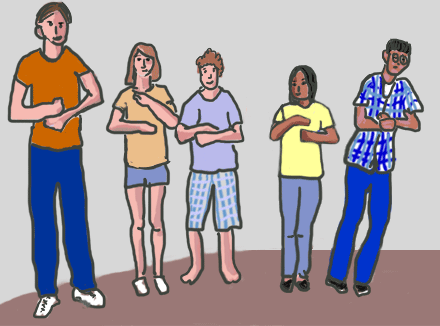
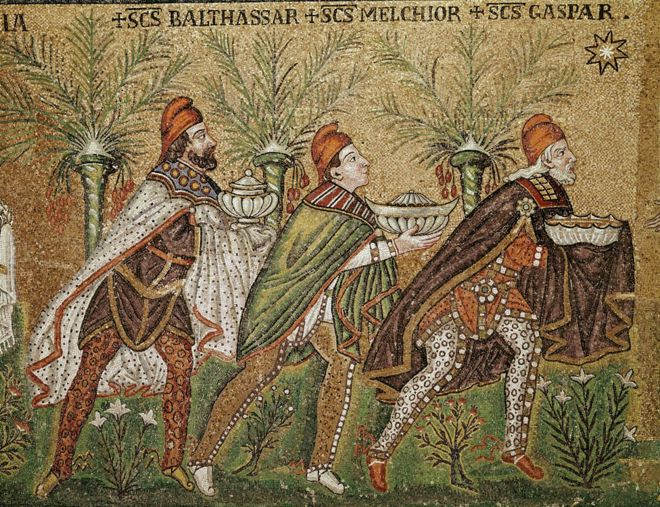 Getty Images

![Description English: A4-sized poster filled with the first 10,000 digits of π. 10,001 digits are actually listed on the poster - this is because of the 3 preceding the decimal mark. They were checked against the following sources: [1], [2], [3] Date 2 May 2011 Source Own work Author User:LoStrangolatore Inkscape-un.svg This W3C-unspecified vector image was created with Inkscape. Licensing Edit w:en:Creative Commons attribution share alike This file is licensed under the Creative Commons Attribution-Share Alike 3.0 Unported license. You are free: to share – to copy, distribute and transmit the work to remix – to adapt the work Under the following conditions:](https://commons.m.wikimedia.org/wiki/File:10,000_digits_of_pi_-_poster.svg)

 stoppauseplayfastforwardrewindejectrecorddotnet
