8/26/2014
in the “house” [framework] that “see/hear/say evil” or “feedback” built … stars [in the sense of “models” ~ “ngu+o+`i ma^~u, ngu+o+`i la`m gu+o+ng ~ mirror”] and stripes [in the sense of “in the image” ta^m/trinity/conscience] … : everything seems to rhyme together …. e.g. broken window channel balance above garage side door … door on upstair porch lock … door to side of house walkway hinge … front door sweep which could use some puffing up with wire such as that being run under garage side door … gasket of door of lg laundry washer … window screen of green room … blind frame to porch door upstair could use support and so does drawer of kitchen cabinet under range … neighbor’s front window faux blind rotted and fell … not to mention to^nan tried to write/establish the foundations of a computer operating system … not with any intention to replace windows os but merely to assert “muo^n loa`i ddu+o+.c bi`nh thu+o+`ng so^’ng la^u; everyone live well and long” … to^n an mo^`m lo+? lo+~ mo^`m …
 Peachtree IPD Citadel swing patio door multi-point center mortise lock.
This lock mortise is reversible for swing direction and features a panic release.

 https://www.pwdservice.net/peachtree/peachtree-patio-door-parts-and-hardware
PWDService is the factory authorized source for Peachtree and Crestline product replacement parts.
PWDService is not affiliated with the Peachtree Windows and Door or Crestline Windows and Door Companies.
Address for all Shipping & Returns
1411 Frey Rd.
Pittsburgh, PA 15235
 하이스쿨 – 러브온 / High School – Love On Also Known as: Hi! School: Love On Chinese Title: 爱在高中. Genre: Romance, Youth, School: character in movie says buy cell phone … from korea ~ gia ~ structure ~ virus …

the first letter “s” and letter “m” seems to be [perhaps, to^nan is guessing, tua^n and be^ con chu’ hu+ng co^ hie^n who perhaps, to^nan venture a guess on love, have taken to flying instead of driving for penitent or for memory sake remembrance of things past ky? nie^.m reasons relating perhaps to ca^.u kie^.m in us miliarty helicopter accident during the vietnam war or to be^ car accident: tranposrter accidents] missing yet the spaces are still silverized as though those letters have been reduced to “essences” … sbtn reports tua^’n the homeless “family” in sa`igo`n vietnam…: these missing letters seems to represent “huyndai” “huynh dde^.” the other giant korean company manufacterer of automobiles since the phone contains software and connection services/facilities/account from the other korean giant company “LG” … miniature korea in one cell phone … to see eternity in a grain of sand and heaven in a wild flower …
the following things might be “connected”/”rhymed” [that is, an invitation by the serpent to “see/hear/say evil connections/rhymes”] …. to dahlia’s recent immunization and to dahlia’s not shitting for three days …
 Rhododendron_catawbiense_Boursault … see saul/salieri below …
korean “10 seaweeds salad mix” from sura bought from lions market where we met ye^’n the first time we went there on the day father was due to arrive in california: when dahlia fever from immunization subsided on the day father returns to michigan to^nan learns that he was supposed to have washed the preserving salts from the following “10 seaweed salad mix” first before using them in a salad instead of eating them straight from the pack as he and father did a couple of days ago … [salt and stomach acid and kidney ~ kim quye^n] … “ca’ kho^ng a(n muo^’i ca’ u+o+n; con ca~i cha me. tra(m ddu+o+`ng con hu+” …
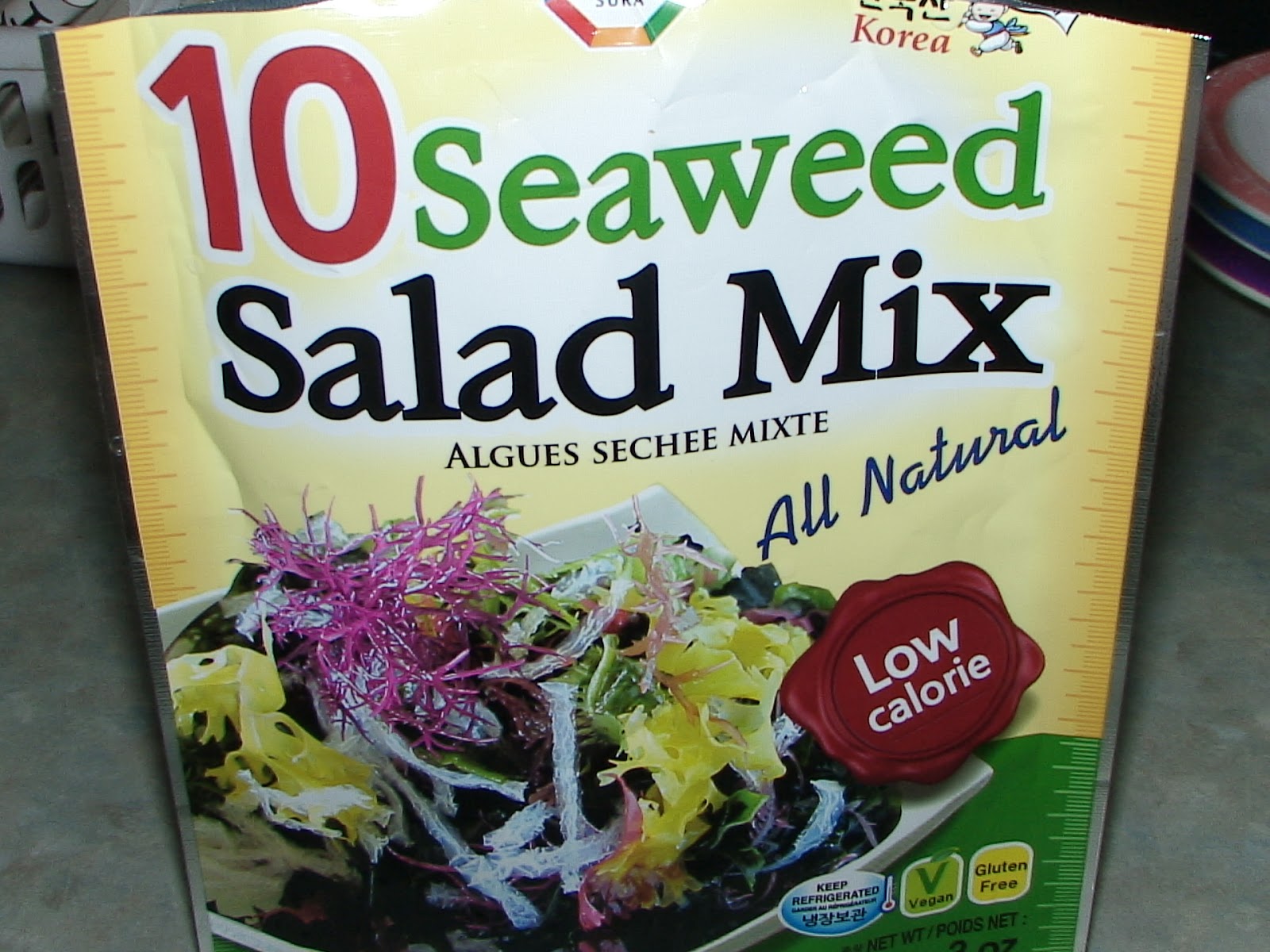 ingredients: wakame, sea string, seaweed stem, kelp, C. costaria, Z. latifolia (green), Z. latifolia (red), agar, S. fusiforme, G. amansil, sea salt …
 recently soil microbes or pro-biotic organisms have been added to fertilizers …
co^ be^’s australian dr nature queen bee honey or royal jelly extract …

Description
The chemical composition of Royal Jelly is complex, consisting of proteins, amino acids, sugars, lipids and vitamins, especially B-complex. Royal Jelly is one of the richest natural sources of amino acids, containing at least 17, including the 8 essential ones. A number of anti-microbial peptides have been identified in Royal Jelly. Another component,10-hydroxy-2-decenoic acid (10-HDA) is the most important active ingredient, the content of which can be considered as an index of RJ quality. 10-HDA is known to have various pharmacological actions, including immune-regulation, providing anti-cancer and anti-bacterial effects. to increase energy, promote longevity and support the immune system.
Dr Nature Royal Jelly 1500mg – 365 capsules
Price: AUD $59.95
http://www.hangsengherbal.com.au/health-foods/77-dr-nature-royal-jelly-1500mg-365-capsules.html
The New Zealand Ministry of Food Safety requires the following warnings to appear on products comprised solely of royal jelly:
“WARNING – THIS PRODUCT IS NOT RECOMMENDED FOR ASTHMA AND ALLERGY SUFFERERS AS IT CAN CAUSE SEVERE ALLERGIC REACTIONS”
In the case of a product that contains royal jelly as an ingredient in a multi-ingredient product:
“WARNING – THIS PRODUCT CONTAINS ROYAL JELLY AND IS NOT RECOMMENDED FOR ASTHMA AND ALLERGY SUFFERERS AS IT CAN CAUSE SEVERE ALLERGIC REACTIONS.”
OR the following may be used for products consisting in part or entirely of royal jelly”
“WARNING -THIS PRODUCT CONTAINS ROYAL JELLY WHICH HAS BEEN REPORTED TO CAUSE ALLERGIC REACTIONS AND IN RARE CASES, FATALITIES IN ASTHMA AND ALLERGY SUFFERERS.”
For bee pollen: “THIS PRODUCT MAY CAUSE SEVERE ALLERGIC REACTIONS.”
For Bee Propolis: “PROPOLIS MAY CAUSE SEVERE ALLERGIC REACTIONS.”
Prepared by the Center for Science in the Public Interest, February 2009.
For further information contact Ilene Ringel Heller at 202-777-8317 or Wendi Hausfeld at 202-777-8362.
Click to access supplements_warning_list.pdf
dave lowe reports stalker/intruder in his and co^ be^ house in hawaii …: : a couple of skinny/scrawny teenagers from nearby christian valley highschool came by to sell $20.00 saving card for football … then a couple of big teenagers in football uniform came by to sell the same …
rush hour traffic jam in san francisco …. the verve “bittersweet symphony” was on the car radio … “come on, stay with us” … as doves and wind in a rhythmic flutter of motions acted out the rhythm of the symphony we came to a standstill stop as woman suggestive of co^ va^n in neighboring car laughed on her cell phone …
… previously man carry “racer” beer crossed the street … die^~m thi …: “”Bitter Sweet Symphony” is a song by English alternative rock band The Verve, and is the lead track on their third studio album, Urban Hymns (1997). It is based on an Andrew Loog Oldham orchestral version of The Rolling Stones’ song, “The Last Time” from which it samples a main theme, and involved some legal controversy surrounding plagiarism charge as a result.” http://en.wikipedia.org/wiki/Bitter_Sweet_Symphony “”The Last Time” is a song by the English rock band The Rolling Stones.[1] This was The Rolling Stones’ first British single written by Mick Jagger and Keith Richards,[1] although Keith Richards admitted in the 2003 book According to the Rolling Stones that ‘we came up with The Last Time, which was basically re-adapting a traditional gospel song that had been sung by the Staple Singers, but luckily the song itself goes back into the mists of time.'[2] It was the band’s third UK single to reach No. 1 in the UK Singles Chart, ” http://en.wikipedia.org/wiki/The_Last_Time_(song)
which “rush” [“thi”: die^~m thi
 “how’s your new baby” the city of san francisco inquired … traffic jam ~ not pooping for three days …


] song is suggestive of yet another “rush” song elvis – o sole mio – it’s now or never … and is suggestive of “o^ng cu. non” ecclesiastes premature conclusion “the sun sets and sun also rises: there’s nothing new under the sun. there’s no remembrance of things past” which is followed by a more mature conclusion [buddha’s “work out your salvation with diligence” and confucius’ “The path may not be left for an instant. If it could be left, it would not be the path. On this account, the superior man does not wait till he sees things, to be cautious, nor till he hears things, to be apprehensive.”: homeless man in san francisco hold out sign “one penny please” where one ~ win and penny ~ abraham lincoln the great slave liberator which seems contradictory on a friday where people are about to be off work to enjoy the weekend ] about “trying” “12:1Don’t let the excitement of youth cause you to forget your Creator. Honor him in your youth before you grow old and say, “Life is not pleasant anymore. …
13That’s the whole story. Here now is my final conclusion: Fear God and obey his commands, for this is everyone’s duty. 14God will judge us for everything we do, including every secret thing, whether good or bad.”
also on car radio was
COLBIE CAILLAT LYRICS
“Try”
Oooh
Oooh
Put your make up on
Get your nails done
Curl your hair
Run the extra mile
Keep it slim so they like you, do they like you?
Get your sexy on
Don’t be shy, girl
Take it off
This is what you want, to belong, so they like you
Do you like you?
You don’t have to try so hard
You don’t have to give it all away
You just have to get up, get up, get up, get up
You don’t have to change a single thing
You don’t have to try, try, try, try
You don’t have to try, try, try, try
You don’t have to try, try, try, try
You don’t have to try
Yooou don’t have to try
Oooh
Oooh
Get your shopping on, at the mall, max your credit cards
You don’t have to choose, buy it all, so they like you
Do they like you?
Wait a second,
Why should you care, what they think of you
When you’re all alone, by yourself, do you like you?
Do you like you?
You don’t have to try so hard
You don’t have to give it all away
You just have to get up, get up, get up, get up
You don’t have to change a single thing
You don’t have to try so hard
You don’t have to bend until you break
You just have to get up, get up, get up, get up
You don’t have to change a single thing
You don’t have to try, try, try, try
You don’t have to try, try, try, try
You don’t have to try, try, try, try
You don’t have to try
You don’t have to try, try, try, try
You don’t have to try, try, try, try
You don’t have to try, try, try, try
You don’t have to try
Yooou don’t have to try
Noooo
Oooh
You don’t have to try so hard
You don’t have to give it all away
You just have to get up, get up, get up, get up
You don’t have to change a single thing
You don’t have to try, try, try, try
You don’t have to try, try, try, try
You don’t have to try
You don’t have to try
Take your make up off
Let your hair down
Take a breath
Look into the mirror, at yourself
Don’t you like you?
Cause I like you
Thanks to Anonymous for adding these lyrics.
Thanks to Lily for correcting these lyrics.
Submit Corrections
COLBIE CAILLAT Lyrics
A-Z Lyrics
Writer(s): Jason Reeves, Kenny Babyface Edmonds, Colbie Caillat, Antonio Lamar Dixon
Copyright: Faze 2 Music, Inafi Music, Songs Of Universal Inc., Sony/ATV Songs LLC, Dancing Squirrel Music, Cocomarie Music, Sony/ATV Tunes LLC, Rafael’S Son Music
die^~m made condensed [con ~ child: “dense” “child”] milk can fell out of refrigerator …: 8/25/2014 neighboring children you don’t want to balance hurt with hurt for example hurt to mother after she has gotten well with hurt to father when he is well tit-for-tat because you want to count your blessing and minimize suffering and stop at “muo^n loa`i ddu+o+c. bi`nh thu+o+`ng so^’ng la^u; everyone live well and long” … as long as muo^n loa`i is well don’t tit-for-tat … co^ tu’ telephoned suggesting administering grape juice to faciliate/assist baby with shitting … for example you don’t want to balance hurt with hurt co^ tu’ ‘s grandchild [ddu`m and his wife] passing with dahlia hurting …afterall shakespeare says “what has hecuba to her that she should weep thus” as long as you are well leave it alone and even if you are not well things usually reduce to the air, water, food you eat anyway instead of to any vengeance for any wrongs/ideals … e.g mr. bob dodge and wife lily dodge passing and mr alex tribuzio wife being left behind after mrs. marguerite tribuzio passing mr. frank akerley passing being husband of mrs. marguerite akerley who is left behind and ba` no^.i passing and co^ quye^n passing leaving chu’ ha^n behind and ba’c quy`nh ni su+ vie^n lu+o+ng’s passing followed by ba’c quy`nh ni su+ vie^n lu+o+ng’s passing … pbs movie “breathless” says “there’s no little one is there” [to go along with its theme of “stay” or “stay with us” … toy race car interrupted … run-away girl is suggestive of pbs globe trekker’s megan …: mexican cleaning women and native american indian and other native populations and census] … neighbor in green about to^nan size … ella “it’s not even deep enough [for me] …” translation “pick someone your own size” … who is also in green collide at front door today and woman in green in pbs movie “breathless” ~ “timeless” is hated and almost got stabbed by jealousy of another woman whose husband was spotted talking to the woman in green … sprinkler system and using wrong or too much fertilizers on plants in garden …
… stanley elkin’s push the pusher trick of disappearing/re-appearing or of returning things to the way they were …
wycliffe’s translation of the bible 1Corinthian 10: 13Temptation take not you, but man’s temptation; for God is true, which shall not suffer you to be tempted above that that ye may; but he shall make with temptation also purveyance, that ye may suffer, (or sustain), (it). (Do not let yourselves be overtaken, or defeated, by any test, for it is but each man’s testing; and God is true, and he shall not allow you to be tested beyond what ye can endure; and he shall also make provision with any test, so that ye can endure it/so that ye can sustain it.)
from passionhd website: Ever Hung Out with a Cam Girl? It’s really fun. Click Below.
reflecting audrey’s comment about her grandpa’s vietnamese music from the 1960’s on the car radio … “it’s really funny” …
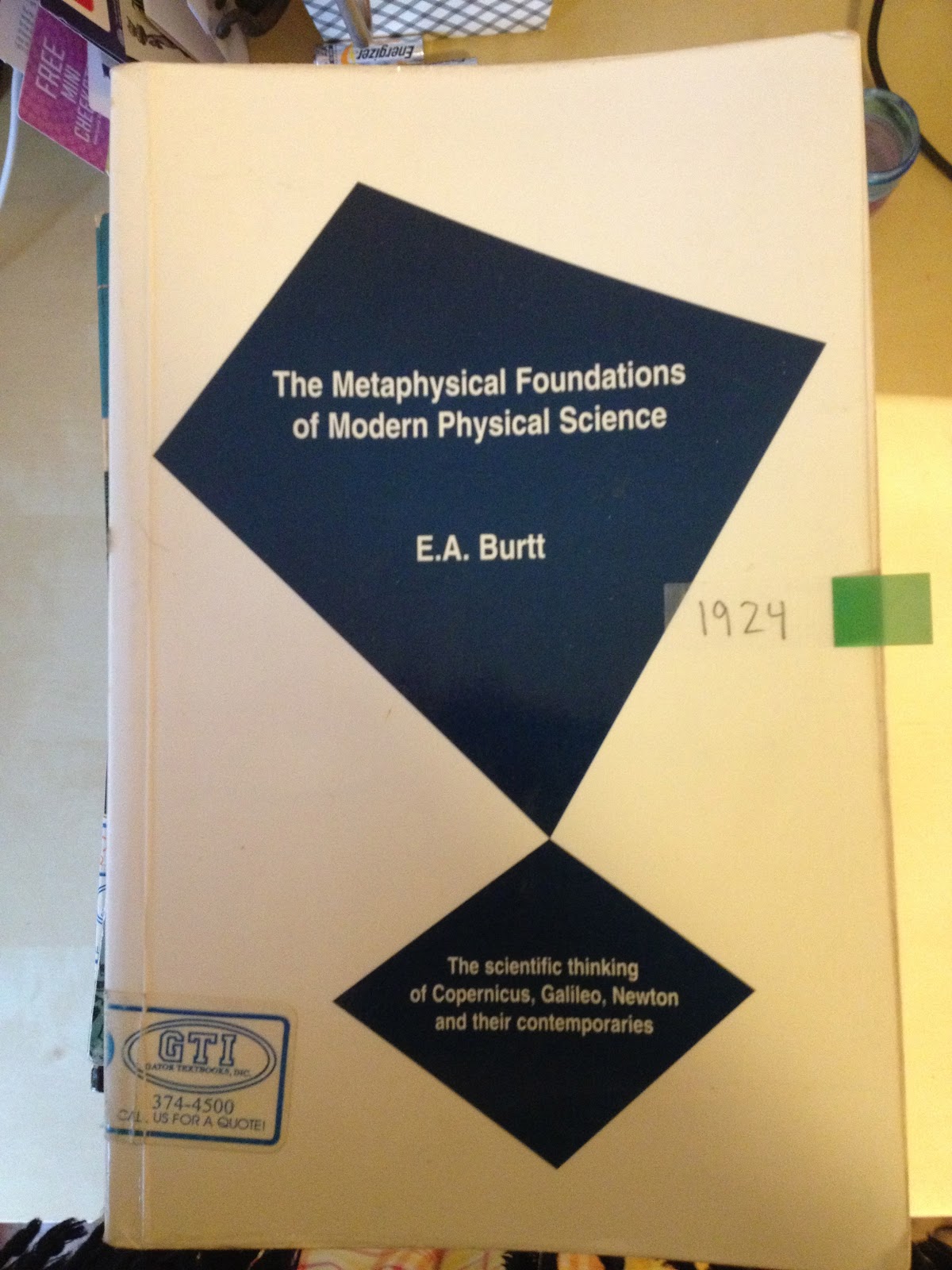
9/15/2014 anh Anh visits us today give us che` mother creates vegetarian supper and gives him co^ be^’s chocolate … regardding passion/emmanuelle being christian: to^nan just realized that the same guy e a burtt ~ birth is behind both of his ann arbor university books from class curriculum and from personal collection … [when europe came to america via columbus and others, j s bach ~ ba.ch ~ tra(‘ng ~ russia/china and johahns brahms ~ brahmin ~ india and sir isaac newton where to^n ~ raise came to europe and the judeo-christian tradition is i ching transformed into what at times has been touted/sold to outsiders or born-yesterdays as a contender of judeo-christianity: actually it’s universal … c.f. [whole ta^m “in the image” ddo^.i tro+`i chung same origin/image] holographic [kho^ng ddo^.i tro+`i chung or contender] cell below … c.f. chu+~ ta^m kia mo+’i ba(`ng ba chu+~ ta`i …]

probably the word “compassionate” is a translation of “tu+` bi hy? xa?” … c.f. “vi. tha” below … 10/14/2014 anh ba(`ng chi. trang visit father with co^ hie^n … the four words “tu+` bi hy? xa?” are practically synonymous with “non-attachment” … which is synonymous with “yielding” or “turn the other cheek” … c.f. “yielding is the way of the TAO” below … c.f. below how italian jews germans chinese allies e.g. east lake restaurateurs turned against to^nan and family as an example of negative non-attachment … : anh tu+` in san jose and whitney houston also passes away in same period of time that saw ba’c oanh passes away and the beginning of the birth of dahlia die^~m thi … 10/21/2014 happy birthday to dien huy`nh or die^~m or di` ba … tu+ ~ good-bye, from, etc suggesting ca’ch or non-attachment not in the negative way of never again but in the sense of parallel lines or runners running in parallel lanes, bi ~ ball/whole suggesting completeness or complete separation or non-attachment not in the negative way of bi quan hopelessness but with 1 corinthian 10:13 sense of bearable sustainable completeness there is a way dda.o out of kho^? to su+o+’ng … there is light at the end of the tunnel … hy? ~ joy see smile as a motion of yielding so that return or resurrection/re-incarnation is possible in the future suggesting non-attachment … xa? ~ shed …suggesting non-attachment … non-attachment not in the negative sense of ignoring but in the sense of optimum attention/caring … which is also how one should translate “vo^ thu+o+`ng” … va`o/optimum thu+o+ng/love … chu’ dao and di` die^.p “do^” heineken beer 10/20/2014 …
Tứ vô lượng (zh. 四無量, sa. catvāryapramāṇāni, pi. catasso appamaññāyo), là “bốn trạng thái tâm thức vô lượng”, còn được gọi là Tứ phạm trú (zh. 四梵住, sa. caturbrahmavihāra), “bốn cách an trú trong cõi Phạm” hay gọi là Tứ vô lượng tâm và gọi tắt là Từ bi hỷ xả. Là thuật ngữ chỉ một phép thiền định, trong đó hành giả tạo điều kiện cho bốn tâm thức cao thượng phát sinh. Bốn tâm vô lượng là:
1.Từ vô lượng (sa. maitry-apramāṇa, pi. metta-appamaññā)
2.Bi vô lượng (sa. karuṇāpramāṇa, pi. karuṇā-appamaññā)
3.Hỉ vô lượng (sa. muditāpramāṇa, pi. muditā-appamaññā)
4.Xả vô lượng (sa. upekṣāpramāṇa, pi. upekkhā-appamaññā).
Bốn tâm này đối trị bốn phiền não là sân hận, ganh tị, buồn bực và tham muốn. Trong Đại thừa, Bốn tâm vô lượng cũng được gọi là hạnh Ba-la-mật-đa (sa. pāramitā, Lục độ). Đó là tâm thức của Bồ Tát muốn cứu độ chúng sinh. Thực hành Tứ vô lượng, thiền giả sẽ tái sinh tại cõi Thiên (sa. deva).
Phật Thích-ca Mâu-ni giảng về phép thiền định này như sau:
“Có bốn vô lượng. Hỡi các tỉ-khâu, một người tràn đầy tâm từ (bi, hỉ, xả) sẽ phóng tâm đó đi một phương, hai phương, ba phương, bốn phương, rồi phía trên, phía dưới, xung quanh mình. Người đó phóng tâm đi khắp thế giới, chiếu rọi khắp nơi với tâm từ (bi, hỉ, xả), tâm thức vô lượng vắng bóng sân hận và phiền não.”
Tứ vô lượng (zh. 四無量, sa. catvāryapramāṇāni, pi. catasso appamaññāyo), là “bốn trạng thái tâm thức vô lượng”, còn được gọi là Tứ phạm trú (zh. 四梵住, sa. caturbrahmavihāra), “bốn cách an trú trong cõi Phạm” hay gọi là Tứ vô lượng tâm và gọi tắt là Từ bi hỷ xả. Là thuật ngữ chỉ một phép thiền định, trong đó hành giả tạo điều kiện cho bốn tâm thức cao thượng phát sinh. Bốn tâm vô lượng là:
1.Từ vô lượng (sa. maitry-apramāṇa, pi. metta-appamaññā)
2.Bi vô lượng (sa. karuṇāpramāṇa, pi. karuṇā-appamaññā)
3.Hỉ vô lượng (sa. muditāpramāṇa, pi. muditā-appamaññā)
4.Xả vô lượng (sa. upekṣāpramāṇa, pi. upekkhā-appamaññā).
Bốn tâm này đối trị bốn phiền não là sân hận, ganh tị, buồn bực và tham muốn. Trong Đại thừa, Bốn tâm vô lượng cũng được gọi là hạnh Ba-la-mật-đa (sa. pāramitā, Lục độ). Đó là tâm thức của Bồ Tát muốn cứu độ chúng sinh. Thực hành Tứ vô lượng, thiền giả sẽ tái sinh tại cõi Thiên (sa. deva).
Phật Thích-ca Mâu-ni giảng về phép thiền định này như sau:
“Có bốn vô lượng. Hỡi các tỉ-khâu, một người tràn đầy tâm từ (bi, hỉ, xả) sẽ phóng tâm đó đi một phương, hai phương, ba phương, bốn phương, rồi phía trên, phía dưới, xung quanh mình. Người đó phóng tâm đi khắp thế giới, chiếu rọi khắp nơi với tâm từ (bi, hỉ, xả), tâm thức vô lượng vắng bóng sân hận và phiền não.”
Etymology & translations[edit]
Pāli: cattāri brahmavihārā
Sanskrit: चत्वारि ब्रह्मविहाराः (IAST: catvāri brahmavihārāḥ)
Brahmavihāra may be parsed as “Brahmā” and “vihāra”; which is often rendered into English as “sublime” or “divine abodes”.[7]
Apramāṇa, usually translated as “the immeasurables,” means “boundlessness, infinitude, a state that is illimitable”.[8] When developed to a high degree in meditation, these attitudes are said to make the mind “immeasurable” and like the mind of the loving Brahmā (gods).[9]
Other translations:
English: four divine abodes, four divine emotions, four sublime attitudes.
East Asia: (traditional Chinese: 四無量心; pinyin: Sì wúliàng xīn; Korean: 사무량심; Vietnamese: Tứ Vô Lượng Tâm; literally: “immeasurable states of mind, from apramāṇa-citta”), (traditional Chinese: 四等(心); pinyin: sì děng; literally: “four equalities/universals”), (traditional Chinese: 四梵行; pinyin: sì fàn xíng; literally: “noble Brahma-acts/characteristics”).[10]
Tibetan: ཚད་མེད་བཞི, Wylie: tshad med bzhi or Tibetan: ཚངས་གནས་བཞི་, Wylie: tshangs gnas bzhi.
Exegesis[edit]
The four immeasurables are:
1.Loving-kindness (Pāli: mettā, Sanskrit: maitrī) towards all: the hope that a person will be well; “the wish that all sentient beings, without any exception, be happy.”[11]
2.Compassion (Pāli and Sanskrit: karuṇā): the hope that a person’s sufferings will diminish; “the wish for all sentient beings to be free from suffering.”[11]
3.Empathetic joy (Pāli and Sanskrit: muditā): joy in the accomplishments of a person—oneself or another; sympathetic joy; “the wholesome attitude of rejoicing in the happiness and virtues of all sentient beings.”[11]
4.Equanimity (Pāli: upekkhā, Sanskrit: upekṣā): learning to accept loss and gain, good-repute and ill-repute, praise and censure, sorrow and happiness (Attha Loka Dhamma),[12] all with detachment, equally, for oneself and for others. Equanimity is “not to distinguish between friend, enemy or stranger, but regard every sentient being as equal. It is a clear-minded tranquil state of mind—not being overpowered by delusions, mental dullness or agitation.”[13]
Brahmavihāra practice in the Visuddhimagga[edit]
The four immeasurables are explained in The Path of Purification (Visuddhimagga), written in the fifth century CE by the scholar and commentator Buddhaghoṣa. They are often practiced by taking each of the immeasurables in turn and applying it to oneself (something which is in fact not recommended by the Buddha in the Pali suttas), and then to others nearby, and so on to everybody in the world, and to everybody in all universes.
Legacy[edit]
Although this form of these ideas has a Buddhist origin, the ideas themselves are in no way sectarian. The Sarvodaya Shramadana Movement uses them in public meditation events in Sri Lanka bringing together Buddhists, Hindus, Muslims, and Christians. Rudyard Kipling’s inspirational poem If refers to the idea of upekkhā in calling Triumph and Disaster impostors.
10/20/2014 sbtn mai vy interviewing su+ co^ huye^`n ddu+’c orphanage …Dc.f. also walt whitman’s imperturbe poem that hints of the native american indian attitude of non-attachment … one step/level above the black martin luther king jr and the indian mahatma gandhi’s principle of non-violence protest since the native american indian did little protest from the beginning but litteraly seem to welcome with open arms the europeans in a “with our brothers/sisters we will share” attitude at best and a “with non-attachment” attitude at worse or what little protest in afterthought they did was promptly yielded with little fanfare …
] ….. and detachment or removing attachment/desire is pain/suffering … of course had we moved/motioned with non-attachment/desirelessness then we would not have pain/suffering/pleasure … the pain and the pleasure are there as steering signals to guide us toward the path of non-attachment/desirelessnes [absolutely or relatively speaking have eyes/ears/mouths/senses but as though cannot see/hear/say/sense pain/pleasure/attachments: we term the absolutely/relatively insensitive/saded pain/pleasure the eternal pain/pleasure that’s constant forever forever young thi’ch nha^’t ha.nh old path white cloud ddu+o+`ng xu+a ma^y tra(‘ng chapter 33 ca’i dde.p kho^ng ta`n hoa.i beauty that does not fade because pain/pleasure = attraction = beauty] toward the path of “muo^n loa`i ddu+o+.c bi`nh thu+o+`ng so^’ng la^u; everyone live well and long” …
I raise my arms, I spread them. I’m a bird — slow, powerful, easy, free. I move my head offering
profile like something beaked. I’m the Thunderbird. “In the school where I go I have a teacher who
teaches me magic,” I say. “Arnold Salamancy, give Push your arrows. Give him one, he gives back
two. Push is the God of the Neighborhood.”
“Go way. Push,” the kid says, uncertain.
“Right,” Push says, himself again. “Right. I’ll disappear. First the fingers.” My fingers ball into fists.
“My forearms next.” They jackknife into my upper arms. “The arms.” Quick as bird-blink they snap
behind my back, fit between my shoulder blades like a small knapsack. (I am double-jointed,
protean.) “My head,” I say.
“No, Push,” the kid says, terrified. I shudder and everything comes back, falls into place from the
stem of self like a shaken puppet.
“The arrow, the arrow. Two where was one.” He hands me an arrow.
“Trouble, trouble, double rubble!” I snap it and give back the pieces.

kenichi ebina
… but “re-appearances” or “returns” and/or “co-existence” without any “disappearances” or “re-appearances” are usually “hard” … the story of the chinese farmer to^nan would have to^nan’s father advising him to stake claim to the “hardest” ground/earth that no one else wants … di`ba lays claim to dishwashing today …. “staying” or “maintenance” is the nearest best thing … “small steps for a man a giant step for mankind” … to creating “re-appearances” or “returns” or “co-existence” and ultimately to “muo^n loa`i ddu+o+.c bi`nh thu+o+`ng so^’ng la^u everyone live well and long” … vehicle or bus with sign “the real [subject matter or some such] …”} …


Joan Rivers’ Family Keeping ‘Our Fingers Crossed’ for Iconic Comedian
Aug 31, 2014, 3:29 PM ET
By ABC NEWS via Good Morning America
Joan Rivers has been unconscious since her arrival three days ago at a New York City hospital, but her daughter expressed hope today that the 81-year-old comedian will recover from her illness.
“Thank you for your continued love and support,” Melissa Rivers said in a statement today. “We are keeping our fingers crossed.”
Her mother arrived at Mount Sinai Hospital Thursday after an emergency call that she was in cardiac arrest at an Upper East Side clinic, Yorkville Endoscopy, sources said.
http://abcnews.go.com/Entertainment/joan-rivers-family-keeping-fingers-crossed-iconic-comedian/story?id=25197261
… in fact, your true [inconstant] heart revolves around the eternal/constant/”staying” idea/wish/intention/dream/aim “muo^n loa`i ddu+o+.c bi`nh thu+o+`ng so^’ng la^u everyone live well and long” … ] and don’t be cruel to a heart that’s true by [co^ be^ put on her scarf in hot california summer weather] elvis pressley [disappearances and re-appearances/returns/reincarnations/resurrections, if any, happen or come about, if they do happen or come about, so that “muo^n loa`i ddu+o+.c bi`nh thu+o+`ng so^’ng la^u everyone live well and long” … ; since “muo^n loa`i ddu+o+.c bi`nh thu+o+`ng so^’ng la^u everyone live well and long” does not change but “stay”, by “staying”, {chu’ ha^n stomping his feet in place upon ba` no^.i passing and o^ng ngoa.i would exercise by stomping/walking/running in place and dahlia die^~m thi would lie and exercise by slapping her feet ddi xe dda.p and wailing her arms possibly while watching and smiling at the pooh mobile or other mobile … } albeit you’re jumping to conclusion in a sense since “muo^n loa`i ddu+o+.c bi`nh thu+o+`ng so^’ng la^u everyone live well and long” is the common conclusion/love of everything of muo^n loa`i, you’re providing the conditions for both disappearances/re-appearances/returns/reincarnations/resurrections, you’re providing for “muo^n loa`i ddu+o+.c bi`nh thu+o+`ng so^’ng la^u everyone live well and long” …] …
… from Doctrine of the Mean by Confucius: While there are no stirrings of pleasure, anger, sorrow, or joy, the mind may be said to be in the state of Equilibrium. When those feelings have been stirred, and they act in their due degree, there ensues what may be called the state of Harmony. This Equilibrium is the great root from which grow all the human actings in the world, and this Harmony is the universal path which they all should pursue.
[in “working”, “playing”, “eating”, … etc. in all acts in all things] Let the states of equilibrium and harmony exist in perfection, and a happy order [“muo^n loa`i ddu+o+.c bi`nh thu+o+`ng so^’ng la^u everyone live well and long”] will prevail throughout heaven and earth, and all things will be nourished and flourish.
from Tao Te Ching by Lao Tzu Translated: from the Chinese by S. Mitchell :
39
[when man moves] In harmony with the Tao,
the sky is clear and spacious,
the earth is solid and full,
all creature flourish together,
content with the way they are,
endlessly repeating themselves,
endlessly renewed.
When man interferes with the Tao,
goethe faust: “whenever man’s aspirations stir he cannot choose but err; however, the man who tries unweariedly [e.g. stanza below: the man who tries unweariedly to clean up after himself is redeemable] is not beyond redeeming”: this is because as noted below, the parts must not only try to be parts/partials while at the same time try to fulfill the whole … [bible: it’s not easy, “one cannot serve both money and god”: however, there is the example of “centripetal/centrifugal” motion in a circle that’s a result of both outgoing and ingoing motions; dahlia dda ti`nh multi-loves … viettoday 9/2/2014 plays lee pour over coffee to recall starbuck 156 country all you need is love commercial and reports on The Spasskaya Tower international military music festival in red square moscow russia …
PATTY LOVELESS LYRICS
“Blame It On Your [dda ti`nh: dahlia] Heart”
You’ve got a thing or two to learn about me baby
‘Cause I ain’t taking it no more and I don’t mean maybe
You don’t know right from wrong
Well the love we had is gone
So blame it on your lying, cheating, cold deadbeating,
Two-timing, double dealing
Mean mistreating, loving heart
Well all I wanted was to be your one and only
And all I ever got from you was being lonely
Now that dream is laid to rest
‘Cause you have failed the test
Hey blame it on your lying, cheating, cold deadbeating,
Two-timing, double dealing
Mean mistreating, loving heart
Are you headed for a heartache, oh yeah
Gonna get a bad break, oh yeah
You made a bad mistake, oh yeah
Well, you’re never gonna find another love like mine
Someone’s gonna do you like you done me honey
And when she does you like she’ll do you, it ain’t funny
You need some sympathy
But don’t be calling me
Hey blame it on your lying, cheating, cold deadbeating
Two-timing, double dealing
Mean mistreating, loving heart
Are you headed for a heartache, oh yeah
Gonna get a bad break, oh yeah
You made a bad mistake, oh yeah
Well, you’re never gonna find another love like mine
Someone’s gonna do you like you done me honey
And when she does you like she’ll do you, it ain’t funny
You need some sympathy
But don’t be calling me
Hey blame it on your lying, cheating, cold deadbeating
Two-timing, double dealing
Mean mistreating, loving heart
Hey blame it on your lying, cheating, cold deadbeating, two-timing, double dealing
Mean mistreating, loving heart
Submit Corrections
PATTY LOVELESS Lyrics
A-Z Lyrics
Writer(s): Kostas Lazarides
] … everything moves on its own part/partial path toward the whole “muo^n loa`i ddu+o+.c bi`nh thu+o+`ng so^’ng la^u; everyone live well and long” and the part/partial path being far from the whole “muo^n loa`i ddu+o+.c bi`nh thu+o+`ng so^’ng la^u; everyone live well and long” is said to be off course from the whole that is in err from the whole “muo^n loa`i ddu+o+.c bi`nh thu+o+`ng so^’ng la^u; everyone live well and long” … one must thus have compassion for the parts … being a part one self … and one must aim one’s compassion for the whole “muo^n loa`i ddu+o+.c bi`nh thu+o+`ng so^’ng la^u; everyone live well and long” …
the sky becomes filthy,
the earth becomes depleted,
the equilibrium crumbles,
creatures become extinct.
The Master views the parts [e.g. faces/tiles of the rubik’s cube] with compassion,
because he understands the whole [rubik’s cube itself].
His constant practice is humility.
He doesn’t glitter like a jewel
but lets himself be shaped by the Tao,
as rugged and common as stone.
40
Return is the movement of the Tao. … return ~ quy y ~ lo ve^` ~ love c.f. qi symbol below … : from the Bible, “God is love” … 1 John 4:7
* Beloved, let us love one another, because love is of God; everyone who loves is begotten by God and knows God.
see acupuncture cha^m cu+’u in previou note: everything returns/moves [in same way that the moon/earth returns/moves toward the earth/sun in circular orbit] toward [the “common”, the center {which center is}] “muo^n loa`i ddu+o+.c bi`nh thu+o+`ng so^’ng la^u; everyone live well and long” …
 Salvadore [c.f. salieri, saul, etc.] Dali’s “The agony of love” and acupuncture “a stitch in time saves nine ~ chi’n ~ china”
father often relates the story of how o^ng no^.i ty. demotes a government oficial instead of granting the official a self-imposed resignation because the official fails to show up for dda(‘p dde^ dam building duty … super duty truck at nordstrom rack ann taylor and panda express with a rather halloween rest room … hannibal lecteur on att&t uverse commercial … with co^ be^ and mother a couple of days ago 09/19/2014 where to^nan brought co^ be^ a pair of pump shoe neither too high heeled nor flat heeled for some 100.00 dollars off nordstrom credit card that was approved then … c.f. china credit below… and subsequently o^ng no^.i ty. retires/resigns himself from official duty …
9/17/2014 hai ba’c vu~ sent present for dahlia die^~m thi …
Hạ Vũ (chữ Hán: 禹; 2205 TCN – 2198 TCN[1] hoặc 2200 TCN – 2100 TCN [2]) là một vị vua huyền thoại ở Trung Quốc cổ đại nổi tiếng với về việc chống lũ, xác lập chế độ cha truyền con nối ở Trung Quốc bằng cách thành lập nhà Hạ và nhân cách đạo đức ngay thẳng của mình [3][4] . Tên khi sinh của ông là Tự Văn Mệnh (chữ Hán: 姒文命), thường được gọi là Đại Vũ (大禹).
Theo Sử Ký của Tư Mã Thiên, Vũ là cháu 5 đời của Hoàng Đế; cha của Vũ là Cổn là con trai út của Chuyên Húc; cha của Chuyên Húc là Xương Ý con thứ 5 của Hoàng Đế [5][6][7][8]. Vũ đã được sinh ra tại núi Long Sơn (tiếng Trung: 汶山), nay thuộc Bắc Xuyên, tỉnh Tứ Xuyên [9], mặc dù có ý kiến cho rằng ông được sinh ra ở Thập Phương [10]. Mẹ của Vũ là một người phụ nữ tên là Chí Nữ (tiếng Trung: 女志) hoặc Hi Nữ (tiếng Trung: 女嬉).
Khi còn là một đứa trẻ, cha Vũ là Cổn di chuyển người dân về phía đông Trung Nguyên. Vua Nghiêu phong cho Cổn làm người đứng đầu ở điạ điểm thường được xác định là gần núi Tung Sơn. Vũ do đó được cho là lớn lên trên sườn Tung Sơn, phía nam sông Hoàng Hà [11]. Sau đó, ông kết hôn với một người phụ nữ ở núi Đồ Sơn (tiếng Trung: 塗山), người thường được gọi là Đồ Sơn Thị (tiếng Trung: 塗山氏; nghĩa đen “Lady Tushan”) [12] và có một con trai tên là Khải, một tên nghĩa đen có nghĩa là “mặc khải” [12].
Theo truyền thuyết, vua Vũ là vị vua đầu tiên của nhà Hạ trong lịch sử Trung Quốc, được coi là người sáng lập ra triều đại này. Ông được nhớ tới nhiều nhất với tư cách là người đã có công phát triển kỹ thuật trị thủy chinh phục các sông ngòi Trung Quốc.
Note: compare the following story to the story of Dighavu and Brahamadatta and to the story of Mozart and Salieri in movie Amadeus and to the story of David and Saul …: when one realizes that the universe is fractal or holographic etc. where one can “see eternity in a grain of sand, heaven in a wild flower, …” in short where one can “see the whole in the parts” [“there but for the grace of God goes I”] then one does not waste time but save time instead by not tracing the resemblances of the stories to find the common root/origin … to find the cause and reason/rhymes of the resemblances … : in the same way, when one realizes that the universe is fractal or holographic [“there but for the grace of God goes I”] etc. then one does not waste time [because any and every thing/part is in the form “the whole in the part” and hence any and every thing/part can be blamed any and everything is a plagiarism of the “whole” … “man and everything were plagiarized/made ‘in the image’ of God” … because of the “common” “whole”, “the whole in the part”] on blames [c.f. plagiarism; dhammapada’s “they blame him/her who says little; they blame him/her who says much; they blame him/her who says enough; they blame him/her who says nothing; no one is without blame”] etc. for the blame is properly all/everyone/everything which is to say equivalently the blame is on one’s own self [song ” you can learn to be you in time …”] …
Trong suốt triều đại của Nghiêu (堯), vùng trung tâm Trung Quốc thường xuyên bị ảnh hưởng bởi lũ lụt đã ngăn cản phát triển kinh tế và xã hội [13]. Cha Vũ là Cổn (鯀) được giao nhiệm vụ xây dựng hệ thống kiểm soát lũ lụt. Ông đã trải qua chín năm xây dựng một loạt các tuyến đê và đập nước dọc theo bờ sông, nhưng không đạt hiệu quả nên bị người kế tục vua Nghiêu là Thuấn (舜) xử tử. Khi trưởng thành, Vũ tiếp tục công việc của cha và đã thực hiện một nghiên cứu cẩn thận các hệ thống sông trong một nỗ lực để tìm hiểu lý do tại sao những nỗ lực tuyệt vời của cha ông đã không thành công.
Phối hợp với Hậu Tắc, Vũ đã thành công trong việc phát minh ra một hệ thống kiểm soát lũ lụt rất quan trọng trong việc xây dựng sự thịnh vượng của khu trung tâm Trung Quốc. Thay vì trực tiếp đắp đập ngăn dòng chảy của sông, ông đã thực hiện một hệ thống kênh mương thủy lợi thuyên giảm nước lũ vào các cánh đồng, cũng như chi tiêu lớn trong nỗ lực nạo vét lòng sông [7]. Vũ được cho là đã ăn và ngủ chung với các nhân viên và dành hầu hết thời gian cá nhân của mình để hỗ trợ công tác nạo vét dải phù sa của con sông trong 13 năm cho đến khi dự án hoàn thành. Việc nạo vét thủy lợi đã thành công và cho phép văn hóa Trung Hoa cổ đại phát triển dọc theo sông Hoàng Hà, sông Vị và đường thủy của vùng trung tâm Trung Quốc. Dự án này đã khiến Vũ nổi tiếng trong suốt lịch sử Trung Quốc, và được gọi trong lịch sử Trung Quốc là “Đại Vũ trị thủy” (tiếng Trung: 大禹治水; bính âm: Dà Yǔ Zhì Shuǐ). Đặc biệt, núi Long Môn dọc theo sông Hoàng Hà đã có một kênh rất hẹp đã chặn nước chảy tự do về phía đông hướng đến đại dương. Vũ được cho là đã mang lại một số lượng lớn người lao động để mở kênh này, và được biết đến như là “Cổng Vũ” (tiếng Trung: 禹門口).[7].
Huyền thoại[sửa | sửa mã nguồn]
Trong một phiên bản thần thoại của câu chuyện này, Vũ được hỗ trợ trong công việc của mình bởi một con rồng màu vàng và một con rùa màu đen (không nhất thiết phải liên quan đến Huyền Vũ của thần thoại Trung Quốc) [14]. Một huyền thoại địa phương nói rằng ông tạo ra Tam Môn Hiệp của Tứ Xuyên gần sông Dương Tử bằng cách cắt một sườn núi với rìu chiến thần để kiểm soát lũ lụt [15].
Những câu chuyện cổ nói rằng Vũ đã hy sinh rất nhiều để kiểm soát lũ lụt. Ví dụ, bàn tay của ông được khá chai dày và bàn chân của ông được bao phủ hoàn toàn với mô sẹo. Trong một câu chuyện phổ biến, ông mới chỉ được kết hôn bốn ngày khi ông được giao nhiệm vụ chống lũ. Ông nói lời tạm biệt với vợ mình, nói rằng không biết khi nào ông sẽ trở lại. Trong suốt 13 năm chống lũ, ông đi ngang qua nhà của mình ba lần nhưng đều không bước vào trong. Lần đầu tiên đi ngang qua, ông nghe nói rằng vợ của mình đang sinh đẻ. Lần thứ hai đi ngang qua, con trai của Vũ đã có thể gọi tên cha mình. Gia đình thúc giục Vũ trở về nhà nhưng ông nói từ chối vì lũ lụt vẫn xảy ra. Lần thứ ba đi ngang qua, con trai của ông đã hơn 10 tuổi. Mỗi lần như vậy, Vũ đêu từ chối đi vào cửa, nói rằng vì lũ lụt đã khiến vô số người vô gia cư, ông chưa thể nghỉ ngơi được [12][16].
Trị vì[sửa | sửa mã nguồn]
Vua Thuấn rất ấn tượng trước những công việc kỹ thuật và nỗ lực của Vũ và đã đưa ông lên ngôi chứ không phải con trai mình là Thương Quân. Vũ được cho là lúc đầu từ chối ngôi vua, nhưng do quá nổi tiếng với các thủ lĩnh địa phương nên ông đã đồng ý để trở thành vua ở tuổi 53. Ông dựng đô ở An Ấp (tiếng Trung: 安邑) – di tích của nó nay thuộc huyện Hạ ở phía nam tỉnh Sơn Tây, trở thành người sáng lập nhà Hạ, truyền thống coi là triều đại đầu tiên của Trung Quốc [17].
Yu the Great (Chinese: 大禹; pinyin: Dà Yǔ, c. 2200 – 2100 BC),[1] was a legendary ruler in ancient China famed for his introduction of flood control, inaugurating dynastic rule in China by founding the Xia Dynasty, and for his upright moral character.[2][3]
The dates proposed for Yu’s reign precede the oldest known written records in China, the oracle bones of the late Shang dynasty, by nearly a millennium.[4] Stories about his life and reign were transmitted orally in various areas of China, and first recorded in texts from the Western Zhou period (c. 1045–771 BC).[5] Many were collected in Sima Qian’s famous Records of the Grand Historian. Yu and other “sage-kings” of Ancient China were lauded for their virtues and morals by Confucius and other Chinese teachers.[6]
Yu is one of the few Chinese rulers posthumously honored with the epithet “the Great”.
http://vi.wikipedia.org/wiki/H%E1%BA%A1_V%C5%A9
Ancestry and early life[edit]
For a family tree, see: Family tree of ancient Chinese emperors
According to several ancient Chinese records, Yu was the 8th great-grandson of the Yellow Emperor: Yu’s father Gun was the 5th great-grandson of Emperor Zhuanxu; Zhuanxu’s father, Changyi, was the second son of the Yellow Emperor.[7][8][9][10] Yu was said to have been born at Mount Wen (汶山), in modern day Beichuan County, Sichuan Province,[11] though there are debates as to whether he was born in Shifang instead.[12] Yu’s mother was of the Youxin clan named either Nüzhi (女志) or Nüxi (女嬉).
When Yu was a child, his father Gun moved the people east toward the Central Plain. King Yao enfeoffed Gun as lord of Chong, usually identified as the middle peak of Mount Song. Yu is thus believed to have grown up on the slopes of Mount Song, just south of the Yellow River.[13] He later married a woman from Mount Tu (Chinese: 塗山) who is generally referred to as Tushan-shi (塗山氏; “Lady Tushan”).[14] They had a son named Qi, a name literally meaning “revelation”.[14]
The location of Mount Tu has always been disputed. The two most probable locations are Mount Tu in Anhui Province and the Tu Peak of the Southern Mountain in Chongqing Municipality.[citation needed]
Great Yu Controls the Waters[edit]
Main article: Great Flood (China)
During the reign of king Yao, the Chinese heartland was frequently plagued by floods that prevented further economic and social development.[15] Yu’s father, Gun, was tasked with devising a system to control the flooding. He spent more than nine years building a series of dikes and dams along the riverbanks, but all of this was ineffective, despite (or because of) the great number and size of these dikes and the use of a special self-expanding soil. As an adult, Yu continued his father’s work and made a careful study of the river systems in an attempt to learn why his father’s great efforts had failed.
Collaborating with Houji, a semi-mythical agricultural master about whom little is concretely known, Yu successfully devised a system of flood controls that were crucial in establishing the prosperity of the Chinese heartland. Instead of directly damming the rivers’ flow, Yu made a system of irrigation canals which relieved floodwater into fields, as well as spending great effort dredging the riverbeds.[9] Yu is said to have eaten and slept with the common workers and spent most of his time personally assisting the work of dredging the silty beds of the rivers for the thirteen years the projects took to complete. The dredging and irrigation were successful, and allowed ancient Chinese culture to flourish along the Yellow River, Wei River, and other waterways of the Chinese heartland. The project earned Yu renown throughout Chinese history, and is referred to in Chinese history as “Great Yu Controls the Waters” (Chinese: 大禹治水; pinyin: Dà Yǔ Zhì Shuǐ). In particular, Mount Longmen along the Yellow River had a very narrow channel which blocked water from flowing freely east toward the ocean. Yu is said to have brought a large number of workers to open up this channel, which has been known ever since as “Yu’s Gateway” (Chinese: 禹門口).[9]
Apocryphal stories[edit]
In a mythical version of this story, presented in Wang Jia’s 4th century AD work Shi Yi Ji, Yu is assisted in his work by a yellow dragon and a black turtle (not necessarily related to the Black Tortoise of Chinese mythology).[16] Another local myth says that Yu created the Sanmenxia “Three Passes Gorge” of the Yangzi River by cutting a mountain ridge with a divine battle-axe to control flooding.[17]
Traditional stories say that Yu sacrificed a great deal of his body to control the floods. For example, his hands were said to be thickly callused, and his feet were completely covered with callus. In one common story, Yu had only been married four days when he was given the task of fighting the flood. He said goodbye to his wife, saying that he did not know when he would return. During the thirteen years of flooding, he passed by his own family’s doorstep three times, but each time he did not return inside his own home. The first time he passed, he heard that his wife was in labor. The second time he passed by, his son could already call out to his father. His family urged him to return home, but he said it was impossible as the flood was still going on. The third time Yu was passing by, his son was older than ten years old. Each time, Yu refused to go in the door, saying that as the flood was rendering countless numbers of people homeless, he could not rest.[14][18]
…
The Nine Provinces[edit]
Main articles: Yu Gong, Nine Provinces (China) and Nine Tripod Cauldrons
King Shun, who reigned after Yao, was so impressed by Yu’s engineering work and diligence that he passed the throne to Yu instead of to his own son. Yu is said to have initially declined the throne, but was so popular with other local lords and chiefs that he agreed to become the new emperor, at the age of fifty-three. He established a capital at Anyi (Chinese: 安邑), the ruins of which are in modern Xia County in southern Shanxi Province, and founded what would be called the Xia Dynasty, traditionally considered China’s first dynasty.[19]
http://en.wikipedia.org/wiki/Yu_the_Great
Chuyện Ngu công dời núi
Ngu Công dời núi không phải là một chuyện thật, nhưng nó ai ai cũng biết tại Trung Quốc. Chuyện này ghi chép trong “Liệt Tử”. “Liệt Tử” là một cuốn sách do nhà triết học tên là Liệt Ngự Khấu viết vào thế ký thứ bốn, thứ năm trước công nguyên.
Chuyện kể rằng, có một ông lão, tên là Ngu Công, đã gần 90 tuổi rồi. Trước cửa nhà ông có hai ngọn núi lớn, một ngọn tên là Thái Hàng Sơn, một ngọn là Vương Ốc Sơn, mọi người ra vào rất không tiện.
Một hôm, Ngu Công triệu tập tất cả người trong nhà lại nói: “Hai ngọn núi này đã ngăn cản trước cửa nhà ta, ta ra cửa phải đi nhiều đường vòng oan uổng. Chi bằng chúng ta cả nhà ra sức, di chuyển hai ngọn núi này, mọi người thấy thế nào ?”
Các con, cháu Ngu Công nghe nói đều nói: “Ông nói đúng, từ ngày mai chúng ta bắt tay vào làm.” Thế nhưng, vợ Ngu Công cảm thấy dọn hai ngọn núi này khó quá, nêu ra ý kiến phản đối nói: “Chúng ta đã sống nhiều năm tại đây, làm sao lại không thể tiếp tục sống như thế này ? Huống chi, hai ngọn núi lớn như vậy, cho dù có thể di dời từng tí một, nhưng nơi nào có thể đổ nhiều đất đá xuống như vậy ?”
Lời nói của vợ Ngu Công lập tức khiến mọi người bàn luận, đây quả thực là một vấn đề. Sau cùng họ quyết định: Chuyển đất đá trên núi đổ xuống biển.
Ngày thứ hai, Ngu Công dẫn cả nhà bắt đầu dọn núi. Láng giềng của ông là một bà goá, bà có một đứa con trai, mới mười bảy, mười tám tuổi, nghe nói dời núi cũng vui vẻ đến giúp. Nhưng công cụ di dời núi của nhà Ngu Công chỉ là cuốc và gùi địu trên lưng, hơn nữa giữa núi và biển cả cách nhau xa xôi, một người một ngày không đi được hai chuyến. Một tháng làm việc, ngọn núi xem ra chẳng khác gì ban đầu.
Có một ông lão tên là Trí Tẩu, ăn ở đối xử rất tinh ranh. Ông thấy cả nhà Ngu Công dọn núi thì cảm thấy nực cười. Có một hôm, ông nói với Ngu Công rằng: “ông đã nhiều tuổi như vậy, đi lại đã không dễ dàng, làm sao có thể dọn được hai ngọn núi này ?”
Ngu Công trả lời rằng: “Tên ông là Trí Tẩu, nhưng tôi thấy ông còn không giỏi bằng con nít. Tôi tuy đã sắp chết, nhưng tôi còn có con trai, con trai tôi chết, còn có cháu, con cháu đời đời truyền cho nhau, vô cùng vô tận. Đất đá trên núi dọn đi chút nào thì ít đi chút ấy, không thể mọc thêm được. Chúng tôi ngày nào, tháng nào, năm nào cũng dọn, làm sao không thể dọn nổi ngọn núi ?” Trí Tẩu tự cho là thông minh nghe nói cũng không nói thêm được lời nào.
Ngu Công dẫn cả nhà, bất kể mùa hè nóng nực, hay là mùa đông giá lạnh, hàng ngày đi sớm về tối, không ngừng đào núi. Việc làm của họ cuối cùng đã cảm động Thượng Đế. Thượng Đế đã cử hai vị thần tiên xuống trần gian, dọn hai ngọn núi này, Thế nhưng chuyện Ngu Công dời núi luôn lưu truyền đến nay. Nó nói với mọi người, bất kể gặp phải việc khó khăn ra sao, miễn là có quyết tâm có nghị lực làm thì có thể thành công .
http://vietnamese.cri.cn/chinaabc/chapter16/chapter160207.htm
Ngu Công dọn núi
Phía nam Châu Ký, có hai quả núi Thái Hàng và Vương Ốc to bảy trăm dặm, cao muôn thước, cây cối rậm, ác thú nhiều, đi lại khó.
Ở chân núi có một cái nhà của ông lão tên là Ngu Công tuổi đã chín mươi.
Ngu Công thấy vì núi mà nhà ở chướng ngại, đường đi bất tiện, lấy làm bực tức. Một hôm cụ họp cả vợ con, người nhà lại bàn rằng:
– Ta muốn cùng lũ ngươi hết sức bạt phẳng hai quả núi này thì có nên không?
Ai nấy đều thuận. Chỉ có người vợ ngần ngại, hỏi vặn rằng:
– Sức ông không bạt nổi một cái gò, thì làm thế nào bạt được những hai quả núi? Mà dù cho có sức bạt được nữa, thì đất, đá định đem đổ đi đâu?
Ngu Công nói:
– Khuân đổ ra biển Đông.
Đoạn Ngu Công đem con cháu cùng cả họ ra phá núi, kẻ đục đá, người đào đất, kẻ đầu đội, người vai mang, hết ngày này sang tháng khác. Láng giềng có đứa bé mới tám tuổi, con người đàn bà góa, cũng xin đi làm giúp, hàng năm mới về một lần.
Gần miền có một ông lão khác, tên là Trí Tẩu thấy vậy, cười Ngu Công và can rằng:
– Sao khờ dại vậy! Mình thì tuổi tác, núi thì cao lớn, phá thế nào nổi!
Ngu Công thở dài nói:
– Ngươi không bền lòng. Bền lòng thì việc gì cũng phải được. Ngươi không bằng người đàn bà góa, đứa trẻ con thơ. Ta già, ta chết, đã có con ta. Hết đời con ta, đã có cháu ta, hết đời cháu ta đã có chắt ta, con con cháu cháu sinh hạ vô cùng mà núi thì bao giờ cũng vậy, lo gì không bạt nổi.
Trí Tẩu nghe nói, nín lặng, không trả lời.
Sau này vùng nam Châu Ký không có núi non chướng ngại, đi lại thuận tiện là nhờ có Ngu Công. (Liệt Tử)
Lời bàn:
Ta không tưởng tượng rõ núi Thái Hàng và núi Vương Ốc to lớn thế nào. Ta chỉ biết ở cái đời Ngu Công bấy giờ chưa có máy móc tinh xảo như bây giờ, mà đã bạt được núi, thì giỏi thật. Lại không kể phải thuê từng hàng nghìn vạn người để làm, chỉ người trong một nhà, một họ và ít người lân cận giúp tay vào mà cũng làm nổi. Ôi! Nếu quả như vậy, thì cái gương kiên nhẫn của Ngu Công thực đáng để truyền lại mãi cho muôn nghìn đời về sau này. Vả chăng chỉ một câu Ngu Công nói với Trí Tẩu, cũng nên ghi nhớ lắm. Sự kiên tâm không phải chỉ hạn chế trong một đời, nhưng cứ tiếp luôn đời ấy, đời khác ,theo đuổi mãi thì ở đời còn có gì gọi là khó được nữa. Ngu Công đây thật là người “đại trí được ngu” (người cực khôn, bề ngoài coi như ngu). Ngôn hành ông y như những câu sau đây cũng đều có ý khuyên chúng ta lập chí và kiên tâm để làm việc:
myth of sisyphus and da~ tra`ng xe ca’t be^? ddo^ng and dung beatles [c.f. jesus lizard walking on water] compare/contrast co’ chi’ thi` ne^n, ddu+o+`ng ddi kho’ kho^ng kho’ vi` nga(n so^ng ca’ch nu’i ma` kho’ vi` lo`ng ngu+o+`i nga.i nu’i e so^ng …
1. Trên đời chả có việc gì khó, chỉ tại tâm người ta không kiên nhẫn mà thôi.
2. Bí quyết thành công cốt ở nhất định không thay mỗi mục đích.
3. Đã có cái kiến thức can đảm phi thường, nhất quyết làm được sự nghiệp phi thường.
4. Đem sự hiểu biết tinh tường, dùng hết tâm trí bền bỉ, vận cả toàn lực tinh tiến vô cùng, thì có việc gì mà không làm được. Người ta sống một cách nay lần mai lữa, suốt đời không được việc gì, chỉ tại không có chí.
5. Ý chí kiên nhẫn có thể chinh phục được hết thảy các thứ tự nhiên trong vòng trời.
(Trích Cổ học tinh hoa, Ôn Như Nguyễn Văn Ngọc & Từ An [to^n an and his greater/extended family and his friends and acquaintances and surely everyone will/wish/dream/move/do/carry-out/give ourselves the monumental ngu co^ng do.n nu’i job of enabling “muo^n loa`i ddu+o+.c bi`nh thu+o+`ng so^’ng la^u; everyone live well and long”] Trần Lê Nhân)
http://lophoc24h.com/home/Default.asp?MenuID=1&ProgID=20&ArticlesID=279, http://vnthuquan.net/truyen/truyen.aspx?tid=2qtqv3m3237nqn0n2n31n343tq83a3q3m3237nvn

The Unicorn in
Greek mythology—which is perhaps the narwhal of the marine world— was used by Dalí, and
specifically the horn, in order to recreate a reproduction of the Lacemaker by Vermeer in May
1955 at the Vincennes Zoo in Paris for his film with Robert Descharnes The Amazing Adventure
of the Lacemaker and the Rhinoceros. The tip of the rhino’s horn could purify water, an idea
which developed into the sculpture The Unicorn (1984), from the model The Agony of Love
(c.1977-1978).
Click to access descharnes_1279092442.pdf


Ballerina is a common subject in portrait oil paintings. The celebrated Chinese oil painting artist Guan Zeju[sounds like jesus] is most well-known for his ballet dancer oil paintings. Some of the silk embroideries below are reproduced from his ballerina oil paintings, embroidered by hands with silk threads.

http://www.suembroidery.com/embroidery_blog/article/12-08/Suzhou_hand_embroidered_silk_ballerina_painting.html
Yielding is the way of the Tao.
9/27/2014 each layer of an onion “yields” to all other layers in that each layer is in its own shell/orbit/circle not interfering with all other layers …
yielding is even more passive then turn the other cheek since it says “whatever” [“vo^ thu+o+`ng”: which means “anything anything at all so that ‘muo^n loa`i ddu+o+.c bi`nh thu+o+`ng so^’ng la^u; everyone live well and long’”] passively instead of actively make the motion of “turning” … : 9/11/2014
9/16/2014 dahlia and her mother and father receive in the mail present from hai ba’c vu~ ba’ cu+o+`ng … to^nan noticed that the new gavottes present from hai ba’c cu+o+`ng has a new logo suggestive of the mandelbrot set …

 chicken runs … song “better runs through the jungle” …
[9/21/2014
the windmills of your mind is quite simple and reduce to the following if you keep in mind crudely the anthropic principle says along with bible genesis before the fall of man:
“the eternals and everything else … e.g. water, air, ocean, mountain, etc. and plants and beasts are made of ‘man’, by ‘man’, and for ‘man’ …” … the Hindu says “thou art that” … whatever thou art sense/encounter, thou art that … : thus whenever you, a man, look at any phenonmenon, physical or mathematical, such as fractals you can assume [observer-observed interference problems] rather correctly that the phenonmenon is mere “mirror” images, faithful [ddo^.i tro+`i chung, simple] or distorted [kho^ng ddo^.i tro+`i chung, complicated ra(‘c ro^’i complex], of none other than you … [usually depending on some sort of “distance” that measures how close you and the phenonmenon have come into “contact” with one another]: “there but for the grace of god goes I” …
9/19/2014 the windmills of your mind is quite simple and can be reduced to fundamentals … dahlia bi. chu.p mu~ and in blue stripes … if you keep in mind … fractal fundamentals … or in fact the fundamental of any physical math formula intending on describing the world/universe, … namely the fundamental that the fractal or math formula usually consist of … “repeats” + “no repeats” … “theme and variations” … [e.g. you have your common lagrangian or green’s function … one legged guy on plane to michigan from california 9/20/2014… or differential equation and then you have your “un-common” eigenvalues and eigenfunctions that are the solution to your “common” lagrangian or green’s function or one might say the reverse that the lagrangian is the “solution” to your eigens … the gen in eigen is jealous ~ ty. ~ difference]: either one believes in “ddo^.i tro+`I chung” existence of a “common” or one does not believe in “ddo^.i tro+`i chung” {that is, one believes in “kho^ng ddo^.i tro+`i chung”} non-existence of a “common” …. typically when one “has eyes/ears/mouth but as though cannot see/hear/say so that effectively one sees/hears/says no evil” then one “has eyes/ears/mouth but as though cannot see/hear/say no ‘common'”, otherwise one “see/hear/say the evil/good of the ‘common'” … practically, one there are both “ddo^.i tro+`i chung” “similarities” or “repeats” and “kho^ng ddo^.i tro+`i chung” “differences” or “no repeats” … “theme and variations” …
Dr. Stephen Wolfram once said:
“If the whole history of our universe can be obtained by following definite simple rules, then at some level this history has the same kind of character as a construct such as the digit sequence of pi. And what this suggests is that it makes no more or less sense to talk about the meaning of phenomena in our universe as it does to talk about the meaning of phenomena in the digit sequence of pi.”
]
Arc of Light: A Portrait of Anna Campbell Bliss
Sunday, Sept. 7, at 10:30 p.m.
Repeats Monday, Sept. 8, at 4:30 a.m. and Sunday, Sept. 14, at 12:30 a.m.
Anna Campbell Bliss is a pioneering artist, architect and designer who has devoted her life to the creation of works of art that explore the complex intersections between art, technology, science, nature, poetry, mathematics and architecture.
This film looks at the astonishing range of Bliss’ work, from small painterly and digitally based studies of color and light to architectural site commissions of immense scale. It also puts her work in art-historical context and traces her Modernist influences, including the Bauhaus school artists of the 1920s. from westernreservepublicmedia.org
 10/24/2014 saw in michigan before leaving for california … co^ng tha`nh reads backward is tha`nh co^ng ~ success … co^ng tha`nh was reading off a long list of happy birthdays …
the TAO is the “wall” the TAO being “nameless” hence “unknown” in the same way that a “wall” makes objects it shields “unknown” … the implication is that the “wall” is not really a “wall” or rather not really “solid” [a “wall” is a “uniqueness” that must move constantly in order to remain “wall”/”unique”] but an illusion born of “yielding” or “flowing” or “being [yourself] in ‘time’” or “being at one with” the Perpetual Motion of Things That Be …
father recently reads Fermilab’s director Leon Lederman’s analogy of guessing the rules [or synchronicities, or “walls”] of a soccer game by observing the motion of the soccer ball …
Once I ran to you (I ran)
Now I’ll run from you
This tainted love you’ve given
I give you all a boy could give you
Take my tears and that’s not nearly all
Tainted love
Tainted love
Now I know I’ve got to
Run away I’ve got to
Get away
You don’t really want any more from me

which might very well be the underlying basis of “tro+`i sinh tro+`i du+o+~ng god provides/cares for even the lilies of the valley and the sparrow how much more would He provide/care for you …” … contrary to the tragedy of the common, it might be that the more you eat/desire the more food will be available to you … and the stick and carrot model …. and Godel’s Theorem besides …..
 Kon-Tiki was the raft used by Norwegian explorer and writer Thor Heyerdahl in his 1947 expedition across the Pacific Ocean from South America to the Polynesian islands. It was named after the Inca sun god, Viracocha, for whom “Kon-Tiki” was said to be an old name. Kon-Tiki is also the name of Heyerdahl’s book; the Academy Award-winning documentary film chronicling his adventures; and the 2012 dramatised feature film nominated for the Academy Award for Best Foreign Language Film.
 supposedly to^nan first encountered bare naked “mo.i” “ngu+o+`i thu+o+.ng” as a child of a few years old in kontum …
Heyerdahl believed that people from South America could have settled Polynesia in pre-Columbian times. … His aim in mounting the Kon-Tiki expedition was to show, by using only the materials and technologies available to those people at the time, that there were no technical reasons to prevent them from having done so. Although the expedition carried some modern equipment, such as a radio, watches, charts, sextant, and metal knives, Heyerdahl argued they were incidental to the purpose of proving that the raft itself could make the journey.
The Kon-Tiki expedition was funded by private loans, along with donations of equipment from the United States Army. Heyerdahl and a small team went to Peru, where, with the help of dockyard facilities provided by the Peruvian authorities, they constructed the raft out of balsa logs and other native materials in an indigenous style as recorded in illustrations by Spanish conquistadores. … Heyerdahl and five companions sailed the raft for 101 days over 6900 km (4,300 miles) across the Pacific Ocean before smashing into a reef at Raroia in the Tuamotu Islands….
from http://en.wikipedia.org/wiki/Kon-Tiki
 andes/andean god viracocha kon tiki on sun gate in bolivia
… “in between” and inthecrack porn website …

 the indigenous people of the Xingu river in Brazil …
] gun synchronizer
[10/31/2014 “fitting” and “in between” …
 c.f. salvador dali agony of love “wall” ..
 inca wall
10/15/2014 incidentally, “fitting” in the “in-betweens” e.g. “in between” propeller blades or “in between” swinging ropes e.g. “smiling” for {non-contact} “yielding” might very well be, in what is neutrally in less emotional or dramatic terms, what is meant by “right” in
The Noble Eightfold Path (Pali: ariyo aṭṭhaṅgiko maggo, Sanskrit: āryāṣṭāṅgamārga)[1] is one of the principal teachings of the Buddha, who described it as the way leading to the cessation of suffering (dukkha) and the achievement of self-awakening.[2] It is used to develop insight into the true nature of phenomena (or reality) and to eradicate greed, hatred, and delusion. The Noble Eightfold Path is the fourth of the Buddha’s Four Noble Truths; the first element of the Noble Eightfold Path is, in turn, an understanding of the Four Noble Truths. It is also known as the Middle Path or Middle Way.
All eight elements of the Path begin with the word “right”, which translates the word samyañc (in Sanskrit) or sammā (in Pāli).
… see zoroaster below for another perspective on “right” namely “all good/gooddness/god” … “it’s all good” … “each and everything is all good/goodness/god/godliness” … “each and everything strives to be all good/goodness/god/godliness” … also see confucius “ren” nha^n ba?n for other perspective on “right” [
Đức Khổng Tử nêu lên ngũ luân với thuyết chính danh và chữ “Nhân” để làm chuẩn mực cho mọi sinh hoạt chính trị và an sinh xã hội.
Ngũ thường: ngũ là năm, thường là hằng có. Người ta phải giữ năm đạo đó làm thường, không nên để rối loạn. Ngũ thường gồm: Nhân, Nghĩa, Lễ, Trí, Tín.
Nhân: Là lòng từ thiện. Khổng Tử nói: Khi ở nhà giữ gìn dung mạo khiêm cung; khi ra làm việc thi hành một cách kính cẩn; khi giao thiệp với người, giữ lòng trung thành. Dẫu đi tới các đoàn rợ phương đông và phương bắc, cũng chẳng bỏ ba đức hạnh cung, kính và trung ấy, như vậy là người có đức nhân
Nghĩa: Là việc nên làm hay là cách xử sự phải đường hoàng, hào hiệp. Hành vi của con người phải tuân theo tính chính đáng, chú trọng quy tắc, tiêu chuẩn, trọng tâm là nghĩa vụ và trách nhiệm. Trước khi làm gì phải xem xét hành vi đó có hướng đến điều “thiện” hay không, có thể hiện tiêu chuẩn đạo nghĩa, ý thức trách nhiệm với cộng đồng hay không.
Lễ: Sự tôn trọng, hòa nhã trong khi cư xử với mọi người, mở rộng ra là việc tuân thủ các quy tắc, nguyên tắc đạo đức xã hội và pháp luật. Một cách căn bản, chính nghi lễ và nghi thức làm cho cuộc sống quân bình. Lễ làm bền vững nền văn hiến của một nước, lễ mà ại hoại thì văn hiến cũng tiêu tan. Khổng Tử nói: “Cung kính mà thiếu lễ thì làm thân mình lao nhọc. Cẩn thận mà thiếu lễ thì trở thành nhút nhát. Dũng cảm mà thiếu lễ sẽ trở thành rối loạn. Ngay thẳng mà thiếu lễ sẽ trở nên thô lỗ”.
Trí: Óc khôn ngoan, sáng suốt. Cảm giác đúng và sai. Biết tiên liệu, tính toán để hành động hợp đạo lý.
Tín: Giữ đúng lời, đáng tin cậy. Chữ tín vốn nằm trong 4 điều trên, sau này được tách ra để thành Ngũ thường. Tín là thước đo, là sự phản ánh 4 giá trị trên.
from http://vi.wikipedia.org/wiki/Nho_gi%C3%A1o
Ethics
Confucius and disciples, statues of the Ashikaga Gakko, a Confucian school and oldest academy of Japan.
Confucian ethics are described as humanistic.[4] This ethical philosophy can be practiced by all the members of a society.[21] Confucian ethics is characterized by the promotion of virtues, encompassed by the Five Constants, or the Wuchang (五常), extrapolated by Confucian scholars during the Han Dynasty.[22] The Five Constants are:[22]
Rén (仁, humaneness);
Yì (義, righteousness or justice);
Lǐ (禮, proper rite);
Zhì (智, knowledge);
Xìn (信, integrity).
These are accompanied by the classical Sìzì (四字), that singles out four virtues, one of which is included among the Five Constants:
Zhōng (忠, loyalty);
Xiào (孝, filial piety);
Jié (節, continency);
Yì (義, righteousness).
There are still many other elements, such as chéng (誠, honesty), shù (恕, kindness and forgiveness), lián (廉, honesty and cleanness), chǐ (恥, shame, judge and sense of right and wrong),yǒng (勇, bravery), wēn (溫, kind and gentle), liáng (良, good, kindhearted), gōng (恭, respectful, reverent), jiǎn (儉, frugal), ràng (讓, modestly, self-effacing).
Humaneness
Main article: Ren (Confucianism)
Ren (Chinese: 仁, rén) is the Confucian virtue denoting the good feeling a virtuous human experiences when being altruistic. It is exemplified by a normal adult’s protective feelings for children. It is considered the outward expression of Confucian ideals.
Yan Hui, Confucius’s most outstanding student, once asked his master to describe the rules of ren and Confucius replied, “one should see nothing improper, hear nothing improper, say nothing improper, do nothing improper”.[23] Confucius also defined ren in the following way: “wishing to be established himself, seeks also to establish others; wishing to be enlarged himself, he seeks also to enlarge others”.[24]
Another meaning of ren is “not to do to others as you would not wish done to yourself”.[25] Confucius also said, “ren is not far off; he who seeks it has already found it”. Ren is close to man and never leaves him.
from http://en.wikipedia.org/wiki/Confucianism
] … and ti’nh ba?n thie^.n in tam tu+. kinh three character classic …
In the same way I saw an ancient path, an ancient road, traveled by the Rightly Self-awakened Ones of former times. And what is that ancient path, that ancient road, traveled by the Rightly Self-awakened Ones of former times? Just this noble eightfold path: right view, right aspiration, right speech, right action, right livelihood, right effort, right mindfulness, right concentration…
—Nagara Sutta[4][5 http://en.wikipedia.org/wiki/Noble_Eightfold_Path%5D%5D
9/15/2014 father telephoned saying ambulance came to twin’s house today … the father is suggestive of to^nan’s professor david williams of [multi love: dda ti`nh, dahlia] multipole/fourier/laplace/taylor expansion via moire pattterns:
multipole/fourier/laplace expansion via moire pattterns:
All things are born of being.
Being is born of non-being.
41
[“the TAO”: 9/16/2014 south african dancer on dancing with the stars: the ubuntu compare/contrast the TAO]
When a superior man hears of the Tao,
he immediately begins to embody it.
When an average man hears of the Tao,
he half believes it, half doubts it.
When a foolish man hears of the Tao,
he laughs out loud.
9/14-15/2014 PBS laurence welk show on the theme of music by johnny mercer and henry mancini [manual/man/drive china chi ni] … The Lawrence Welk Show – Mancini Mercer – Interview, Bobby Burgess – 11-10-1973 … quotes laurence saying “try to look like you’re having fun but [to^nan is 3,000 dollars in debt] don’t have any [when you aim for the impossible dream/aim/ddi’ch of “muo^n loa`i ddu+o+.c bi`nh thu+o+`ng so^’ng la^u; everyone live well and long” you attain for yourself some measure of “muo^n loa`i ddu+o+.c bi`nh thu+o+`ng so^’ng la^u; everyone live well and long” however seemingly “impossible” is the dream/aim/mo+/ddi’ch “muo^n loa`i ddu+o+.c bi`nh thu+o+`ng so^’ng la^u; everyone live well and long”: neighbor of die^~m and ddi.nh with the sign in their driveway “Drive as though your kid lives here”: the point is that when you’re lying when you play acting or simulating or emulating or pretending etc. something you become that something for however brief the period of your supposed lying, play acting, simulating, emulating, pretending, etc. so that when you aim for the impossible beyond truth and lies because it is merely a wish/dream such as for “muo^n loa`i ddu+o+.c bi`nh thu+o+`ng so^’ng la^u; everyone live well and long” then you become in some measure that impossibility “muo^n loa`i ddu+o+.c bi`nh thu+o+`ng so^’ng la^u; everyone live well and long”: to^nan and his mother and his father and his aunts and his uncles and his nephews and his nieces and his in-laws and his grandmothers and his grandfathers in short his greater/extended family and his friends and his acquaintances and surely everyone else dream/wish/mo+/aim “muo^n loa`i ddu+o+.c bi`nh thu+o+`ng so^’ng la^u; everyone live well and long”; the point is when you make another person laugh you’re minimizing that person footprint and when another person makes you laugh you minimize your footprint … either ways, when people minimize their footprints for the ‘common’ {one laughs when a friend returns and return implies contact/common} ‘muo^n loa`i ddu+o+.c bi`nh thu+o+`ng so^’ng la^u; everyone live well and long’ then everyone will be happy will be well will live long because ‘muo^n loa`i ddu+o+.c bi`nh thu+o+`ng so^’ng la^u; everyone live well and long’ …” … die^~m to die^~m thi “bi. du./ga. ro^`i” 9/16/2014 … passion-hd web site porn and cat stevens song
nha^n chi so+ ti’nh ba?n thie^.n ti’nh tu+o+ng ca^.n ta^p tu+o+ng vie^~n …
… see anthropic principle, confucius “ren” “nha^n ba?n”, and ubuntu … co^ tu’ telephoned about anthony con ca^.u nha^’t co^ le^. visit to california ….


人之初,性本善;
性相近,習相遠。
Nhân chi sơ, tính bổn/ba?n thiện;
Tính tương cận, tập tương viễn.
co^ die^~m di` ba ru die^~m thi dahlia “me. o+i cho con la^’y cho^`ng ga^`n ddu+`ng ba(‘t con ddi la^’y cho^`ng xa” …
Bông Điên Điển
Đóng góp: Zing Mp3
Hò ơi …. má ơi đừng gả con xa chim kêu vượn hú
Hò ớ …. chim kêu vượn hú biết nhà má đâu
Em đi lấy chồng về nơi xứ xa đêm ru điệu hát vọng hò trên môi . Miền Tây xanh sắc mây trời phù sa nước nổi người ơi đừng về .
Với màu điên điển say mê vàng trong ánh mắt vỗ về gót chân . Trót thương tình nghĩa vợ chồng nên bông điên điển nở cho lòng vấn vương tình thương em khó mà lường .
Chồng gần không lấy em lấy chồng xa , giờ đây nhớ mẹ thương cha còn đâu mà thong thả đi về nhà thăm . Xa xăm nơi chốn bưng biền ăn bông mà điên điển nghiêng mình nhớ đất quê chồng xa em khó mà về .
People at birth,
are naturally good.
Their natures are similar;
their habits become different.
from yellowbridge.com
movie “the sand pebble” line “[we started out with good intentions tính bổn/ba?n thiện:
c.f. zoroaster and goodness …
Genesis 1:3 Then God said, “Let there be light,” and there was light. 4 And God saw that the light was good.
Declaration of Independence: We hold these truths to be self-evident, that all men are created equal, that they are endowed by their Creator with certain unalienable Rights, that among these are Life, Liberty and the pursuit of Happiness.
Preamble to the United States Constitution:
We the people of the United States, in order to form a more perfect union, establish justice, insure domestic tranquility, provide for the common defense, promote the general welfare, and secure the blessings of liberty to ourselves and our posterity, do ordain and establish this Constitution for the United States of America.] what the hell happened? to us”:
 dahlia touched book the pregnant king about cross-overs by devdut pattanaik that reminds ba’c ty’ of three cups of tea … cheezaley: Balti word that means, roughly, “What the hell?”: we sometimes tend to think that our particular way of life is heavenly until we visit another culture where our way of life seems hell …. ma(‘t xanh mu~i lo~ is considered quy? in vietnam but chu’ kha being russian is associated with names that end with -sky that is with heaven or tro+`i or god … c.f. usa man forgets bible in club in north korea below …
the “chain”/”bridge”/”tunnel” between Brownian Motion and Skyway Motion is suggested by Tính tương cận, tập tương viễn. or as mother says “sai mo^.t ly ddi mo^.t da(.m” or “the way to hell might be paved with good intentions” … it seems to be another “adaptation” to adversity c.f. below but anyway to^n an finds that constantly reminding [with frequency usually determines by frequency and duration of contact of two hands clapping since when the hands are not clapping it is understood … we then made love that’s understood … “muo^n loa`i ddu+o+.c bi`nh thu+o+`ng so^’ng la^u; everyone live well and long” is understood to be the aim/love/wish of one and all; zen koan what’s the sound of one hand clapping … presumably it is the implicitly understood “muo^n loa`i ddu+o+.c bi`nh thu+o+`ng so^’ng la^u; everyone live well and long”] oneself that one acts/thinks/lives for “muo^n loa`i ddu+o+.c bi`nh thu+o+`ng so^’ng la^u; everyone live well and long” one could endure the hardships/dramas with not “sand pebble” but more fair/neutral humanly/humane sustainable dramatics … after all one’s conscience is assured/stabilized since one aims for “muo^n loa`i ddu+o+.c bi`nh thu+o+`ng so^’ng la^u; everyone live well and long” not only at the start in the beginning but at every steps along the way …
buddha “work out your salvation with diligence” …

苟不教,性乃遷;
教之道,貴以專。
Cẩu bất giáo, tính nãi thiên;
Giáo chi đạo, quý dĩ chuyên.
The right way to teach,
is with absolute concentration/specialization.
confucius “The path may not be left for an instant. If it could be left, it would not be the path. On this account, the superior man does not wait till he sees things, to be cautious, nor till he hears things, to be apprehensive. ”
song “Can’t Take My Eyes Off Of You”
You’re just too good to be true.
Can’t take my eyes off of you.
You’d be like heaven to touch.
I wanna hold you so much.
At long last love has arrived.
And I thank God I’m alive.
You’re just too good to be true.
Can’t take my eyes off of you.
Pardon the way that I stare.
There’s nothing else to compare.
The sight of you leaves me weak.
There are no words left to speak.
But if you feel like I feel.
Please let me know that it’s real.
You’re just too good to be true.
Can’t take my eyes off of you.
“Oh, baby, baby, it’s a wild [nature] world
It’s hard to get by just upon [to^n ddi.nh mentions co^ be^’s on-cue stewardess smile; technician helmut schick is bothered by to^nan’s smile “{go ahead} smile, smile …” in the way of christmas carol “you’d better watchout you better not cry i’m telling you why santa claus is coming to town …” … he eventually got a girl lori as an assistance from to^nan’s professor longo and introduced to^nan to her … ] a smile [ha^n, nha^n: human world] [compare the “sad” man … young girl on airplane home to michigan 9/23/2014 watching captain hook cartoon in disbelief:
It is an ancient Mariner,
And he stoppeth one of three.
‘By thy long grey beard and glittering eye,
Now wherefore stopp’st thou me? …. “stop” means not allowed to “get by” … means “contact” … of course in view of the pendulum waves and the fact that the points on a circle are all unique that is there is no real “contact” or “twinning” or “sameness” between the “unique” points even though they might participate in waves on the circle that create the illusion of “contact” or “stopping” … bob dylan’s song “did you think i made contact” and rolling stones song “you can’t always get what you want but if you try sometimes you get what you need” …
…
Farewell, farewell! but this I tell
To thee, thou Wedding-Guest!
He prayeth well, who loveth well
Both man and bird and beast.
 9/30/2014 watching this sbtn documentary with father … earlier chu’ ty. telephoned … co^ hie^n telephoned … die^~m di.nh telephoned … ba’c be.p telephoned … telephoned ba’c tue^. ga’i about anh vi~nh assuming ownership name on lien/loan of chu’ ha^n’s house on dover street … to^nan supposedly was in the womb fed on food of doves noodle … gilligan island and dove novel … : the sum substance of the emotional music in the film is ti`nh ngu+o+`i human/humane compassion/love is this that at first seems contradictory to the flee since it was meant to express “acceptance” of all ty. unless one is reminding of “yielding is the way of the TAO” … bata … so that the flee is not fron non-acceptance but from accepting enough to yield … hongkong tries to differentiate political versus economic refugees …: “whatever the ty. jealousy/differences/etc. we are of one mind one heart one sex one stand ddo^`ng chi’ .. chu’ kha .. or rather ddo^`ng y’ dddo^`ng ti’nh since supposedly the refugees are non-communists … ddo^`ng ta^m ddo^`ng ti`nh/du.c, namely, we pray/are/aim for “muo^n loa`i ddu+o+.c bi`nh thu+o+`ng so^’ng la^u; everyone live well and long” …
He prayeth best, who loveth best … to^nan and family and in-laws and uncles and aunts and nieces and nephews and friends and acquaintances and surely everyone else pray/love “muo^n loa`i ddu+o+.c bi`nh thu+o+`ng so^’ng la^u; everyone live well and long” …
All things both great and small;
For the dear God who loveth us,
He made and loveth all.
The Mariner, whose eye is bright,
Whose beard with age is hoar,
Is gone: and now the Wedding-Guest
Turned from the bridegroom’s door.
He went like one that hath been stunned,
And is of sense forlorn:
A sadder and a wiser man,
He rose the morrow morn.
The Rime of the Ancient Mariner By Samuel Taylor Coleridge http://www.poetryfoundation.org/poem/173253
lots of tunnelings … connecting ca^.n to vie^~n brownian motion to skyway motion … from high to low … the powers of ann arbor … co^ quye^n stuck her tongue out at monk/priest … from right to left … from here to there … from past to future …. movie back to the future … : pentecostal tongue phenonmenon circa judeo-christian celebration of the year 2000 millenium …
1 John 4:6
We belong to God, and anyone who knows God listens to us, while anyone who does not belong to God refuses to hear us. This is how we know the spirit of truth and the spirit of deceit.
God’s Love and Christian Life.
7
* Beloved, let us love one another, because love is of God; everyone who loves is begotten by God and knows God.
;
 stoppauseplayfastforwardrewindejectrecorddotnet