1/27/2014
“tu+” or di` Die^.p or di` Tu+ wears a tattered blue jean signifying fragmentation/segmentation and shys away from ba’c Ty’ anh Ty’ ….
fragmentation/segmentation and design for a computer file system …. : close-packing of circles and spheres …
http://i.stack.imgur.com/XJxrT.png
http://www.cut-the-knot.org/Curriculum/Geometry/InversionInArbelos.shtml
 oil bubbles: to^nan helps mother la`m co^~ chay cho/ho^m mu`ng mo^.t te^’t …
the Bissel deep carpet cleaner container uses a bladder to accomplish the feat of using one container space for both clean solution and dirty return solution [“what’s garbage to one man is treasure to another man”: Statue of Liberty Emma Lazarus “Give your refuse …” …]: this means that clean/dirty solution is “co-variant” or Buddhist Conditional Genesis “THIS arises; THAT arises” in much the same manner as the oil bubbles and in much the same manner as the files in a file system on a hard drive …


http://www.getcookingblog.com/wp-content/uploads/2010/05/chicken-frying.jpg 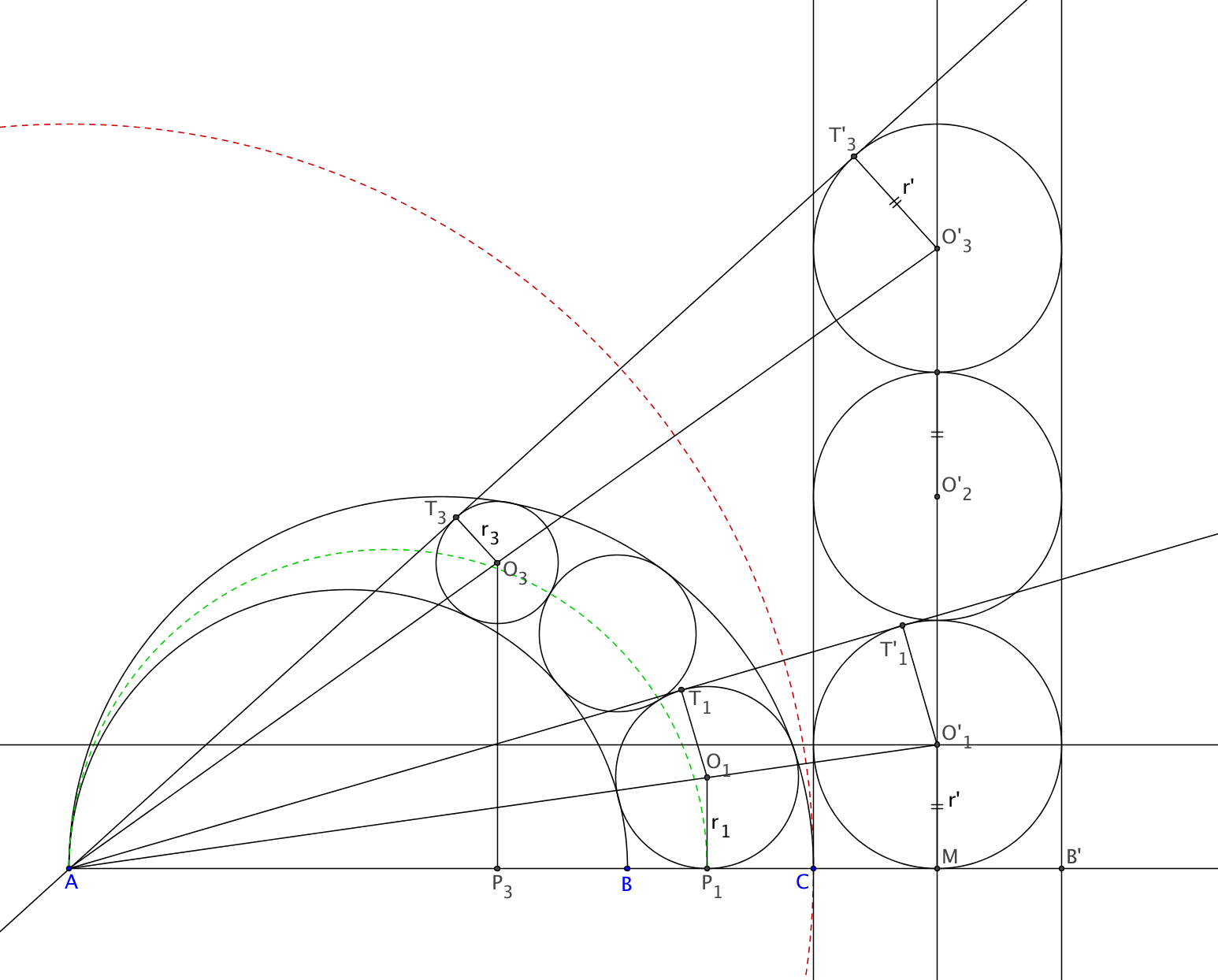
golden shadows of faucet handles made by floodlight directly above it … segment:offset memory addressing scheme of intel ia32 architecture ….
 fern leaves: fragmentation/segmentation in nature such as leave/leaf form allows for tro+`I sinh tro+`I du+o+~ng every parts of a plant, every plants of a forest, every forests of the planet … kho^ng ma(.c ke^. ai … “God cares for even the fallen sparrow and the lilies of the field, how much more would he care for you …” … co^ Die^.p provides copper-green coconut cracker by “Jans” … and orchid that turns copper-yellow and bu+o+?I bu+o+?I in yellow at te^’t lunch in Grand Century Mall …
everything existing is covariant … every computer filing system existing is covariant: so the point is any newly designed computer file system should also be covariant …
http://www.landcraftenvironment.com/mm5/graphics/00000001/FERN-BFl.jpg

Note: there is a re-scaling [] in the fractal illustration above …Note: there is a re-scaling [] in the fractal illustration above …
Note: there is a re-scaling [] in the fractal illustration above …

[H61] “Program Organization and Record Keeping for Dynamic Storage”
A.W. Holt
Communications of the ACM, Volume 4, Issue 10, October 1961
An incredibly early and difficult to read paper about segmentation and some of its uses.
[G62] “Fact Segmentation”
M. N. Greenfield
Proceedings of the SJCC, Volume 21, May 1962
Another early paper on segmentation; so early that it has no references to other work.
http://www.pages.cs.wisc.edu/…/vm-segmentation.pdf …
Sam Biddle on Gizmodo
Tupac hologram
Tupac Hologram Wasn’t a Hologram

http://gizmodo.com/5902625/tupac-hologram-wasnt-a-hologram

holo-memory http://static.ddmcdn.com/gif/holo-memory.gif … the segment:offset metaphorical addressing scheme of intel i32a architecture or computer file system fragmentation/segmentation over time due to usage would fain imitate an “interference pattern” such as the interference pattern of a laser hologram …
overheard some one or some child rapping: …Tupac Hologram Performs at Coachella ….
2/4/2014 yesterday di` ba, and day after te^’t ye^’n stimulating gia ba?o, lies– as though on ba’c si~ ta^m tha^`n psychologist’s couch– under to^n ddi.nh’s who just came home from work sounding sinus problems to take out the garbage 3d painting: remember that before we left michigan for california was reading theosophy article by father that leads to laser memory …. something to keep in mind when designing a computer filing system:
“In order to understand how the whole can exist in every part, Bohm became interested in the mechanics of holographic photography. Using lasers, a holographic image is recorded evenly across the photographic film. Consequently any region of the film contains information about the whole image, so any small region of the film can recreate the image, although in poorer resolution than the entire film produces.” http://everythingforever.com/Bohm.htm
The development of the laser enabled the first practical optical holograms that recorded 3D objects to be made in 1962 by Yuri Denisyuk in the Soviet Union[5] and by Emmett Leith and Juris Upatnieks at the University of Michigan, USA.[
http://en.wikipedia.org/wiki/Holography


To^nDDi.nh’s washroom used following old-fashioned faucet style directly under a floodlight that casts a metallic reflection shadow off the faucet handles in the form of two intersecting circles …

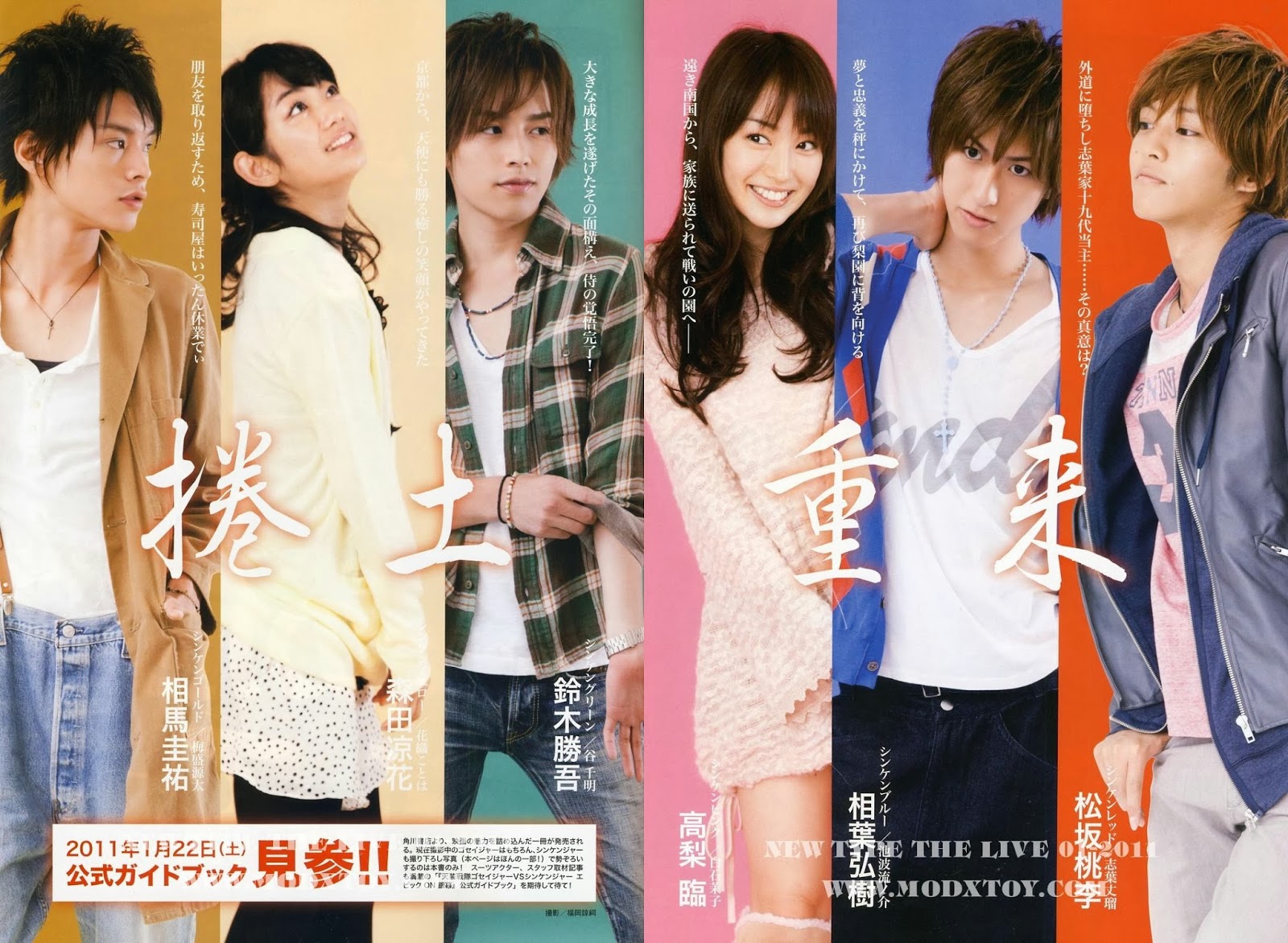
“Vo^ du.ng ddo^` vo^ du.ng …” [Ecclesiastes “Vanity, vanity, all is vanity. There’s nothing new under the sun”: refering to when things have achieved their Eternal zero-footprint Buddhist “Middle Path” on which they “see/hear/say no evil/use” or have achieved Confucius “will of heaven” “muo^n loa`i ddu+o+.c so^’ng la^u bi`nh thu+o+`ng; everyone live long and well” or have achieved Confucius equilibrium–“Let the states of equilibrium and harmony exist in perfection, and a happy order will prevail throughout heaven and earth, and all things will be nourished and flourish.” Doctrine of the Mean–] said Japan Lao-Tzu generation to Japan Confucius generation: somewhere between notes 1.17.2014 and 1.19.2014 bought Power Ranger Shinkenger for Gia Ba?o …. his mother Ye^’n wore beauty facial at night and his father So+n bought him a red ranger mask and Gia Ba?o got a bad case of if not star warshttp://www.cnn.com/2014/01/17/world/asia/japan-philippines-ww2-soldier-dies/ asthma then coughing …

https://stoppauseplayfastforwardrewindejectrecord.net/wp-content/uploads/2014/01/31bed-new.jpgThe Shiba Clan, who has said 17 other generations before, have been fighting the Gedoushuu, beings born from the Sanzu River who have fallen into despair and live literally “off the beaten path”, for hundreds of years. The Gedoushuu are led by the merciless and ferocious supreme general, Chimatsuri Doukoku. The young Lord of the Shiba clan, Takeru Shiba, has taken under his wing four retainers who have been raised from childhood to be samurai, and together with the Samurai power known as Mojikara, they henshin into the Shinkengers and fight against the Gedoushuu and their servants, the Ayakashi, in order to seal Doukoku and bring peace to the world again.
The story of Shinkenger is both very simple and yet very complex all at the same time, but that is the beauty of it in general. On the outside, it is a show about a Samurai leader and his retainers fighting against a powerful foe, but on the inside, Shinkenger is about not only what being a retainer, a lord, and what being on a team means, but about what it means to conform and not to conform, what it means to rejoice the good times, to suffer the bad, and most importantly, what it truly means to live on and off the beaten path. This not only goes for the main heroes of the story, but also for the Gedoushuu as well, and from a psychological standpoint, the ideas presented are very interesting and thought provoking. The head writer of Shinkenger was Yasuko Kobayashi, who is best known for her writings of Shakugan no Shana, Claymore, and, oh yeah…ATTACK ON TITAN….yeah. She is also no stranger to the Toku genre as she was head writer for shows like Gingaman, Timeranger, Kamen Rider Ryuki, and Kamen Rider Den-O. Because of this, you probably expect some pretty damn good storytelling, and Shinkenger is no exception to this rule. The writing is very strong, the developments in the story and in the characters for the most part are very consistent, and Kobayashi really brings the heart and soul of these characters to life in such a fantastic way.
One thing I love about Shinkenger in particular is how plot points carry over from one episode to another. Even filler episodes feel like they have significance in helping develop the story, and without those fillers we wouldn’t be able to know these characters, understand them, and connect with them like we do. Some filler episodes do serve no real purpose in the overall story, but all of them are still very entertaining as is. With all these elements and more put together, it creates a wonderful story that keeps you invested from beginning to end throughout the 49 episode period! If I had only one real complaint, it would be that the aspects of Mojikara and what it is are never really explained, which in turn bugs me when some episodes try to focus on increasing Mojikara. That is just a small nitpick of mine though and not something to worry about too much in the grand scheme of things.
……..
The back stories of Juuzou and Dayuu falling to Gedou due to their dark lives and pasts are not only heartbreaking and get you invested in the resolve of the Gedoushuu to an extent. It creates an interesting dynamic of the Gedoushuu and who they were before falling into despair. What is so fascinating about this specifically is that the main goal of the Gedoushuu is to bring humans into despair in order to increase the amount of water in the Sanzu River. Hmm…interesting when you think about it, ain’t it?
http://thetokubuster.blogspot.com/

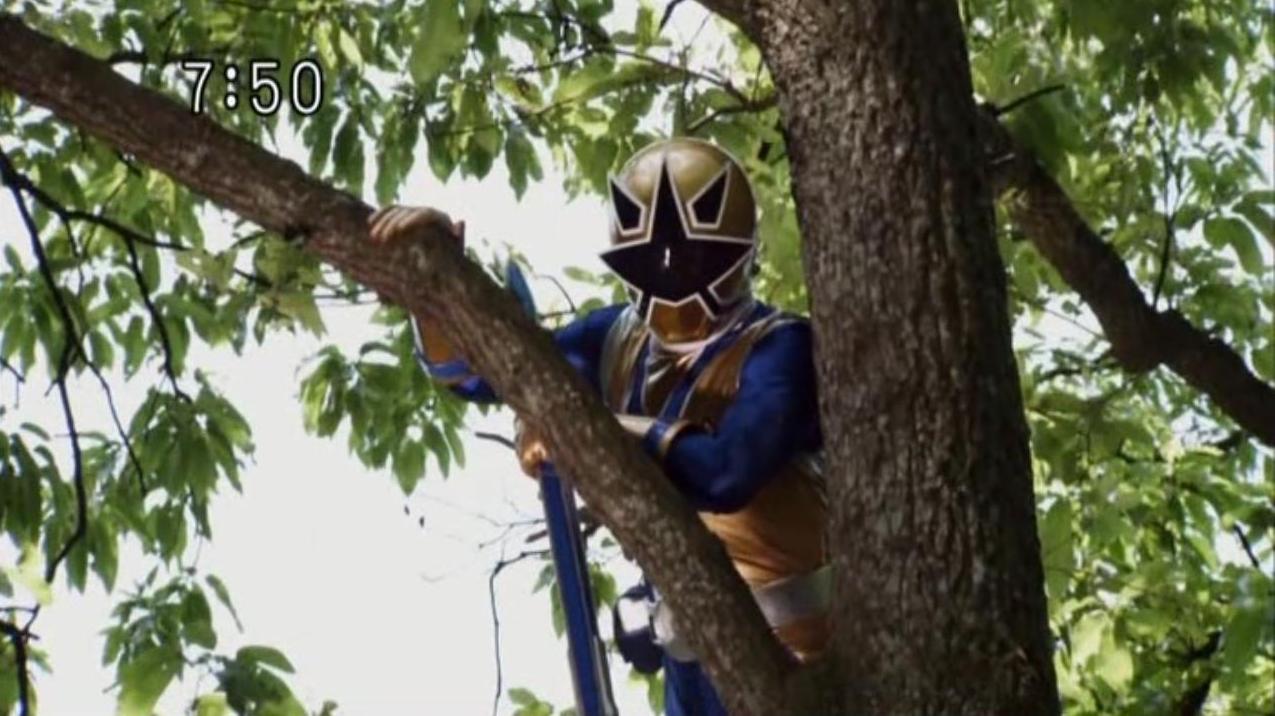 the sushi seller: Shinkenger Gold Power Ranger Genta Umemori
http://supersentaiimages.blogspot.com/2009/06/ranger-profile-shinkenger-shinken-gold.html
Tokyo (CNN) — A Japanese soldier who hunkered down in the jungles of the Philippines for nearly three decades, refusing to believe that World War II had ended, has died in Tokyo. Hiroo Onoda was 91 years old.
In 1944, Onoda was sent to the small island of Lubang in the western Philippines to spy on U.S. forces in the area. Allied forces defeated the Japanese imperial army in the Philippines in the latter stages of the war, but Onoda, a lieutenant, evaded capture. While most of the Japanese troops on the island withdrew or surrendered in the face of oncoming American forces, Onoda and a few fellow holdouts hid in the jungles, dismissing messages saying the war was over.
For 29 years, he survived on food gathered from the jungle or stolen from local farmers.
After losing his comrades to various circumstances, Onoda was eventually persuaded to come out of hiding in 1974.
His former commanding officer traveled to Lubang to see him and tell him he was released from his military duties.
In his battered old army uniform, Onoda handed over his sword, nearly 30 years after Japan surrendered..
2011: Japanese WWII vets honored
“Every Japanese soldier was prepared for death, but as an intelligence officer I was ordered to conduct guerrilla warfare and not to die,” Onoda told CNN affiliate, the Australian Broadcasting Corporation. “I had to follow my orders as I was a soldier.”
He returned to Japan, where he received a hero’s welcome, a figure from a different era emerging into post-war modernity.
But anger remained in the Philippines, where he was blamed for multiple killings.
The Philippines government pardoned him. But when he returned to Lubang in 1996, relatives of people he was accused of killing gathered to demand compensation.
After his return to Japan, he moved to Brazil in 1975 and set up a cattle ranch.
“Japan’s philosophy and ideas changed dramatically after World War II,” Onoda told ABC. “That philosophy clashed with mine so I went to live in Brazil.”
http://www.cnn.com/2014/01/17/world/asia/japan-philippines-ww2-soldier-dies/

http://ecx.images-amazon.com/images/I/41l97Jk1BpL.jpg
golden shadows of faucet handles made by floodlight directly above it ….. segmentation…. segment:offset memory addressing scheme of intel ia32 architecture ….
http://ecx.images-amazon.com/images/I/41l97Jk1BpL.jpg
golden shadows of faucet handles made by floodlight directly above it ….. segmentation…. segment:offset memory addressing scheme of intel ia32 architecture ….
golden shadows of faucet handles made by floodlight directly above it … segment:offset memory addressing scheme of intel ia32 architecture ….
golden shadows of faucet handles made by floodlight directly above it ….. segmentation…. segment:offset memory addressing scheme of intel ia32 architecture …. or file system fragmentation/segmentation
 stoppauseplayfastforwardrewindejectrecorddotnet